What's next for American after CEO Doug Parker announces his retirement?


Editor's note: A version of this story first appeared in TPG's biweekly Aviation newsletter. Sign up here to make sure you'll always be the first to see our exclusive content.
The world's biggest airline will soon have a new leader at the helm.
That news came Tuesday, when American Airlines CEO Doug Parker said he'd retire in March. Taking his place will be Robert Isom, currently the carrier's president.
Neither move was surprise, but it's part of a broader leadership change now underway for the U.S. airline industry. Southwest CEO Gary Kelly will step down in February while Alaska Airlines' Brad Tilden did so earlier this year. With that, there'll be new CEOs running three of the nation's five biggest carriers by the time summer arrives.
For now, though, Parker's retirement and Isom's impending promotion to CEO is the big story. The executives did a whirlwind round of media interviews after their Tuesday announcement. I got 8 1/2 minutes with the pair Tuesday. It was a "buckle your seat belt, prepare for takeoff" lighting round that touched both on Parker's legacy and the future of the world's largest airline.
From 9/11 to COVID-19: As CEO, Doug Parker's 20-year tenure spanned from crisis to crisis
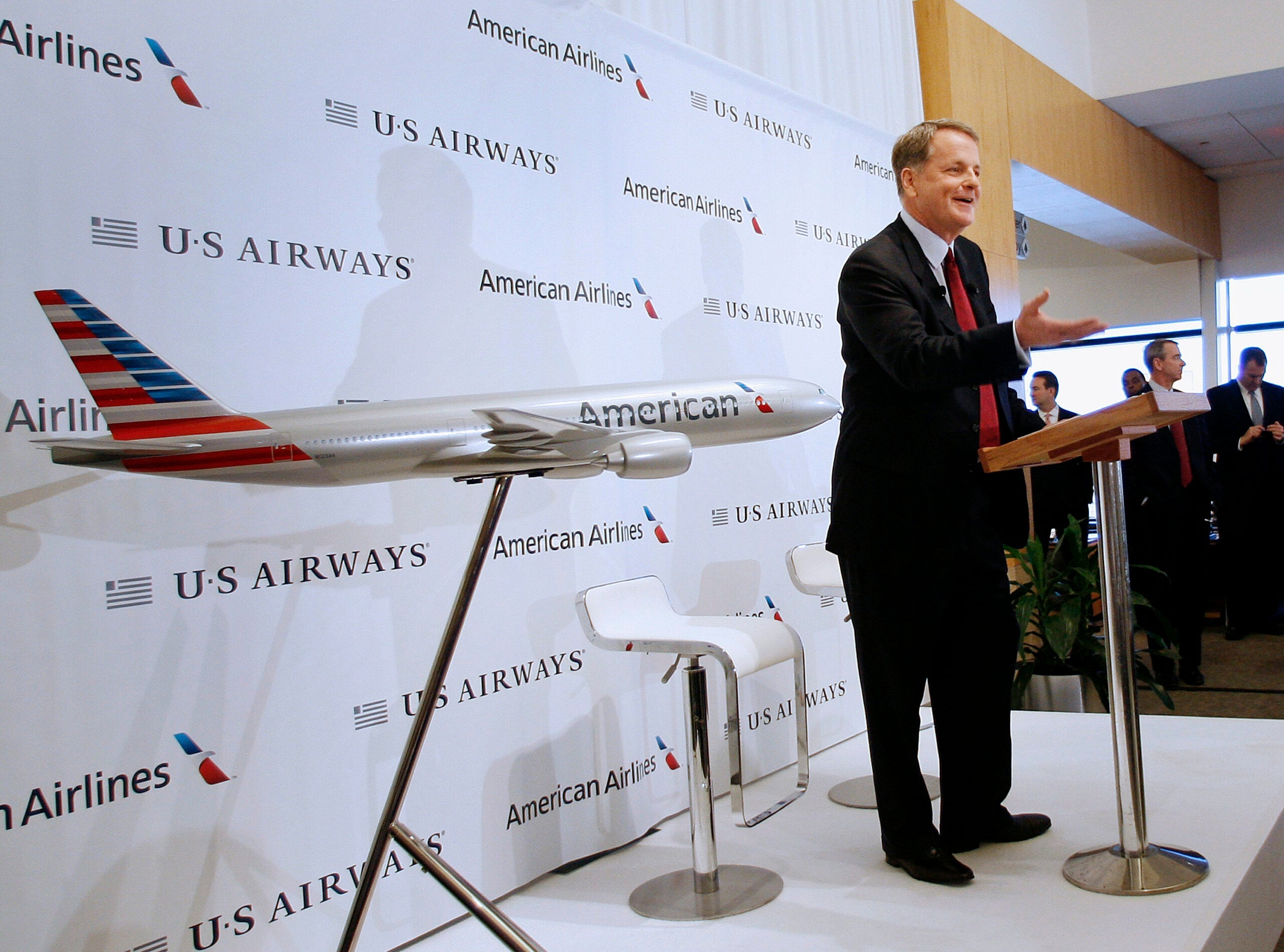
For Parker, he is exiting the industry literally yards from where he started his career in the 1980s. He was part of a crew of young financial analysts, fresh out of school and ready to conquer the world.
"I joined American Airlines in 1986 – at a time when we all knew we were working at the best airline in the world," Parker said to TPG during the interview.
Over the years, Parker would hold other airline jobs, eventually becoming CEO of America West days before the Sept. 11, 2001, terrorist attacks.

But his legacy might ultimately be as the catalyst who reshaped – and brought stability – to the post-deregulation airline industry.
Another CEO retires: From battling 'frenemy' Delta to Oneworld to Virgin America, outgoing Alaska Air CEO leaves his mark
Parker was the CEO who kicked off the industry's modern cycle of merger mania back in 2005, when his America West Airlines acquired then-bankrupt US Airways – ultimately taking on the latter's name.
Other merger dominoes began to fall shortly after. First Delta and Northwest merged, then United and Continental and – finally – Southwest acquired AirTran.
But it would be Parker who – seven years after he started the modern merger rush – would end it with the most ambitious deal yet. His smaller US Airways would take over a bigger-but-bankrupt American Airlines, adopting the American name and Texas headquarters – though what emerged was still very much a US Airways-led company.
Now, that's where Parker will exit the industry – on that same plot of land in Texas. Except this time, he's in a modern glass complex and at the helm of the world's largest airline. Yes, American still has issues, but Parker says he is "leaving it, feeling in a really good place."
TPG exclusive: American CEO Doug Parker talks about alliances, travel rebound
Pushed further, when asked if there's one thing as CEO that he never got to accomplish, Parker just replied: "I feel pretty good."
But not so good that he's yet mapping out where he plans to use his free flight benefits.
I've still got 4 1/2 months as CEO here and I haven't thought about where next," Parker said. But his guiding principle will be "someplace I haven't been before."
Looking ahead, the transition to Isom will not be a radical shift for American. He's been president since 2016 and has been a top leader, with Parker, since the US Airways days in 2007.
A CEO's prerogative: American's Doug Parker on how he feels about flying his own airline

Isom notes that "I've had a chance to learn from Doug" and says that he's "committed to running a company with a sense of purpose."
"Doug's been a great teacher, mentor and friend," he added.
Don't expect a major shift in strategy, but Isom will bring his own style. "I am probably much more of a morning person than Doug," he jokes.
Job No. 1 for Isom will be to ensure that the airline is ready for the wave of travelers he expects to soon be flying.
"We worked so hard to make it through the pandemic and do more than survive," he said. "We have positioned American to thrive once demand returns."
TPG flies both carriers: We put AA and JetBlue to the test: Does the new alliance deliver on promised elite perks?
That includes modernizing the fleet, making the jets uniform, optimizing the network and leveraging the partnerships with Alaska Airlines and JetBlue.
"In 2022, it is really about running an on-time airline," he said.
We wouldn't be TPG without ending the call talking about the value of the AAdvantage frequent flyer program.
Isom didn't go into details about it beyond saying "it's incredibly important" and pointing to how American used to program during the pandemic to help it refinance its debt.
Probably not the message die-hard flyers want to hear, but the silver lining is that at least he sees value in the program.
TPG featured card
at American Express's secure site
Terms & restrictions apply. See rates & fees.
| 4X | Earn 4X Membership Rewards® points per dollar spent on purchases at restaurants worldwide, on up to $50,000 in purchases per calendar year, then 1X points for the rest of the year. |
| 4X | Earn 4X Membership Rewards® points per dollar spent at US supermarkets, on up to $25,000 in purchases per calendar year, then 1X points for the rest of the year. |
| 5X | Earn 5X Membership Rewards® points on prepaid hotel stays booked through AmexTravel.com or the Amex Travel App™. |
| 3X | Earn 3X Membership Rewards® points on flights booked through AmexTravel.com, the Amex Travel App™, or purchased directly from airlines. |
| 2X | Earn 2X Membership Rewards® points on prepaid car rentals booked through AmexTravel.com or the Amex Travel App™ and cruises booked and paid through AmexTravel.com. |
| 1X | Earn 1X Membership Rewards® point per dollar spent on all other eligible purchases. |
Pros
- Valuable dining and food-related credits
- Flexible rewards with airline and hotel transfer partners
- Multiple travel and purchase protections
- No foreign transaction fees
- Access to Amex Offers for additional savings (enrollment required)
Cons
- Not as useful for those living outside the U.S.
- Some may have trouble using Uber and other dining credits
- You may be eligible for as high as 100,000 Membership Rewards® Points after you spend $8,000 in eligible purchases on your new Card in your first 6 months of Card Membership. Welcome offers vary and you may not be eligible for an offer. Apply to know if you’re approved and find out your exact welcome offer amount – all with no credit score impact. If you’re approved and choose to accept the Card, your score may be impacted.
- Earn 4X Membership Rewards® points per dollar spent on purchases at restaurants worldwide, on up to $50,000 in purchases per calendar year, then 1X points for the rest of the year.
- Earn 4X Membership Rewards® points per dollar spent at US supermarkets, on up to $25,000 in purchases per calendar year, then 1X points for the rest of the year.
- Earn 5X Membership Rewards® points on prepaid hotel stays booked through AmexTravel.com or the Amex Travel App™.
- Earn 3X Membership Rewards® points on flights booked through AmexTravel.com, the Amex Travel App™, or purchased directly from airlines.
- Earn 2X Membership Rewards® points on prepaid car rentals booked through AmexTravel.com or the Amex Travel App™ and cruises booked and paid through AmexTravel.com.
- Earn 1X Membership Rewards® point per dollar spent on all other eligible purchases.
- Pay It® lets you tap in the American Express® App to quickly pay for small purchase amounts throughout the month and still earn rewards the way you usually do. Plan It® gives you the option to split up big purchases into equal monthly payments with a fixed fee. You’ll know upfront exactly how much you’ll pay.
- $120 Dining Credit: Earn up to a total of $10 in statement credits monthly when you pay with the Gold Card at Grubhub (including Seamless), Buffalo Wild Wings, Five Guys, The Cheesecake Factory, and Wonder. This can be an annual savings of up to $120. Enrollment required.
- $100 Resy Credit: Get up to $100 in statement credits each calendar year at over 10,000 qualifying U.S. Resy restaurants after you pay for eligible purchases with the American Express® Gold Card. That’s up to $50 in statement credits semi-annually. Enrollment required.
- $84 Dunkin' Credit: Earn up to $7 in monthly statement credits after you pay with the American Express® Gold Card at U.S. Dunkin’ locations. Enrollment required.
- $120 Uber Cash on Gold: Enjoy up to $120 in Uber Cash annually with your Gold Card. Just add your Card to your Uber account and you'll get $10 in Uber Cash each month to use on orders and rides in the U.S. when you select an Amex Card for your transaction.
- Enjoy complimentary Hertz Five Star® Status benefits like skipping the counter at select locations, adding an additional driver at no additional cost*, and vehicle upgrades**. Benefit enrollment and Hertz Gold+ registration are required. *Additional drivers must meet standard rental qualifications and must be a spouse or domestic partner to qualify as complimentary. Other additional drivers subject to fees. **Benefits are subject to availability and vary by location. Additional Hertz program Terms and Conditions including age restrictions apply.
- Book two nights or more with The Hotel Collection through AmexTravel.com or the Amex Travel App™ and receive a $100* credit towards eligible charges at over 1,400 upscale hotels worldwide. *Eligible charges vary by property.
- Book your travel through the Amex Travel App™ with added peace of mind – backed by American Express® service and support. Only for American Express® Card Members.
- Whenever you need us, we're here. Our Member Services team will ensure you are taken care of. From lost Card replacement to statement questions, we are available to help 24/7.
- No Foreign Transaction Fees.
- Annual Fee is $325.
- Terms Apply.