
Tuesday is the 10th anniversary of the "Miracle on The Hudson" flight. There is no better time to go pay tribute to the skill and bravery of Captain Chesley Sullenberger and First Officer Jeffrey Skiles by visiting the Carolinas Aviation Museum.
What To Expect
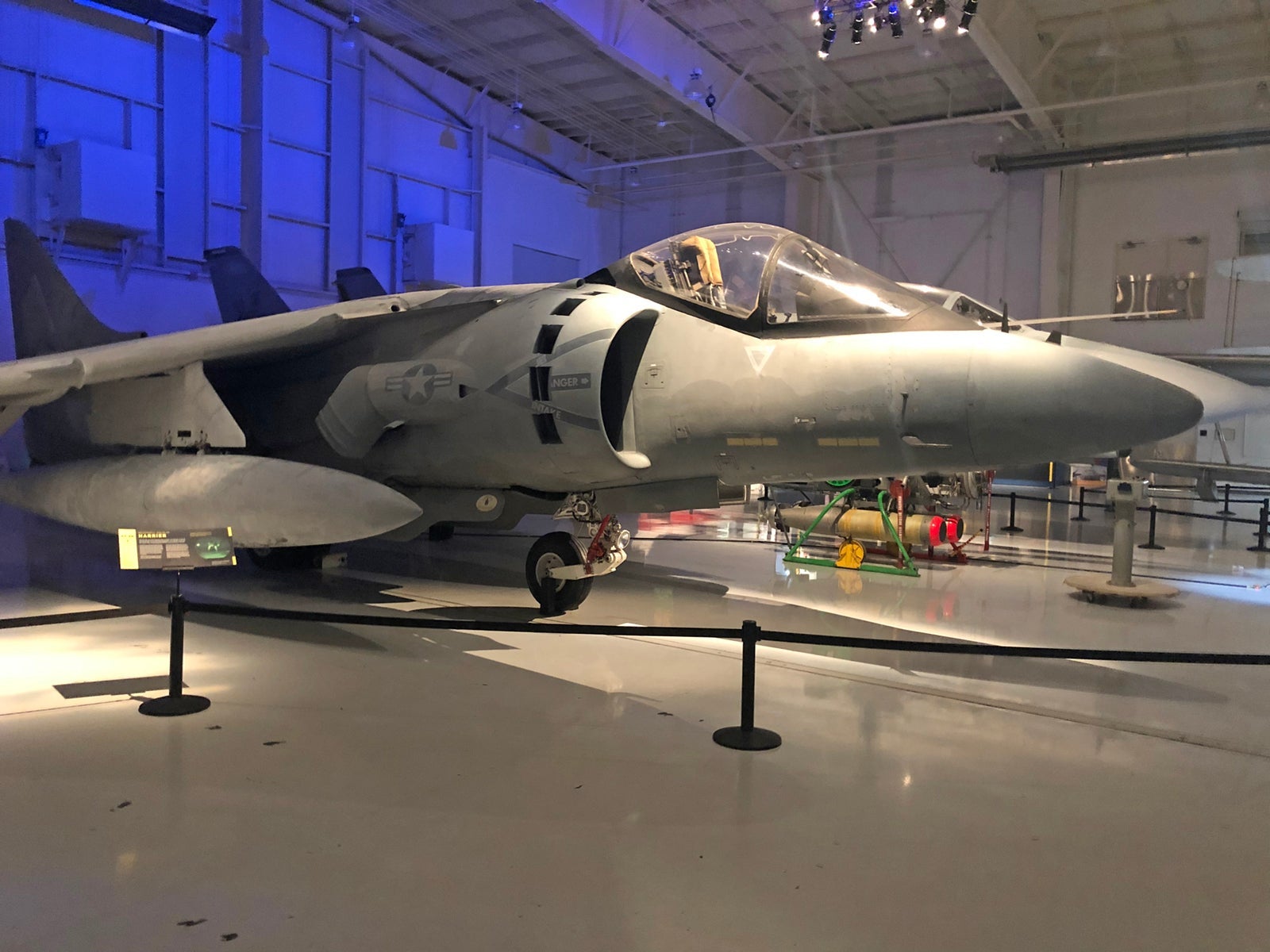
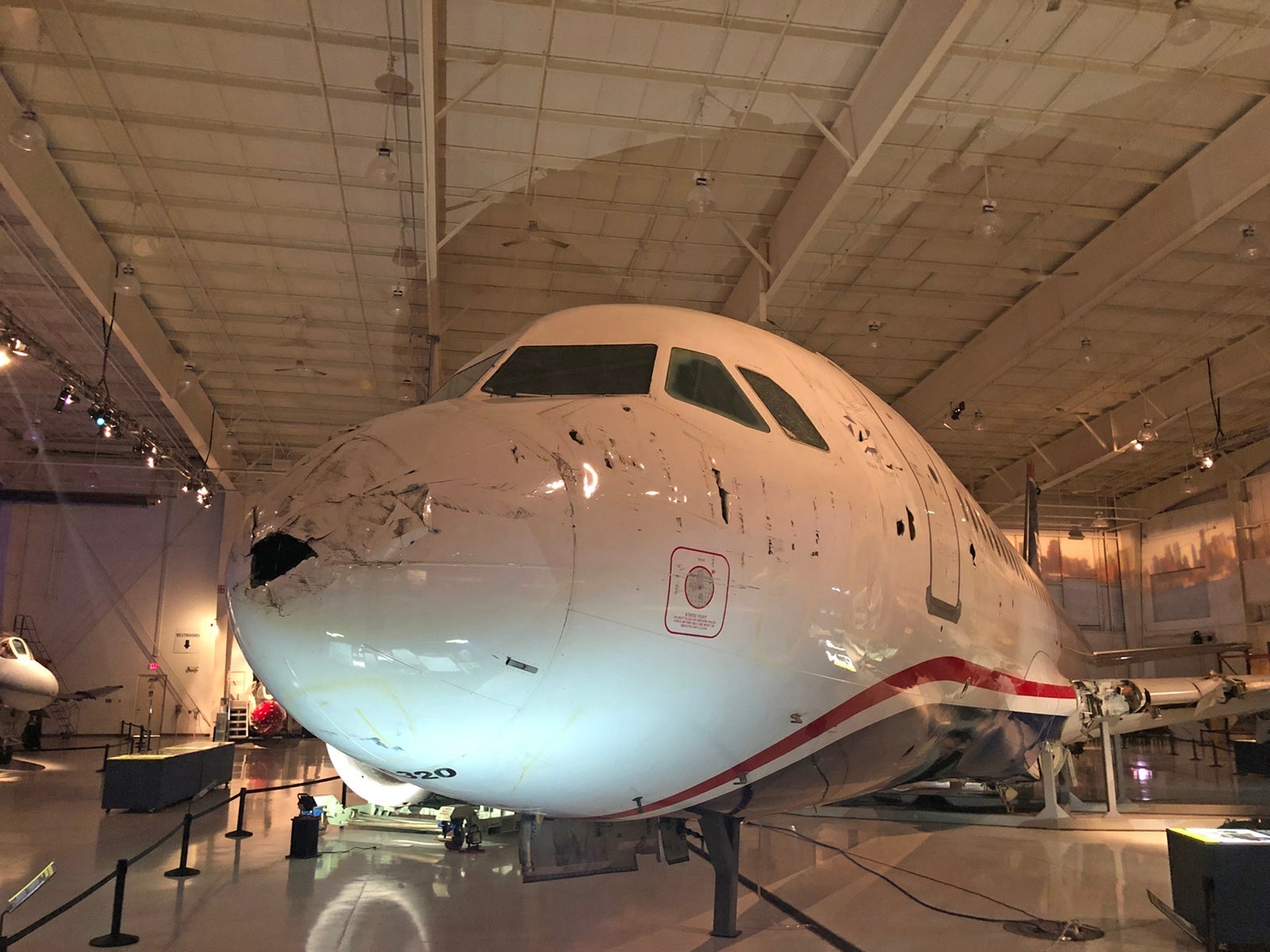
The museum is on the far east side of the Charlotte Douglas International Airport (CLT.) Housed in a large hangar next to the North Carolina Air National Guard and adjacent to runways 18L/36R and 5/23, the museum hosts a range of historic commercial aircraft like a Piedmont Airlines DC-3 and an Eastern Airlines DC-7B, plus famous military birds like the Grumman F-14 Tomcat and Boeing Sea Knight helicopter — plus of course the very Airbus A320 that Sullenberger and Skiles successfully guided to a no-engines ditching in a freezing river, without a single life lost.
The museum also features an exhibit dedicated to the now-defunct Piedmont Airlines. Many American Airlines and (former) US Airways flyers will instantly recognize Piedmont, which used to fly as a regional operator for US Airways Express, now American Eagle. The regional subsidiary’s name posthumously pays tribute to the original Piedmont Airlines. AvGeeks and history buffs alike are treated to various memorabilia and displays commemorating the airline’s 40+ year history.
US Airways Flight 1549
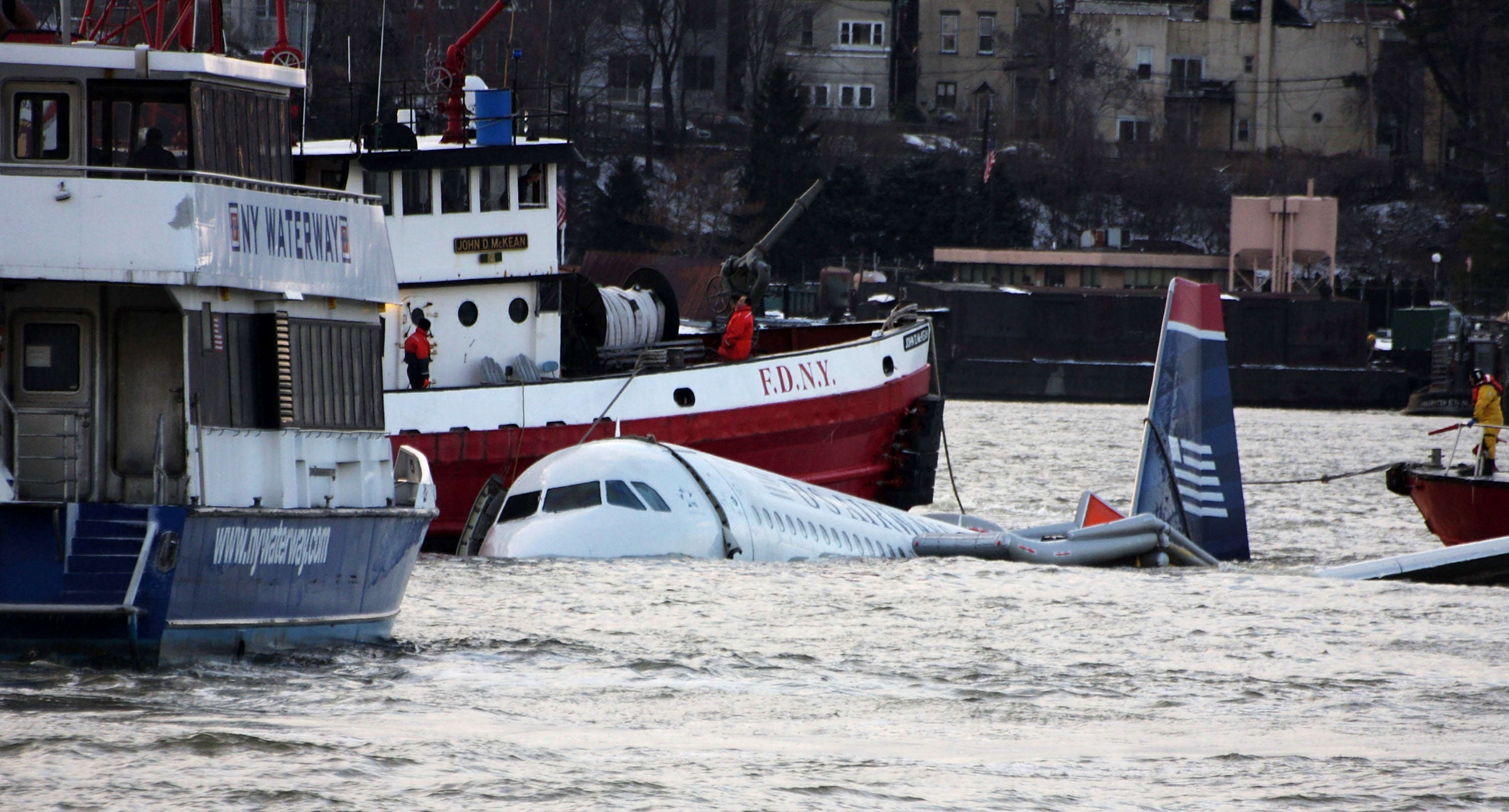
On a blistering cold New York winter day, Captain Sullenberger, First Officer Skiles, 150 passengers, and three cabin crew began their ascent out of LaGuardia Airport bound for Charlotte, on a routine flight. The Airbus A320 quickly ran into trouble when it struck a flock of geese immediately after takeoff. Almost instantly, the aircraft lost power in both engines, at an altitude of just 3,060 feet.
The crew made an attempt to turn back toward LaGuardia. With all departures on hold, Captain Sullenberger determined the aircraft was unable to make it back to LGA — nor could it reach any of the other nearby airports, Teterboro and Newark. At the controls, Sullenberger glided the aircraft to the southwest as it slowly descended towards the Hudson. Less than four minutes into flight, Sullenberger told his first officer “We’re gonna be in the Hudson.” 95 seconds later, the plane, with no engine power, landed in the Hudson the same way it would have landed at an airport, nose up. Sullenberger had managed not to lose lift and stall, and the fuselage stayed intact.
West of Manhattan’s 50th Street, all 155 passengers and crew began leaving the aircraft through the overwing window exits, onto inflatable rafts — some even jumped into the 41° F Hudson River. It only took minutes before ferries and other boats began arriving on the scene to rescue passengers. With the help of ferryboat captains, firefighters, police officers, and divers, it only 24 minutes after landing for all passengers and crew to be brought to safety. Everybody walked (or swam) out, with only minimal injuries to some. The skill and composure of the pilots and crew had turned a potential tragedy into a feat that has entered rightly the annals of aviation.
The Exhibit
The exhibit transports museumgoers back to that cold January day 10 years ago. The plane itself, which is almost completely intact, tells a story, from being fished with cranes out of the Hudson until being transported to the museum, more than 500 miles south of the accident site.
Attendees can get up close and personal with the A320, viewing the damage sustained to the nose from the initial bird strikes as well as the engine damage from both the strikes and the water landing impact. One can also see scars, bumps, and bruises all over the aircraft, such as the broken passenger windows caused by rescue ferries hitting the fuselage.
Apparently technical details like the auxiliary power unit (APU), exhibited separately from the rest of the aircraft, help tell a powerful story. The APU, a small engine in the tail of the A320 that provides backup electrical power when the plane is on the ground, helped aid in the outcome of Flight 1549. Captain Sullenberger started the APU immediately, and out of order on the safety checklist, to maintain vital flight controls with the engines dead.
Many passenger and crew belongings from the flight remain in remarkable condition. Luggage, wine, and uniforms are all displayed prominently. There is even a showcase featuring a global testament to Captain Sullenberger with newspaper articles, a commemorative Wheaties box, and handwritten notes from survivors and admirers.
To say this exhibit is profound would be an absolute understatement. You'll get a sense of what the passengers and the crew experienced on this fateful flight — and you don't need to be an aviation enthusiast to truly understand just how monumental a feat the crew of US1549 pulled off.
The Carolinas Aviation Museum is open seven days a week:
Monday-Friday: 10:00 am - 4:00 pm
Saturday: 10:00 am - 5:00 pm
Sunday: 1:00 pm - 5:00 pm
Admission starts at $12.00 for adults and $8.00 for children four and up.