UPDATE: Using new ranking system, CDC removes every country from 'do not travel' list


The Centers for Disease Control and Prevention removed every country in the world from its "do not travel" recommendation as it applied updated parameters Monday to its multi-tiered Travel Health Notices system.
The change, which the CDC said last week would take effect Monday, was intended to significantly reduce the number of countries listed under the highest level of its alert system. Before Monday, the agency listed countries at "Level 4" with a recommendation to avoid travel when they hit certain COVID-19 metrics.
With virtually half the world, including most of Europe, listed at Level 4, though, the CDC has now shifted to reserving that highest alert level for only the most severe situations or "special circumstances."
No countries met that criteria Monday, but Level 3 ("high" levels of COVID-19) had far more countries listed than any other level, including all of North America and nearly every country in Europe.

This marks just the latest change in how the CDC communicates concerns about the virus when it comes to international travel. These changes are not likely to have any substantive impact on your existing travel plans, but understanding the CDC's system could help you get a better sense of the COVID-19 situation in another country as you prepare to travel.
How the system works
The CDC's travel health alert system has evolved over the course of the pandemic, particularly as international travel became more of an option.
While the CDC has typically used a three-level alert system for health advisories dating back to before the pandemic, the agency went to four levels in November 2020 as a way to align more closely with the alert systems used by public health organizations.
Related: The difference between CDC and State Department travel warnings
The agency monitors numerous factors in determining how to rank a country on its alert system, but the No. 1 factor is the number of cases per 100,000 people in the last 28 days. Before Monday, countries' metrics could land them on one of four Travel Health Notice levels, including Level 1: Low; Level 2: Moderate; Level 3: High; and Level 4: Very High.

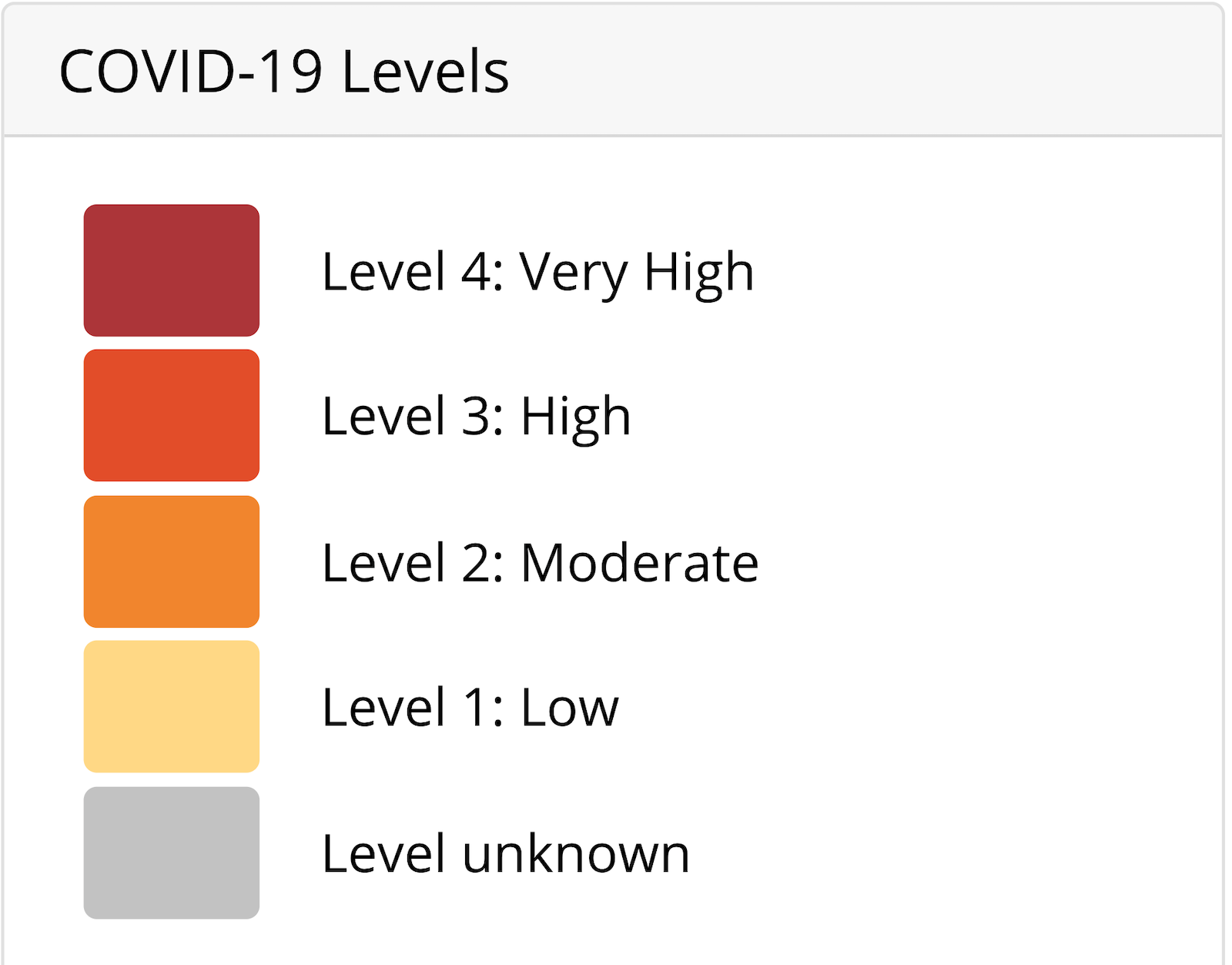
Relying on data from the World Health Organization, the CDC updates its advisories each Monday.
Starting this week, though, the agency is, by and large, funneling countries into Levels 1, 2 or 3, with Level 4 now denoted "Do Not Travel/Special Circumstances."
In announcing the pending changes last week, the CDC said it would reserve those circumstances that could include "rapidly escalating case trajectory or extremely high case counts, emergence of a new variant of concern, or healthcare infrastructure collapse."
Why this change? The CDC says the goal is "to help the public understand when the highest level of concern is most urgent."
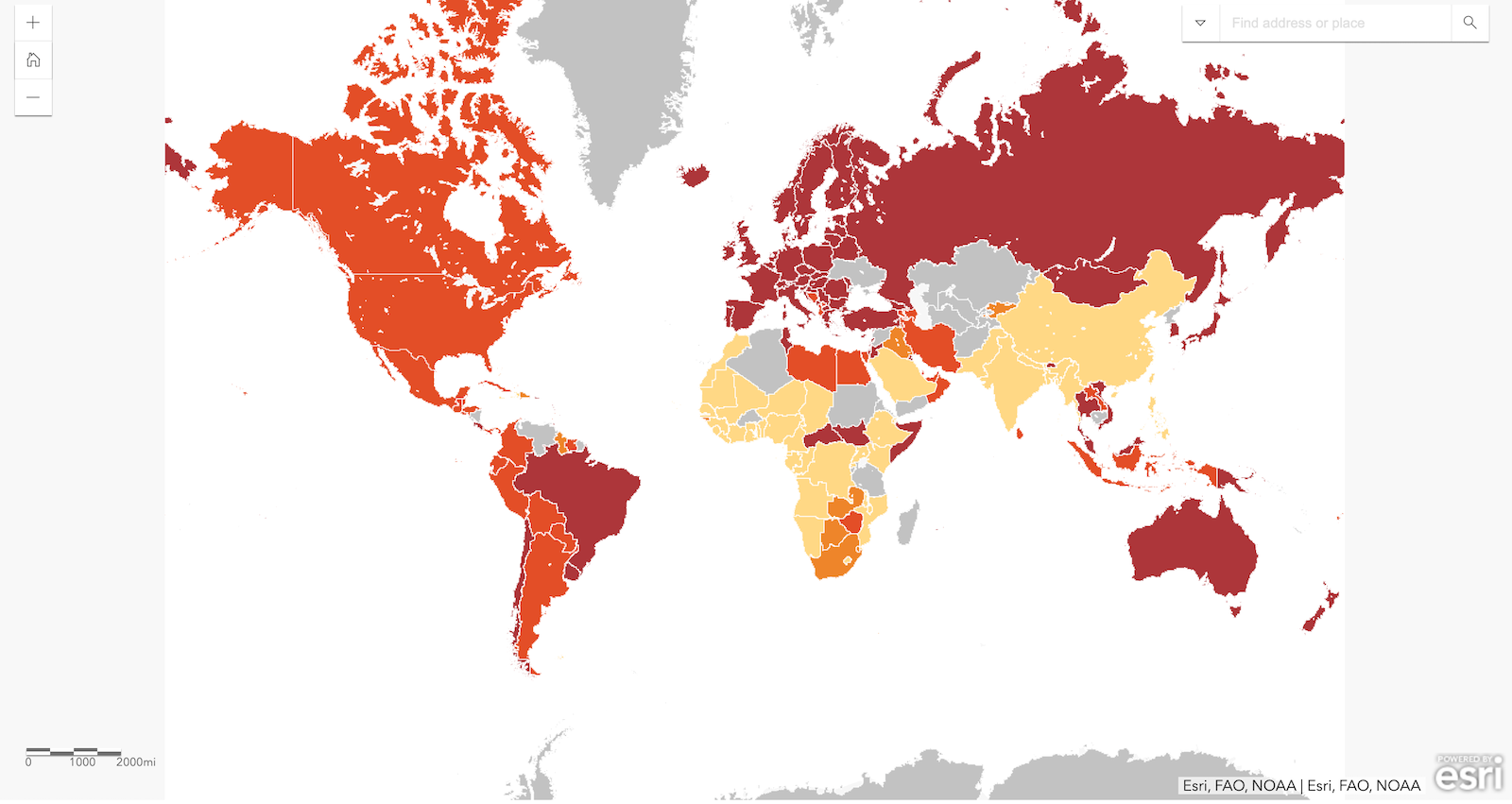
To give you a sense of how the new methodology changed the warnings, take a look at what the CDC's alert map looked like prior to Monday. Countries in red fell under the previous Level 4 which, as you can see, meant the agency was urging people not to travel to virtually anywhere in Europe, among other places like Australia and Iceland. This, despite international travel continuing to open up further. Again, the map below is now outdated.
Related: CDC completely drops its warning for cruises
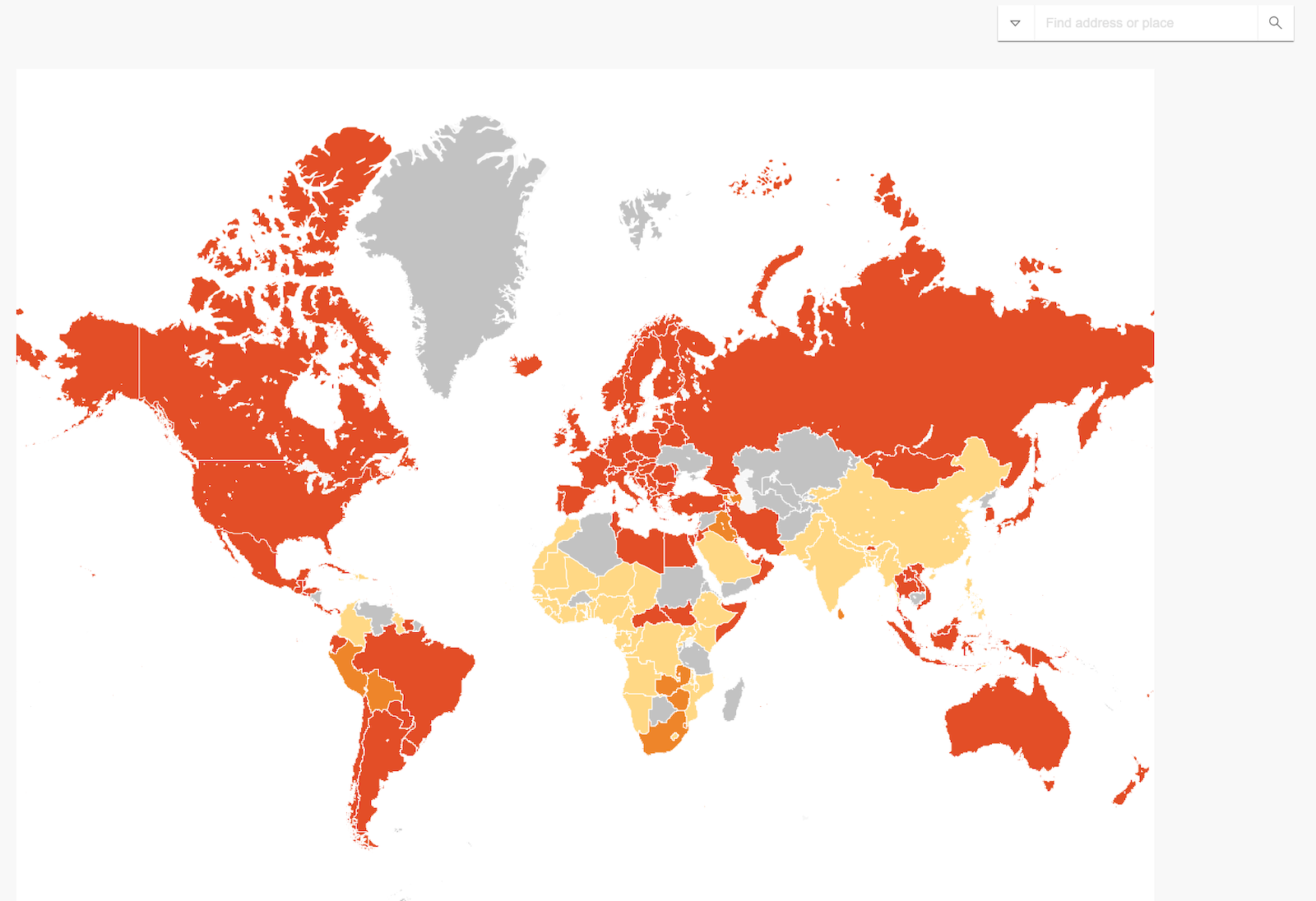
Now, take a look (below) at the CDC's new map as of Monday. You can see that while much of the world (including the U.S.) is highlighted in orange, indicating "high" levels of COVID-19, no countries are in red under the new system.
Related: A country-by-country guide to coronavirus reopenings
Bottom line
These changes come just as the new White House COVID-19 response coordinator has said that when it comes to evaluating the COVID-19 situation as a whole, above cases, hospitalizations will be the most important metric to track.
With the CDC's newest changes, you know that if, in the future, you see a country listed at Level 4 on its Travel Health Notices, that country is truly dealing with a precarious COVID-19 situation.
The CDC's new alerts come out each Monday, so TPG will continue to monitor how countries fluctuate each week.
TPG featured card

at Capital One's secure site
Terms & restrictions apply. See rates & fees.
| 5X miles | Earn 5X miles on hotels, vacation rentals and rental cars booked through Capital One Travel |
| 2X miles | Earn unlimited 2X miles on every purchase, every day |
Pros
- Stellar welcome offer of 75,000 miles after spending $4,000 on purchases in the first three months from account opening. Plus, a $250 Capital One Travel credit to use in your first cardholder year upon account opening.
- You'll earn 2 miles per dollar on every purchase, which means you won't have to worry about memorizing bonus categories
- Rewards are versatile and can be redeemed for a statement credit or transferred to Capital One’s transfer partners
Cons
- Highest bonus-earning categories only on travel booked via Capital One Travel
- LIMITED-TIME OFFER: Enjoy $250 to use on Capital One Travel in your first cardholder year, plus earn 75,000 bonus miles once you spend $4,000 on purchases within the first 3 months from account opening - that’s equal to $1,000 in travel
- Earn unlimited 2X miles on every purchase, every day
- Earn 5X miles on hotels, vacation rentals and rental cars booked through Capital One Travel
- Miles won't expire for the life of the account and there's no limit to how many you can earn
- Receive up to a $120 credit for Global Entry or TSA PreCheck®
- Use your miles to get reimbursed for any travel purchase—or redeem by booking a trip through Capital One Travel
- Enjoy a $50 experience credit and other premium benefits with every hotel and vacation rental booked from the Lifestyle Collection
- Transfer your miles to your choice of 15+ travel loyalty programs
- Top rated mobile app