Breeze CEO David Neeleman doubles down on Breeze's success, calls sustainable aviation fuel a 'waste of money'

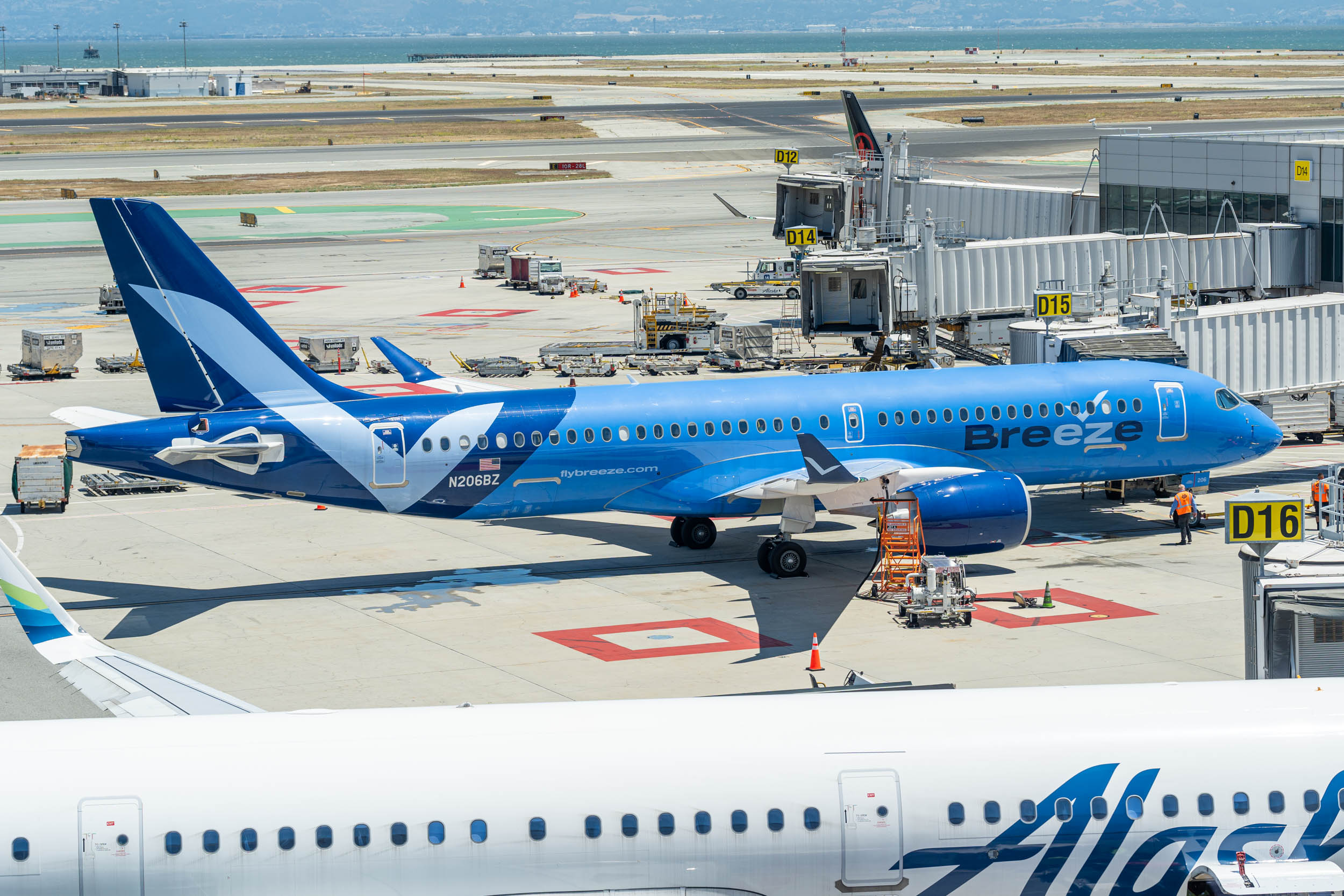
Despite the naysayers, Breeze Airways founder and CEO David Neeleman doubled down on the ultra-low-cost carrier's long-term viability during a Q&A at the Skift Global Conference in New York City on Wednesday.
Breeze, founded in 2021, relies on a business model similar to that of Allegiant and Avelo — it operates routes between underserved destinations and popular leisure ones. Since its founding, Breeze has added a slate of new routes ranging from major leisure cities like Los Angeles and Orlando and smaller ones like Springfield, Illinois, and Charleston, West Virginia.
However, the ultra-low-cost carrier has faced a rocky start. Constrained by the pilot shortage, Breeze not only increased pay beyond what it had planned — a win for pilots — but also looked to recruit pilots from Australia to fill its flight decks. In June 2022, Breeze initially had to postpone the launch of a few new routes, including one to LA, due to staffing shortages and supply chain issues.
"I wasn't going to start an airline for the sake of starting it," he said. "If you just do that, then obviously you're not successful and most airlines are not successful."
Neeleman, a serial airline entrepreneur who founded JetBlue and Brazil-based Azul, said he believed Breeze was filling a gap in the U.S. market given the limitations of regional jets and the fact that airlines have gradually opted to operate larger planes for most flights.
"I saw this trend where the airplanes were getting bigger and bigger and bigger," he said at the Skift conference. "I just saw that there was a middle space."
Breeze's fleet is primarily comprised of Airbus A220s, narrow-body jets that can seat up to 160 passengers. Neeleman said he thought they had unique characteristics, citing their long fuel range and ability to accommodate premium seating (the airline also uses smaller Embraer regional jets).
As a result, Neeleman said there is an "exponential amount of markets" Breeze can serve, including its most recent addition of Springfield, Illinois — the carrier's first airport in the state.
"We really want to fly where people are, we want to be able to make it convenient for customers," he said.

Breeze is also slated to expand internationally, most likely to destinations in Mexico or the Caribbean. Neeleman reiterated at the panel that he believed Breeze's international expansion would be successful. The carrier is waiting for the U.S. Department of Transportation to grant it the authority to operate international flights, and the Breeze CEO said he expected to receive the approval by the end of the year.
Neeleman also noted that he felt Breeze has been able to appeal to customers so far because it doesn't charge cancellation fees. It also has a seating policy that accommodates families, along with premium seating, which he said many customers are willing to buy.
Even as Breeze eyes an international expansion in 2023, Neeleman cautioned that airlines have over-scheduled flights for the fall with weak travel demand, driving down airfare as rising jet fuel costs squeeze airlines' profit margins.
Large U.S. airlines reported record profits during the summer, driven by a surge in demand for international travel. Meanwhile, ultra-low-cost carriers limped through the second quarter earnings seasons, with many reporting net losses in response to weakened demand for domestic travel.
"There's a lot of people traveling, it's just that you have to build that extra 20% of fares," he said. "Fares have come down as fuel prices have gone up."
However, the serial airline entrepreneur said he still thinks there's a sizable market of people who want to travel domestically, citing Allegiant's high second-quarter profit margins.
While Breeze is still in its early stages, it's not immune to some of the same controversies that plague bigger airlines, including the use of "junk fees" — the extra fees tacked onto hotel bookings, credit cards, airfare and events that lawmakers in Congress are seeking to outlaw.
In the case of Breeze, the carrier charges an additional "technology development" fee when customers book flights. When asked why Breeze charges an extra fee, Neeleman didn't have a response and instead emphasized that the carrier does not charge any change or cancellation fees.
"I don't know," he said. "It's something our guys decided to do. It is a little annoying but we do have a technology expense."
The Skift panel also touched on the airline industry's quick embrace of sustainable aviation fuel, which Neeleman — perhaps controversially — said he believes is a "waste of money."
"I bought a Tesla. It was $60,000. I put electricity in it," he said. "It's cheaper for me to drive that car. It doesn't work on an airplane but it works in a car."
Neeleman instead suggested that the industry should instead invest its money into where it makes "economic sense."
"This is just greenwashing," Neeleman said. "It really is. It's nonsense and I think somebody needs to say it is for what it is."
TPG featured card
at American Express's secure site
Terms & restrictions apply. See rates & fees.
| 4X | Earn 4X Membership Rewards® points per dollar spent on purchases at restaurants worldwide, on up to $50,000 in purchases per calendar year, then 1X points for the rest of the year. |
| 4X | Earn 4X Membership Rewards® points per dollar spent at US supermarkets, on up to $25,000 in purchases per calendar year, then 1X points for the rest of the year. |
| 5X | Earn 5X Membership Rewards® points on prepaid hotel stays booked through AmexTravel.com or the Amex Travel App™. |
| 3X | Earn 3X Membership Rewards® points on flights booked through AmexTravel.com, the Amex Travel App™, or purchased directly from airlines. |
| 2X | Earn 2X Membership Rewards® points on prepaid car rentals booked through AmexTravel.com or the Amex Travel App™ and cruises booked and paid through AmexTravel.com. |
| 1X | Earn 1X Membership Rewards® point per dollar spent on all other eligible purchases. |
Pros
- Valuable dining and food-related credits
- Flexible rewards with airline and hotel transfer partners
- Multiple travel and purchase protections
- No foreign transaction fees
- Access to Amex Offers for additional savings (enrollment required)
Cons
- Not as useful for those living outside the U.S.
- Some may have trouble using Uber and other dining credits
- You may be eligible for as high as 100,000 Membership Rewards® Points after you spend $8,000 in eligible purchases on your new Card in your first 6 months of Card Membership. Welcome offers vary and you may not be eligible for an offer. Apply to know if you’re approved and find out your exact welcome offer amount – all with no credit score impact. If you’re approved and choose to accept the Card, your score may be impacted.
- Earn 4X Membership Rewards® points per dollar spent on purchases at restaurants worldwide, on up to $50,000 in purchases per calendar year, then 1X points for the rest of the year.
- Earn 4X Membership Rewards® points per dollar spent at US supermarkets, on up to $25,000 in purchases per calendar year, then 1X points for the rest of the year.
- Earn 5X Membership Rewards® points on prepaid hotel stays booked through AmexTravel.com or the Amex Travel App™.
- Earn 3X Membership Rewards® points on flights booked through AmexTravel.com, the Amex Travel App™, or purchased directly from airlines.
- Earn 2X Membership Rewards® points on prepaid car rentals booked through AmexTravel.com or the Amex Travel App™ and cruises booked and paid through AmexTravel.com.
- Earn 1X Membership Rewards® point per dollar spent on all other eligible purchases.
- Pay It® lets you tap in the American Express® App to quickly pay for small purchase amounts throughout the month and still earn rewards the way you usually do. Plan It® gives you the option to split up big purchases into equal monthly payments with a fixed fee. You’ll know upfront exactly how much you’ll pay.
- $120 Dining Credit: Earn up to a total of $10 in statement credits monthly when you pay with the Gold Card at Grubhub (including Seamless), Buffalo Wild Wings, Five Guys, The Cheesecake Factory, and Wonder. This can be an annual savings of up to $120. Enrollment required.
- $100 Resy Credit: Get up to $100 in statement credits each calendar year at over 10,000 qualifying U.S. Resy restaurants after you pay for eligible purchases with the American Express® Gold Card. That’s up to $50 in statement credits semi-annually. Enrollment required.
- $84 Dunkin' Credit: Earn up to $7 in monthly statement credits after you pay with the American Express® Gold Card at U.S. Dunkin’ locations. Enrollment required.
- $120 Uber Cash on Gold: Enjoy up to $120 in Uber Cash annually with your Gold Card. Just add your Card to your Uber account and you'll get $10 in Uber Cash each month to use on orders and rides in the U.S. when you select an Amex Card for your transaction.
- Enjoy complimentary Hertz Five Star® Status benefits like skipping the counter at select locations, adding an additional driver at no additional cost*, and vehicle upgrades**. Benefit enrollment and Hertz Gold+ registration are required. *Additional drivers must meet standard rental qualifications and must be a spouse or domestic partner to qualify as complimentary. Other additional drivers subject to fees. **Benefits are subject to availability and vary by location. Additional Hertz program Terms and Conditions including age restrictions apply.
- Book two nights or more with The Hotel Collection through AmexTravel.com and receive a $100* credit towards eligible charges at over 1,300 upscale hotels worldwide.§ *Eligible charges vary by property.
- Book your travel through the Amex Travel App™ with added peace of mind – backed by American Express® service and support. Only for American Express® Card Members.
- Whenever you need us, we're here. Our Member Services team will ensure you are taken care of. From lost Card replacement to statement questions, we are available to help 24/7.
- No Foreign Transaction Fees.
- Annual Fee is $325.
- Terms Apply.