Boeing Says the World Needs 87 New Airline Pilots Every Day

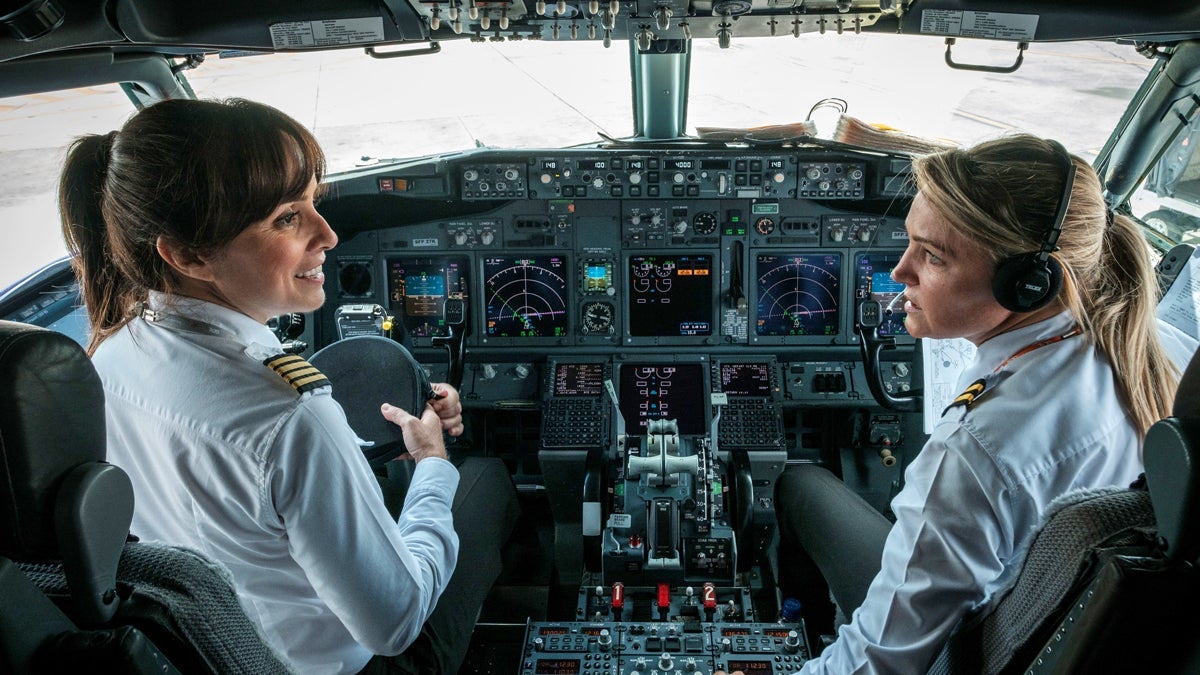
Despite the negative news about airlines that seems to surface on an almost daily basis, the industry continues to grow and thrive. In light of that, Boeing just released its 2017-2036 Pilot and Technician Outlook. It's an annual report from the manufacturer, and this most recent edition highlights the industry's urgent need for licensed aviation professionals.
Pilots
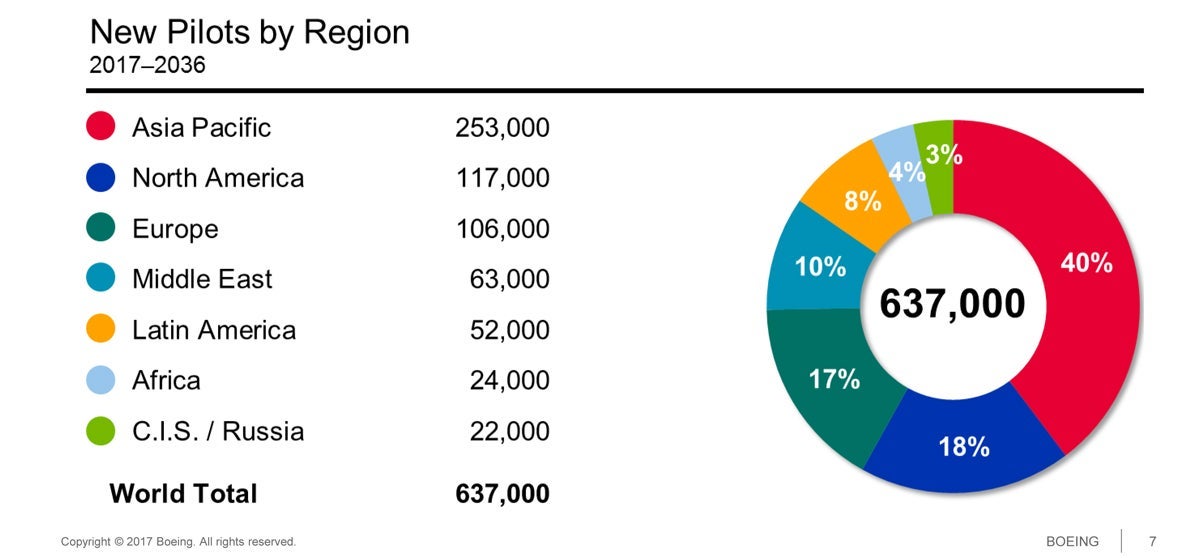
Boeing said the commercial aviation industry will need 637,000 new airline pilots worldwide between now and 2036. That boils down to just over 87 pilots a day, or almost four pilots every hour. The rapidly growing Asia-Pacific region accounts for 40% of the need, with 253,000 pilots needed. North America needs less than half of that, at 117,000, followed by 106,000 in Europe, 63,000 in the Middle East, 52,000 in Latin America, 24,000 in Africa and 22,000 in CIS (Commonwealth of Independent States)/Russia.
Why so many new pilots? There are two reasons. First, airlines are adding a bunch of new planes to support growing market demand in addition to replacing older, less efficient planes. Naturally, the more planes you have, the more pilots you need. Airline pilots also have a maximum working age of 65, so retirees have to be replaced.
Boeing says airlines will need to order 41,030 planes between now and 2036, valued at approximately $6.1 trillion. 25,530 of those new planes will be single-aisle planes, similar to the Boeing 737. As of July 18, Boeing has a backlog of 5,744 planes to build.
Aircraft Maintenance Technicians
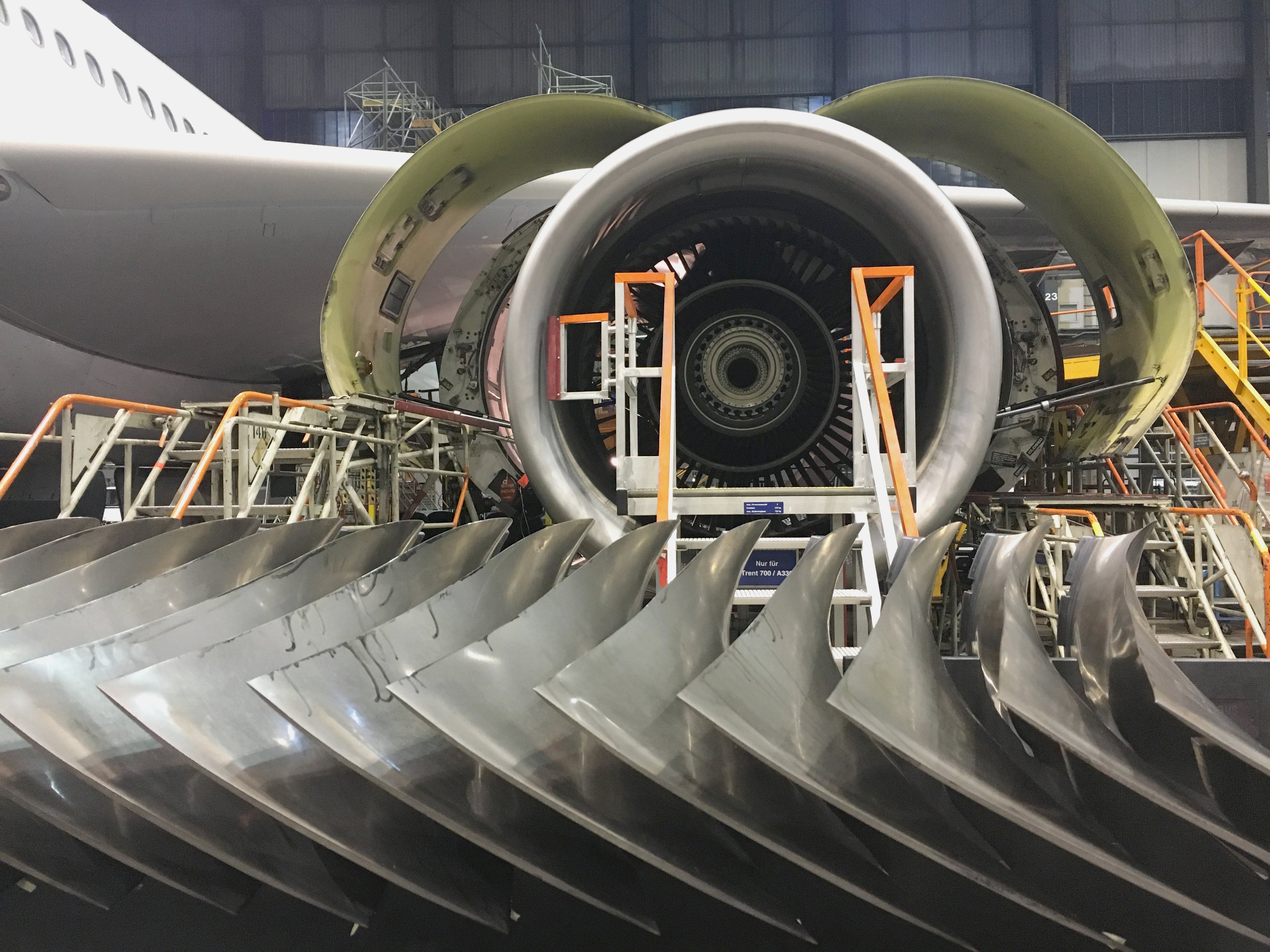
Aircraft maintenance technicians (AMTs) aren't only needed when something on a plane breaks; preventative maintenance is necessary as well. The required checks account for most of the time an aircraft will spend out of service throughout its life cycle. Depending on the age and type of plane, along with what needs to be checked, a plane that is functioning perfectly may be out of service anywhere from a few hours to a few weeks.
Planes can also spend extra time out of service when an airline decides to upgrade its interior fixtures, seats or in-flight entertainment systems. These upgrades are often done during the most intensive maintenance checks.

Although modern aircraft such as the 787 Dreamliner require less maintenance than other planes, Boeing estimates that 648,000 maintenance technicians will be needed in the 2017-2036 timeframe. Once again, the growth will be led by the Asia-Pacific region, which will need 256,000 AMTs in the next 20 years.
Cabin Crew
Hopefully by now, everyone understands that flight attendants aren't just there to serve you food and beverages. The largest need of all is for flight attendants, which Boeing estimates at 839,000 within the next 20 years. After all, modern planes can fly with two pilots, but the government requires a flight attendant for every 50 passengers the plane can hold. For example, Southwest Airlines has to staff four flight attendants on its 737-800, which holds 175 passengers.
Flight attendants don't have a maximum age limit here in the US, and some have served beyond age 80. But in other countries, airlines are allowed to discriminate on the grounds of age, marital status and the physical shape of flight attendants. Until those policies are gone, the flight attendant position will remain more of a temporary job rather than a career in some parts of the world, resulting in a high turnover rate and the continual need for more professionals to fill these positions.
TPG featured card
at American Express's secure site
Terms & restrictions apply. See rates & fees.
| 4X | Earn 4X Membership Rewards® points per dollar spent on purchases at restaurants worldwide, on up to $50,000 in purchases per calendar year, then 1X points for the rest of the year. |
| 4X | Earn 4X Membership Rewards® points per dollar spent at US supermarkets, on up to $25,000 in purchases per calendar year, then 1X points for the rest of the year. |
| 5X | Earn 5X Membership Rewards® points on prepaid hotel stays booked through AmexTravel.com or the Amex Travel App™. |
| 3X | Earn 3X Membership Rewards® points on flights booked through AmexTravel.com, the Amex Travel App™, or purchased directly from airlines. |
| 2X | Earn 2X Membership Rewards® points on prepaid car rentals booked through AmexTravel.com or the Amex Travel App™ and cruises booked and paid through AmexTravel.com. |
| 1X | Earn 1X Membership Rewards® point per dollar spent on all other eligible purchases. |
Pros
- Valuable dining and food-related credits
- Flexible rewards with airline and hotel transfer partners
- Multiple travel and purchase protections
- No foreign transaction fees
- Access to Amex Offers for additional savings (enrollment required)
Cons
- Not as useful for those living outside the U.S.
- Some may have trouble using Uber and other dining credits
- You may be eligible for as high as 100,000 Membership Rewards® Points after you spend $8,000 in eligible purchases on your new Card in your first 6 months of Card Membership. Welcome offers vary and you may not be eligible for an offer. Apply to know if you’re approved and find out your exact welcome offer amount – all with no credit score impact. If you’re approved and choose to accept the Card, your score may be impacted.
- Earn 4X Membership Rewards® points per dollar spent on purchases at restaurants worldwide, on up to $50,000 in purchases per calendar year, then 1X points for the rest of the year.
- Earn 4X Membership Rewards® points per dollar spent at US supermarkets, on up to $25,000 in purchases per calendar year, then 1X points for the rest of the year.
- Earn 5X Membership Rewards® points on prepaid hotel stays booked through AmexTravel.com or the Amex Travel App™.
- Earn 3X Membership Rewards® points on flights booked through AmexTravel.com, the Amex Travel App™, or purchased directly from airlines.
- Earn 2X Membership Rewards® points on prepaid car rentals booked through AmexTravel.com or the Amex Travel App™ and cruises booked and paid through AmexTravel.com.
- Earn 1X Membership Rewards® point per dollar spent on all other eligible purchases.
- Pay It® lets you tap in the American Express® App to quickly pay for small purchase amounts throughout the month and still earn rewards the way you usually do. Plan It® gives you the option to split up big purchases into equal monthly payments with a fixed fee. You’ll know upfront exactly how much you’ll pay.
- $120 Dining Credit: Earn up to a total of $10 in statement credits monthly when you pay with the Gold Card at Grubhub (including Seamless), Buffalo Wild Wings, Five Guys, The Cheesecake Factory, and Wonder. This can be an annual savings of up to $120. Enrollment required.
- $100 Resy Credit: Get up to $100 in statement credits each calendar year at over 10,000 qualifying U.S. Resy restaurants after you pay for eligible purchases with the American Express® Gold Card. That’s up to $50 in statement credits semi-annually. Enrollment required.
- $84 Dunkin' Credit: Earn up to $7 in monthly statement credits after you pay with the American Express® Gold Card at U.S. Dunkin’ locations. Enrollment required.
- $120 Uber Cash on Gold: Enjoy up to $120 in Uber Cash annually with your Gold Card. Just add your Card to your Uber account and you'll get $10 in Uber Cash each month to use on orders and rides in the U.S. when you select an Amex Card for your transaction.
- Enjoy complimentary Hertz Five Star® Status benefits like skipping the counter at select locations, adding an additional driver at no additional cost*, and vehicle upgrades**. Benefit enrollment and Hertz Gold+ registration are required. *Additional drivers must meet standard rental qualifications and must be a spouse or domestic partner to qualify as complimentary. Other additional drivers subject to fees. **Benefits are subject to availability and vary by location. Additional Hertz program Terms and Conditions including age restrictions apply.
- Book two nights or more with The Hotel Collection through AmexTravel.com or the Amex Travel App™ and receive a $100* credit towards eligible charges at over 1,400 upscale hotels worldwide. *Eligible charges vary by property.
- Book your travel through the Amex Travel App™ with added peace of mind – backed by American Express® service and support. Only for American Express® Card Members.
- Whenever you need us, we're here. Our Member Services team will ensure you are taken care of. From lost Card replacement to statement questions, we are available to help 24/7.
- No Foreign Transaction Fees.
- Annual Fee is $325.
- Terms Apply.