The Points Guy believes that credit cards can transform lives, helping you leverage everyday spending for cash back or travel experiences that might otherwise be out of reach. That's why we publish a variety of editorial content and card comparisons: to help you find a great card to turn your goals into reality.
Our site may earn compensation when a customer clicks on a link, when an application is approved, or when an account is opened with our partners, and this may impact how or where these products appear. While we don't cover all available credit cards, our editorial team creates and maintains all of the analysis of these cards, and our content is not influenced nor subject to review by any credit card company, bank or partner prior to (or after) publication. Please view our advertising policy and product review methodology for more information.
Advertiser disclosure
The Points Guy believes that credit cards can transform lives, helping you leverage everyday spending for cash back or travel experiences that might otherwise be out of reach. That's why we publish a variety of editorial content and card comparisons: to help you find a great card to turn your goals into reality.
Our site may earn compensation when a customer clicks on a link, when an application is approved, or when an account is opened with our partners, and this may impact how or where these products appear. While we don't cover all available credit cards, our editorial team creates and maintains all of the analysis of these cards, and our content is not influenced nor subject to review by any credit card company, bank or partner prior to (or after) publication. Please view our advertising policy and product review methodology for more information.
News
Which airline is now best if you don't want to pay bag fees?
Sean Cudahy is an aviation reporter covering news about airlines, frequent flyer programs and consumer travel issues.
March 19, 2025 • 9 min read
The cards we feature here are from partners who compensate us when you are approved through our site, and this may impact how or where these products appear. We don't cover all available credit cards, but our analysis, reviews, and opinions are entirely from our editorial team. Terms apply to the offers listed on this page. Please view our advertising policy and product review methodology for more information.Editorial disclaimer: Opinions expressed here are the author's alone, not those of any bank, credit card issuer, airline or hotel chain, and have not been reviewed, approved or otherwise endorsed by any of these entities.
Comments
By commenting, you agree to our Community Guidelines to help create a positive space for conversation. The responses below are not provided or commissioned by the bank advertiser, our partners, or The Points Guy (“TPG”). They have not been reviewed, approved, or otherwise endorsed by any of these parties. All responses are submitted by individual contributors, and neither the bank advertiser, our partners, nor TPG are responsible for ensuring that all posts and/or questions are answered.
Related stories
Quick summary
Southwest Airlines will begin charging most customers for checked bags starting May 28, ending its longstanding two-free-bag policy.
Most major U.S. airlines now charge for checked bags, with fees typically starting around $35 for the first bag and increasing for additional bags.
Travelers with elite status or select airline credit cards may still receive at least one free checked bag, but policies and eligibility vary by carrier.
Budget airlines use dynamic pricing for baggage fees, and some offer fare bundles that include bags, though free checked bags are rare outside special promotions.
What to consider
Checked bag fees can be lower if paid in advance, but prices rise for additional bags or last-minute payments.
Basic economy fares may restrict carry-on bag access, especially on United and most budget airlines, so review fare details before booking.
Elite status or holding certain airline credit cards can provide free checked bags, but benefits depend on the airline and fare class.
What you'll miss from the article
A detailed comparison of baggage policies across major and budget U.S. airlines, including strategies to minimize or avoid bag fees.
Generated by AI with support from our editorial team.
Update: Some offers mentioned below are no longer available. View the current offers here.
Which U.S. airline has the most customer-friendly bag policies? For years, it’s been an easy question to answer: Southwest Airlines, with two free bags for every traveler on every fare.
Beyond Frontier Airlines’ not-yet-permanent push to woo disillusioned Southwest flyers with free bags, there’s no longer a clear-cut, go-to airline for flyers who prefer to err on the side of packing heavy.
SEAN CUDAHY/THE POINTS GUY
Put another way: Figuring out which airline is best if you don’t want to pay bag fees just got a lot more complicated.
Here are some things to consider as you make your decision.
Bag fees at the largest US airlines
Ever since U.S. airlines began instituting fees for travelers’ first checked bags in the late 2000s, there’s been remarkable uniformity among carriers. That’s especially true today, after a slew of airlines hiked fees over a matter of weeks last year.
MARIO TAMA/GETTY IMAGES
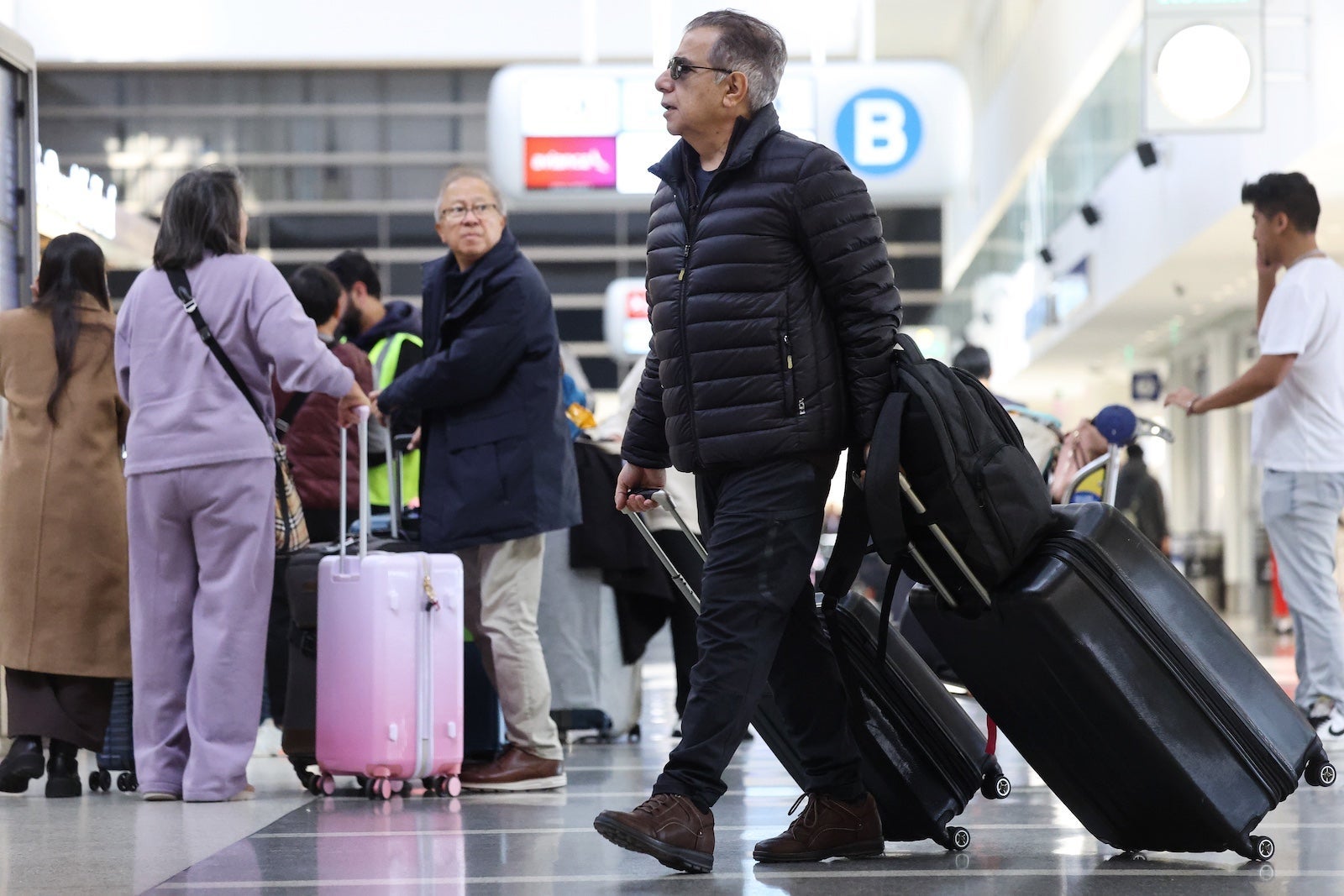
Generally speaking, your first checked bag on the largest U.S. airlines will cost you around $35 — though you may need to pay for it in advance to avoid paying an even higher price.
Prices go up for second and third bags.
Another common thread: At each of these carriers, flyers with elite status and travelers who carry one of the airline's credit cards can check at least one bag for free.
SEAN CUDAHY/THE POINTS GUY
Here are the baggage policies at five of the largest U.S. airlines — and the cheapest credit card at each that can help you skirt the bag fees.
Airline
Fee for first checked bag
Does the most basic fare include a full-size carry-on bag?
Lowest-annual-fee credit card that offers at least one free checked bag
American Airlines
$40 (or $35 if purchased online)
Yes
Citi® / AAdvantage® Platinum Select® World Elite Mastercard® ($99 annual fee, waived for the first 12 months; see rates and fees)
The information for the Citi / AAdvantage Platinum Select, AAdvantage Aviator Red and JetBlue Plus cards has been collected independently by The Points Guy. The card details on this page have not been reviewed or provided by the card issuer.
It’s not clear where Southwest’s policies will fit in. While the carrier said it will start charging customers for baggage starting May 28, it did not elaborate on pricing — or on any potential changes to its carry-on baggage policies.
A Southwest Airlines aircraft at the gate at Louis Armstrong New Orleans International Airport (MSY). SEAN CUDAHY/THE POINTS GUY
Southwest did say its credit card holders will get one free bag, but didn’t share whether its suite of cards will see a shift in annual fees; the company recently reached an amended card deal with Chase, its issuer.
Baggage policies are far less tidy at the budget carriers.
Some — like Spirit Airlines, Frontier Airlines and Breeze Airways — offer a menu of fare bundles that include (or don’t include) bags and other services, with varied prices based on what you select.
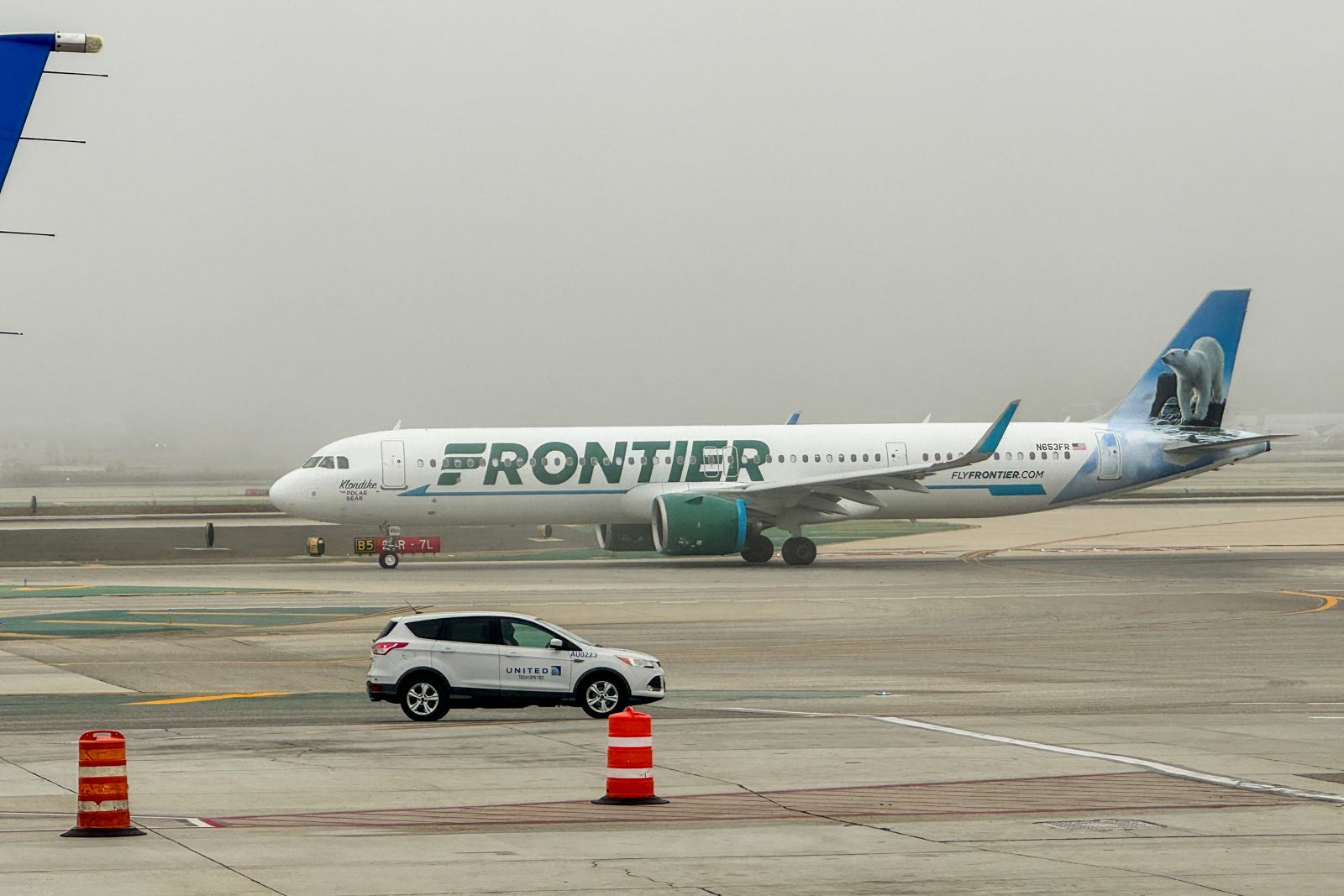
A Frontier Airlines jet taxis at Los Angeles International Airport (LAX). SEAN CUDAHY/THE POINTS GUY
If you’re traveling on a cheap, slimmed-down “basic” fare, several of the ultra-low-cost carriers use dynamic pricing for their bag fees — meaning, what you’ll pay depends on the flight.
Most budget carriers’ cobranded credit cards don’t offer a free checked bag, but a key exception is the Frontier Airlines World Mastercard® ($99 annual fee), which does offer cardholders two free checked bags on eligible flights.
The information for the Frontier Airlines World Mastercard has been collected independently by The Points Guy. The card details on this page have not been reviewed or provided by the card issuer.
So, which airline is best for avoiding bag fees?
It depends.
Setting aside Frontier’s current free-bag promotion, all U.S. carriers now charge for checked bags, save for “special circumstances” like carrying a credit card, earning elite status or purchasing a higher-caliber fare that includes free bags.
Here’s how we’d recommend thinking about your decision based on your go-to strategy for evading these pesky fees:
Going carry-on only
One tried-and-true way to avoid paying checked-bag fees is to go carry-on only. Just remember: You’ll have to comply with the Transportation Security Administration’s 3-1-1 policy for liquids. And a handful of airlines won’t let you bring a full-size carry-on bag on board if you’re flying on their cheapest, most basic fare.
Also, be sure to check your airline's specific size restrictions for carry-on bags.
Which airline to fly: Four airlines will allow full-size carry-ons for basic economy flyers: American, Delta, Alaska and JetBlue.
You may face other restrictions, though (think seat selection and limits on how many miles you’ll earn).
SEAN CUDAHY/THE POINTS GUY
Tread carefully: United is the only large network carrier to ban overhead bin access for its basic economy passengers. Budget carriers do the same for their slimmed-down fares.
Credit cards and elite status
One of the best ways to avoid paying a checked-bag fee is to open an airline credit card that includes a free checked bag (often for you and a certain number of traveling companions flying with you). Generally, cards that offer such a perk carry annual fees starting at just under $100.
While that may sound steep, the card could pay for itself in two trips if you’re checking bags — or one trip if you have a companion flying on the same reservation.
Today, many airline credit cards can also give you a lift toward elite status — which itself often brings free bag(s) as an entry-level perk.
Which airline, and card, is best? Your best bet may ultimately be the airline with the biggest presence in your home city — or the one you’ll fly the most.
Case in point: I fly out of Raleigh-Durham International Airport (RDU), where American has a sizable presence. I’ve carried the Citi / AAdvantage Platinum Select World Elite Mastercard, which includes a free checked bag on domestic American Airlines flights. The card also helped boost me to AAdvantage Platinum status, which now affords me two free bags on every flight.
A Oneworld Alliance-branded American Airlines jet. SEAN CUDAHY/THE POINTS GUY
Tread carefully: Here at TPG, we generally recommend also carrying a travel credit card that earns points you can transfer to a wider range of airline and hotel partners, so your proverbial eggs (points) aren’t all in the basket (loyalty program) of one airline.
Fortunately, some of these cards can also help in your quest to offset pesky baggage fees. The Platinum Card® from American Express ($895 annual fee; see rates and fees) includes up to $200 in annual statement credits with a selected airline for airline incidental fees, like baggage fees. Enrollment is required.
The Chase Sapphire Reserve® ($795 annual fee; see rates and fees) features a highly flexible $300 credit annually for travel expenses.
Purchasing a higher-fare ticket that includes a bag can also help you avoid bag fees, since first-class, business-class and premium economy tickets typically include baggage.
The same is true, on some airlines, for certain higher-caliber coach fares.
Plus, some airlines offer free checked bags on long-haul main cabin fares, so if you’re planning a transatlantic flight to Europe this summer, you may be in luck even if you don’t have elite status. Check with your airline before booking to see what’s included on intercontinental flights.
For rates and fees of the Amex Delta Gold card, click here. For rates and fees of the Amex Platinum card, click here.
By commenting, you agree to our Community Guidelines to help create a positive space for conversation. The responses below are not provided or commissioned by the bank advertiser, our partners, or The Points Guy (“TPG”). They have not been reviewed, approved, or otherwise endorsed by any of these parties. All responses are submitted by individual contributors, and neither the bank advertiser, our partners, nor TPG are responsible for ensuring that all posts and/or questions are answered.