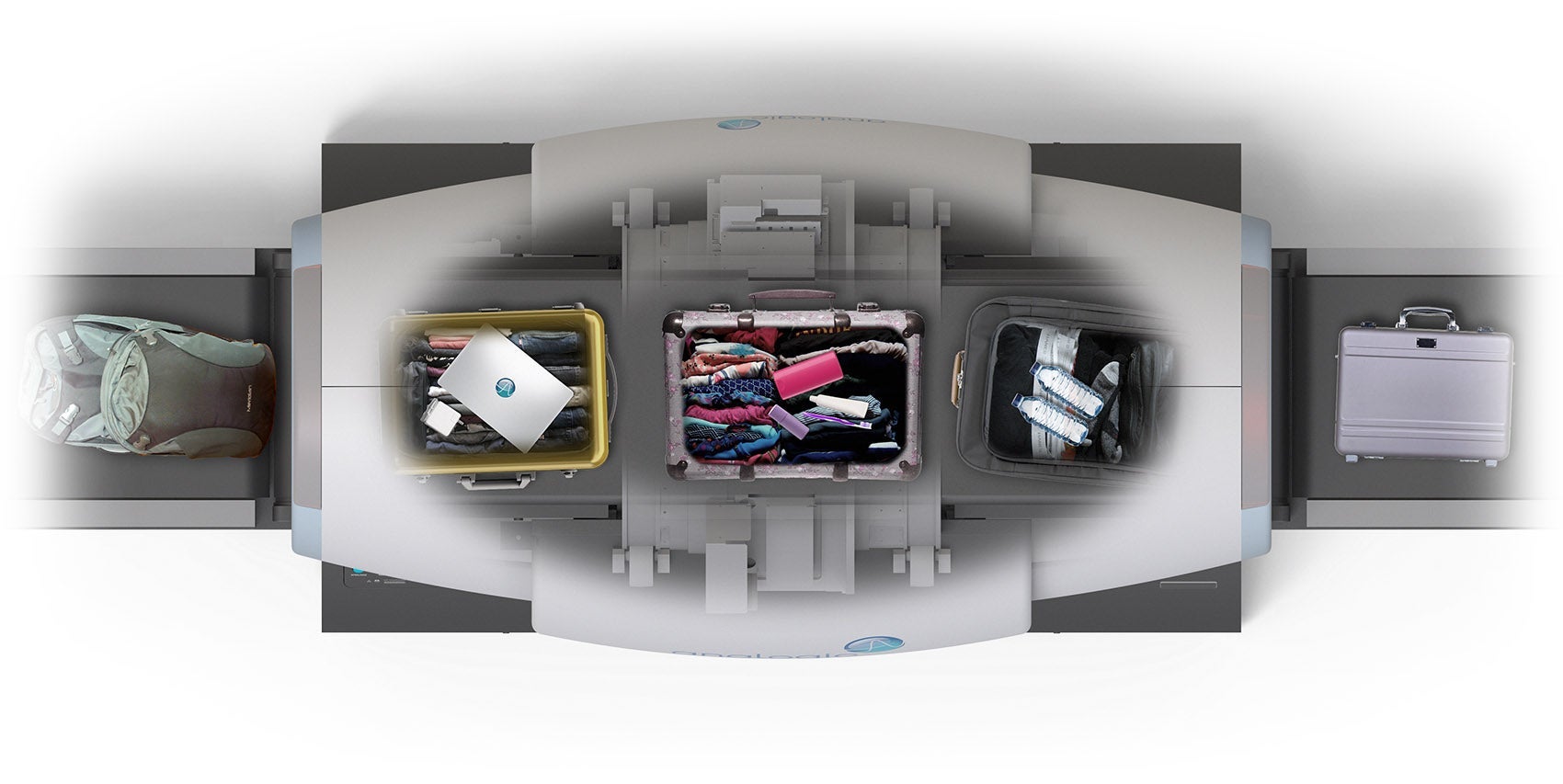

So something felt very familiar when I read TPG's aviation writer Zach Wichter's story, "The TSA Is Testing Ways to Eventually Keep Laptops in Bags for Everybody." TSA is testing what it calls the Advancing the Checkpoint Environment program or ACE, at a new facility located on the lower level of Terminal 3 at Las Vegas’ McCarran International Airport. Domestic passengers flying on United Airlines will be able to use ACE lanes with advanced imaging machines that use CT technology to check carry-on bags.
While at Aviation Daily, I was particularly focused on TSA's testing of technology designed to do a better job of scanning carry-on bags and make it less burdensome for passengers. One of those machines was the Analogic Cobra EDS 3D machine, which also used CT technology to screen bags for liquids, aerosols, gels, weapons. and explosives. In turn, that allowed passengers to keep their laptops, liquids and electronics in their carry-on bags.
At the time, the system boasted of having "superior detection, higher throughput and less bin use," with the ability to scan up to 550 bags an hour. TSA placed a 12-unit, $7.6 million order, plus signed a broader contract for up to 40 machines and support services at a price tag of $37.5 million.
The Cobra EDS was tested at Baltimore-Washington International Airport (BWI) starting in October 2007 for six months. The TSA was busy developing and testing technology including arm/leg cast scanners, bottle scanners and shoe scanners, to name a few. Some never made it to prime time, while others, like the Cobra EDS, were pulled abruptly and sent to the TSA's Transportation Security Laboratory in Atlantic City, NJ, for "further testing," never to be seen again.
Meanwhile, the Cobra EDS is currently being used at Amsterdam Schiphol and London Heathrow airports. Here's hoping that 12 years after TSA first tested the technology at BWI Airport, this time it will stick.