The TSA Is Testing Ways to Eventually Keep Laptops in Bags for Everybody

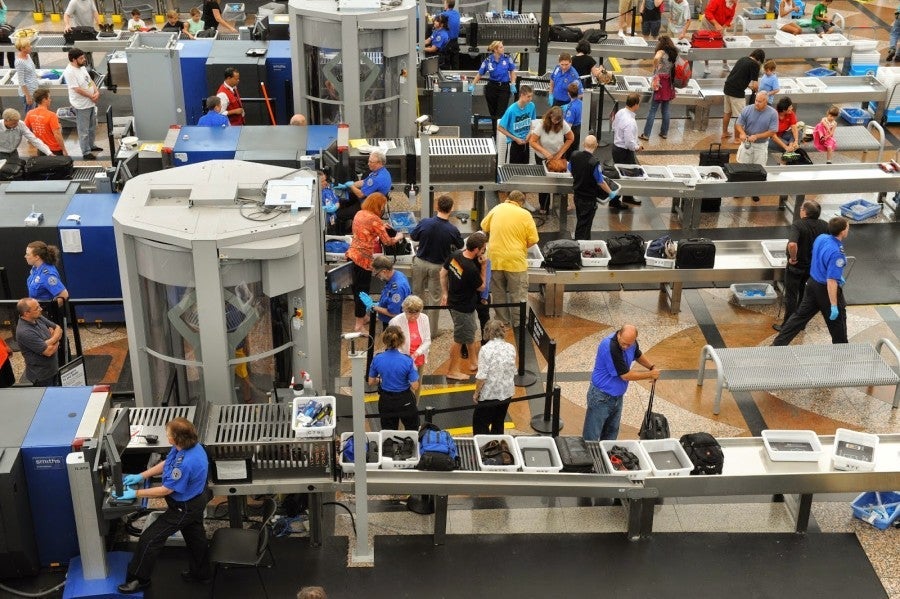
The Transportation Security Administration is testing a screening method that may eventually result in passengers, even those who do not have TSA PreCheck, keeping laptops in their bags. The TSA is trying out the new screening in Las Vegas and may one day expand it nationwide.
On Tuesday the TSA announced that it had opened a new facility on the lower level of Terminal 3 at Las Vegas' McCarran International Airport, part of what the agency has dubbed the Advancing the Checkpoint Environment program or ACE.
"This is a space that will allow us to assess new technology and processes," said Jose Bonilla, the director of TSA's Innovation Task Force, on a conference call. "It will allow us to demonstrate a unique network of capabilities without impacting their current operation."
The regular Terminal 3 TSA checkpoints are on the building's upper level, but the ACE facility is located downstairs. For now, only domestic passengers flying United Airlines will be able to use ACE lanes, though an airport representative said that could expand to other domestic and international airlines in the future. The checkpoint is also only open for approximately four hours a day Sunday through Thursday.
For passengers, going through ACE can mean they get to leave their laptops in their bags even if they don't have Precheck, and also may mean a faster security screening overall, since fewer passengers will be processed through the experimental lanes than the traditional ones. Passengers who get sent to the ACE lanes — at the TSA's discretion — will bypass the traditional checkpoints in Terminal 3.
Related: The Top 7 Cards for Global Entry and TSA PreCheck

For now, the main trials at LAS involve advanced imaging machines that use CT technology to look into your carry-on bags. The resulting images are more detailed than traditional X-ray scans, and that is why passengers may leave items in their bags. Similar machines are being tested at other airports, too, including at JFK's Terminal 8. As ACE gets up to speed, other new technologies and procedures will likely be introduced. One of the primary purposes of the ACE facility is to allow multiple different kinds of technology and procedures to be tested in conjunction with each other.
Even in the ACE lanes, though, Bonilla said passengers currently still have to remove their liquids and take off their shoes. But, he added, that may not be the case forever: "The procedures will change as the technology evolves."
Bonilla said that feedback from passengers who pass through the ACE lanes and the agents who manage them will be important in evaluating the new technologies being tested there, and can help the TSA decide if and how to roll new machines and procedures out more broadly.
So far, according to Bonilla, passengers seem to like the innovations that have been introduced. The ACE lanes had a "soft launch" on June 19.
"When we kicked it off, the very first two passengers that came by were a couple," he said. "Their first question was 'Oh my God, are you going to do this everywhere?'" Although the tests at ACE are not necessarily a precursor to new screening procedures nationwide, Bonilla said they may eventually appear at other airports.
TPG featured card
at American Express's secure site
Terms & restrictions apply. See rates & fees.
| 4X | Earn 4X Membership Rewards® points per dollar spent on purchases at restaurants worldwide, on up to $50,000 in purchases per calendar year, then 1X points for the rest of the year. |
| 4X | Earn 4X Membership Rewards® points per dollar spent at US supermarkets, on up to $25,000 in purchases per calendar year, then 1X points for the rest of the year. |
| 5X | Earn 5X Membership Rewards® points on prepaid hotel stays booked through AmexTravel.com or the Amex Travel App™. |
| 3X | Earn 3X Membership Rewards® points on flights booked through AmexTravel.com, the Amex Travel App™, or purchased directly from airlines. |
| 2X | Earn 2X Membership Rewards® points on prepaid car rentals booked through AmexTravel.com or the Amex Travel App™ and cruises booked and paid through AmexTravel.com. |
| 1X | Earn 1X Membership Rewards® point per dollar spent on all other eligible purchases. |
Pros
- Valuable dining and food-related credits
- Flexible rewards with airline and hotel transfer partners
- Multiple travel and purchase protections
- No foreign transaction fees
- Access to Amex Offers for additional savings (enrollment required)
Cons
- Not as useful for those living outside the U.S.
- Some may have trouble using Uber and other dining credits
- You may be eligible for as high as 100,000 Membership Rewards® Points after you spend $8,000 in eligible purchases on your new Card in your first 6 months of Card Membership. Welcome offers vary and you may not be eligible for an offer. Apply to know if you’re approved and find out your exact welcome offer amount – all with no credit score impact. If you’re approved and choose to accept the Card, your score may be impacted.
- Earn 4X Membership Rewards® points per dollar spent on purchases at restaurants worldwide, on up to $50,000 in purchases per calendar year, then 1X points for the rest of the year.
- Earn 4X Membership Rewards® points per dollar spent at US supermarkets, on up to $25,000 in purchases per calendar year, then 1X points for the rest of the year.
- Earn 5X Membership Rewards® points on prepaid hotel stays booked through AmexTravel.com or the Amex Travel App™.
- Earn 3X Membership Rewards® points on flights booked through AmexTravel.com, the Amex Travel App™, or purchased directly from airlines.
- Earn 2X Membership Rewards® points on prepaid car rentals booked through AmexTravel.com or the Amex Travel App™ and cruises booked and paid through AmexTravel.com.
- Earn 1X Membership Rewards® point per dollar spent on all other eligible purchases.
- Pay It® lets you tap in the American Express® App to quickly pay for small purchase amounts throughout the month and still earn rewards the way you usually do. Plan It® gives you the option to split up big purchases into equal monthly payments with a fixed fee. You’ll know upfront exactly how much you’ll pay.
- $120 Dining Credit: Earn up to a total of $10 in statement credits monthly when you pay with the Gold Card at Grubhub (including Seamless), Buffalo Wild Wings, Five Guys, The Cheesecake Factory, and Wonder. This can be an annual savings of up to $120. Enrollment required.
- $100 Resy Credit: Get up to $100 in statement credits each calendar year at over 10,000 qualifying U.S. Resy restaurants after you pay for eligible purchases with the American Express® Gold Card. That’s up to $50 in statement credits semi-annually. Enrollment required.
- $84 Dunkin' Credit: Earn up to $7 in monthly statement credits after you pay with the American Express® Gold Card at U.S. Dunkin’ locations. Enrollment required.
- $120 Uber Cash on Gold: Enjoy up to $120 in Uber Cash annually with your Gold Card. Just add your Card to your Uber account and you'll get $10 in Uber Cash each month to use on orders and rides in the U.S. when you select an Amex Card for your transaction.
- Enjoy complimentary Hertz Five Star® Status benefits like skipping the counter at select locations, adding an additional driver at no additional cost*, and vehicle upgrades**. Benefit enrollment and Hertz Gold+ registration are required. *Additional drivers must meet standard rental qualifications and must be a spouse or domestic partner to qualify as complimentary. Other additional drivers subject to fees. **Benefits are subject to availability and vary by location. Additional Hertz program Terms and Conditions including age restrictions apply.
- Book two nights or more with The Hotel Collection through AmexTravel.com or the Amex Travel App™ and receive a $100* credit towards eligible charges at over 1,400 upscale hotels worldwide. *Eligible charges vary by property.
- Book your travel through the Amex Travel App™ with added peace of mind – backed by American Express® service and support. Only for American Express® Card Members.
- Whenever you need us, we're here. Our Member Services team will ensure you are taken care of. From lost Card replacement to statement questions, we are available to help 24/7.
- No Foreign Transaction Fees.
- Annual Fee is $325.
- Terms Apply.