
Update: Some offers mentioned below are no longer available. View the current offers here.
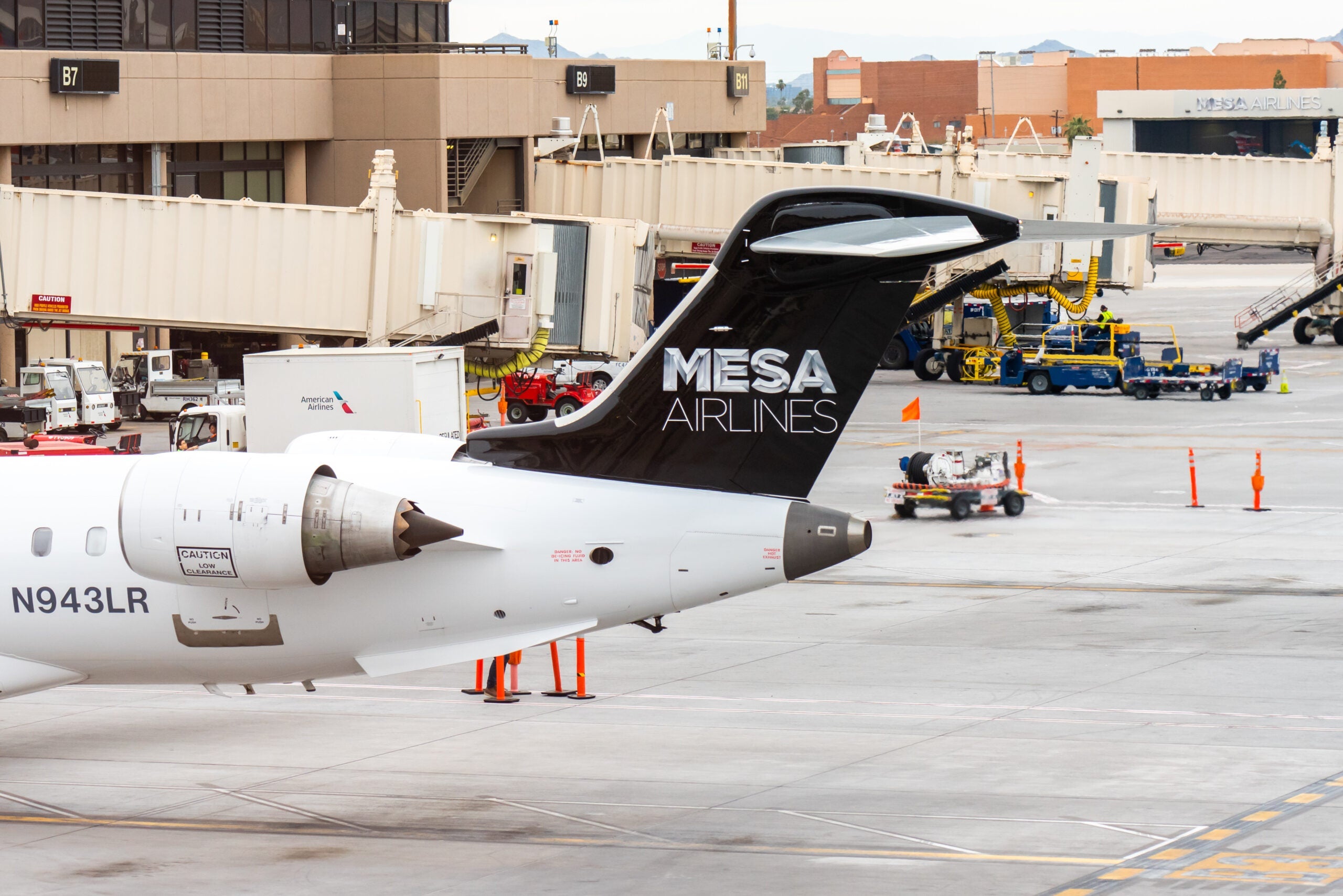
It was a beautiful morning in Phoenix on Sept. 11, 2001. I was three months into my job as the director of communications and community relations at Mesa Air Group, a regional airline that, at the time, flew as America West Express and US Airways Express.
I had fallen asleep during the Monday Night Football game between the Denver Broncos and the New York Giants (Denver won), so when I woke up that morning, I turned the channel to ESPN to get the final score. I also did some last-minute packing for a work trip to Washington, D.C.
Because Phoenix doesn’t observe daylight saving time, we were three hours behind the East Coast. My phone rang and a Mesa board member asked me if I knew what was going on. While he explained, I turned the channel to CNN just in time to see the second plane hit the World Trade Center Twin Towers.
Shocked, I grabbed my suitcase and drove to Mesa’s offices, minutes away from Phoenix Sky Harbor International Airport (PHX). On the way to work, my dad, a retired U.S. Air Force officer, called me in a panic. He told me I could not fly anywhere that day. We argued, with me saying, “I have to tell my boss I can't go to D.C. because my dad won't let me?” My dad answered, saying, “Give me his phone number.”
Related: America remembers 9/11 – photos from across the country
It turned out my dad didn’t have to worry since the U.S. and Canadian airspace systems had been closed. By the time I arrived at our office, it was crazy. There were televisions positioned around the office and people watched things unfold. We had a group of flight dispatchers stranded in Las Vegas and we scrambled to rent a van to get them back.
We also had flight crews stranded all over the country in places that we didn’t serve, so we had to get them hotels. Those of us with corporate American Express Business Green Rewards Cards were working the phones to guarantee rooms for our employees. I also took a few press calls.
We sent nonessential staff home because there was nothing for them to do. Food was ordered for those who were still in the office since the situation was still developing and we had no idea how long we’d be there. My office had a view of Sky Harbor and it was eerie to see all the planes grounded. There were also fighter jets from Luke Air Force Base flying around.
The rest of the day passed in a haze. I ended up leaving around 8 p.m. I got a call from Brett “Cranky Flyer” Snyder, who was then a pricing analyst for America West Airlines. He asked if I was OK and if I wanted to go to a bar. I hadn’t really had time to make friends in Phoenix yet, and I knew him from one of our aviation geek chat groups, so I accepted.
We spent the evening at the bar, discussing what happened and the future of the U.S. commercial aviation industry. All televisions were on the news and when the bartender changed all the channels, we all cheered. I will always be grateful to Snyder for that invitation on that fateful day.
Related: Honoring 9/11 crew: A former flight attendant on his quest to push a beverage cart from BOS to NYC
A few weeks later, I ended up going on that work trip to Washington, D.C., on one of the first flights back in the air. I won’t lie -- it was eerie. One, because the flight was almost empty. Two, people were visibly praying from the time we took off until when we landed. The whole thing, even 20 years later, is still surreal to me.
A mere 12 days after 9/11, Congress passed an appropriation bill for $15 billion -- and President George W. Bush signed it -- giving the airline industry a much-needed boost. Of those funds, $5 billion went straight to airlines.
In the immediate of that day, travel demand in the U.S. fell by more than 30 percent and more than 62,000 airline jobs. It took about six years for the airlines to recover capacity after 9/11, according to the Airline Passenger Experience Association.
Passengers who took to the skies after 9/11 saw how the newly created Transportation Security Administration (TSA) put tools in place, including officer patrols and a laser focus on government IDs, along with upgraded X-ray machines, new magnetometers, Advanced Imaging Technology (AIT) units and explosive detection equipment to screen luggage.
Despite the tragedy that was 9/11, passengers took to the skies again because they felt it was safe to do so. I didn’t hesitate to fly to Washington, D.C., for my work trip. My airline colleagues -- and the American public -- also began booking flights because, in the end, we are optimistic and resilient people.