American Express Is Reporting Referral Bonuses as Taxable Income to the IRS


Update: Some offers mentioned below are no longer available. View the current offers here.
Bad news for those of you who referred friends and family members to American Express last year. Amex is reporting the referral bonus it paid you as taxable income — even if you received points for your referral.
Many cardholders received Form 1099-MISC in the mail Thursday from "American Express National Bank" reporting Other Income amounts for these referrals. The points valuations depend on what type of points or miles you received as compensation:
- Hilton Honors points: 0.67 cents per point vs. TPG's valuation of 0.6 cents each
- American Express Membership Rewards points: 1.0 cents per point vs. TPG's valuation of 2.0 cents each
- Delta SkyMiles: 1.0 cents per point vs. TPG's valuation of 1.2 cents each
- Marriott Rewards: 1.0 cents per point vs. TPG's valuation of 0.8 cents each
TPG's own Nick Ewen got one of these dreaded 1099-MISC in the mail yesterday reporting $100 of "Other Income" for referring a friend to The Blue Business®️ Plus Credit Card from American Express — a solid credit card that offers 2x Membership Rewards points per dollar spent on the first $50,000 of purchases each year (then 1x).
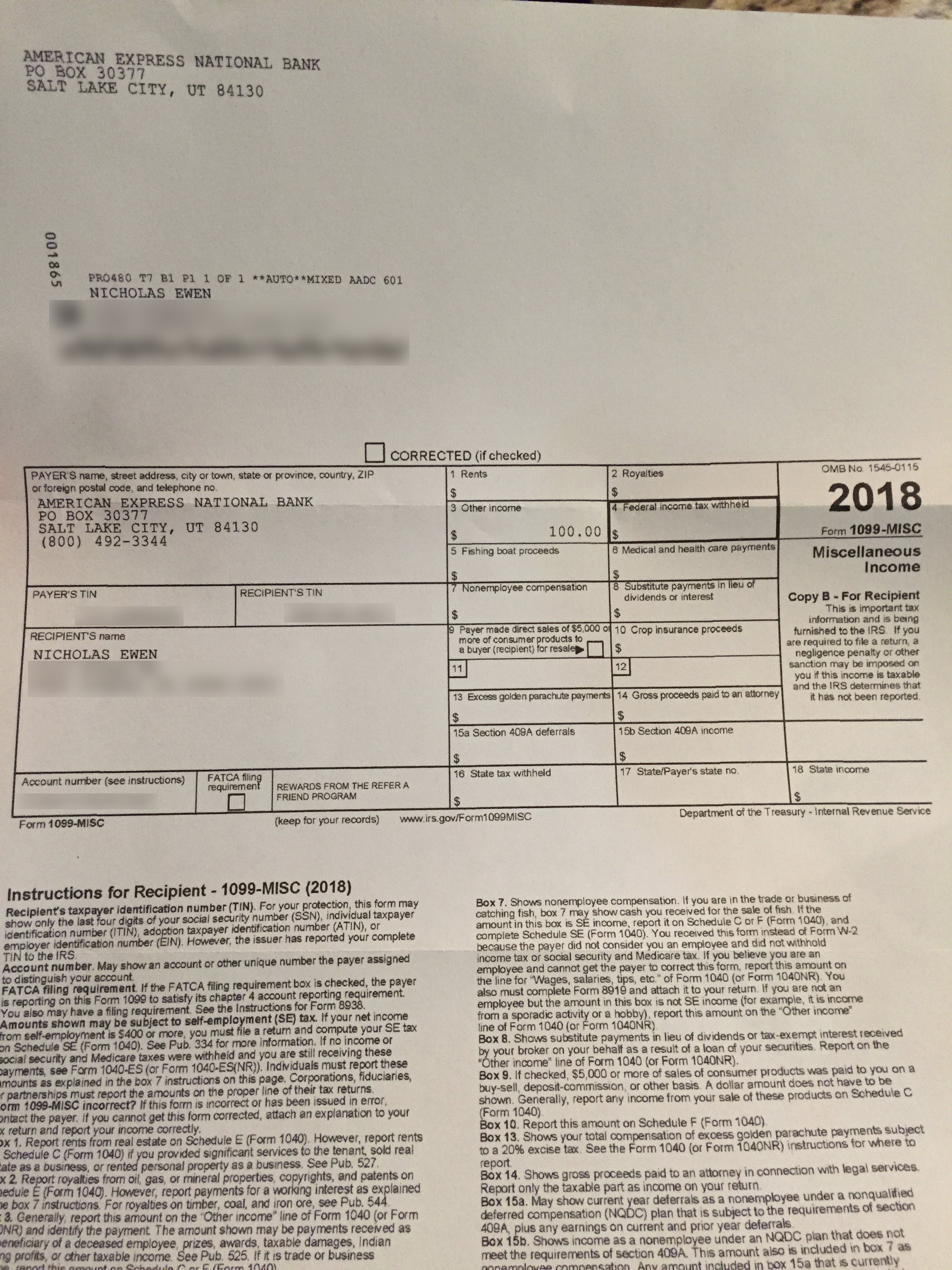
If you're in the same situation, you might be wondering what to do now. Let's tackle this in Q&A style.
What should I do with this 1099?
It's probably most proper for you to report on Line 21 Other Income of Schedule 1 of your Form 1040 personal tax return. An exception to that would be if you make a legitimate business out of referring people to American Express credit cards — in which case you can file on Schedule C along with any related expenses.
What if I already filed my tax return?

Unfortunately, you're going to need to file a superseding tax return to report this income — unless you want a letter from the IRS asking you why you didn't include this income. And the problem with those letters is that they usually come with penalties and interest.
What if I don't agree with the valuation of the points?
It's probably not worth fighting the valuation for this small amount of income. However, there's a prolonged tax law explanation on why these points probably aren't actually taxable yet. If you want to go down that path, you'll want to talk with a tax professional about how to do so without prompting a notice from the IRS.
Can I just ignore the 1099?
You could, but I wouldn't recommend it. As this form was — or will be — filed with the IRS, the taxman is going to expect you to report this income on your personal tax return. Ignoring it will almost certainly net you a "matching notice" letter from the IRS noting the discrepancy.
Is there anything else I can do?
You could complain to American Express about getting a 1099, and Amex might just send a corrected 1099-MISC with a lesser amount of income. For the 2016 tax year, Chase sent out 1099s reporting income for referrals before sending out a "corrected" 1099 adjusting that income amount to $0. Reaching out to Amex may not change anything, but it could be worth a shot.
The author is a Certified Public Accountant (CPA) in Georgia. However, this article has been prepared for informational purposes only, and is not intended to provide — and should not be relied on as — tax advice. Please consult your tax professional.