Merger of Alaska Airlines, Hawaiian Airlines moves forward, clears antitrust concerns

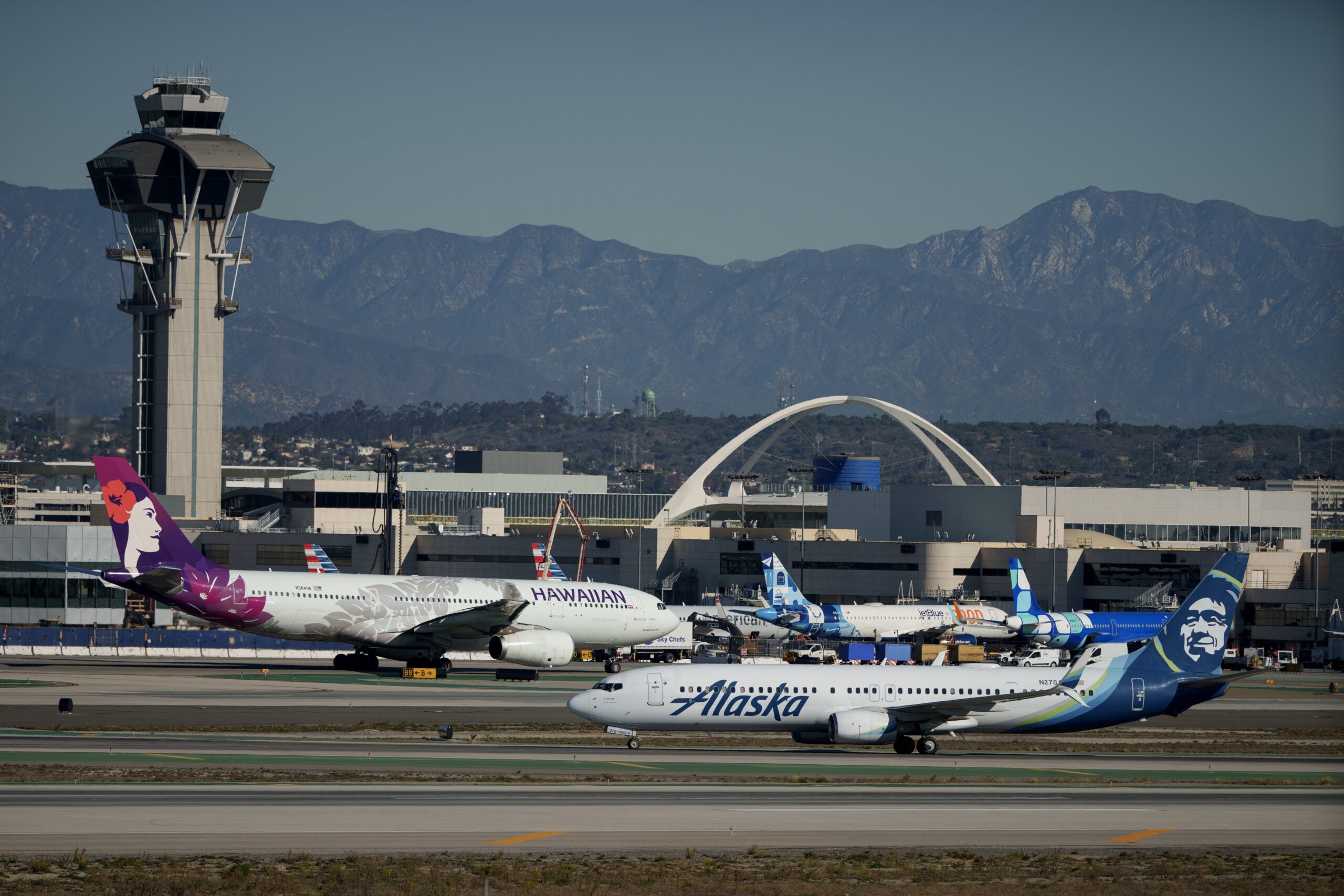
The proposed merger between Alaska Airlines and Hawaiian Airlines cleared a major hurdle this week after the Department of Justice opted not to try to block it.
The DOJ, which investigated the proposed merger, declined to file an antitrust lawsuit before the end of a waiting period imposed by the review process, the airlines said on Tuesday, eight months after first announcing plans to combine.
Before the merger can proceed, the Department of Transportation must review and approve the $1.8 billion deal. It was not immediately clear what the timeline would be for that approval.
"This is a significant milestone in the process to join our airlines," Alaska Airlines said in a statement on Tuesday. "During the DOJ's review, Alaska worked closely with the Hawai'i Attorney General to reinforce and expand upon our commitments for the future of Hawaiian Airlines and to Hawai'i consumers."
Alaska reiterated plans, first shared during the initial announcement in December, to preserve the Hawaiian Airlines brand, along with jobs and interisland routes and frequencies.
The merger, if completed, will allow the largest U.S. airline merger since Alaska Airlines bought rival Virgin America in 2016.
The DOJ's implicit approval stood in stark contrast to recent DOJ policy under the Biden administration, which has aggressively — and successfully — litigated to block consolidation within the airline industry.
In January, the DOJ won an antitrust suit blocking JetBlue's planned acquisition of Spirit Airlines. During a monthlong trial in federal court in Boston last fall, the DOJ argued that the merger would hurt competition across the industry.
Value check: Are airline credit cards worth it anymore?

JetBlue argued during the trial that it needed Spirit's aircraft and crew members to become large enough to compete with bigger U.S. carriers. Spirit said it was in a precarious financial position and could no longer compete effectively with its ultra-low-cost business model without making drastic changes. Under the terms of the merger, JetBlue would have acquired Spirit and absorbed its assets under its own brand and operation.
In 2022, the DOJ similarly sued — successfully — to block the Northeast Alliance between JetBlue and American Airlines, which saw the two airlines codeshare on each other's flights and coordinate their route networks. JetBlue had argued that it was too small to compete against the other major airlines without help, while American said that it was cornered out of New York, and effectively the broader Northeast market, by Delta Air Lines and United Airlines.
Still, the Alaska-Hawaiian merger, as proposed by the carriers, would be significantly different from JetBlue's efforts.
The carrier would be the fifth-largest in the U.S. in terms of fleet size, with 365 aircraft.
While JetBlue had complex overlapping routes with both American and Spirit, Alaska and Hawaiian say that less than 3% of their network routes overlap. Of 1,400 combined flights per day, the airlines only share 12 overlapping markets, the airlines said when they announced the merger late last year.
According to the carriers at the time, the combined airline would initially service 138 destinations across its network, including 29 international markets. More than 1,200 destinations would be accessible through Oneworld partners.
And, unlike the proposed JetBlue-Spirit merger, the Alaska-Hawaiian combination would not remove a low-cost carrier from the market. Since the merger was blocked, Spirit has struggled to stem financial losses and has introduced new fare products that are at odds with the traditional ultra-low-cost business model.
Loyalty update: Alaska Airlines unveils 4 major changes to MVP elite status
Hawaiian, meanwhile, has struggled in recent years and is in near-desperate need of a lifeline. Wildfires in Maui hurt the tourism market, as has a weaker yen, which has discouraged leisure travel to the islands from Japan. Meanwhile, stiff competition from Southwest Airlines has put more financial pressure on the airline.
Politicians in Hawaii have come out strongly in support of the merger since it was announced last December.
"I am confident that by the joining of these two airlines, a stronger company will emerge and offer more travel options for Hawai'i residents and local businesses — and will enhance competition across the U.S. airline industry," Hawaii Gov. Josh Green said on Tuesday. "I appreciate the DOJ's strong consideration of Hawai'i's unique needs during its review of the proposed merger. I look forward to this merger proceeding and the overwhelming consumer, employee and community benefits that will result from it."
The DOT did not immediately return TPG's request for comment.
TPG featured card

at Capital One's secure site
Terms & restrictions apply. See rates & fees.
| 5X miles | Earn 5X miles on hotels, vacation rentals and rental cars booked through Capital One Travel |
| 2X miles | Earn unlimited 2X miles on every purchase, every day |
Pros
- Stellar welcome offer of 75,000 miles after spending $4,000 on purchases in the first three months from account opening. Plus, a $250 Capital One Travel credit to use in your first cardholder year upon account opening.
- You'll earn 2 miles per dollar on every purchase, which means you won't have to worry about memorizing bonus categories
- Rewards are versatile and can be redeemed for a statement credit or transferred to Capital One’s transfer partners
Cons
- Highest bonus-earning categories only on travel booked via Capital One Travel
- LIMITED-TIME OFFER: Enjoy $250 to use on Capital One Travel in your first cardholder year, plus earn 75,000 bonus miles once you spend $4,000 on purchases within the first 3 months from account opening - that’s equal to $1,000 in travel
- Earn unlimited 2X miles on every purchase, every day
- Earn 5X miles on hotels, vacation rentals and rental cars booked through Capital One Travel
- Miles won't expire for the life of the account and there's no limit to how many you can earn
- Receive up to a $120 credit for Global Entry or TSA PreCheck®
- Use your miles to get reimbursed for any travel purchase—or redeem by booking a trip through Capital One Travel
- Enjoy a $50 experience credit and other premium benefits with every hotel and vacation rental booked from the Lifestyle Collection
- Transfer your miles to your choice of 15+ travel loyalty programs
- Top rated mobile app