Airplanes May Get Safer With Child-Sized Medication and Equipment
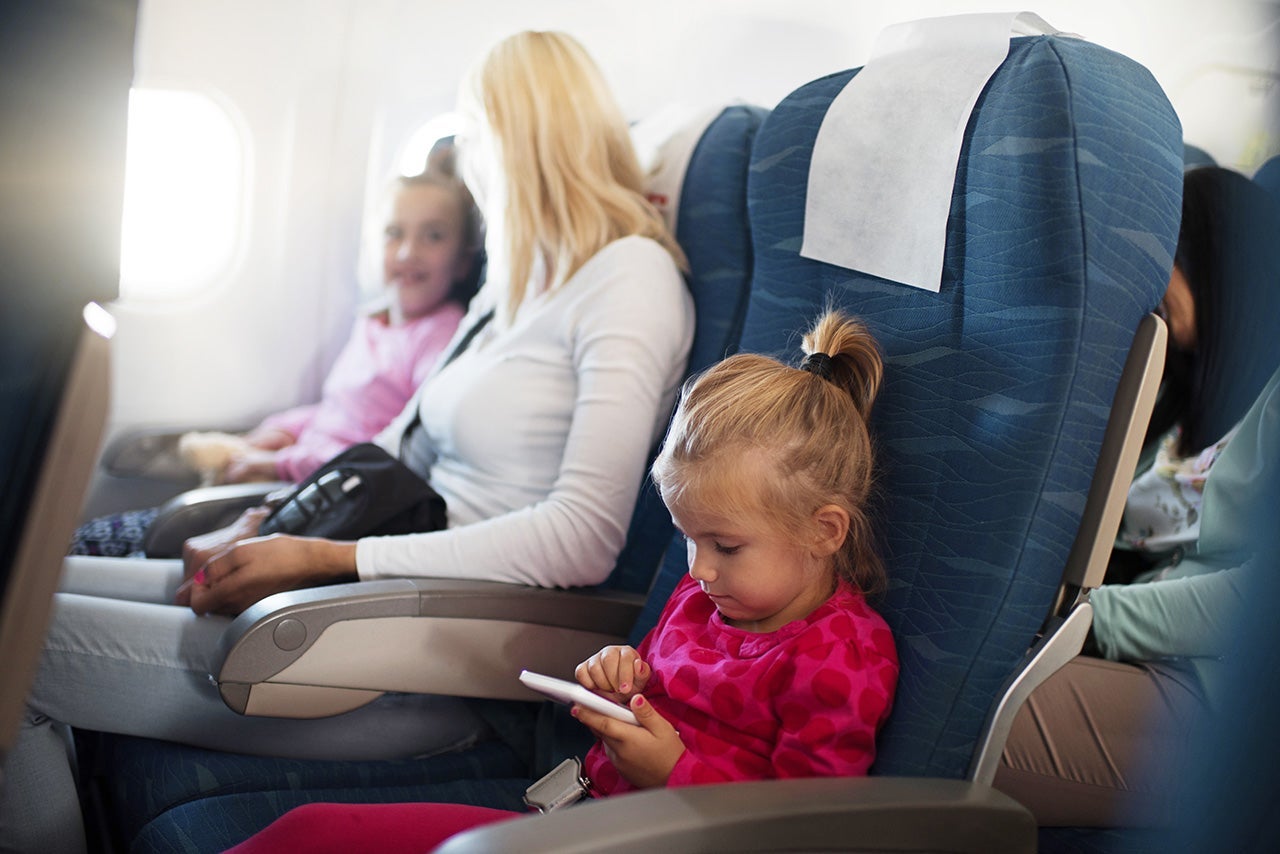
Finally, planes may be required to stock their emergency medical kits with child-sized equipment and doses.
The Airplane Kids In Transit Safety Act was folded into the recently adopted 2018 reauthorization of the Federal Aviation Administration, which is good for five years. As previously reported by TPG, the same bill requires large and medium sized airports to set aside private lactation rooms for nursing mothers along with changing tables in both men's and women's restrooms.
Though the details have to be worked out, the bill requires the FAA to outline what medications and equipment must be included "to meet the emergency medical needs of children." One example cited by the sponsors of the requirement is child-scaled, auto-inject doses of epinephrine, which is used to immediately counteract extreme allergic reactions.
The American Academy of Pediatrics had advocated for the requirement.
"Currently, the emergency medical kits on airplanes are not designed with children's needs in mind–they lack the right medications in an appropriate dose and formulation and the equipment is too large to fit a child," said Colleen Kraft, MD, MBA, FAAP, President, American Academy of Pediatrics in a prepared statement. The Airplane KITS Act addresses that problem by requiring the FAA to review and update the contents of the emergency medical kits on planes, which is something that hasn't been done in almost 20 years. Families will soon be able to rest a little easier knowing that if their child experiences an in-flight emergency, like a seizure, asthma attack or allergic reaction, the right drugs and equipment will be on board."
Medical emergencies occur on about one of every 604 flights, according to the Cleveland Clinic Journal of Medicine, though that is an estimate, as airlines are not required to report such incidents.

While the average age of a person with an inflight medical emergency is 48, according to an analysis by the Centers for Disease Control, emergencies involving children do happen. In a time period studied by the CDC, the youngest patient was only 14 days old. Fainting, respiratory distress, nausea and cardiac issues are the most common problems.
Photo by BraunS/Getty Images
TPG featured card

at Capital One's secure site
Terms & restrictions apply. See rates & fees.
| 5X miles | Earn 5X miles on hotels, vacation rentals and rental cars booked through Capital One Travel |
| 2X miles | Earn unlimited 2X miles on every purchase, every day |
Pros
- Stellar welcome offer of 75,000 miles after spending $4,000 on purchases in the first three months from account opening. Plus, a $250 Capital One Travel credit to use in your first cardholder year upon account opening.
- You'll earn 2 miles per dollar on every purchase, which means you won't have to worry about memorizing bonus categories
- Rewards are versatile and can be redeemed for a statement credit or transferred to Capital One’s transfer partners
Cons
- Highest bonus-earning categories only on travel booked via Capital One Travel
- LIMITED-TIME OFFER: Enjoy $250 to use on Capital One Travel in your first cardholder year, plus earn 75,000 bonus miles once you spend $4,000 on purchases within the first 3 months from account opening - that’s equal to $1,000 in travel
- Earn unlimited 2X miles on every purchase, every day
- Earn 5X miles on hotels, vacation rentals and rental cars booked through Capital One Travel
- Miles won't expire for the life of the account and there's no limit to how many you can earn
- Receive up to a $120 credit for Global Entry or TSA PreCheck®
- Use your miles to get reimbursed for any travel purchase—or redeem by booking a trip through Capital One Travel
- Enjoy a $50 experience credit and other premium benefits with every hotel and vacation rental booked from the Lifestyle Collection
- Transfer your miles to your choice of 15+ travel loyalty programs
- Top rated mobile app