Skip to content

Could airlines say 'no thanks' to payroll aid because of schedule requirements?

April 17, 2020
6 min read
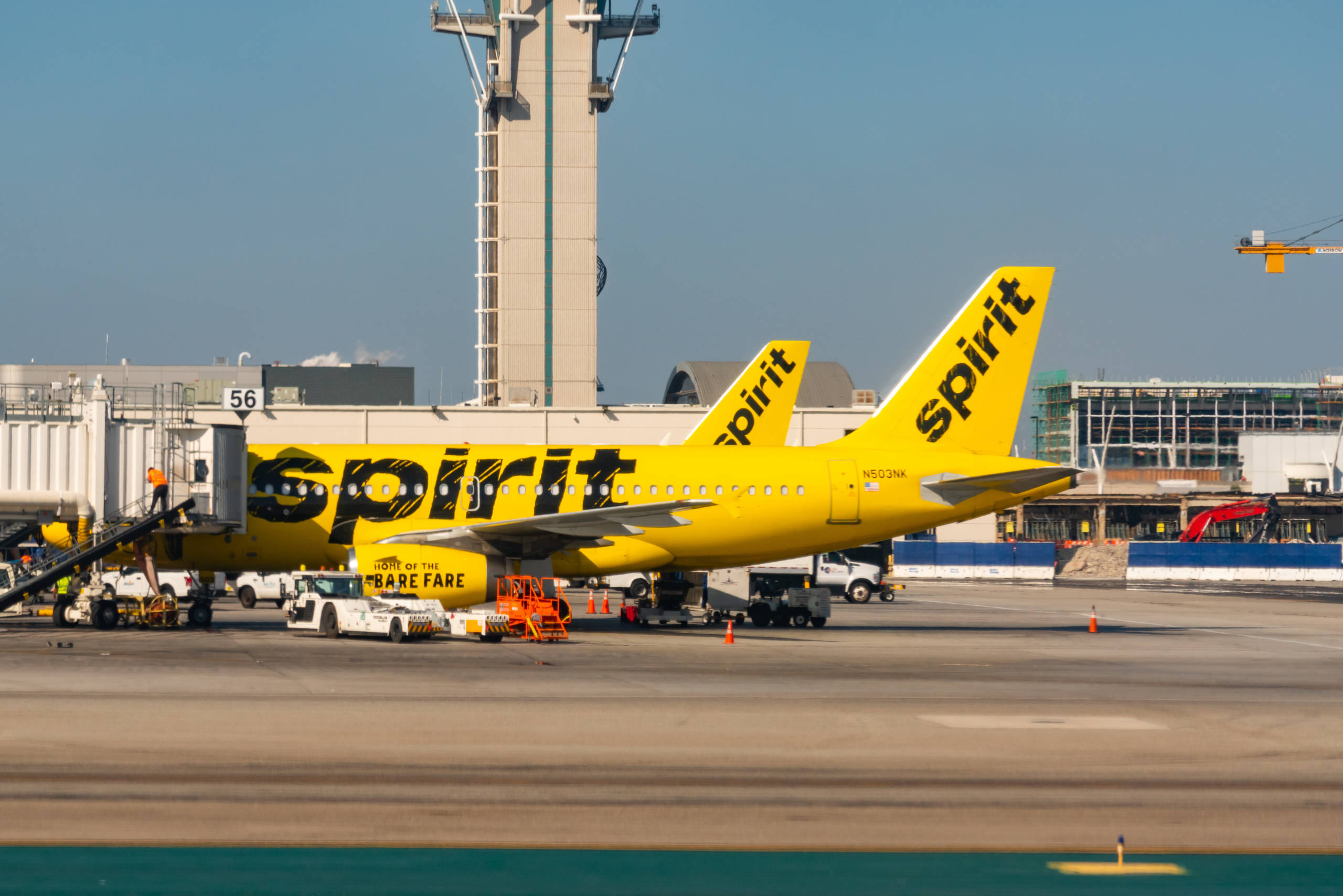
Spirit Airlines aircrafts seen at Los Angeles International
Could airlines say 'no thanks' to payroll aid because of schedule requirements?
The cards we feature here are from partners who compensate us when you are approved through our site, and this may impact how or where these products appear. We don’t cover all available credit cards, but our analysis, reviews, and opinions are entirely from our editorial team. Terms apply to the offers listed on this page. Please view our advertising policy and product review methodology for more information.

The U.S. government has weighed in on the desire by JetBlue Airways and Spirit Airlines to suspend flights to dozens of cities around the country. The results weren't pretty.

Of the 12 and 26 airports were JetBlue and Spirit, respectively, sought to suspend service, only two were approved: Aguadilla (BQN) and Ponce (PSE) in Puerto Rico. JetBlue serves both airports and Spirit just the former.

The airlines were seeking waivers for the air service strings of the government's $2 trillion coronavirus bailout package known as the CARES Act. The Department of Transportation oversees the aspect of the program and ruled on both applications on April 16.

Get Coronavirus travel updates. Stay on top of industry impacts, flight cancellations, and more.
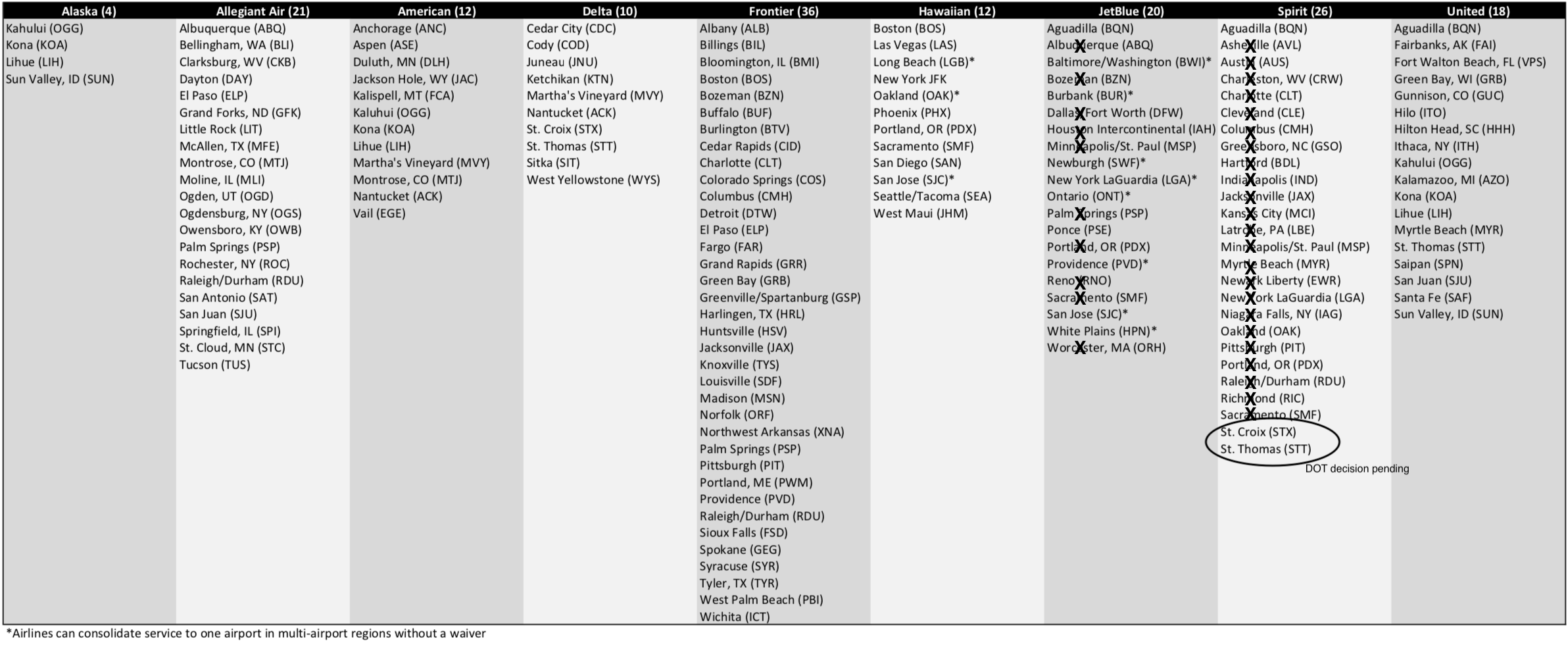
Major U.S. airline planned airport suspensions and waiver requests from CARES Act requirements. X denotes request denied.

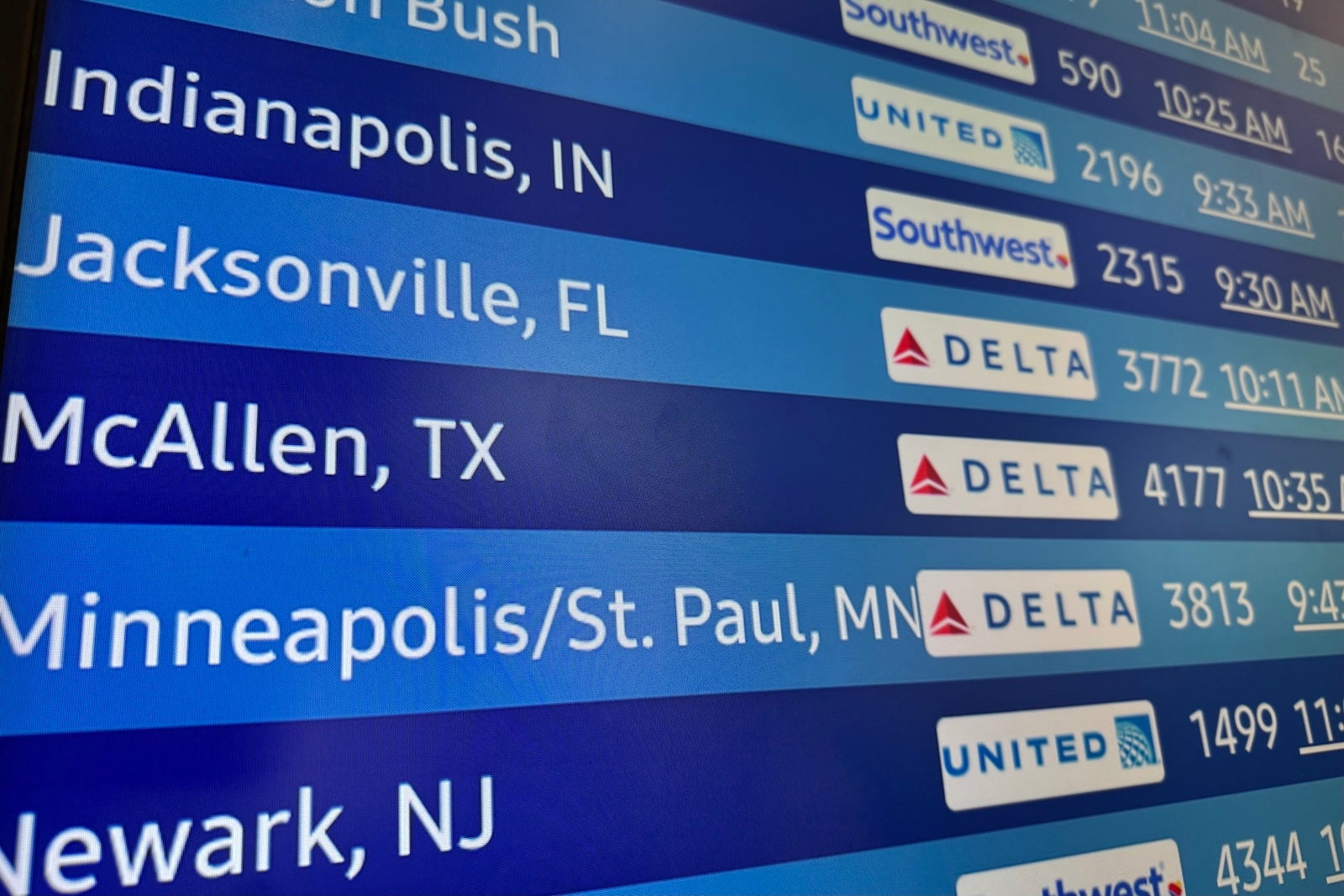
The DOT's decision means, for example, that JetBlue must continue flying to Houston Bush Intercontinental (IAH) where it says the percent of seats booked on its flights is below 15% in April. Based on the New York-based carrier's 14 weekly flights to Houston in February, it will have to serve the city with at least three-weekly flights through Sept. 30.

The question then is: is the cost of operating those flights to Houston — multiply that by the nine other cities JetBlue cannot end service to — worth the $936 million in payroll assistance that it has agreed to?

"It is easy to imagine that if the compliance costs are onerous enough, there is the possibility that an airline would seek to reduce costs immediately and attempt to secure credit on commercial terms, as opposed to agreeing to accept a Treasury Grant (or Loan) with onerous conditions," aviation analyst and former airline executive Robert Mann told TPG.

As Mann pointed out, an airline would also be free to furlough or layoff staff if it turns down CARES Act funds.

Related: JetBlue, Spirit rejected by DOT on nearly all bailout waiver requests
Daily Newsletter
Reward your inbox with the TPG Daily newsletter
Join over 700,000 readers for breaking news, in-depth guides and exclusive deals from TPG’s experts
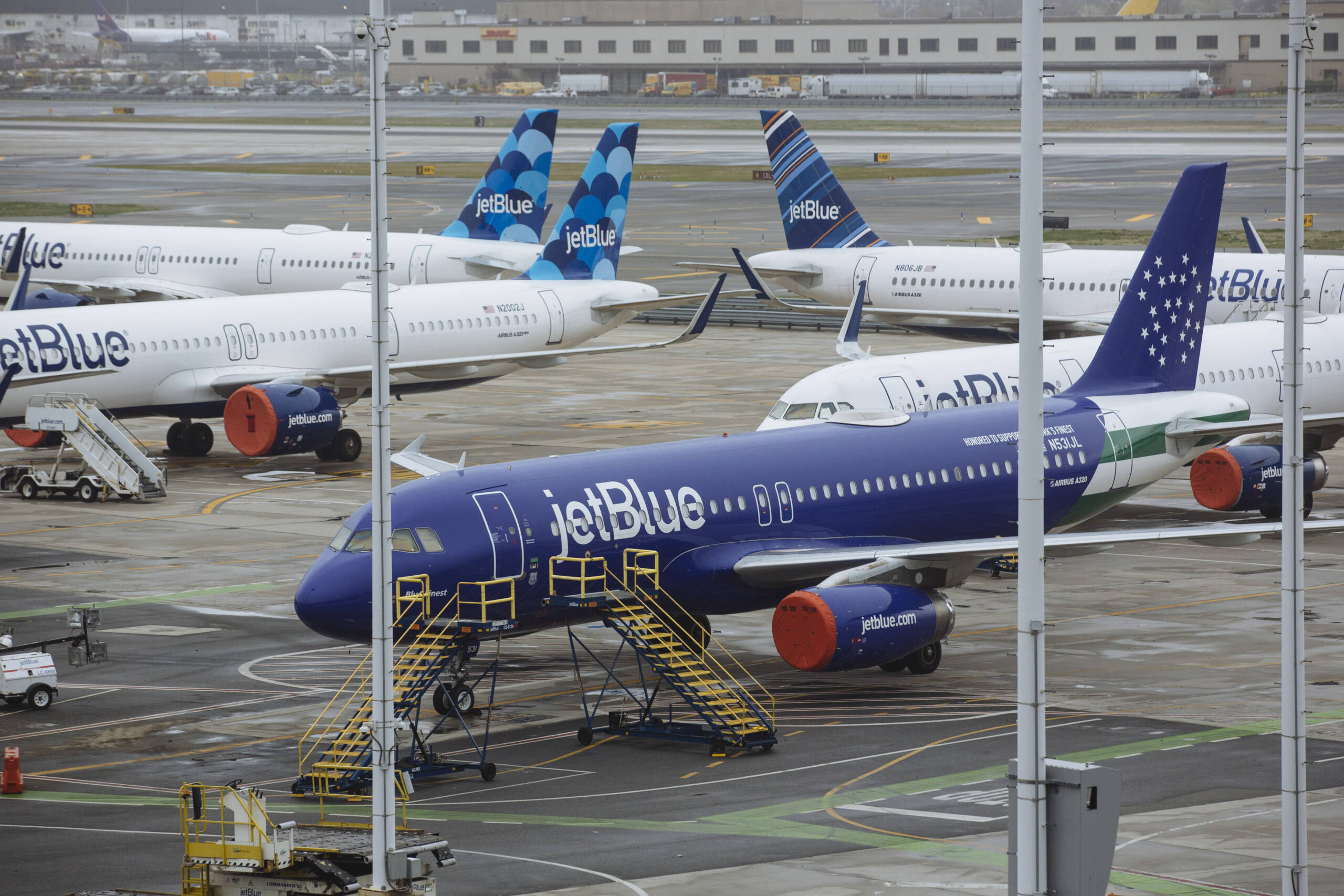
JetBlue aircraft parked at New York JFK. (Image by Angus Mordant/Bloomberg via Getty Images

The cost of maintaining service to multiple cities with few — if any — travelers flying varies across airlines. The amount is based on their respective cost structures and includes factors from fuel expenses to ground-services arrangements. In its DOT application, Spirit pointed out that — as an ultra low-cost carrier — it outsources most ground services. In other words, those labor costs are not covered by its payroll assistance.

Allegiant Air estimates that it would cost roughly $4.7 million to continue service for six months to the 21 airports where it has sought waivers. While the Las Vegas-based carrier has not said how much aid it has agreed to take from the Treasury, its average monthly salary and benefit expenses were $37.5 million in 2019 — eight-fold more than the cost to continue the flights.

Assuming Allegiant is awarded roughly 75% of its payroll expenses as other airlines were, the carrier would receive around $28 million from the CARES Act. This calculus suggests that the financial benefit of the payroll funds outweigh the operational losses of the air service strings.

Related: US airlines' first bailout aid was tougher to get and came with more strings than expected

Cowen analyst Helane Becker agreed that airlines are unlikely to turn down the assistance due to the DOT's decisions.

"We don't think any airline is in a position to reject the financing at this point," she told TPG. "We have seen a 100% takedown of the airline industry and traffic is down 96% so not taking the money isn't an option."

Spirit spokesperson Field Sutton told TPG that the airline would "fully comply with the U.S. Department of Transportation requirements," indicating they will accept the waivers decision.

JetBlue was immediately available to comment on the matter.

Industry organization Airlines for America (A4A) data shows there were on average less than 10 passengers per flight during the week ending April 14 as travelers stay home to avoid and stop the spread of COVID-19. In addition, net demand for future travel — new reservations minus cancellations — was down 99.5% year-over-year for the week ending March 29.

Related: It may be years until passenger demand returns to 2019 levels for US airlines

Forcing airlines to fly near-empty planes to dozens of cities around the country will have some consequences. Carriers could end up in worse shape financially after racking up unneeded fuel and airport expenses. In addition, the carbon emissions reduction that comes from grounding more aircraft will be lost.

The analyst consensus is that passenger numbers will be around 30% lower next year than in 2019. U.S. airlines will have to shrink, both their maps and their workforces, whether they they took CARES Act funds or not. The six-month flying obligation will give carriers time evaluate how many and where people are flying, and then make informed decisions on where they want to fly come Oct. 1.

"We have some tough decisions ahead as we plan for our airline, and our overall workforce, to be smaller than it is today, starting as early as October 1," United Airlines CEO Oscar Munoz and president Scott Kirby said in a warning to staff on April 15.

Related: How will airlines rebuild their route maps after the coronavirus?
Featured image by SOPA Images/LightRocket via Gett

TPG featured card

Best for businesses with high spending
TPG Editor‘s Rating
4.5 / 5
Go to review

Rewards

2 - 10X miles

Intro offer

LIMITED-TIME OFFER: Earn up to 400K bonus miles

Annual Fee

$395

Recommended Credit

740-850
Excellent

Why We Chose It

The Capital One Venture X Business Card has all the Capital One Venture X Rewards Credit Card has to offer and more. It offers an incredible welcome bonus and requires an equally impressive spend to qualify. In addition, the card comes with premium travel perks like annual travel credit. (Partner offer)

Pros

  • The Capital One Venture X business card has a very lucrative welcome offer.
  • In addition, the card comes with many premium travel perks such as an annual $300 credit for bookings through Capital One Business Travel.
  • Business owners are also able to add employee cards for free.

Cons

  • The card requires significant spending to earn the welcome offer.
  • Another drawback is that the annual travel credit can only be used on bookings made through Capital One Business Travel.
  • LIMITED-TIME OFFER: Earn up to 400K bonus miles: 200K miles when you spend $30K in the first 3 months, and an additional 200k miles when you spend $150k in the first 6 months
  • Earn unlimited 2X miles on every purchase, everywhere—with no limits or category restrictions
  • Earn 10X miles on hotels and rental cars and 5X miles on flights and vacation rentals booked through Capital One Business Travel
  • With no preset spending limit, enjoy big purchasing power that adapts so you can spend more and earn more rewards
  • Empower your teams to make business purchases while earning rewards on their transactions, with free employee and virtual cards. Plus, automatically sync your transaction data with your accounting software and pay your vendors with ease
  • Redeem your miles on flights, hotels and more. Plus, transfer your miles to any of the 15+ travel loyalty programs
  • Every year, you'll get 10,000 bonus miles after your account anniversary date. Plus, receive an annual $300 credit for bookings made through Capital One Business Travel
  • Receive up to a $120 credit for Global Entry or TSA PreCheck®. Enjoy access to 1,300+ airport lounges worldwide, including Capital One Lounge locations and Priority Pass™ lounges, after enrollment
  • Enjoy a $100 experience credit and other premium benefits with every hotel and vacation rental booked from the Premier Collection
  • This is a pay-in-full card, so your balance is due in full every month
Apply for Capital One Venture X Business
at Capital One's secure site
Terms & restrictions apply. See rates & fees
Best for businesses with high spending
TPG Editor‘s Rating
4.5 / 5
Go to review

Rewards Rate

2X miles2 miles per dollar on every purchase
5X miles5 miles per dollar on flights and vacation rentals booked through Capital One Business Travel
10X miles10 miles per dollar on hotels and rental cars booked through Capital One Business Travel
  • Intro Offer

    LIMITED-TIME OFFER: Earn up to 400K bonus miles
  • Annual Fee

    $395
  • Recommended Credit

    740-850
    Excellent

Why We Chose It

The Capital One Venture X Business Card has all the Capital One Venture X Rewards Credit Card has to offer and more. It offers an incredible welcome bonus and requires an equally impressive spend to qualify. In addition, the card comes with premium travel perks like annual travel credit. (Partner offer)

Pros

  • The Capital One Venture X business card has a very lucrative welcome offer.
  • In addition, the card comes with many premium travel perks such as an annual $300 credit for bookings through Capital One Business Travel.
  • Business owners are also able to add employee cards for free.

Cons

  • The card requires significant spending to earn the welcome offer.
  • Another drawback is that the annual travel credit can only be used on bookings made through Capital One Business Travel.
  • LIMITED-TIME OFFER: Earn up to 400K bonus miles: 200K miles when you spend $30K in the first 3 months, and an additional 200k miles when you spend $150k in the first 6 months
  • Earn unlimited 2X miles on every purchase, everywhere—with no limits or category restrictions
  • Earn 10X miles on hotels and rental cars and 5X miles on flights and vacation rentals booked through Capital One Business Travel
  • With no preset spending limit, enjoy big purchasing power that adapts so you can spend more and earn more rewards
  • Empower your teams to make business purchases while earning rewards on their transactions, with free employee and virtual cards. Plus, automatically sync your transaction data with your accounting software and pay your vendors with ease
  • Redeem your miles on flights, hotels and more. Plus, transfer your miles to any of the 15+ travel loyalty programs
  • Every year, you'll get 10,000 bonus miles after your account anniversary date. Plus, receive an annual $300 credit for bookings made through Capital One Business Travel
  • Receive up to a $120 credit for Global Entry or TSA PreCheck®. Enjoy access to 1,300+ airport lounges worldwide, including Capital One Lounge locations and Priority Pass™ lounges, after enrollment
  • Enjoy a $100 experience credit and other premium benefits with every hotel and vacation rental booked from the Premier Collection
  • This is a pay-in-full card, so your balance is due in full every month