Why You Should Always Wear Sunscreen on a Plane


For many, scoring a window seat on an airplane is cause for celebration. You not only have a built-in headrest and won't get hit by the food cart, but you also get the best views. Those pluses, however, come with a serious downside: sun exposure.
While travelers are warned incessantly about sunburn risks during beach vacations and even ski getaways, taking protective skincare measures at 30,000 feet is not something typically discussed. Yet you could have a greater risk for sun damage while flying than when you're on the ground.
"Airplane windows are typically made of polycarbonate plastic or layered composite glass," New York City-based dermatologist Cherise Mizrahi-Levi told TPG. "While there is negligible transmission of UVB rays through plastic and glass windshields, UVA transmission through these windows is significant."
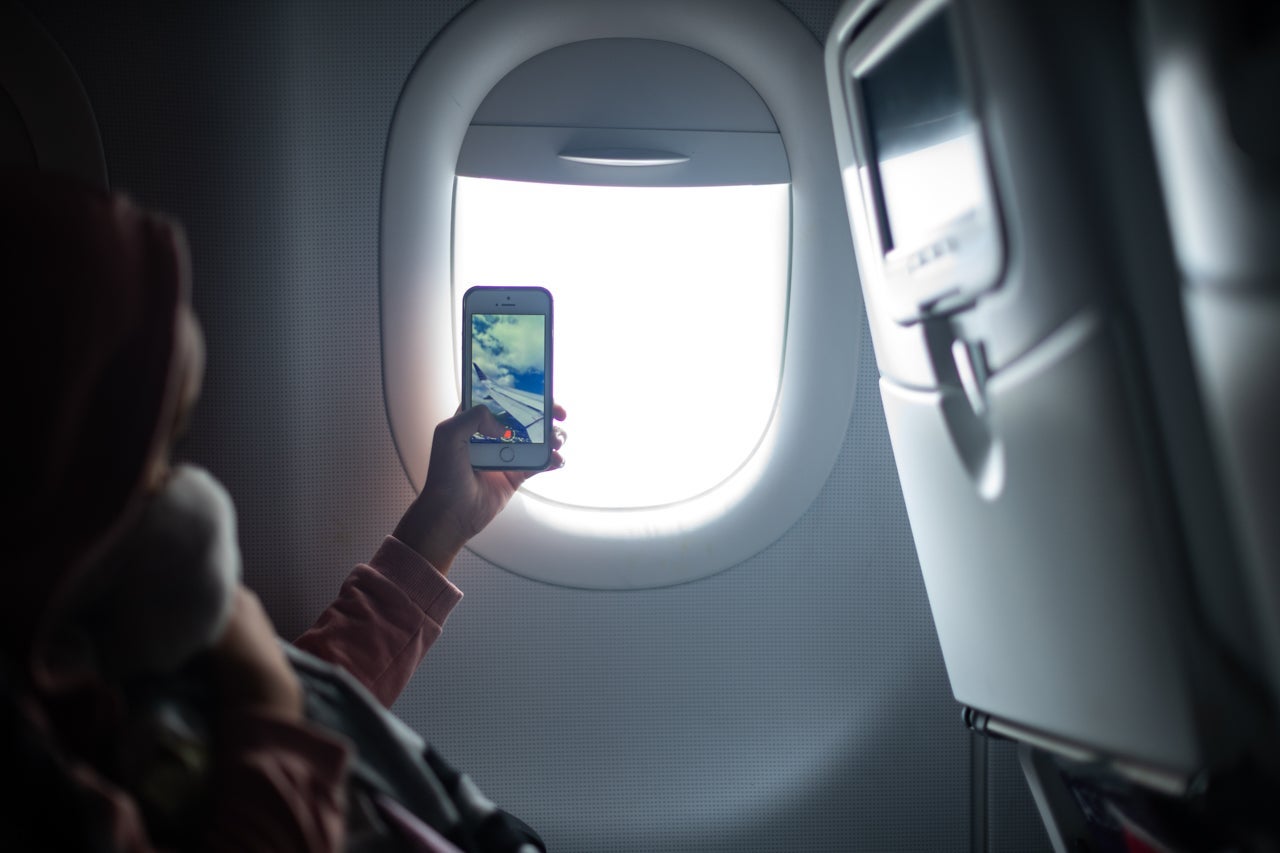
Why is that important? Well, though you won't necessarily get a sunburn since that's caused primarily by UVB radiation, UVA rays penetrate the deeper layers of skin and are known to cause photoaging (sun spots and wrinkling).
And since you're closer to the ozone layer — almost six miles closer to be more exact — the sun's rays are simply more powerful. Plus, extended exposure to UVA rays can contribute to the development of skin cancers.
In fact, The Journal of the American Medical Association reported that the plane's windows stopped about 99% of UVB rays, but only about half of UVA rays. That means about an hour of exposure on a plane is the equivalent of 20 minutes in a tanning bed. And, according to SkinCancer.org, there is no safe amount of time you should spend in a tanning bed. If you've ever used one, your chances
So then, is a 10-hour flight equivalent to 10 hours on the beach? Not exactly.
"With 10 hours on a flight, you will be mostly protected from UVB rays, and have partial protection from UVA rays from the aircraft and composition of the windows," Mizrahi-Levi said. "However, there is still significant UVA exposure through the airplane windows."
"Furthermore, the actual amount of UVA in the atmosphere is much higher at higher altitudes; thus, the effective carcinogenic (cancer-causing) dose is significantly higher at thousands of feet in the air compared to at sea level."

That's why it's not surprising that those at the highest risk are pilots. The New York Times reported they have markedly higher rates of skin cancer, likely due to the prolonged exposure in front of the plane's windshield. Though passengers are sitting next to much smaller windows for much shorter periods of time, they should still take precautions.

How to Protect Yourself From Sun Exposure
"Travelers should wear a broad-spectrum sunscreen with both UVA and UVB protection, at a minimum of SPF 30," warned Mizrahi-Levi. "As a general rule of thumb, you should apply sunscreen 15 minutes before going outside and reapply every two hours during UV exposure."
If you jetset often, other protective measures you should take include sitting in the aisle seat to minimize atmospheric UVA exposure and, if in the window seat, closing the shade, especially while flying at high altitudes. You could also opt for evening flights.
"The most intense UV exposure and the highest risk of sun damage occurs between the hours of 10am and 4pm," Mizrahi-Levi said. Just be wary of messing with your circadian rhythm too much, because that could lead to other health issues.
And it's not just on planes that travelers should be cautious about UVA ray exposure. People sitting next to train or car windows are susceptible to the same levels of sun exposure, according to Mizrahi-Levi. "If it's your car, I recommend having additional UV protective window tinting placed on the windows."
If you're outdoors, you already know it's important to wear sunscreen. But also consider altitude if you're planning a hiking or skiing trip.
"Doing activities at higher altitudes exposes you to increased UV radiation," said Mizrahi-Levi. "Therefore, it's always important to wear and reapply sunscreen and an SPF lip balm while exercising or doing any outdoor activity at high altitudes."
The CDC also warns travelers about sun exposure at places close to the equator and during summer months. And the reflection from the snow, sand and water increases exposure to both UVB as well as UVA rays, and therefore ups your risk.
Their top tips? Stay in the shade during that peak period Mizrahi-Levi mentioned; wear clothing that covers as much of your skin as possible; use a hat to shade the head, face, neck and ears; wear sunglasses that block both UVA and UVB rays; and make sure you use up-to-date sunscreen (toss it if it's over two years old) to ensure you're getting maximum protection.
TPG featured card
at American Express's secure site
Terms & restrictions apply. See rates & fees.
| 4X | Earn 4X Membership Rewards® points per dollar spent on purchases at restaurants worldwide, on up to $50,000 in purchases per calendar year, then 1X points for the rest of the year. |
| 4X | Earn 4X Membership Rewards® points per dollar spent at US supermarkets, on up to $25,000 in purchases per calendar year, then 1X points for the rest of the year. |
| 5X | Earn 5X Membership Rewards® points on prepaid hotel stays booked through AmexTravel.com or the Amex Travel App™. |
| 3X | Earn 3X Membership Rewards® points on flights booked through AmexTravel.com, the Amex Travel App™, or purchased directly from airlines. |
| 2X | Earn 2X Membership Rewards® points on prepaid car rentals booked through AmexTravel.com or the Amex Travel App™ and cruises booked and paid through AmexTravel.com. |
| 1X | Earn 1X Membership Rewards® point per dollar spent on all other eligible purchases. |
Pros
- Valuable dining and food-related credits
- Flexible rewards with airline and hotel transfer partners
- Multiple travel and purchase protections
- No foreign transaction fees
- Access to Amex Offers for additional savings (enrollment required)
Cons
- Not as useful for those living outside the U.S.
- Some may have trouble using Uber and other dining credits
- You may be eligible for as high as 100,000 Membership Rewards® Points after you spend $8,000 in eligible purchases on your new Card in your first 6 months of Card Membership. Welcome offers vary and you may not be eligible for an offer. Apply to know if you’re approved and find out your exact welcome offer amount – all with no credit score impact. If you’re approved and choose to accept the Card, your score may be impacted.
- Earn 4X Membership Rewards® points per dollar spent on purchases at restaurants worldwide, on up to $50,000 in purchases per calendar year, then 1X points for the rest of the year.
- Earn 4X Membership Rewards® points per dollar spent at US supermarkets, on up to $25,000 in purchases per calendar year, then 1X points for the rest of the year.
- Earn 5X Membership Rewards® points on prepaid hotel stays booked through AmexTravel.com or the Amex Travel App™.
- Earn 3X Membership Rewards® points on flights booked through AmexTravel.com, the Amex Travel App™, or purchased directly from airlines.
- Earn 2X Membership Rewards® points on prepaid car rentals booked through AmexTravel.com or the Amex Travel App™ and cruises booked and paid through AmexTravel.com.
- Earn 1X Membership Rewards® point per dollar spent on all other eligible purchases.
- Pay It® lets you tap in the American Express® App to quickly pay for small purchase amounts throughout the month and still earn rewards the way you usually do. Plan It® gives you the option to split up big purchases into equal monthly payments with a fixed fee. You’ll know upfront exactly how much you’ll pay.
- $120 Dining Credit: Earn up to a total of $10 in statement credits monthly when you pay with the Gold Card at Grubhub (including Seamless), Buffalo Wild Wings, Five Guys, The Cheesecake Factory, and Wonder. This can be an annual savings of up to $120. Enrollment required.
- $100 Resy Credit: Get up to $100 in statement credits each calendar year at over 10,000 qualifying U.S. Resy restaurants after you pay for eligible purchases with the American Express® Gold Card. That’s up to $50 in statement credits semi-annually. Enrollment required.
- $84 Dunkin' Credit: Earn up to $7 in monthly statement credits after you pay with the American Express® Gold Card at U.S. Dunkin’ locations. Enrollment required.
- $120 Uber Cash on Gold: Enjoy up to $120 in Uber Cash annually with your Gold Card. Just add your Card to your Uber account and you'll get $10 in Uber Cash each month to use on orders and rides in the U.S. when you select an Amex Card for your transaction.
- Enjoy complimentary Hertz Five Star® Status benefits like skipping the counter at select locations, adding an additional driver at no additional cost*, and vehicle upgrades**. Benefit enrollment and Hertz Gold+ registration are required. *Additional drivers must meet standard rental qualifications and must be a spouse or domestic partner to qualify as complimentary. Other additional drivers subject to fees. **Benefits are subject to availability and vary by location. Additional Hertz program Terms and Conditions including age restrictions apply.
- Book two nights or more with The Hotel Collection through AmexTravel.com or the Amex Travel App™ and receive a $100* credit towards eligible charges at over 1,400 upscale hotels worldwide. *Eligible charges vary by property.
- Book your travel through the Amex Travel App™ with added peace of mind – backed by American Express® service and support. Only for American Express® Card Members.
- Whenever you need us, we're here. Our Member Services team will ensure you are taken care of. From lost Card replacement to statement questions, we are available to help 24/7.
- No Foreign Transaction Fees.
- Annual Fee is $325.
- Terms Apply.