TSA liquids rule: What to know about 3-1-1 before you head to the airport

Editor's note: This is a recurring post, regularly updated with new information.
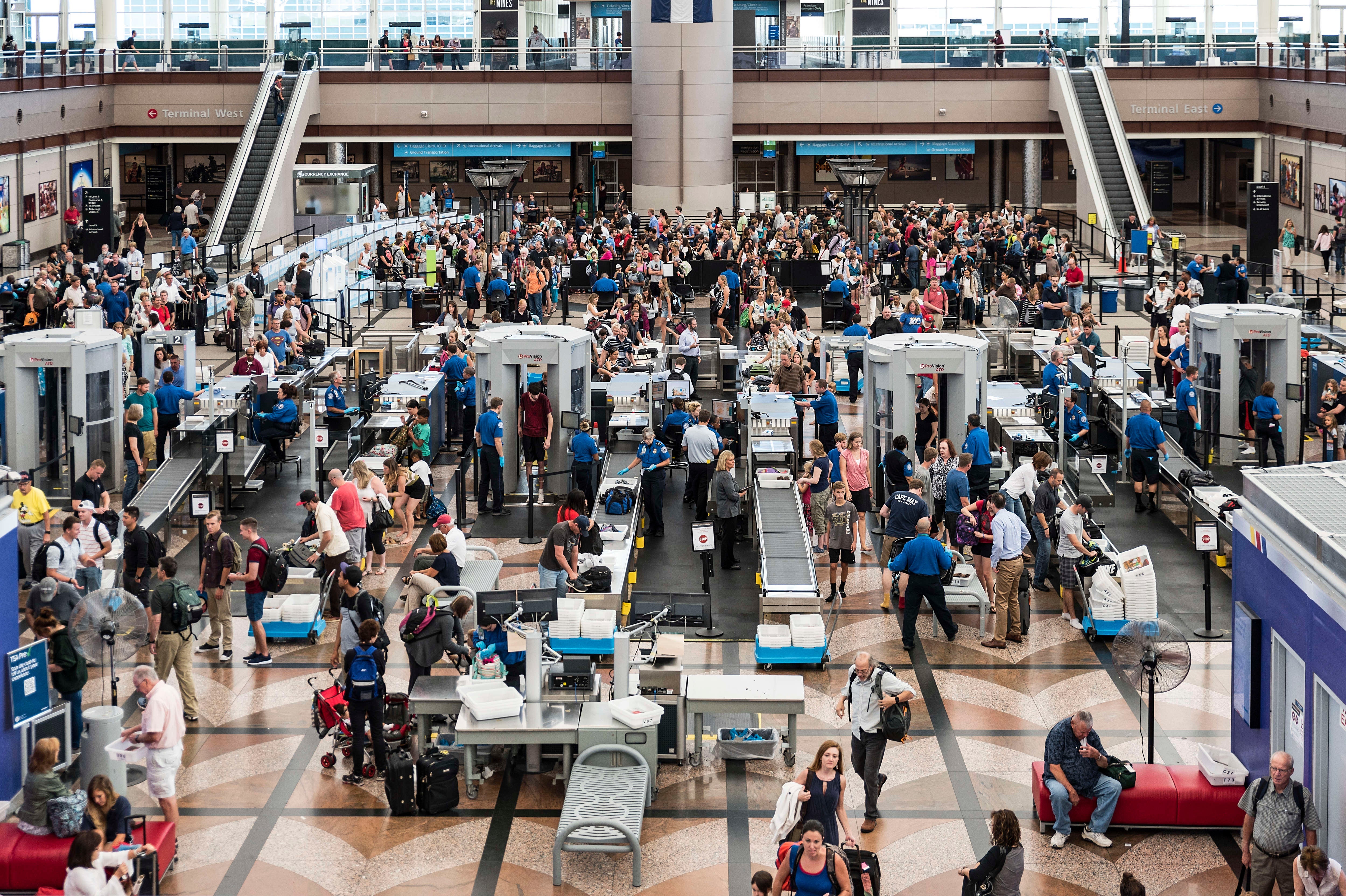
We've all been there: You're waiting in the Transportation Security Administration line, only to hear agents call for a "bag check."
Oftentimes, it's because a traveler has a liquid product in their carry-on that exceeds the allowed limit.
The ensuing process can slow things down — particularly when there's heavy passenger volume during peak travel times such as the holiday season.
Agents typically have to inspect the bag, determine what the prohibited item is and allow the traveler to decide whether to discard the item or take it back to their car.
But what exactly are the TSA liquid rules, and why do they exist? And, most importantly, what does this mean for packing ahead of your next trip?
Here's a quick rundown.
TSA liquids rules: Why do they exist?
The TSA's restrictions on liquids date back to 2006 when a thwarted terrorism plot overseas prompted the agency to limit quantities of liquids, gels and aerosols in carry-on bags.
Scores of other countries around the world took similar steps in the name of aviation security. You'll find comparable rules as you travel internationally — though the U.K. is moving toward removing these restrictions.

What is the TSA's 3-1-1 rule?
The TSA's ban on liquids — or at least large quantities of them — is governed by what's known as the "3-1-1 rule."
The decades-old policy states that:
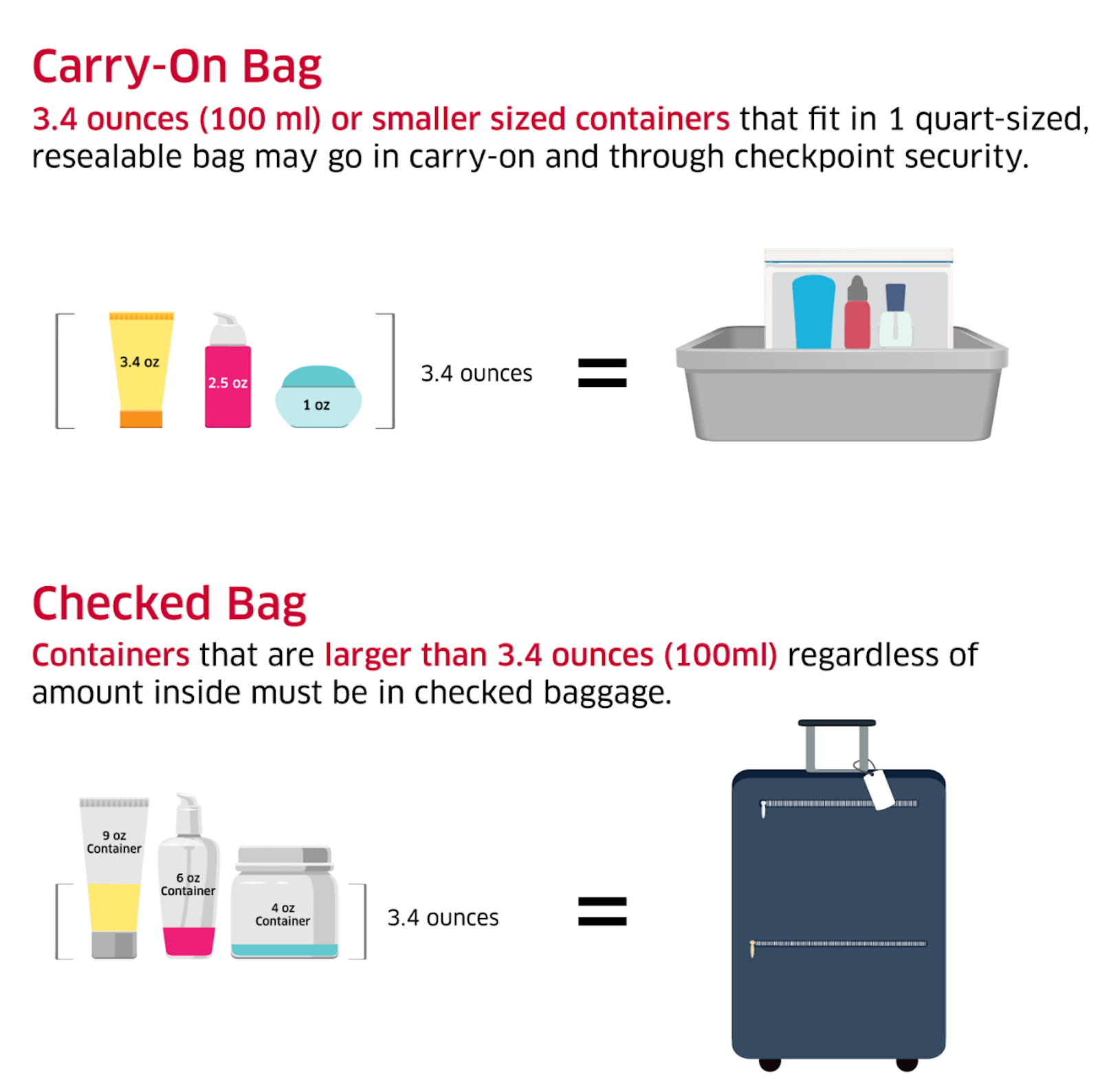
- Liquids must be in containers no larger than 3.4 ounces, or roughly 100 milliliters (that's the "3").
- All containers must be placed in one clear, quart-size plastic bag ("1").
- Each passenger is only allowed one such plastic bag ("1").
These rules govern liquids, gels and aerosol products ranging from toothpaste to shampoo, conditioner, mouthwash and sunscreen — among other products.
Liquid products larger than 3.4 ounces must be placed in a checked bag. That applies even to those large shampoo containers with just a tiny bit of shampoo left, per TSA policy.
Exceptions to the TSA's 3-1-1 policy
There are a few exceptions, though.
The TSA will allow you to bring "medically necessary" liquids, gels and aerosols "in reasonable quantities" for your flight. However, you must declare those items to security officers at the checkpoint for inspection.
The agency asks travelers with larger amounts of medically necessary liquids to remove them from the carry-on bag and place them in a bin or bowl. The TSA has a variety of alternative screening methods it can use.
What can you bring through a TSA checkpoint?
You can bring creamy cheeses, liquid chocolate, liquid coffee, creamy dips and spreads, gravy, honey, hummus, ice cream, jam, jelly, juice, syrup, peanut butter, salad dressing, sauce, salsa, soda, soup and yogurt as long as they are in a container of less than 3.4 ounces, according to the TSA.
You can bring your water bottle with you — as long as it's empty. This can also be a great way to save money at the airport, since many now have post-security filling stations for reusable water bottles.
When in doubt, consult the TSA's list of what you can carry through the airport and check with your airline.
Or, better yet, download the MyTSA app. It contains a "Can I Bring?" section, allowing you to look up items and find out whether they're allowed outright, restricted to 3.4 ounces, permitted only in a checked bag, permitted only in a carry-on bag or prohibited altogether.
What about Thanksgiving food?
The 3-1-1 rules will be particularly important to remember as the TSA prepares to screen some 18.3 million people during this Thanksgiving week — with Sunday, Dec. 1, shaping up to be perhaps the busiest day ever at U.S. airports.
It's a safe bet a large portion of those passengers will be flying with Thanksgiving table staples — or leftovers — some of which blur the lines between "liquid" and "solid."
The TSA's rule of thumb: "If you can spill it, spread it, spray it, pump it or pour it, and it's larger than 3.4 ounces, then it should go in a checked bag."

Specifically, the TSA says turkey, stuffing, casseroles and mac and cheese should be safe to carry on — along with pies, cakes, cookies and brownies.
The TSA notes some food items may need additional screening, even if they do comply with 3-1-1 rules, so be sure to pack components of your Thanksgiving meal in easily accessible locations in your carry-on bag.
On the other hand, cranberry sauce, gravy, canned fruits and canned vegetables are a "no-go" for your carry-on; you'll want to check those items (unless they are frozen solid).
Related reading:
- When is the best time to book flights for the cheapest airfare?
- The best airline credit cards
- What exactly are airline miles, anyway?
- 6 real-life strategies you can use when your flight is canceled or delayed
- Maximize your airfare: The best credit cards for booking flights
- The best credit cards to reach elite status
TPG featured card

at Capital One's secure site
Terms & restrictions apply. See rates & fees.
| 5X miles | Earn 5X miles on hotels, vacation rentals and rental cars booked through Capital One Travel |
| 2X miles | Earn unlimited 2X miles on every purchase, every day |
Pros
- Stellar welcome offer of 75,000 miles after spending $4,000 on purchases in the first three months from account opening. Plus, a $250 Capital One Travel credit to use in your first cardholder year upon account opening.
- You'll earn 2 miles per dollar on every purchase, which means you won't have to worry about memorizing bonus categories
- Rewards are versatile and can be redeemed for a statement credit or transferred to Capital One’s transfer partners
Cons
- Highest bonus-earning categories only on travel booked via Capital One Travel
- LIMITED-TIME OFFER: Enjoy $250 to use on Capital One Travel in your first cardholder year, plus earn 75,000 bonus miles once you spend $4,000 on purchases within the first 3 months from account opening - that’s equal to $1,000 in travel
- Earn unlimited 2X miles on every purchase, every day
- Earn 5X miles on hotels, vacation rentals and rental cars booked through Capital One Travel
- Miles won't expire for the life of the account and there's no limit to how many you can earn
- Receive up to a $120 credit for Global Entry or TSA PreCheck®
- Use your miles to get reimbursed for any travel purchase—or redeem by booking a trip through Capital One Travel
- Enjoy a $50 experience credit and other premium benefits with every hotel and vacation rental booked from the Lifestyle Collection
- Transfer your miles to your choice of 15+ travel loyalty programs
- Top rated mobile app