The Polite Way to Deal With In-Flight Flatulence

Welcome to Travel Etiquette, a new TPG column that explores the fragile social contracts and the delicate dos and don'ts of travel. Have an opinion or suggestion for a future subject? Sound off in the comments below.
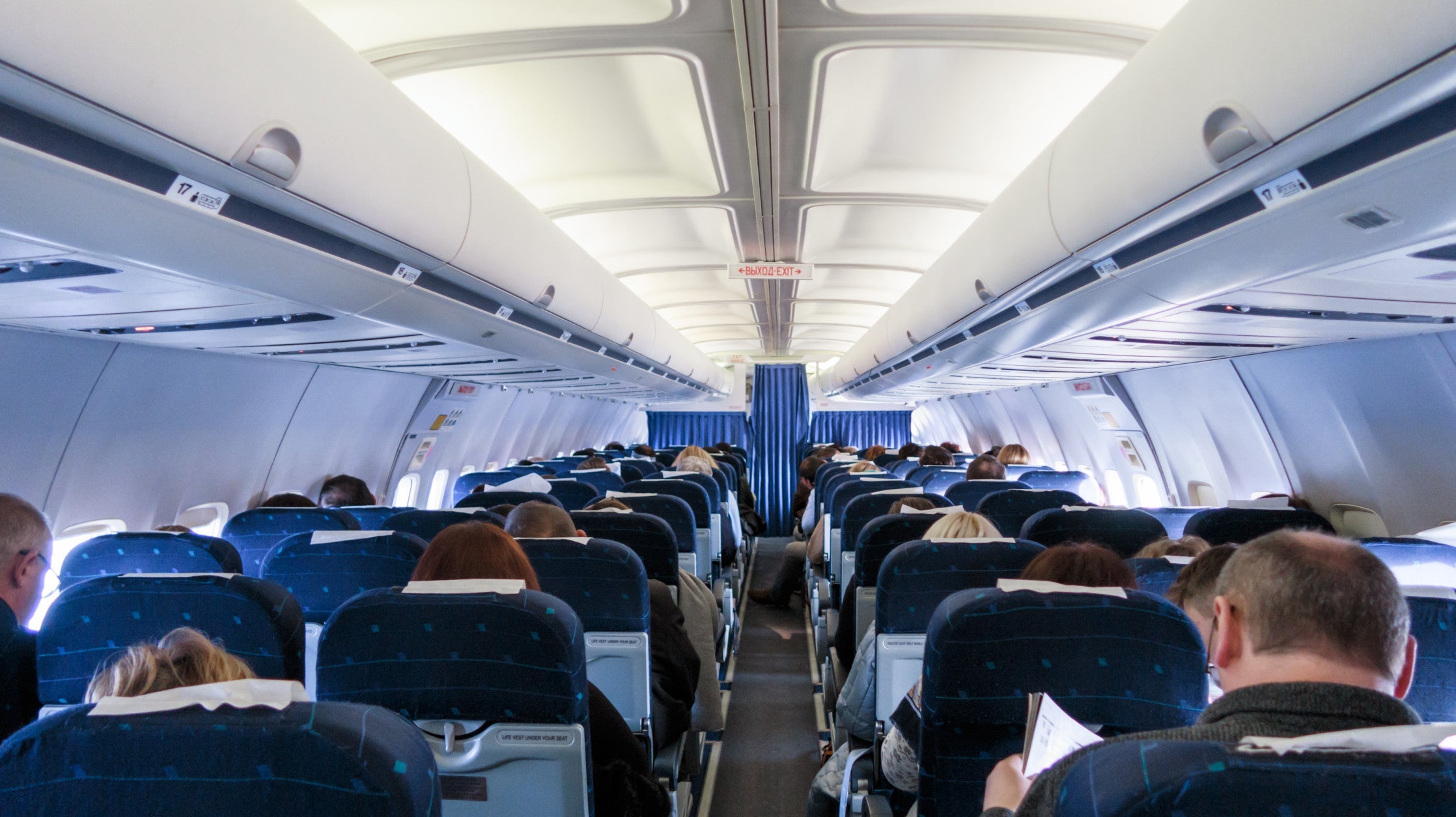
The nightmare and pet peeve of travelers alike, feeling flatulent on flights is a very valid and very common occurrence. Of course, odors in general are unpleasant at best in an enclosed environment, especially when air is being recycled repeatedly for up to 19 hours at a time.
If your ego can bear it, think of your body as a giant balloon. A pressurized aircraft cabin is designed to keep you alive and oxygenated while in an unnatural environment; it isn't calibrated for other bodily functions. "As the pressure around you decreases, the gas in your belly isn't constrained as much and it expands. This can make you feel bloated or become distended," said Dr. Lawrence J. Brandt, Emeritus Chief of the division of gastroenterology at Montefiore Medical Center in New York.
It's all well and good to understand what's happening within your body, of course. But from a social standpoint, what exactly is a traveler to do with all that unwanted air? To paraphrase an old adage, is it better to pass the gas and bear the shame, or to hold it in and bear the pain?
What the experts say
"If you have to go, you have to go," said TPG flight attendant insider Carrie A. Trey. "Pressure makes people gassy. All your gasses inside are changing, and with the pressure, they need somewhere to go. At the end of the day, you're on public transportation. Other people are going to do it, and you're going to do it. There's not much you can do about that!"
Frequent traveler Dr. Drake Coffey, clinical instructor of emergency medicine at Harvard Medical School, counsels travelers to heed their own intuition when expelling gas and caring for other bodily functions. "Each traveler has to follow [his or her] own barometer, but I suggest listening to one's own body and acting accordingly."
While there are little to no long-term harmful effects to holding in gas, Coffey warned that "holding in gas can actually be quite painful, especially if you have any underlying conditions like Irritable Bowel Syndrome." Coffey also mentioned that passengers who hold their bladders for prolonged periods can experience swelling of the urinary system, called hydronephrosis. "Most people know when they can wait and when they just cannot, so do what must be done. We've all been on both sides of that aisle."
For travelers hoping to avoid the awkward dilemma altogether, your body may be more on your side than you know. "The body's nervous system has a way of dampening, or 'turning down the volume,' on signals from the bladder and colon when the conscious mind knows that the body isn't in a good place to relieve itself," Coffey said. "As long as you feel comfortable and in control, it's fine to delay going to the bathroom if you find yourself in an inconvenient spot, like a window seat on a plane."
Show courtesy by doing your business in private
Every source interviewed by TPG strongly urged gassy passengers to visit the lavatory to relieve themselves. This isn't just for the benefit of others; it can be deeply embarrassing to be caught by a fellow traveler and continue sitting next to them for the next half-day in acute awkwardness.

Yet from an sanitation perspective, passing gas in the bathroom rather than in public doesn't make a drastic difference for the health of your fellow passengers. Approximately 50% of the air on-board is recycled through the same type of high-efficiency particulate air filters that hospitals use; the rest is fresh air from outside.
There are other considerations as well. These days, the "seatbelts fastened" light seems to remain on continuously, making it difficult for travelers to feel comfortable going to the lavatory "against the rules." This is where Trey advises common sense and awareness. "If you have to go, you have to go," she said.
"If turbulence is obviously bad enough that you can't walk up the aisle, stay in your seat, for your safety and that of those around you, because if a 180-pound [person] falls on somebody, that's going to hurt them." Trey mentioned that European carriers tend to utilize the seatbelt sign with far more conservatism, which makes it easier for travelers to decide whether or not it's right for them to get up.
The whens and wheres of eliminating gas while in a public space "is more of a social question than a medical one," said frequent road warrior Dr. Amy Faith Ho, an emergency medicine physician based in Dallas. "The social contract of the window seat is that the aisle seat occupant knows they may be frequently interrupted to let the middle and window seat passengers out of the row. And if I were in the aisle seat, I'd rather let the person with an upset GI tract go to the bathroom rather than sit in [their] odors all flight."
For extra measure, Ho jokingly suggested "butt toward the seat back, front towards the passenger" when exiting the row to avoid accidental cropdusting. "Simple politeness!"
Flatulence as a firepower
On rare occasions, your biggest nightmare in normal social situations can become your most satisfactory source of passive-aggressive revenge in negative settings. In fact, Trey joked that flight attendants will absolutely cropdust passengers who have given them a particularly difficult time. "We'll ask each other if there's a passenger that someone doesn't like, and we target them the next time we have to go down the aisle."
At the end of the day, if you can't leave your seat in time to eliminate your gas in the privacy of the restroom, anonymity is on your side, Trey said. "With so many people around you, it could be anyone." But whenever possible, Trey strongly recommends common courtesy and compassion for other passengers. "If you have any self-respect and any [respect] for your fellow [passengers], and if you can do so safely? Get up and go."
TPG featured card

at Capital One's secure site
Terms & restrictions apply. See rates & fees.
| 5X miles | Earn 5X miles on hotels, vacation rentals and rental cars booked through Capital One Travel |
| 2X miles | Earn unlimited 2X miles on every purchase, every day |
Pros
- Stellar welcome offer of 75,000 miles after spending $4,000 on purchases in the first three months from account opening. Plus, a $250 Capital One Travel credit to use in your first cardholder year upon account opening.
- You'll earn 2 miles per dollar on every purchase, which means you won't have to worry about memorizing bonus categories
- Rewards are versatile and can be redeemed for a statement credit or transferred to Capital One’s transfer partners
Cons
- Highest bonus-earning categories only on travel booked via Capital One Travel
- LIMITED-TIME OFFER: Enjoy $250 to use on Capital One Travel in your first cardholder year, plus earn 75,000 bonus miles once you spend $4,000 on purchases within the first 3 months from account opening - that’s equal to $1,000 in travel
- Earn unlimited 2X miles on every purchase, every day
- Earn 5X miles on hotels, vacation rentals and rental cars booked through Capital One Travel
- Miles won't expire for the life of the account and there's no limit to how many you can earn
- Receive up to a $120 credit for Global Entry or TSA PreCheck®
- Use your miles to get reimbursed for any travel purchase—or redeem by booking a trip through Capital One Travel
- Enjoy a $50 experience credit and other premium benefits with every hotel and vacation rental booked from the Lifestyle Collection
- Transfer your miles to your choice of 15+ travel loyalty programs
- Top rated mobile app