English not your 1st language? Use these 8 tips to help your points and miles game


Living in a new country can be exciting. It can also be quite challenging if the language of your new country is different from your native tongue.
Learning to earn points and miles for free (or cheaper) travel is a great hobby to stumble upon. However, much of what's involved in this hobby can feel intimidating when English isn't your first language. Just ask my wife.
She has lived in the U.S. for 10-plus years and speaks great English. However, some parts of the points and miles hobby are still complicated, especially when it comes to banks and credit cards. When you call a bank, phone representatives often mumble — on top of the bad connection your call may have.
How do you navigate these issues so you can collect lots of points and miles when English isn't your first language? Let's look at some tips my wife and I have developed over the years.
[table-of-contents /]
Use chat or secure messages whenever possible
Out of all the tips, this one is the most important.
Phone calls with banks can be confusing for anyone. There's a mix of complex words, maybe a fuzzy connection and often someone reading a statement to you very quickly. Add the fact that many of the phone agents tend to mumble and it can be frustrating to talk to a bank, whether the conversation is in your first or fifth language.

Luckily, many banks have a chat or secure messaging feature. If your bank has this, take advantage of it. Reading what someone says to you can be much simpler than listening to it being spoken. If the message is unclear, you can copy and paste it into Google Translate.
My wife finds chat much simpler to understand than a phone call. Plus, I can sit next to her in case she has questions; eavesdropping or helping with a phone call can be more complicated.

Related: How 5 minutes of chat got me 85,000 points plus $150
Ask for help — on both sides of the call
That leads to my next tip: Be willing to ask for help when you need to make a call. You can ask a partner, friend or family member to assist you. You also can ask the person on the other side of the phone call for help. Don't be afraid to ask for explanations or ask the employee to repeat something.
If you're going to ask a friend or relative to help you during the phone call, most banks will need to verify your identity before someone else can join the phone call. Then, you can have a friend or family member help answer your questions or translate as needed.
Add an account manager
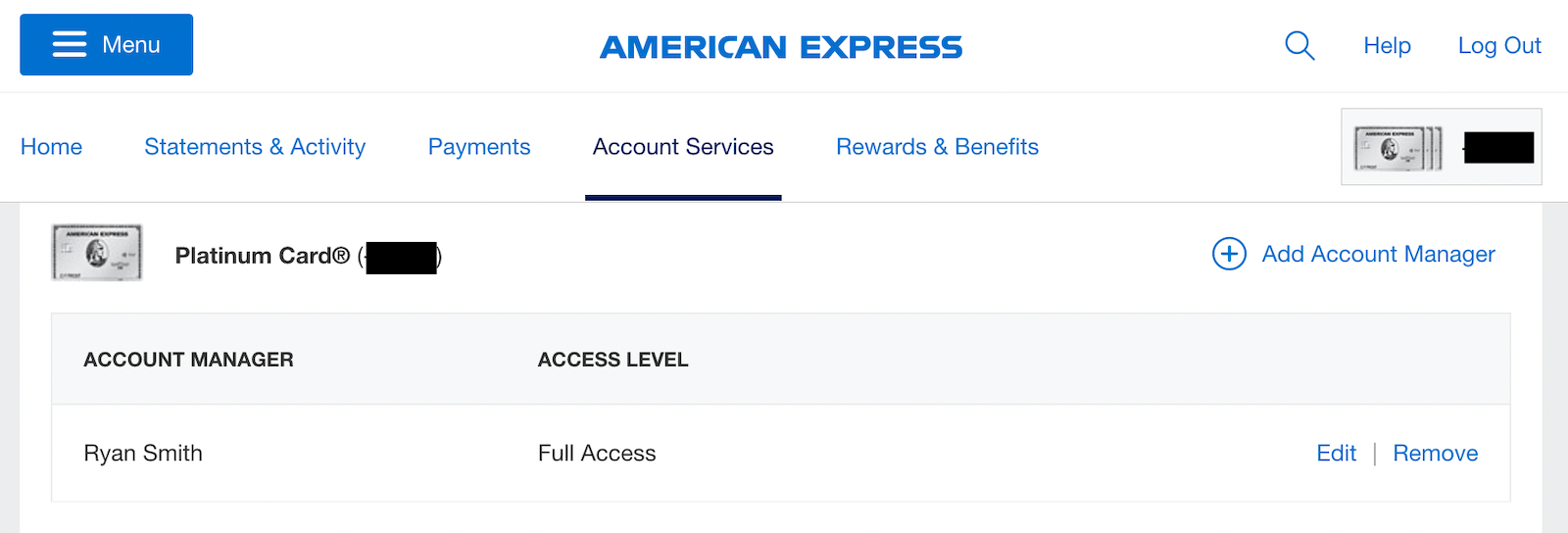
You may be able to have someone else make a phone call for you. This is if you have an account manager on your account. But while an account manager can do many things, there are limits. Account managers usually can't open, close or apply for a credit card.
There may also be times when a bank wants to talk to you about questionable account activity. This happened recently to my wife: Citi thought an online purchase was suspicious and wanted to talk to her about it. The bank insisted on speaking with my wife to make sure everything was OK — despite me being an account manager.
However, there are still many reasons why you may want to have an account manager. The person you choose as your account manager will be able to call to alert the bank when a card is lost, as well as make payments for you and ask about your card's benefits.
Practice before making phone calls
If you will need to call a bank or credit card company and are nervous about it, remember that "practice makes perfect." Ask a friend or relative to help you practice before the phone call. That way, you can think through what you need to say before you talk with a phone agent.
You likely know why you're calling and what you need to do during the phone call. However, practicing saying this out loud in English and repeating what you'll say so it's clear to the phone agent will make the real phone call much easier.
Get documents ready before picking up the phone
What if you need to call about a specific card, such as a United Airlines credit card? You've practiced for the phone call and know what you want to say, but before you start the phone call, you'll want to get all of the information you might need so you have it in front of you when you call.

My wife likes to have a pen and paper for taking notes, her driver's license for all of her personal details, the credit card she's calling about and anything else that may be related to that credit card. So if she's calling about a United credit card, she makes sure she has her United MileagePlus frequent flyer number handy just in case it's needed.
Think through the upcoming phone call, then collect anything you might need. This way, you don't have to search for it during your phone call.
Related: The ultimate guide to credit card application restrictions
Use a script
Preparing a script before your phone call can be very useful. Think about what you need to say, or ask a friend or family member to write it down for you. If you have a script, you don't have to worry about remembering what to say — you can just read it.
You can make a script for what to say when the call starts and also a script for answers to some questions the bank might ask you. When I help my wife with phone calls, I point to the answers we wrote down before the phone call. She then reads them to the phone agent.
Don't be afraid to ask for more time or to be put on hold
If you've used the strategies above and still encounter problems during a phone call, don't be afraid to tell the phone agent to wait. It's OK to say that you didn't understand a question or that you need time to find some information. Don't feel like every answer must be given immediately, as this pressure can make the phone call even more difficult.
If you're still having problems, ask the phone agent to put the call on hold. Use this time to find the information requested or to talk to the person who is helping you.
Hang up and call again if you don't like that phone representative
If you feel like your phone call isn't going well, end the call and try again. Hanging up and calling back can help you find an employee who is friendlier. Before you call again, take time to breathe and relax.
My wife sometimes hangs up the phone and calls again until she finds an agent with a nonnative accent. In her experience, those who also speak English as a second language tend to be more helpful.
Bottom line
Living in the U.S. can make it easy to earn points and miles, unlike what you may find if you live in another country. However, if English isn't your first language, the world of credit card points can seem really difficult to understand.
Luckily, there are tips you can use to help you talk to your bank. For example, as long as you tell your bank that someone is helping you with the phone call, it shouldn't be a problem and can make your interaction much easier.
TPG featured card

at American Express's secure site
Terms & restrictions apply. See rates & fees.
| 3X | Earn 3X Miles on Delta purchases. |
| 1X | Earn 1X Miles on all other eligible purchases. |
Pros
- Delta SkyClub access when flying Delta
- Annual companion ticket for travel on Delta (upon renewal)
- Ability to earn MQDs through spending
- Various statement credits for eligible purchases
Cons
- Steep annual fee of $650
- Other Delta cobranded cards offer superior earning categories
- Earn 100,000 Bonus Miles after you spend $6,000 or more in purchases with your new Card within the first 6 months of Card Membership and an additional 25,000 bonus miles after you make an additional $3,000 in purchases on the Card within your first 6 months, starting from the date that your account is opened. Offer Ends 04/01/2026.
- Delta SkyMiles® Reserve American Express Card Members receive 15 Visits per Medallion® Year to the Delta Sky Club® when flying Delta and can unlock an unlimited number of Visits after spending $75,000 in purchases on your Card in a calendar year. Plus, you’ll receive four One-Time Guest Passes each Medallion Year so you can share the experience with family and friends when traveling Delta together.
- Enjoy complimentary access to The Centurion® Lounge in the U.S. and select international locations (as set forth on the Centurion Lounge Website), Sidecar by The Centurion® Lounge in the U.S. (see the Centurion Lounge Website for more information on Sidecar by The Centurion® Lounge availability), and Escape Lounges when flying on a Delta flight booked with the Delta SkyMiles® Reserve American Express Card. § To access Sidecar by The Centurion® Lounge, Card Members must arrive within 90 minutes of their departing flight (including layovers). To access The Centurion® Lounge, Card Members must arrive within 3 hours of their departing flight. Effective July 8, 2026, during a layover, Card Members must arrive within 5 hours of the connecting flight.
- Receive $2,500 Medallion® Qualification Dollars with MQD Headstart each Medallion Qualification Year and earn $1 MQD for each $10 in purchases on your Delta SkyMiles® Reserve American Express Card with MQD Boost to get closer to Status next Medallion Year.
- Enjoy a Companion Certificate on a Delta First, Delta Comfort, or Delta Main round-trip flight to select destinations each year after renewal of your Card. The Companion Certificate requires payment of government-imposed taxes and fees of between $22 and $250 (for itineraries with up to four flight segments). Baggage charges and other restrictions apply. Delta Basic experiences are not eligible for this benefit.
- $240 Resy Credit: When you use your Delta SkyMiles® Reserve American Express Card for eligible purchases with U.S. Resy restaurants, you can earn up to $20 each month in statement credits. Enrollment required.
- $120 Rideshare Credit: Earn up to $10 back in statement credits each month after you use your Delta SkyMiles® Reserve American Express Card to pay for U.S. rideshare purchases with select providers. Enrollment required.
- Delta SkyMiles® Reserve American Express Card Members get 15% off when using miles to book Award Travel on Delta flights through delta.com and the Fly Delta app. Discount not applicable to partner-operated flights or to taxes and fees.
- With your Delta SkyMiles® Reserve American Express Card, receive upgrade priority over others with the same Medallion tier, product and fare experience purchased, and Million Miler milestone when you fly with Delta.
- Earn 3X Miles on Delta purchases and earn 1X Miles on all other eligible purchases.
- No Foreign Transaction Fees. Enjoy international travel without additional fees on purchases made abroad.
- $650 Annual Fee.
- Apply with confidence. Know if you're approved for a Card with no impact to your credit score. If you're approved and you choose to accept this Card, your credit score may be impacted.
- Terms Apply.
- See Rates & Fees