Psychology meets science: The strategy of commercial aircraft design
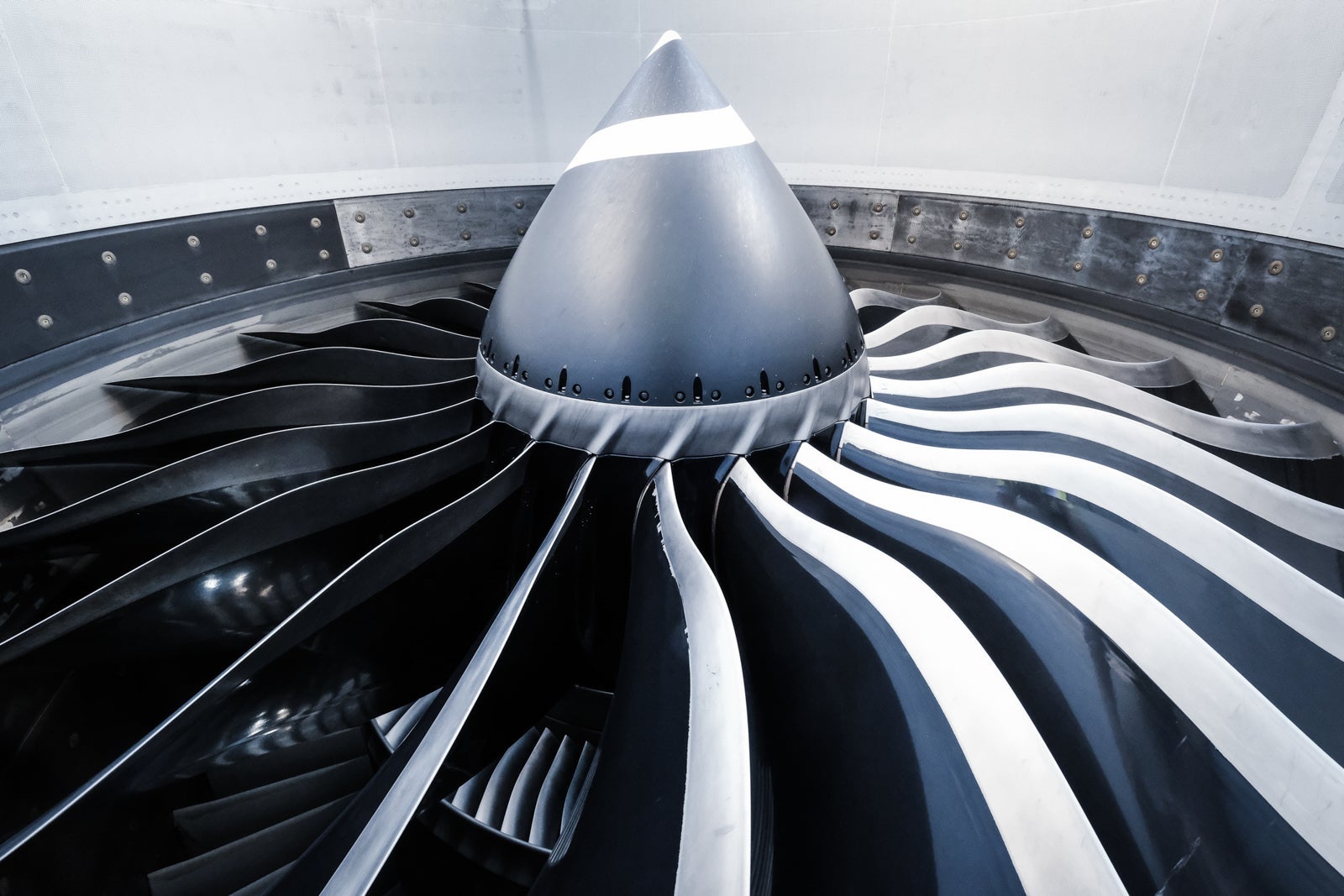
Next time you board an aircraft, notice the seats in front of you, the contour of the overhead bins, the rounded corners of the windows, even the oval shapes of light buttons and the air nozzle indentations.
Those curves are considered "friendlier" than angular shapes and teams of aircraft designers and scientists have put their heads together to make your spot in the cabin more comforting throughout the flight.
These cabin crafters use shapes, colors, patterns and lighting, plus technology and psychology, to influence how travelers feel on every flight.
"We anticipate things that [passengers] may not even realize they want," says Emma Kate Protis, a Delta spokesperson. "All of this is done with the understanding that if it doesn't truly improve their experience with Delta, it shouldn't be on the plane."
Sign up for the free daily TPG newsletter for more travel tips!
There are many passenger touchpoints in the travel experience. Airlines and airports place a high priority on each one, because customers remember how they're treated -- the ease of check-in, the colors and placement of the logo, etc. The airlines' biggest focus is on the place where customers spend the most time -- inside the cabin.
Art or science?
Cabin interior design relies on continual research and advancements in science and technology.
In the design process, the manufacturer offers a vision. When the 777 was introduced in the 1990s, the new shape of the airplane's body allowed Boeing and seat suppliers to offer airlines a wider seat in economy class. For the A380, Airbus told its team to "design the future of aviation." And although the A380 will cease deliveries after 2021, it left its mark on design.
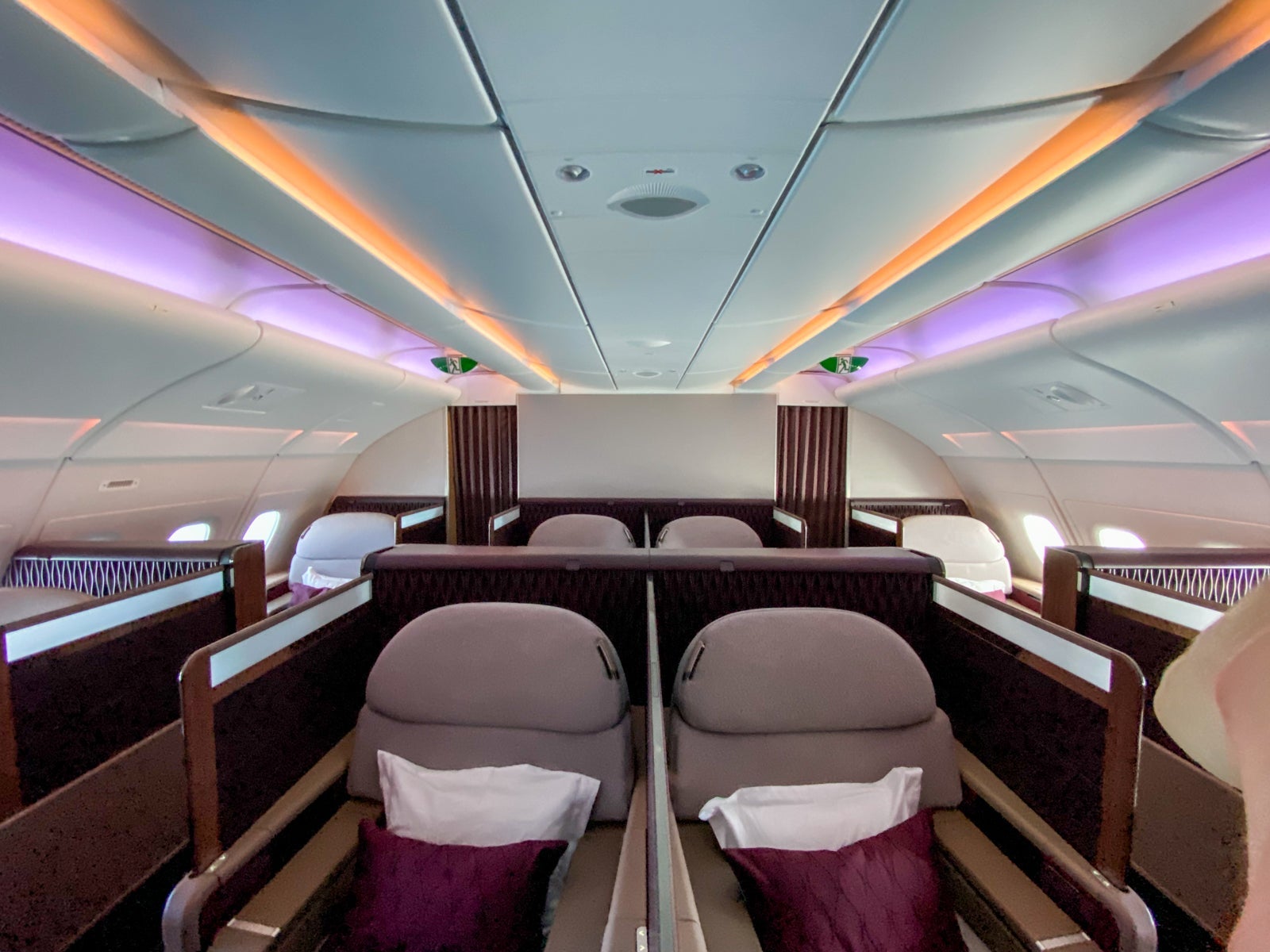
"The project that defined me was the A380 for the State of Qatar," says New York-based designer Edese Doret. "For that interior, we broke away from the traditional way private interiors looked. We treated it like a wide loft with a big open space. The principal laid out the criteria first and gave me layouts of their older aircraft and came up with a design theme."

Read more: 10 fun facts about the Airbus A380
Delta has an in-house team that is heavily involved in the design process and works closely with aircraft manufacturers to create its cabins. For example, the Airbus A220-100 holds up to 135 passengers; however, the early design had limited seat pitch (the distance between rows) and seat width, and reduced the size of the aircraft's lavatories. Listening to customer feedback from other aircraft, the design team at Delta reconfigured the seat map on the aircraft to accommodate only 109 customers to allow a more comfortable seat pitch.
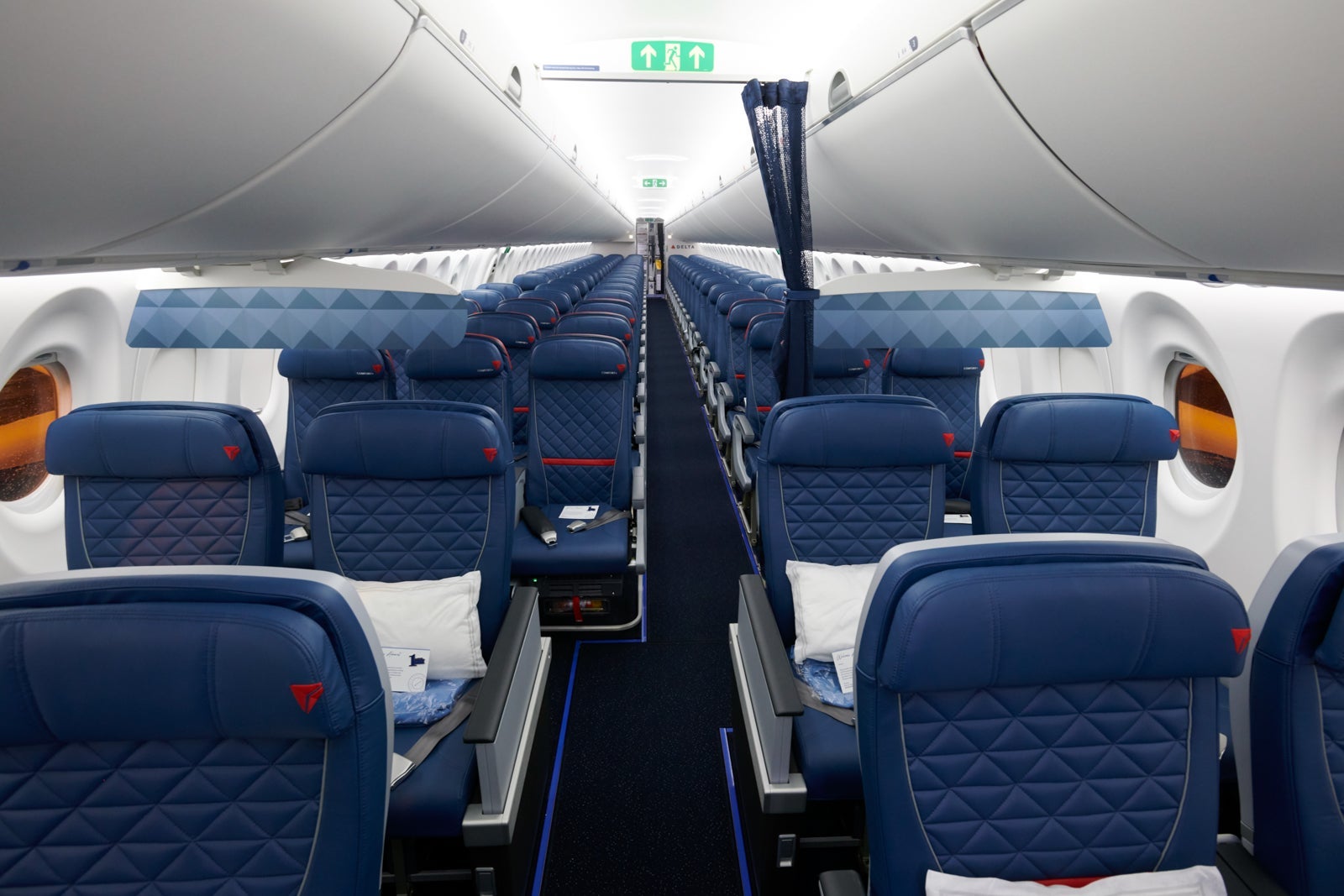
"For the launch of the A220 [in 2018], we wanted to set a high bar for the future of domestic flying," Protis says. "To accomplish this, we paid close attention to the changing needs and desires of our customers who are requesting wider seats, more legroom, and larger overhead bins in domestic aircraft."
As a result, Delta's A220 features the largest main cabin and Delta Comfort+ seats in their fleet, as well as high-capacity overhead bins for more space.
Disruptive airline seating
Upstart companies like London-based LAYER, which created a "disruptive" seat commissioned by Airbus, are changing the landscape – or airscape, if you will. Airbus approached LAYER to examine the economy-class experience and recommend improvements to the economy-class flying experience.
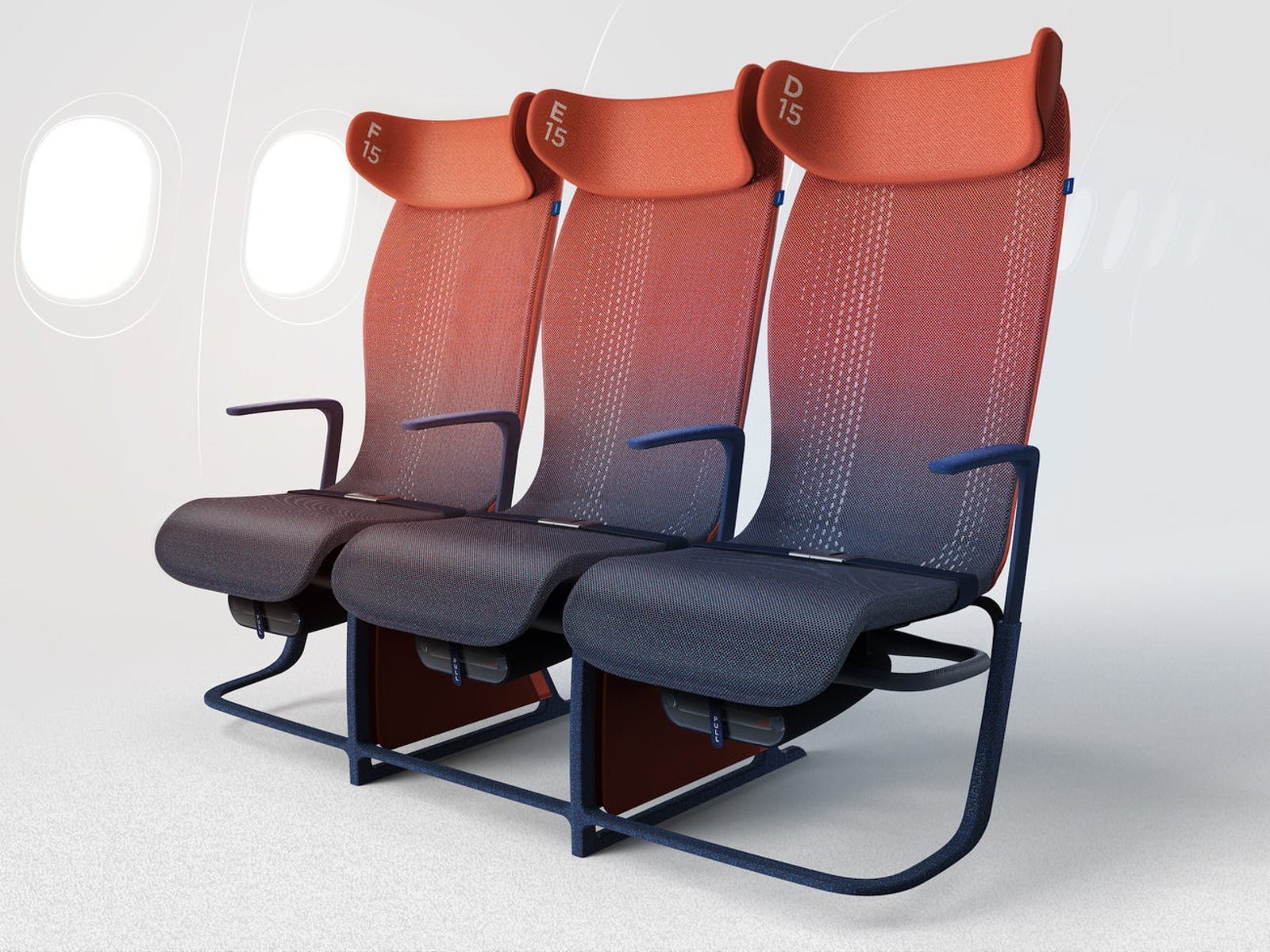
(Photo courtesy of LAYER)
LAYER started by looking at the materials and construction of office chairs and other lightweight furniture. The company found materials and structures that could be adapted for use in the airline industry to make more lightweight, sustainable seats.
The result was a seat called "Move" that is digitally knitted from a polyester and wool blend. The smart-seat cover is connected to a series of sensors. With this app-connected system, the seat "evaluates" the condition of both the passenger's body and seat position, including temperature, seat tension, pressure and movement. A Move app pings the passenger with gentle tips to improve their comfort level.
"We were also interested in the potential of smart textiles to improve the flying experience," says Sarah Reid, studio manager at LAYER. "We did research into smart textiles being developed at MIT and other institutions, as well as research by specialists looking at responsive materials, sensors and temperature control, and so on, and we used that research to create a palette of progressive materials to improve comfort."
The psychology of aircraft cabins
That feeling of calm you experience inside certain aircraft isn't all in your head. Well, it is in a way. Aircraft design teams use cues that signal peace and confidence to your brain. For instance, blue and green are associated with peace and relaxation. Pink and lavender express love and darker blues and purples suggest nobility. When you're in a blue room, you feel cooler; yellow and orange hues make you feel warmer. Designers often use patterns from nature to calm passengers as well.
Because the human brain is sensitive to subtle light changes, cabin lighting is important. Designers of the Boeing 777 discovered they could place ambient lighting in a way that made the space feel softer and the cabin feel bigger. The way light bends around curves and corners creates an experience that overhead lights alone can't achieve. You might not notice the sculpted ceiling accented by light that creates texture and softness, but you'll know instinctively that this is a comfortable place.
Aircraft windows, a critical source of light (and wonder), are important in cabin design. On the Dreamliner, for instance, you can dim the window and still not lose the connection to the sky. In 1958, Boeing added dome lights to its 707s to simulate stars, sunsets and sunrises. For the 787, Boeing created a composite fuselage and the engineers were able to eliminate the window resurfacing band, which added extra weight. The window band is necessary on metal airplanes to prevent stress fractures. By doing away with the resurfacing band, Boeing was able to enlarge its windows, which passengers appreciate. There's a reason that people like window seats, after all.
Tech playing a part for increased passenger satisfaction
Personalization is a popular topic now and companies like Airbus and Boeing are working to empower passengers and flight attendants. Future-facing trends like I0T (Internet of Things) and mobile connectivity play into cabin design.
In September 2019, Airbus was awarded the Crystal Cabin Award (the world's leading accolade for aircraft cabins and products) in the "Best Customer Journey Experience" category. The Airbus "Connected Experience" networks passengers and crew within the aircraft cabin, allowing passengers to order food, contact a flight attendant and more. At the same time, the cabin crew receives information from the networked cabin, like a notice that a lavatory needs supplies. It also regulates temperature, lighting and music for passengers.
What's next? As airlines balance stringent safety rules with beautifully designed interiors, exteriors and technology, the only limit is our imagination.
TPG featured card

at American Express's secure site
Terms & restrictions apply. See rates & fees.
| 3X | Earn 3X Miles on Delta purchases. |
| 1X | Earn 1X Miles on all other eligible purchases. |
Pros
- Delta SkyClub access when flying Delta
- Annual companion ticket for travel on Delta (upon renewal)
- Ability to earn MQDs through spending
- Various statement credits for eligible purchases
Cons
- Steep annual fee of $650
- Other Delta cobranded cards offer superior earning categories
- Earn 100,000 Bonus Miles after you spend $6,000 or more in purchases with your new Card within the first 6 months of Card Membership and an additional 25,000 bonus miles after you make an additional $3,000 in purchases on the Card within your first 6 months, starting from the date that your account is opened. Offer Ends 04/01/2026.
- Delta SkyMiles® Reserve American Express Card Members receive 15 Visits per Medallion® Year to the Delta Sky Club® when flying Delta and can unlock an unlimited number of Visits after spending $75,000 in purchases on your Card in a calendar year. Plus, you’ll receive four One-Time Guest Passes each Medallion Year so you can share the experience with family and friends when traveling Delta together.
- Enjoy complimentary access to The Centurion® Lounge in the U.S. and select international locations (as set forth on the Centurion Lounge Website), Sidecar by The Centurion® Lounge in the U.S. (see the Centurion Lounge Website for more information on Sidecar by The Centurion® Lounge availability), and Escape Lounges when flying on a Delta flight booked with the Delta SkyMiles® Reserve American Express Card. § To access Sidecar by The Centurion® Lounge, Card Members must arrive within 90 minutes of their departing flight (including layovers). To access The Centurion® Lounge, Card Members must arrive within 3 hours of their departing flight. Effective July 8, 2026, during a layover, Card Members must arrive within 5 hours of the connecting flight.
- Receive $2,500 Medallion® Qualification Dollars with MQD Headstart each Medallion Qualification Year and earn $1 MQD for each $10 in purchases on your Delta SkyMiles® Reserve American Express Card with MQD Boost to get closer to Status next Medallion Year.
- Enjoy a Companion Certificate on a Delta First, Delta Comfort, or Delta Main round-trip flight to select destinations each year after renewal of your Card. The Companion Certificate requires payment of government-imposed taxes and fees of between $22 and $250 (for itineraries with up to four flight segments). Baggage charges and other restrictions apply. Delta Basic experiences are not eligible for this benefit.
- $240 Resy Credit: When you use your Delta SkyMiles® Reserve American Express Card for eligible purchases with U.S. Resy restaurants, you can earn up to $20 each month in statement credits. Enrollment required.
- $120 Rideshare Credit: Earn up to $10 back in statement credits each month after you use your Delta SkyMiles® Reserve American Express Card to pay for U.S. rideshare purchases with select providers. Enrollment required.
- Delta SkyMiles® Reserve American Express Card Members get 15% off when using miles to book Award Travel on Delta flights through delta.com and the Fly Delta app. Discount not applicable to partner-operated flights or to taxes and fees.
- With your Delta SkyMiles® Reserve American Express Card, receive upgrade priority over others with the same Medallion tier, product and fare experience purchased, and Million Miler milestone when you fly with Delta.
- Earn 3X Miles on Delta purchases and earn 1X Miles on all other eligible purchases.
- No Foreign Transaction Fees. Enjoy international travel without additional fees on purchases made abroad.
- $650 Annual Fee.
- Apply with confidence. Know if you're approved for a Card with no impact to your credit score. If you're approved and you choose to accept this Card, your credit score may be impacted.
- Terms Apply.
- See Rates & Fees