Can you bring snacks on a cruise? What to know about bringing your own food and drinks

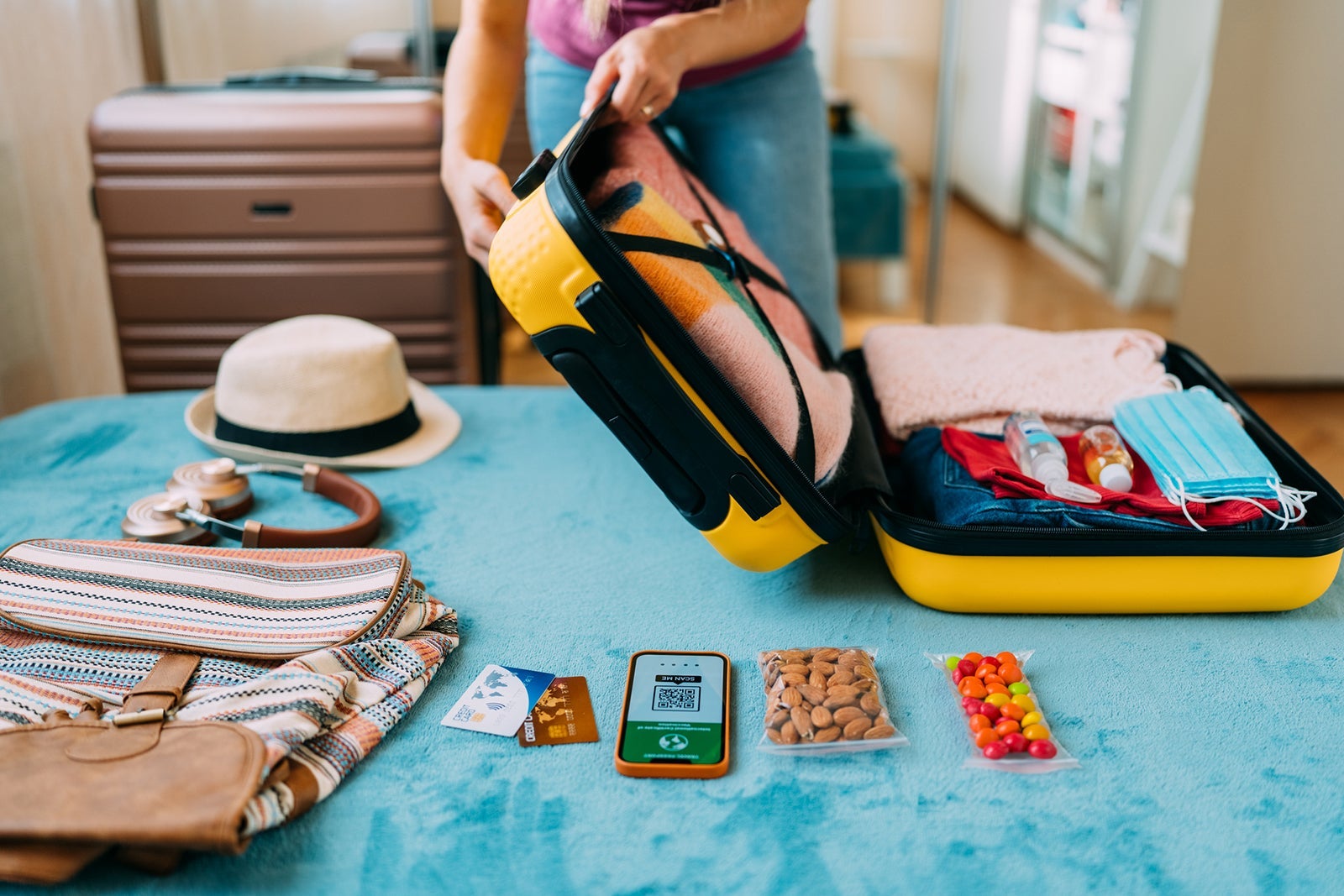
Between buffets, dining rooms, specialty restaurants and pool deck grills, it might not seem necessary to bring your own food on a cruise. But you'd be surprised by the number of times you find yourself wishing for a granola bar between meals or in the middle of a particularly long shore excursion.
Perhaps you or someone with whom you're traveling has dietary restrictions or medication that needs to be taken with food. Or maybe you've got picky kids who might turn up their noses at dinner or a spouse who has 2 a.m. cravings but doesn't want to spend extra for late-night room service.
So, what's the deal with bringing snacks on a cruise? Is it allowed, and if so, are there restrictions? And can you bring your own drinks on a cruise, too?
Here's everything you need to know.
Note: If you have a special need or dietary restriction, it's a good idea to contact your cruise line's special requests department well in advance of sailing to make sure they will provide the food you need or allow you to bring it on board.
Can you bring food on a cruise?

The short answer is yes, you can. However, there are restrictions that limit the types of food and how they're packaged. You can't, for example, waltz on board with several dozen of grandma's freshly baked cookies or the ingredients to make your own salad.
What kind of snacks can I bring on a cruise?
Cruise ships permit just about any food that's prepackaged. That includes items like granola, protein and cereal bars; packs of crackers and cookies; nuts; beef jerky; and bagged items like chips, crackers and popcorn. It also includes baby food and formula.
Candy is also allowed, so pack all the fruit snacks, M&M's and licorice you'd like.
The catch is that your treats have to be shelf-stable and sealed, so don't crack open a giant bag of Reese's Pieces, Life Savers Gummies or Doritos, eat a few handfuls and then try to board with the bag open.

You should also avoid bringing anything that's fresh, that requires refrigeration or that you prepared at home and put in your own container. If it can spoil at any time during your sailing, it's a no-go.
Can you bring drinks on a cruise?

This answer isn't as simple as yes or no. You can bring drinks, but there are limits, especially when it comes to alcohol.
Each cruise line has its own policy, but generally, each person can bring a limited amount of their favorite nonalcoholic drinks, including water, juice, soda, coffee, sports drinks and energy drinks. Lines that allow it are Carnival Cruise Line, Celebrity Cruises, Disney Cruise Line, Princess Cruises, Royal Caribbean and Virgin Voyages. Lines that do not allow this are Holland America (with the exception of bottled water, which is allowed in limited quantities), MSC Cruises and Norwegian Cruise Line.
Note that all major cruise lines do have alternative milks, including soy and almond. Some also offer oat and coconut milks. If you require a specific type, your cruise line should be able to accommodate you with advance notice, so you do not have to bring your own.
In terms of alcohol policies, just about every mainstream cruise line allows one bottle of wine, sparkling wine or Champagne of up to 750 mL per person 21 years of age or older. Sometimes the line will charge a corkage fee of between $15 and $25 per bottle; some lines will only charge it if you consume the bottle outside of your cabin.
None of the major lines (with the exception of Disney Cruise Line, which allows up to six cans of beer per person 21 or older) permits passengers to bring their own beer or liquor.
The exception is luxury cruise lines. Because they include alcohol in their fares and don't stand to miss out on the related onboard revenue, they allow cruisers to bring as much alcohol as they'd like, within reason and regardless of type.
All cruise lines will also allow passengers to bring distilled water onto ships for use in medical devices, such as CPAP machines.
How to bring drinks on a cruise
If you're traveling with drinks that don't include alcohol, the most common rule is that each person can have up to 12 cans or cartons. Sometimes plastic bottles are allowed, but you should check with your cruise line to be certain. Glass bottles are almost always prohibited. Drinks must be sealed; open containers aren't allowed, even if they comply with the above rules.
If you're bringing wine, sparkling wine or Champagne, glass bottles are permitted.
All drinks must be carried on and cannot be put inside checked bags for boarding. If they're found in checked luggage during the embarkation process, your bags will be held until you can claim them. You will be required to open your bags in front of security personnel, who will decide if what you've packed falls within your ship's rules. If it doesn't, your items will be confiscated.
With all of this in mind, there are still cruisers who will try to sneak alcohol on board. Don't do it. It's not worth the risk that you'll be caught, have your alcohol confiscated and be labeled a cheapskate or a rule breaker.
Can you take food off a cruise ship? How about drinks?
The answer here, again, depends on the types of food and drinks. In many ports of call, you can have prepackaged items, but fresh ones will be confiscated. In other words, don't expect to grab fresh fruit from the buffet at breakfast to take ashore as a midday snack. You often won't be allowed to have it. In certain ports, including some in Mexico, officials use trained dogs to sniff out any contraband produce.
Ports are often a bit more flexible about drinks. This is especially true in warm-weather destinations where it's easier to dehydrate. Be smart about what you bring, though. Bottles of water (whether single-use or reusable ones you fill yourself) are a better idea than to-go cups of coffee, which are sometimes banned.
Can you bring food or drink items back to your ship from port?

The rules here are similar for what you can bring onto a cruise. You can bring back prepackaged, shelf-stable foods, but you'll want to avoid anything that's homemade, fresh, not in sealed packaging and not shelf-stable. I once had to throw away (read: eat and give away as many as I could before reboarding) six of the most beautiful doughnuts because I didn't realize I couldn't bring them with me back on board. I only found out when a ship security guard told me I couldn't board the tender boat with my treats.
You can also bring nonalcoholic drinks that are sealed and fall within your cruise line's limits.
The difference between bringing alcohol on board in port, versus at embarkation, is that passengers are allowed to do it — but there are stipulations.
Cruise lines understand that travelers often spring for duty-free booze as a souvenir. Should you decide to purchase a bottle (or several) to take home with you, you can bring it back to your ship. However, you won't be allowed to keep it with you.
When you reboard your vessel and pass through security, you'll have to leave your haul with a crew member. They will take your name and cabin number, and you can either pick your purchases up on the last night of the sailing, or it will be sent to your room. The same rule applies if you buy bottles in the onboard shops.
Have cruise questions? TPG has answers:
- Packing for a cruise? These items aren't allowed on board
- What is baked Alaska, and why is it paraded around cruise ships?
- What are the largest cruise ships in the world?
- Gentlemen hosts on cruises: Who they are and what they do
- What is the Jones Act and how does it impact cruise ships?
- What is a lido deck on a cruise ship?
- What's a cruise cabin guarantee and will it save you money?
- What's the difference between a cruise ship concierge and a butler?
TPG featured card

at American Express's secure site
Terms & restrictions apply. See rates & fees.
| 3X | Earn 3X Miles on Delta purchases. |
| 1X | Earn 1X Miles on all other eligible purchases. |
Pros
- Delta SkyClub access when flying Delta
- Annual companion ticket for travel on Delta (upon renewal)
- Ability to earn MQDs through spending
- Various statement credits for eligible purchases
Cons
- Steep annual fee of $650
- Other Delta cobranded cards offer superior earning categories
- Earn 100,000 Bonus Miles after you spend $6,000 or more in purchases with your new Card within the first 6 months of Card Membership and an additional 25,000 bonus miles after you make an additional $3,000 in purchases on the Card within your first 6 months, starting from the date that your account is opened. Offer Ends 04/01/2026.
- Delta SkyMiles® Reserve American Express Card Members receive 15 Visits per Medallion® Year to the Delta Sky Club® when flying Delta and can unlock an unlimited number of Visits after spending $75,000 in purchases on your Card in a calendar year. Plus, you’ll receive four One-Time Guest Passes each Medallion Year so you can share the experience with family and friends when traveling Delta together.
- Enjoy complimentary access to The Centurion® Lounge in the U.S. and select international locations (as set forth on the Centurion Lounge Website), Sidecar by The Centurion® Lounge in the U.S. (see the Centurion Lounge Website for more information on Sidecar by The Centurion® Lounge availability), and Escape Lounges when flying on a Delta flight booked with the Delta SkyMiles® Reserve American Express Card. § To access Sidecar by The Centurion® Lounge, Card Members must arrive within 90 minutes of their departing flight (including layovers). To access The Centurion® Lounge, Card Members must arrive within 3 hours of their departing flight. Effective July 8, 2026, during a layover, Card Members must arrive within 5 hours of the connecting flight.
- Receive $2,500 Medallion® Qualification Dollars with MQD Headstart each Medallion Qualification Year and earn $1 MQD for each $10 in purchases on your Delta SkyMiles® Reserve American Express Card with MQD Boost to get closer to Status next Medallion Year.
- Enjoy a Companion Certificate on a Delta First, Delta Comfort, or Delta Main round-trip flight to select destinations each year after renewal of your Card. The Companion Certificate requires payment of government-imposed taxes and fees of between $22 and $250 (for itineraries with up to four flight segments). Baggage charges and other restrictions apply. Delta Basic experiences are not eligible for this benefit.
- $240 Resy Credit: When you use your Delta SkyMiles® Reserve American Express Card for eligible purchases with U.S. Resy restaurants, you can earn up to $20 each month in statement credits. Enrollment required.
- $120 Rideshare Credit: Earn up to $10 back in statement credits each month after you use your Delta SkyMiles® Reserve American Express Card to pay for U.S. rideshare purchases with select providers. Enrollment required.
- Delta SkyMiles® Reserve American Express Card Members get 15% off when using miles to book Award Travel on Delta flights through delta.com and the Fly Delta app. Discount not applicable to partner-operated flights or to taxes and fees.
- With your Delta SkyMiles® Reserve American Express Card, receive upgrade priority over others with the same Medallion tier, product and fare experience purchased, and Million Miler milestone when you fly with Delta.
- Earn 3X Miles on Delta purchases and earn 1X Miles on all other eligible purchases.
- No Foreign Transaction Fees. Enjoy international travel without additional fees on purchases made abroad.
- $650 Annual Fee.
- Apply with confidence. Know if you're approved for a Card with no impact to your credit score. If you're approved and you choose to accept this Card, your credit score may be impacted.
- Terms Apply.
- See Rates & Fees