How vintage tickets will slash $1,500 off our family's next Disney World trip


Sometimes, it pays to be a pack rat, and during my last visit to Orlando, I found out just how much: about $1,500. By keeping track of some very important paperwork, I will be able to save money on my family's next Walt Disney World trip.
The key to these Disney World savings? Cashing in some very old theme park tickets with unused park days remaining on them.
A handful of these tickets were stashed away in my father's desk drawer, forgotten for more than 30 years. Curious about how Disney handles these kinds of tickets, I gathered up our family's collection to take with me on my most recent Disney World trip. I took six vintage tickets to a Disney guest relations office, and I exited more than a little pleasantly surprised at their value. I also learned a fair bit of intriguing Disney lore along the way.
Disney World's no-expiration park tickets

Before delving into my $1,500 discovery, let's start with a little history lesson on Disney tickets.
For several decades, Disney World sold park tickets with no expiration date. These tickets bore different names over the years but essentially worked the same way: When a guest redeemed some days of a multiday ticket, unused days remained valid for future use and never expired.
In those years, many frugal guests (my family included) would buy multiday tickets with more days than they might need on a given trip and save the additional days for future vacations. Longer multiday tickets cost less per day on average than shorter ones, just like they do today. Guests who visited regularly could get more bang for their buck using a single longer ticket over the course of multiple vacations rather than buying several tickets with a smaller number of days.
Related: These are the best times to visit Disney World
Disney gradually phased out its no-expiration ticket policy, and this money-saving trick slowly faded into Yesterland. In 2004, tickets no longer included this feature by default. From 2004 to 2015, guests could continue to add a no-expiration option to park tickets for an additional fee. By 2015, however, all Disney tickets became use-it-or-lose-it over a much narrower window of time.
It's a not-very-well-kept secret among the Disney faithful that Disney continued to honor older tickets issued during the no-expiration era, and it still does so now.

Therein lies the value for pack rats like me.
Exactly how the redemption process for unexpired tickets works is not well documented, though. Disney's own website advises simply that guests "visit a Walt Disney World theme park ticket window or call."
I took Disney's advice, setting out with several tickets in hand to find out just how much value had been tucked away in a desk drawer all these years. After taking my final spin on Slinky Dog Dash before heading to the airport, I visited the main guest relations office by the entrance of Hollywood Studios to find out just what these tickets might be worth.
Assessing my vintage Disney tickets' value
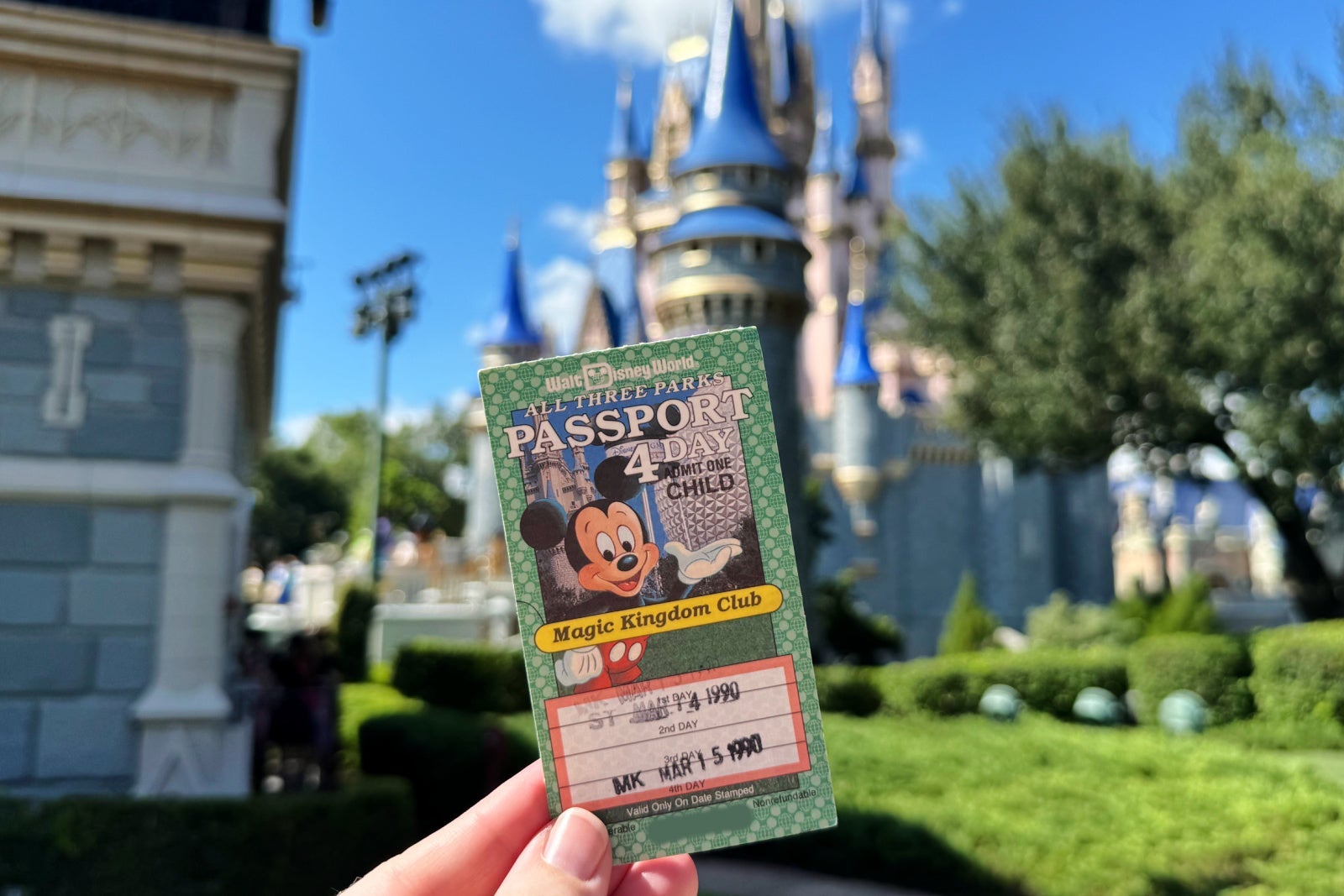
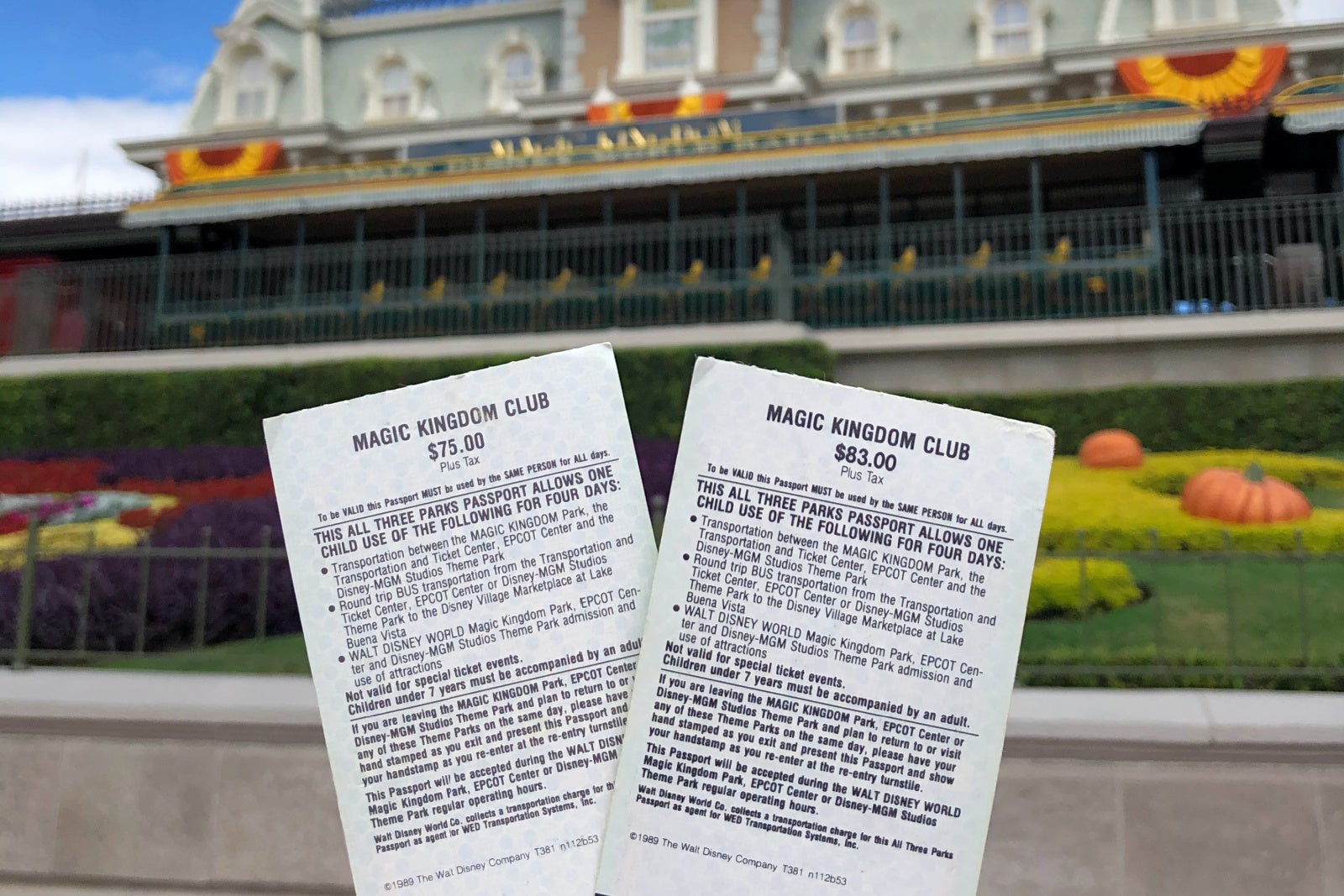
In my possession were three different pairs of tickets from three different theme park eras. Two were child tickets from the early 1990s — so old that they proudly proclaimed you could visit "all three parks" with them. The tickets bore physical date stamps indicating the days they had been used and a shockingly low cost printed on the back.
Two other tickets were plastic "Your Key to the World" keycards with my name and my husband's name on them from a 2005 trip we took. We wisely paid for the no-expiration ticket option way back then.
The final two tickets were seven-day Park Hopper tickets on paper media with a 2011 date. A handwritten note from my mother indicated these may have been even older tickets that my parents had already traded in years ago and gotten reissued.
The cast member who greeted me at guest relations was, as is usually the case in Disney parks, exceptionally friendly and helpful. With a smile, she indicated she was ready to dive into a historical scavenger hunt when I revealed my collection.
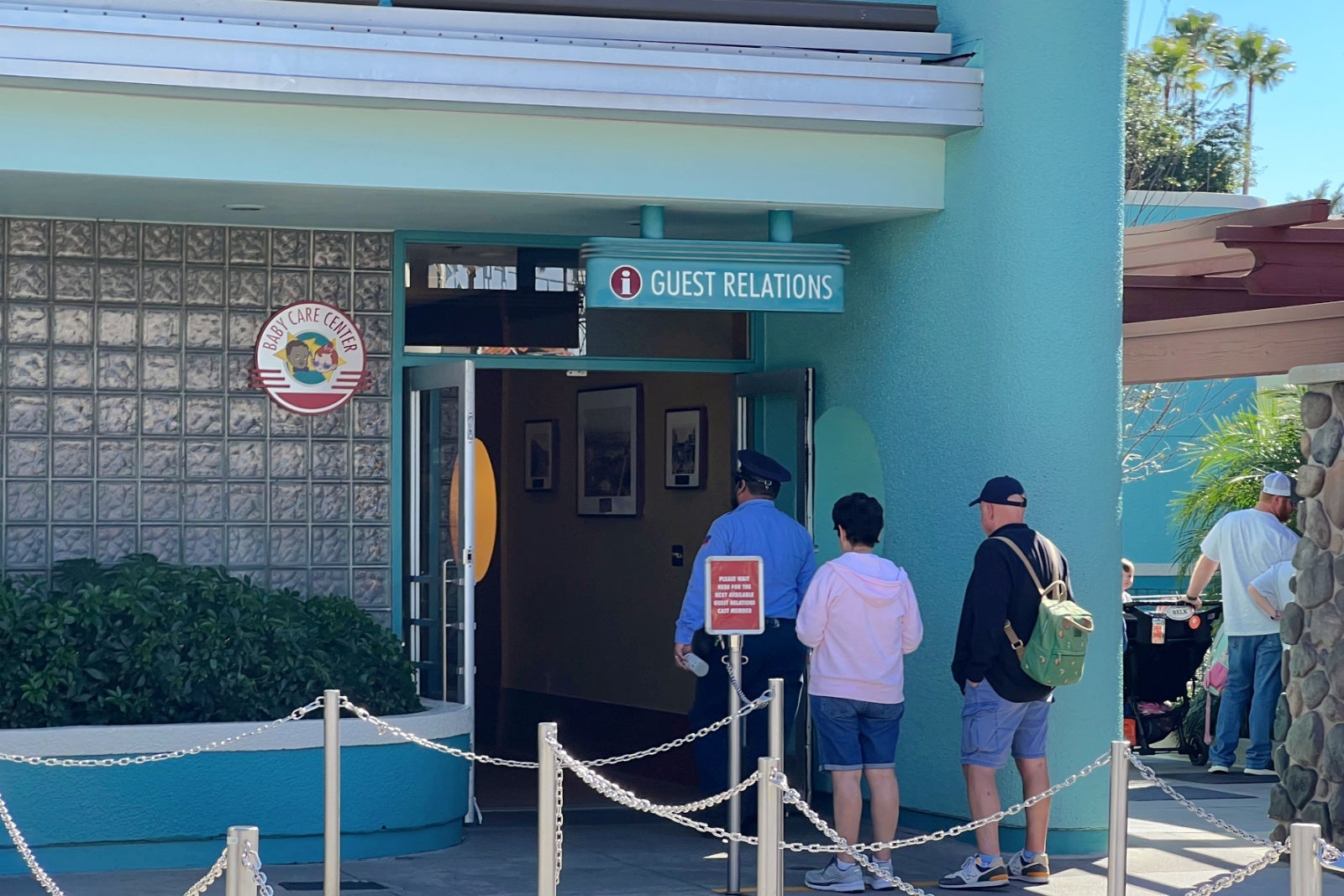
It surprised me to find out that the reason for my visit wasn't all that rare. Disney World apparently fields inquiries from guests with no-expiration tickets pretty much daily, even this many years later. The cast member who helped me said she personally helps someone with old tickets about once a month — although she admitted she doesn't see guests very often with quite the variety of tickets that my collection included.
Disney has a number of resources available for cast members to research the value remaining on historic tickets. The cast member was able to find several of my tickets digitally in the depths of Disney's computer systems.
She also mentioned that, in the back office, there are reference books with each and every ticket media that Disney ever issued, so cast members can also reference that. (The blog AllEars.net has the most comprehensive publicly accessible digital archive of vintage Disney tickets for fellow Disney history buffs.)
After some digging, typing and visiting the back room, she determined that my six tickets had a remainder of eight park days in total left on them. That would be enough for my family of four to use for two park days each. Since Walt Disney World two-day Park Hopper tickets currently cost from $344 to $458 per person, including tax, my collection is valued between $1,376 and $1,832, depending on the dates I plan to visit.
Rules and restrictions for redeeming vintage Disney tickets
As I expected, choosing to redeem the tickets came with a few rules and caveats.
First, the positive: I learned that I could still personally use my 1990s-era child tickets today. Not only do Disney tickets not expire, but they also grow up with the ticketholder. I had assumed I might have to pay a fee to upgrade a child ticket to an adult one but was amazed to find that wouldn't be the case.
I also learned that Park Hopper tickets similarly grow up as well. My "all three parks" tickets would indeed now be usable to enter all four of the parks as they exist now. I was glad to know I wouldn't have to skip Disney's Animal Kingdom.
There were also some restrictions. Disney's official policy has always been that tickets are nontransferable, so vintage tickets have to be used by the person who originally partially redeemed them years ago.
Practically speaking, however, many of these tickets are so old that it is impossible to determine who the original user was. I got the sense that cast members are given some leeway to process and reassign those ticket types, but note that your mileage may vary. As was the case with the plastic keycards from 2005 with my name and my husband's name on them, tickets that bear an individual's name are understandably more restricted.
Additionally, to redeem old Disney tickets, guests have to turn in the physical ticket media to a cast member. Sadly, you cannot keep the tickets as souvenirs. I was tempted to frame the 1990 "all three parks" ticket of my youth, so that part definitely hurt the most to hear.
I learned that Disney will digitally load all unused days from old tickets into a guest's My Disney Experience account when they surrender the media. Disney cast members then have to assign the new ticket to a particular person at that time. That means it's essential to know who in your family will use the tickets in the future when you cash them in.
Since my family hadn't made definite travel plans for our next Walt Disney World vacation (and I still may want to frame that 1990 ticket no matter what), I decided to wait to surrender my tickets this time. They are now safely tucked away in a new desk drawer for my next trip to Orlando, when we will have more concrete plans for their use.
Bottom line
My investigation into these vintage Disney tickets turned out to be both lucrative and captivating. It allowed me to piece together some travel memories within my own family that we all would have likely forgotten.
It also helped me pass on an important lesson to others: If you visited Disney World decades ago, check your desk drawers carefully. You may be able to cash in on a little of this same money-saving magic, too.
Related reading:
TPG featured card

at Capital One's secure site
Terms & restrictions apply. See rates & fees.
| 5X miles | Earn 5X miles on hotels, vacation rentals and rental cars booked through Capital One Travel |
| 2X miles | Earn unlimited 2X miles on every purchase, every day |
Pros
- Stellar welcome offer of 75,000 miles after spending $4,000 on purchases in the first three months from account opening. Plus, a $250 Capital One Travel credit to use in your first cardholder year upon account opening.
- You'll earn 2 miles per dollar on every purchase, which means you won't have to worry about memorizing bonus categories
- Rewards are versatile and can be redeemed for a statement credit or transferred to Capital One’s transfer partners
Cons
- Highest bonus-earning categories only on travel booked via Capital One Travel
- LIMITED-TIME OFFER: Enjoy $250 to use on Capital One Travel in your first cardholder year, plus earn 75,000 bonus miles once you spend $4,000 on purchases within the first 3 months from account opening - that’s equal to $1,000 in travel
- Earn unlimited 2X miles on every purchase, every day
- Earn 5X miles on hotels, vacation rentals and rental cars booked through Capital One Travel
- Miles won't expire for the life of the account and there's no limit to how many you can earn
- Receive up to a $120 credit for Global Entry or TSA PreCheck®
- Use your miles to get reimbursed for any travel purchase—or redeem by booking a trip through Capital One Travel
- Enjoy a $50 experience credit and other premium benefits with every hotel and vacation rental booked from the Lifestyle Collection
- Transfer your miles to your choice of 15+ travel loyalty programs
- Top rated mobile app