What is the Jones Act and how does it impact cruise ships?

You may have heard of the Jones Act in discussions about cruising, piquing your curiosity about what, if any, impact a century-old law has on your cruise. But I bet you haven't heard of the lesser-known Passenger Vessel Services Act, which actually dictates how cruise lines plan itineraries.
If you've ever wondered why cruise ships can't sail from one U.S. port to another without visiting a foreign country, or just like to geek out on the minutiae of legal issues around your favorite vacation type, prepare to have your mind blown about the ramifications of shipping laws on cruise travel.
[table-of-contents /]
What is the Jones Act?
The Jones Act — which is actually the Merchant Marine Act of 1920 — is a federal statute that requires shipping to U.S. ports to be done by ships that were constructed in the United States, carry an American crew and bear U.S. flags (which requires being registered in the United States). In addition, the law provides protection for the crew members and the environment.
What this means is that foreign-flagged ships — and today virtually all cruise ships are foreign-flagged and registered in other countries — can't cruise between two ports that are located within the contiguous United States as well as some noncontiguous U.S. ports.
The Jones Act was not designed to cover passenger vessels.
The Jones Act was originally enacted as a safety measure as part of an increase to national security after World War I, when the U.S. fleet was destroyed by Germany. It also serves as a protection to the economics of the American maritime industry, since it requires ships to be American made. After major hurricanes, the Jones Act is often temporarily waived in affected areas so relief can arrive from anywhere.
Related: Everything you need to know about hurricane season cruises
The Passenger Vessel Services Act — and how it affects cruises
The related law that has a real effect on the cruise industry — since the cargo of a cruise ship is you — is the Passenger Vessel Services Act (PVSA) of 1886, which is applicable even though it was enacted before the cruise industry existed as we know it.

The law says that if an itinerary begins and ends in a U.S. port, foreign-flagged cruise lines must call on foreign ports of call as well. As a result of these laws, you won't find, for example, itineraries on foreign-flagged ships that sail round-trip from Los Angeles to the Hawaiian Islands or from New York up and down the U.S. East Coast without also stopping in another country (e.g. Mexico or Canada). These rules impact sailings to Canada, the Caribbean, Mexico, Panama Canal, Hawaii and Alaska the most.
Cruise lines create PVSA-compliant itineraries, but sometimes the chaos of travel intervenes. If a passenger disembarks early (perhaps due to a medical emergency) without calling on the foreign port, the line risks getting fined. Cruise travelers who miss the ship are also not allowed to embark in just any port of call. They must board in a place in the itinerary that includes a foreign port as part of the remaining portion of the cruise.
Related: What happens if you miss your cruise
Here's where it gets tricky: A cruise that begins and ends in the same U.S. port will not violate the PVSA if it stops in any foreign port. However, a cruise that begins and ends in different U.S. ports (e.g. a Panama Canal cruise that begins in Fort Lauderdale and ends in Los Angeles) must stop in a distant foreign port to be in compliance.
A distant foreign port is defined as any port outside North America, Central America, Bermuda or the West Indies. South American ports and the Leeward Islands of the Netherland Antilles (Aruba, Bonaire and Curacao) are all considered distant foreign ports. That's why any Panama Canal cruise that sails from Florida to California will include a stop in Cartagena, Colombia, or Aruba.
This distinction often confuses passengers trying to book back-to-back sailings who find their request denied even though each individual sailing meets the PVSA requirements. That's because a back-to-back sailing is still considered one transport vs. two distinct sailings, even though cruisers need to debark their ship between cruises and meet with Customs and Border Patrol for inspection before reboarding.
Try to book a repositioning cruise from Seattle to Vancouver followed immediately by that ship's next cruise from Vancouver to Seward, Alaska, and your request will be flagged and denied. Why? According to the law, the cruise ship has transported you from one U.S. port to another (Seattle to Seward) without stopping in a distant foreign port.
The exceptions: American-flagged ships
American-flagged ships are exempt from the PVSA and can sail itineraries their foreign-flagged counterparts cannot.
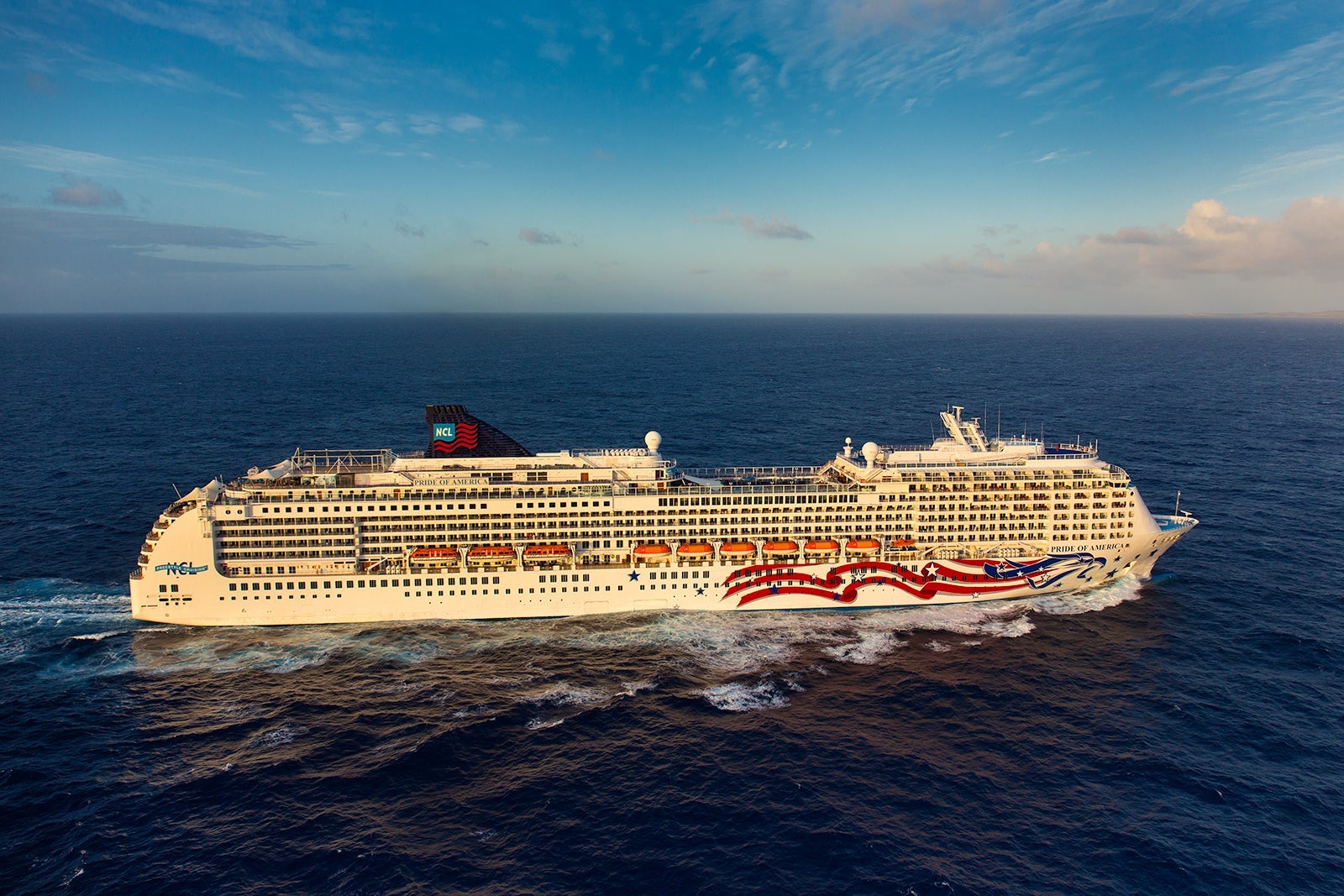
Norwegian Cruise Line runs a U.S.-flagged ship — Pride of America — which sails around the Hawaiian Islands round-trip from Honolulu. When this ship (which was only partially built in the United States) launched in 2005, it was the first cruise ship in 50 years to fly the American flag while sailing on an ocean — and the only to sail Hawaii cruises without visiting a non-U.S. port.
There are also cruise ships that are part of smaller lines that are registered in the U.S., including ones operated by Alaska Dream Cruises, Lindblad Expeditions and UnCruise Adventures. They sail itineraries wholly within Alaska or the Hawaiian islands.
Related: Big vs. small cruise ships: Which will I like better?
In addition, several riverboat companies, such as American Queen Voyages and American Cruise Lines, operate U.S.-flagged vessels on American rivers.
So why would most major large-ship cruise lines continue to register their ships in other countries, such as the Bahamas, Panama, Bermuda and Malta? Building ships on U.S. soil is a much more expensive proposition than in the European shipyards that most lines favor. In addition, U.S.-flagged ships are subject to high American taxes and stricter labor laws, environmental codes and consumer protection laws than ships registered in other countries.
Bottom line
The Jones Act and Passenger Vessels Services Act impact how cruise lines plan itineraries. Most of the time cruise travelers can ignore these obscure old maritime laws. However, it's good to know what they are on the rare occasion you have to join a cruise late or disembark early, or when you want to plan back-to-back cruises that begin and end in different ports.
Planning a cruise? Start with these stories:
- The 5 most desirable cabin locations on any cruise ship
- The 8 worst cabin locations on any cruise ship
- A quick guide to the most popular cruise lines
- 21 tips and tricks that will make your cruise go smoothly
- 15 ways cruisers waste money
- 12 best cruises for people who never want to grow up
- What to pack for your first cruise
TPG featured card

at American Express's secure site
Terms & restrictions apply. See rates & fees.
| 3X | Earn 3X Miles on Delta purchases. |
| 1X | Earn 1X Miles on all other eligible purchases. |
Pros
- Delta SkyClub access when flying Delta
- Annual companion ticket for travel on Delta (upon renewal)
- Ability to earn MQDs through spending
- Various statement credits for eligible purchases
Cons
- Steep annual fee of $650
- Other Delta cobranded cards offer superior earning categories
- Earn 100,000 Bonus Miles after you spend $6,000 or more in purchases with your new Card within the first 6 months of Card Membership and an additional 25,000 bonus miles after you make an additional $3,000 in purchases on the Card within your first 6 months, starting from the date that your account is opened. Offer Ends 04/01/2026.
- Delta SkyMiles® Reserve American Express Card Members receive 15 Visits per Medallion® Year to the Delta Sky Club® when flying Delta and can unlock an unlimited number of Visits after spending $75,000 in purchases on your Card in a calendar year. Plus, you’ll receive four One-Time Guest Passes each Medallion Year so you can share the experience with family and friends when traveling Delta together.
- Enjoy complimentary access to The Centurion® Lounge in the U.S. and select international locations (as set forth on the Centurion Lounge Website), Sidecar by The Centurion® Lounge in the U.S. (see the Centurion Lounge Website for more information on Sidecar by The Centurion® Lounge availability), and Escape Lounges when flying on a Delta flight booked with the Delta SkyMiles® Reserve American Express Card. § To access Sidecar by The Centurion® Lounge, Card Members must arrive within 90 minutes of their departing flight (including layovers). To access The Centurion® Lounge, Card Members must arrive within 3 hours of their departing flight. Effective July 8, 2026, during a layover, Card Members must arrive within 5 hours of the connecting flight.
- Receive $2,500 Medallion® Qualification Dollars with MQD Headstart each Medallion Qualification Year and earn $1 MQD for each $10 in purchases on your Delta SkyMiles® Reserve American Express Card with MQD Boost to get closer to Status next Medallion Year.
- Enjoy a Companion Certificate on a Delta First, Delta Comfort, or Delta Main round-trip flight to select destinations each year after renewal of your Card. The Companion Certificate requires payment of government-imposed taxes and fees of between $22 and $250 (for itineraries with up to four flight segments). Baggage charges and other restrictions apply. Delta Basic experiences are not eligible for this benefit.
- $240 Resy Credit: When you use your Delta SkyMiles® Reserve American Express Card for eligible purchases with U.S. Resy restaurants, you can earn up to $20 each month in statement credits. Enrollment required.
- $120 Rideshare Credit: Earn up to $10 back in statement credits each month after you use your Delta SkyMiles® Reserve American Express Card to pay for U.S. rideshare purchases with select providers. Enrollment required.
- Delta SkyMiles® Reserve American Express Card Members get 15% off when using miles to book Award Travel on Delta flights through delta.com and the Fly Delta app. Discount not applicable to partner-operated flights or to taxes and fees.
- With your Delta SkyMiles® Reserve American Express Card, receive upgrade priority over others with the same Medallion tier, product and fare experience purchased, and Million Miler milestone when you fly with Delta.
- Earn 3X Miles on Delta purchases and earn 1X Miles on all other eligible purchases.
- No Foreign Transaction Fees. Enjoy international travel without additional fees on purchases made abroad.
- $650 Annual Fee.
- Apply with confidence. Know if you're approved for a Card with no impact to your credit score. If you're approved and you choose to accept this Card, your credit score may be impacted.
- Terms Apply.
- See Rates & Fees