What is the Fair Credit Billing Act, and how does it affect consumers?



Editor's Note
Credit card consumers have a number of different rights and protections afforded to them, many of which are laid out in the Fair Credit Billing Act. The law has been around since 1974 — longer than the first credit card travel rewards program — but most people still don't know what exactly the act entails and how it affects cardholders.
The FCBA protects consumers from unfair billing practices and includes stipulations about a consumer's liability for unauthorized or inaccurate billing charges. The act covers three main areas where consumers have express rights:
- Limiting liability of unauthorized or inaccurate purchases
- Withholding payment while disputes are being investigated
- Timeliness on behalf of creditors regarding billing
We'll give an overview of your rights in each of those scenarios.
Disputing unauthorized or inaccurate purchases
If you lose your card or it gets stolen, you are protected from any and all unauthorized charges if (and here's the kicker) you report the card as lost or stolen before it is used.
Major U.S. credit card issuers make it easy to report a lost or stolen credit card online or through the app. You can even temporarily freeze most credit cards if you've misplaced them.

But even if you don't manage to report a lost or stolen card before an unauthorized charge is made, the Fair Credit Billing Act limits your liability to $50.
Billing errors, including charges with the wrong amount and charges with the wrong date, are also included in the FCBA. You'll need to provide proof of the error, such as an original receipt. Your creditor must acknowledge the complaint within 30 days, and they have two billing cycles to resolve the dispute.
You have 60 days from the time of the charge to dispute an error or unauthorized charge.

Related: Credit card fraud vs. identity theft: How to know the difference
Important tips
Most of the top credit cards feature a zero liability feature and the ability to dispute a charge easily directly with the issuer. While there is nothing wrong with using these benefits, keep in mind that doing so may preclude you from protection under the FCBA.
The Fair Credit Billing Act was created before the internet boom, and it specifically requires consumers to mail a written notice to dispute a transaction within 60 days of the charge in order to be covered by the law. This is still true even in the digital age, meaning consumers must mail in a written notice to be protected under the FCBA.
Withholding payment while disputes are being investigated
The Fair Credit Billing Act states that consumers are not required to pay for the disputed transaction while the dispute is ongoing. Additionally, your creditor cannot take actions related to the dispute that could damage your credit score (such as listing a missed payment because you withheld payment until the issue is resolved).

The process is a bit different if you are having a dispute with a merchant and not a creditor. If you have an issue with the goods or services rendered by a merchant, you have to make an effort to work it out with that merchant before taking any action against your card issuer.
But if you are unable to resolve the issue with a merchant, you are allowed to take the same legal action against your credit card issuer under state law.
Important tips
It's important to note that while you aren't required to pay for the disputed transactions until an investigation is initially concluded, you do still have to pay your other charges and bills. For example, if your monthly credit card bill is $500 and includes a $150 unauthorized charge, you still have to pay for the other $350 in charges on time. It's only the disputed charge that is allowed to be withheld.
Related: Credit vs. debit card: Which is the smarter choice?
Timelines on behalf of creditors regarding billing
The FCBA outlines a number of different timelines that apply to creditors. Some of them, such as the creditor having 30 days to acknowledge a complaint and two billing cycles to come to a conclusion regarding a dispute, are mentioned above.
Another protection afforded by the FCBA is the timeline for posting a payment to your account. Creditors must post payments immediately upon receiving them to prevent you from having to pay unwarranted interest or fees.

When it comes to disputed charges, the timelines are very strict. If an issuer misses any of those deadlines, they can't collect the disputed amount — regardless of the outcome of the investigation.
But once again, this only applies to disputes that are handled through the process outlined in the Fair Credit Billing Act, meaning you have to physically mail in a letter to your creditor within 60 days of the disputed charge. The Federal Trade Commission does have a sample letter available on its website.
Bottom line
The Fair Credit Billing Act is just one of many pieces of legislation that outline the different rights consumers have when it comes to credit cards. It's important to know your rights as a consumer, especially since stolen card information and other data security issues have become more prevalent in the past decade.
Related: Best credit cards
TPG featured card
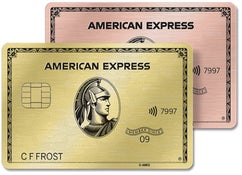
at American Express's secure site
Terms & restrictions apply. See rates & fees.
| 4X | Earn 4X Membership Rewards® points per dollar spent on purchases at restaurants worldwide, on up to $50,000 in purchases per calendar year, then 1X points for the rest of the year. |
| 4X | Earn 4X Membership Rewards® points per dollar spent at US supermarkets, on up to $25,000 in purchases per calendar year, then 1X points for the rest of the year. |
| 5X | Earn 5X Membership Rewards® points on prepaid hotel stays booked through AmexTravel.com or the Amex Travel App™. |
| 3X | Earn 3X Membership Rewards® points on flights booked through AmexTravel.com, the Amex Travel App™, or purchased directly from airlines. |
| 2X | Earn 2X Membership Rewards® points on prepaid car rentals booked through AmexTravel.com or the Amex Travel App™ and cruises booked and paid through AmexTravel.com. |
| 1X | Earn 1X Membership Rewards® point per dollar spent on all other eligible purchases. |
Pros
- Valuable dining and food-related credits
- Flexible rewards with airline and hotel transfer partners
- Multiple travel and purchase protections
- No foreign transaction fees
- Access to Amex Offers for additional savings (enrollment required)
Cons
- Not as useful for those living outside the U.S.
- Some may have trouble using Uber and other dining credits
- You may be eligible for as high as 100,000 Membership Rewards® Points after you spend $8,000 in eligible purchases on your new Card in your first 6 months of Card Membership. Welcome offers vary and you may not be eligible for an offer. Apply to know if you’re approved and find out your exact welcome offer amount – all with no credit score impact. If you’re approved and choose to accept the Card, your score may be impacted.
- Earn 4X Membership Rewards® points per dollar spent on purchases at restaurants worldwide, on up to $50,000 in purchases per calendar year, then 1X points for the rest of the year.
- Earn 4X Membership Rewards® points per dollar spent at US supermarkets, on up to $25,000 in purchases per calendar year, then 1X points for the rest of the year.
- Earn 5X Membership Rewards® points on prepaid hotel stays booked through AmexTravel.com or the Amex Travel App™.
- Earn 3X Membership Rewards® points on flights booked through AmexTravel.com, the Amex Travel App™, or purchased directly from airlines.
- Earn 2X Membership Rewards® points on prepaid car rentals booked through AmexTravel.com or the Amex Travel App™ and cruises booked and paid through AmexTravel.com.
- Earn 1X Membership Rewards® point per dollar spent on all other eligible purchases.
- Pay It® lets you tap in the American Express® App to quickly pay for small purchase amounts throughout the month and still earn rewards the way you usually do. Plan It® gives you the option to split up big purchases into equal monthly payments with a fixed fee. You’ll know upfront exactly how much you’ll pay.
- $120 Dining Credit: Earn up to a total of $10 in statement credits monthly when you pay with the Gold Card at Grubhub (including Seamless), Buffalo Wild Wings, Five Guys, The Cheesecake Factory, and Wonder. This can be an annual savings of up to $120. Enrollment required.
- $100 Resy Credit: Get up to $100 in statement credits each calendar year at over 10,000 qualifying U.S. Resy restaurants after you pay for eligible purchases with the American Express® Gold Card. That’s up to $50 in statement credits semi-annually. Enrollment required.
- $84 Dunkin' Credit: Earn up to $7 in monthly statement credits after you pay with the American Express® Gold Card at U.S. Dunkin’ locations. Enrollment required.
- $120 Uber Cash on Gold: Enjoy up to $120 in Uber Cash annually with your Gold Card. Just add your Card to your Uber account and you'll get $10 in Uber Cash each month to use on orders and rides in the U.S. when you select an Amex Card for your transaction.
- Enjoy complimentary Hertz Five Star® Status benefits like skipping the counter at select locations, adding an additional driver at no additional cost*, and vehicle upgrades**. Benefit enrollment and Hertz Gold+ registration are required. *Additional drivers must meet standard rental qualifications and must be a spouse or domestic partner to qualify as complimentary. Other additional drivers subject to fees. **Benefits are subject to availability and vary by location. Additional Hertz program Terms and Conditions including age restrictions apply.
- Book two nights or more with The Hotel Collection through AmexTravel.com or the Amex Travel App™ and receive a $100* credit towards eligible charges at over 1,400 upscale hotels worldwide. *Eligible charges vary by property.
- Book your travel through the Amex Travel App™ with added peace of mind – backed by American Express® service and support. Only for American Express® Card Members.
- Whenever you need us, we're here. Our Member Services team will ensure you are taken care of. From lost Card replacement to statement questions, we are available to help 24/7.
- No Foreign Transaction Fees.
- Annual Fee is $325.
- Terms Apply.