Becky Pokora is an avid traveler with a particular love for the outdoors. She's always looking for new ways to make travel easier, more memorable, and more affordable. You'll find stories, tips, and inspiration here and on her travel blog, sightDOING.
Nick Ewen is TPG's editor-in-chief and helps readers leverage credit cards (he has more than 25 of them) and loyalty programs to travel more for less. He's been at TPG for over 11 years.
also contributed to this story
November 20, 2026 • 11 min read
The cards we feature here are from partners who compensate us when you are approved through our site, and this may impact how or where these products appear. We don't cover all available credit cards, but our analysis, reviews, and opinions are entirely from our editorial team. Terms apply to the offers listed on this page. Please view our advertising policy and product review methodology for more information.
Editorial note: This is a recurring post, regularly updated with new information and offers.
Editorial disclaimer: Opinions expressed here are the author's alone, not those of any bank, credit card issuer, airline or hotel chain, and have not been reviewed, approved or otherwise endorsed by any of these entities.
Comments
By commenting, you agree to our Community Guidelines to help create a positive space for conversation. The responses below are not provided or commissioned by the bank advertiser, our partners, or The Points Guy (“TPG”). They have not been reviewed, approved, or otherwise endorsed by any of these parties. All responses are submitted by individual contributors, and neither the bank advertiser, our partners, nor TPG are responsible for ensuring that all posts and/or questions are answered.
Related stories
Quick summary
Trip delay protection reimburses reasonable out-of-pocket expenses such as lodging, meals, toiletries and local transportation when a trip paid for with an eligible card is delayed beyond a set threshold for a covered reason.
Coverage typically requires you to pay upfront and then file a claim for reimbursement, and it is secondary to any compensation provided by the airline or other sources.
Policies differ in how soon coverage begins, the maximum reimbursement allowed, and whether limits apply per traveler or per trip, which can significantly impact families or groups.
Eligibility, covered reasons for delay, and claim limits vary by card, so reviewing your benefits guide and booking rules is essential before relying on this protection.
What to consider
Coverage usually requires a minimum delay of six hours or an overnight stay, and only applies to specific causes like bad weather or equipment failure.
Some cards require round-trip travel or payment of the full trip cost with the card, while others allow coverage for taxes and fees on award travel.
Claim limits and eligible family members differ; some cards restrict the number of claims per year or define covered travelers more narrowly.
What you'll miss from the article
A detailed comparison of policy differences, including how per-trip versus per-traveler caps and eligibility rules affect your potential reimbursement.
Generated by AI with support from our editorial team.
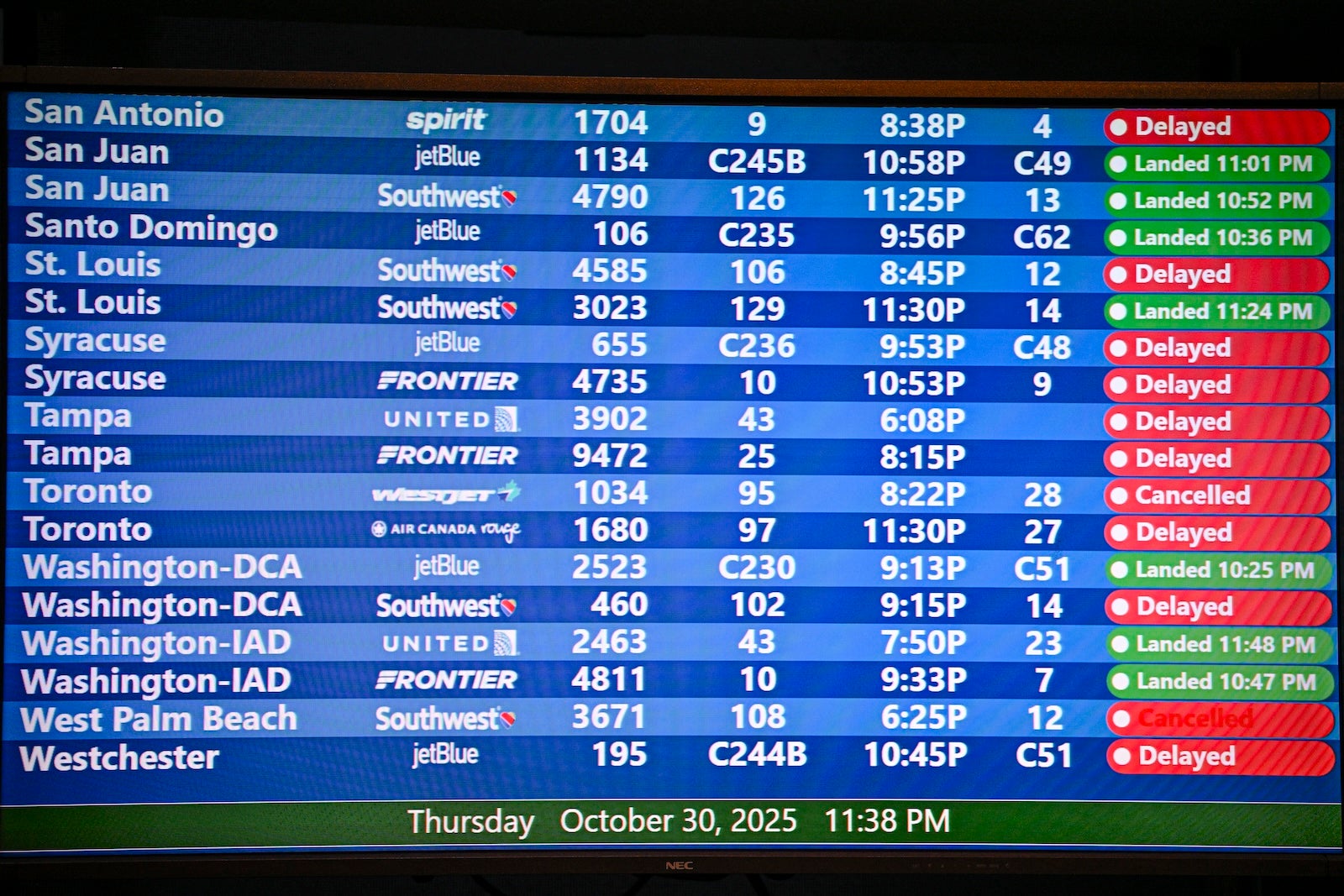
Many of us have been there: You book a flight through an airline's major hub, but your first segment is delayed and you miss your connecting flight, only to find out the next available flight with an open seat is hours away (or even the next morning). Or maybe you're trying to get home, but your flight is canceled, and you're stuck at your destination an extra night.
And when things go really wrong, it could be days before you can reach your destination.
There's no way to get that lost time back, but trip delay protection can come to the rescue if you used the right credit card to pay for your trip.
What is credit card trip delay protection?
Trip delay protection reimburses reasonable out-of-pocket costs (lodging, meals, toiletries and local transportation) when a trip you paid for with an eligible card is delayed past a set threshold for a covered reason. You’ll pay these costs upfront, then file a claim for reimbursement so you're not left to cover those expenses yourself.
DARREN MURPH/THE POINTS GUY
This coverage is secondary — meaning it only kicks in after you receive any other compensation. So if an airline provides food vouchers, you can't also request reimbursement for those meals. Even if the airline covers some expenses, you can still file a claim for any remaining expenses, like if you book a hotel at your own expense.
Importantly, a canceled flight is not automatically a covered trip delay. The cancellation generally must leave you stranded long enough to meet the policy's time requirement, result from a covered reason and involve a trip booked according to the card's payment rules.
*Eligibility and benefit level varies by card. Terms, conditions and limitations apply. Visit americanexpress.com/benefitsguide for details. Policies are underwritten by New Hampshire Insurance Company, an AIG Company.
The $500 headline makes these policies look more alike than they are. In practice, they differ on how soon coverage begins, whether the cap scales with each traveler or ticket and whether the way you paid actually activates the benefit.
Being reimbursed per traveler means you actually have a much higher limit to work with. For example, if you're traveling as a family of four and spend a total of $800 on two hotel rooms, meals and transportation, you'd be reimbursed for all $800 if the policy is "per traveler", assuming everyone qualifies and all expenses are eligible. But if the card is capped at $500 per trip, you'll only get a $500 payout, regardless of how many people are traveling, leaving you to foot the rest of the bill.
Common limitations of trip delay reimbursement
How you pay matters
For your travel to be covered, you must have paid for the original trip with the credit card that provides coverage. Some cards, like those issued by Capital One or Chase, include award travel if you paid for the taxes and fees on your flight with an eligible card.
However, other issuers, including American Express, require you to pay for the full cost of the trip with the card (or with reward points from the program). Amex also requires cardholders to pay for round-trip travel with their eligible card, though it's not as limiting as it sounds. Two separate one-ways still count, as long as both were purchased with the same card.
The also requires round-trip travel purchased on the card.
Before counting on coverage, read your card’s Guide to Benefits before you book.
Trip delay coverage is only set up to cover expenses from lengthy delays rather than minor inconveniences. A minimum six-hour delay is required before coverage kicks in, and some cards require longer.
BUNHILL/GETTY IMAGES
Some cards also allow for reimbursement of expenses during a forced overnight stay. That overnight provision makes some 12-hour policies more useful than they first appear because a flight that was supposed to take off at 10 p.m. and is now at 6 a.m. would qualify.
The delay must be for a covered reason
Every card in our table covers bad weather and equipment failure. Beyond that, the lists differ. Capital One and Chase also cover strikes. Amex and Citi don't, but they do cover lost or stolen passports.
Traffic or arriving late at the airport will not turn a missed flight into a covered delay. A previously announced or "known" disruption may also be excluded, so don't book a flight during a hurricane that's already started and expect to be covered.
The coverage may only cover particular family members
Capital One has a pretty minimal umbrella of coverage when it comes to who's eligible. Trip delay protection usually only covers you, your spouse and your dependent children under the age of 22.
Chase has a more inclusive definition of family, including children (of any age), as well as parents, siblings, grandparents and more. Covered Chase family members also do not necessarily need to be traveling with the cardholder, as long as an eligible ticket was purchased with a qualifying card.
MELKINIMAGES/GETTY IMAGES
But Amex cards with this benefit generally cover companions who are traveling with you, even if they're unrelated, as well as tickets you purchased with your card on behalf of your spouse/domestic partner or unmarried dependent children up to age 19 (or under age 26 if a full-time student at an accredited college or university) even when they aren't traveling with you.
There may be a maximum number of claims you can file per 12-month period
Chase doesn't list a maximum number of claims anyone can file, but American Express restricts you to two claims per eligible card per 12-month period. That distinction matters for frequent travelers.
Two claims may sound sufficient, but a frequent traveler could use both during one rough round-trip. For someone who flies regularly, an unlimited annual claim cap can be a meaningful advantage.
Payouts aren't instant
Claims can take weeks to be processed and paid out, which can make other card benefits you have useful in the meantime. Airport lounge access might cover the cost of food and drinks while you're waiting out a delay rather than having to collect and submit restaurant receipts, for example.
The exception is the : If your Alaska Airlines flight booked directly with Alaska on the card is delayed two hours or more, or canceled within 24 hours of departure, the primary cardholder automatically gets a $50 credit. It expires in 48 hours, so use it during the delay.
Though it's a modest credit, it can help cover your meal or transportation in real time, no paperwork required (and doesn't preclude you from filing a trip delay claim for other expenses later).
The most convenient way to file a claim is online through your card issuer's benefits website. You'll find the link within your online account or benefits guide. You can also initiate a claim by calling the phone number on the back of your card.
Usually, you must initiate a claim within 30 to 60 days of the event. I recommend opening the claim as soon as possible, even if you don't have all the receipts and paperwork yet. You'll typically have an additional grace period to submit all documentation after the claim has been formally opened.
EVA KATALIN/GETTY IMAGES
Expect to provide four types of documentation:
Trip and payment records: Your original and updated itineraries, boarding passes and proof of payment for the original ticket
Delay records: A statement from the airline or carrier explaining the reason for the delay
Itemized receipts: For all claimed expenses
Claim paperwork: The completed claim form and any additional documents requested by the benefits administrator
Take screenshots of delay notifications, canceled segments and rebooking options before they disappear from the airline's app. Most airlines allow you to request statements confirming the delay and its reason through online customer service.
When deciding between earning slightly more rewards and activating stronger insurance, the insurance may be the better trade on an expensive, complicated or disruption-prone itinerary. You'll also want to double-check that your trip delay coverage rules match how you actually booked.
Before travel, save your card's current benefits guide, use the card in the required way and keep every receipt. You certainly hope to never use this benefit, but it can be extremely valuable if you do.
For rates and fees of the Amex Platinum, click here.
For Capital One products listed on this page, some of the benefits may be provided by Visa® or Mastercard® and may vary by product. See the respective Guide to Benefits for details, as terms and exclusions apply.
By commenting, you agree to our Community Guidelines to help create a positive space for conversation. The responses below are not provided or commissioned by the bank advertiser, our partners, or The Points Guy (“TPG”). They have not been reviewed, approved, or otherwise endorsed by any of these parties. All responses are submitted by individual contributors, and neither the bank advertiser, our partners, nor TPG are responsible for ensuring that all posts and/or questions are answered.