Why Do Some Passengers' Ears Bleed When Plane Cabins Have Pressure Issues?

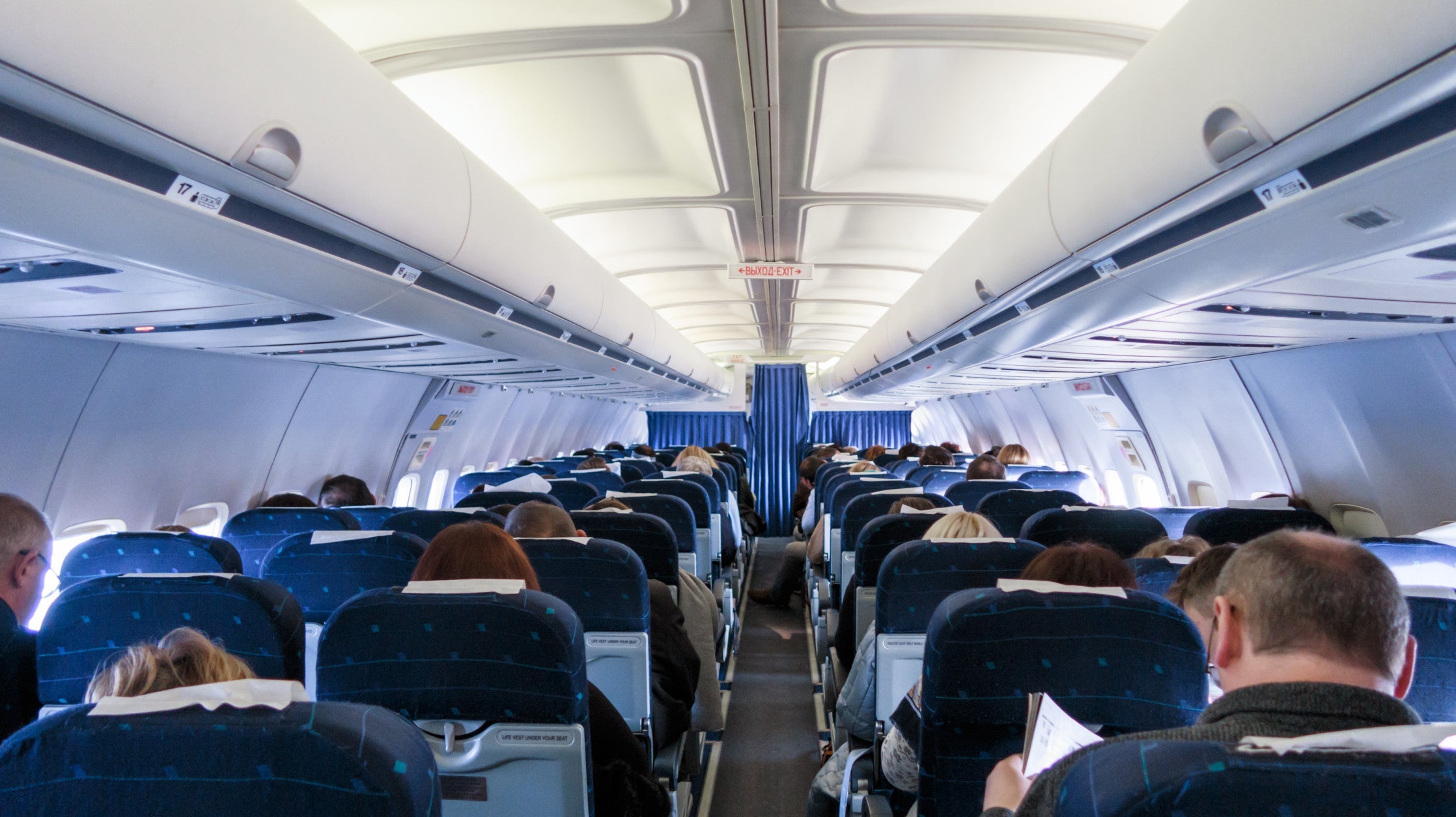
Last Friday, an issue with the pressure in the cabin of a Southwest Airlines flight forced the aircraft to return to its airport of origin, Connecticut's Bradley International Airport (BDL). Part of the reason the flight turned around, the Hartford Courant reported, was because passengers' ears were in pain.
At least one passenger was bleeding from the ears, and emergency medical professionals met the flight when it landed. Several passengers were treated at the airport.
Southwest removed the Boeing 737 from service and simply said the aircraft "experienced a pressurization issue shortly after takeoff. Our flight crew followed proper procedures and returned to BDL, where it landed safely. Some customers, among the 139 onboard, were treated for discomfort by local paramedics."
This isn't the first time passengers' ears have bled due to a sudden change in pressure. The same thing has happened on at least two other flights last year: one Ryanair plane in July and one Jet Airways flight in September. Both were also on Boeing 737s.
So what causes these sudden pressure changes on flights that could be potentially painful to passengers?
The Southwest incident was likely to do with the aircraft's system for pressurizing the cabin, Todd Curtis, director of the Airsafe.com Foundation, explained to TPG.

"The aircraft apparently flew up to 10,000 feet MSL [Mean Sea Level] before diverting," Curtis said. "Given this altitude limitation, and the fact that the 737 typically pressurizes to around 8,000 feet MSL, the problem was likely related to the aircraft not being able to maintain the appropriate cabin pressure."
Usually to maintain a comfortable cabin pressure, 737s rely on a two systems.
"On a 737 there are two air-conditioning pressurizations systems, a left and a right bleed air source (the compressor section of the engine) and a pack to cool the compressed air," John Cox, CEO of Safety Operating Systems, told TPG. "Either system will keep the airplane pressurized. The 737 pressurization system does not fail very often."
Those pressurization systems, however, do have valves that can malfunction and cause a sudden change in pressure.
"Airplane cabin pressure is managed by valves that control the outflow of air from the cabin to the atmosphere," former Boeing engineer Peter Lemme told TPG. "Cabin pressure is managed automatically by controlling the outflow valve. A valve malfunction or control error could cause pressure to change rapidly. There are other relief valves in the cabin that operate to protect from overpressure or from negative pressure."
Normally, pilots do not manage cabin pressurization altitude directly, Lemme noted. As for the bleeding, Lemme says the sudden change in pressure can damage the ear drum.
"The human ear has tubes that allow equalization of the air on the back side of the ear drum," he explained. "Rapid pressure changes can overwhelm the ear and cause the drum to rupture."
Sounds like a painful experience, but fortunately, one that is not too common on board typical passenger aircraft.
TPG featured card

at Capital One's secure site
Terms & restrictions apply. See rates & fees.
| 5X miles | Earn 5X miles on hotels, vacation rentals and rental cars booked through Capital One Travel |
| 2X miles | Earn unlimited 2X miles on every purchase, every day |
Pros
- Stellar welcome offer of 75,000 miles after spending $4,000 on purchases in the first three months from account opening. Plus, a $250 Capital One Travel credit to use in your first cardholder year upon account opening.
- You'll earn 2 miles per dollar on every purchase, which means you won't have to worry about memorizing bonus categories
- Rewards are versatile and can be redeemed for a statement credit or transferred to Capital One’s transfer partners
Cons
- Highest bonus-earning categories only on travel booked via Capital One Travel
- LIMITED-TIME OFFER: Enjoy $250 to use on Capital One Travel in your first cardholder year, plus earn 75,000 bonus miles once you spend $4,000 on purchases within the first 3 months from account opening - that’s equal to $1,000 in travel
- Earn unlimited 2X miles on every purchase, every day
- Earn 5X miles on hotels, vacation rentals and rental cars booked through Capital One Travel
- Miles won't expire for the life of the account and there's no limit to how many you can earn
- Receive up to a $120 credit for Global Entry or TSA PreCheck®
- Use your miles to get reimbursed for any travel purchase—or redeem by booking a trip through Capital One Travel
- Enjoy a $50 experience credit and other premium benefits with every hotel and vacation rental booked from the Lifestyle Collection
- Transfer your miles to your choice of 15+ travel loyalty programs
- Top rated mobile app