What's the Hole in Your Plane's Tail? It's the Little Engine That Could: The APU
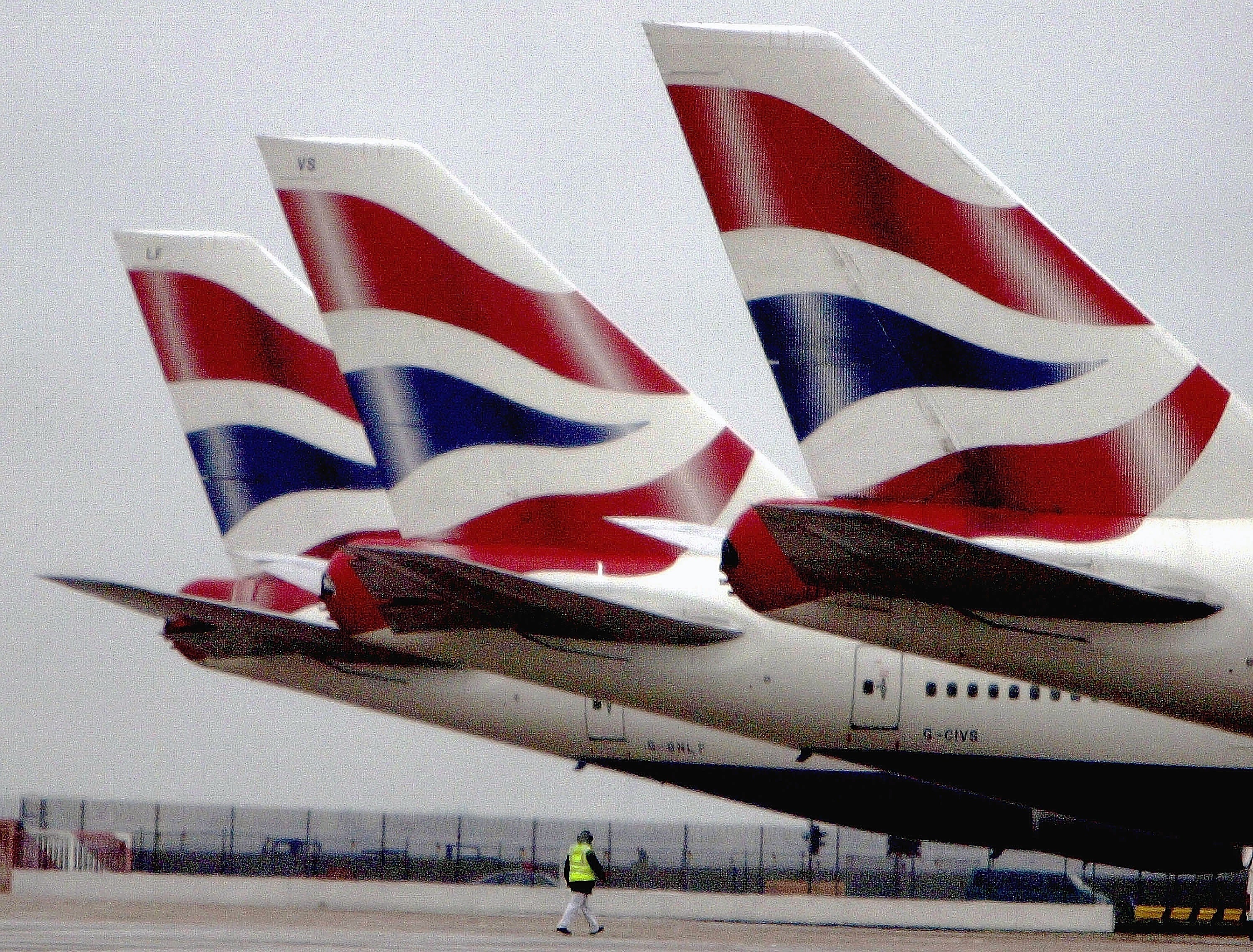
You may have noticed a strange phenomenon when looking at the rear of aircraft parked at the gate: they're venting out exhaust from a little hole in the tail. Through that hole is the Auxiliary Power Unit — the little engine that could. As with everything in aviation, it's primarily known by its acronym, the APU. Last week we explained how jet engines work, and this week we'll talk about their little — but often indispensable — sibling at the back of the plane.
I connected with Captain Dean Plumb, British Airways' Chief Technical Pilot, to answer my questions about this hidden engine and its use.
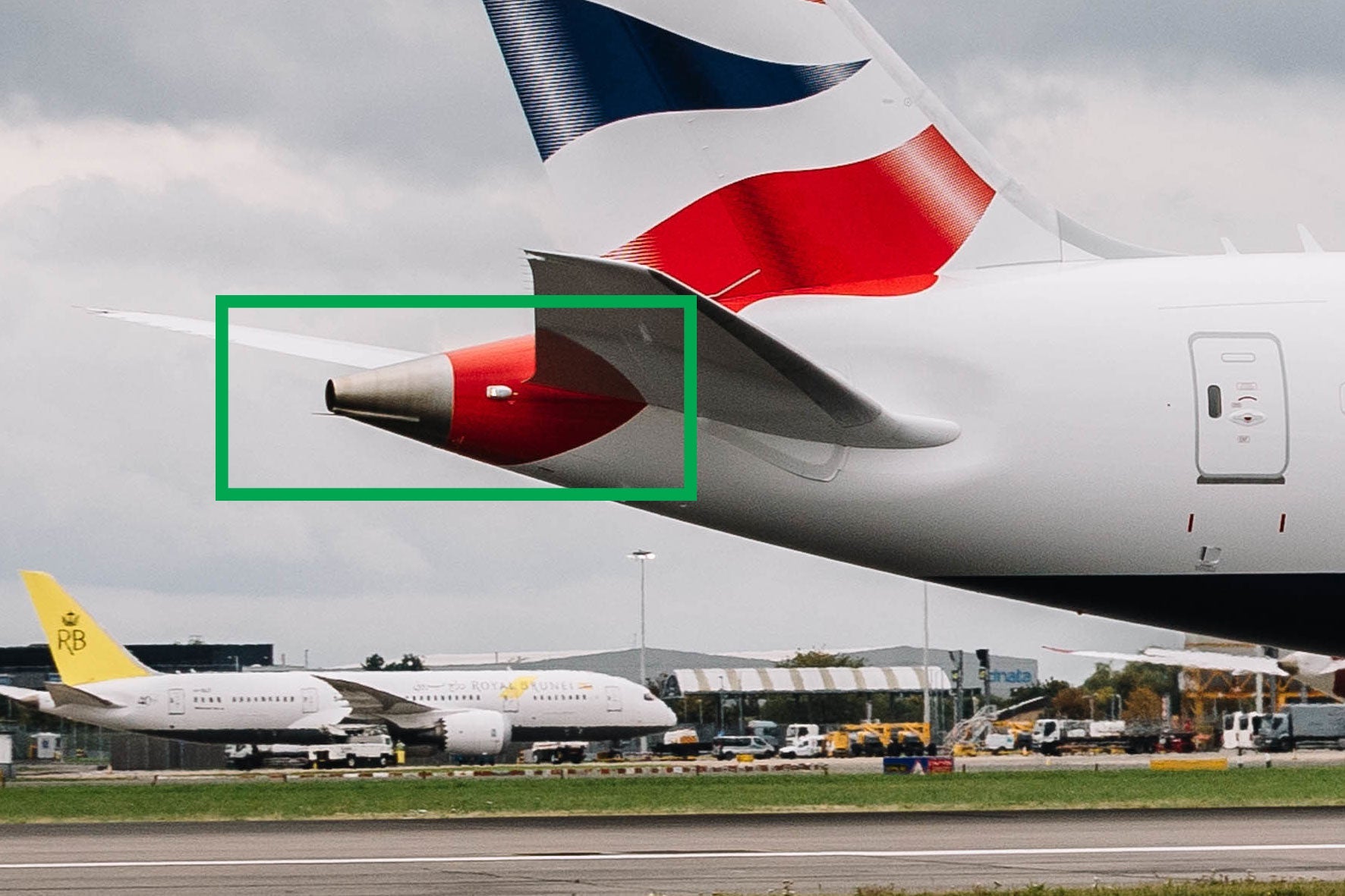
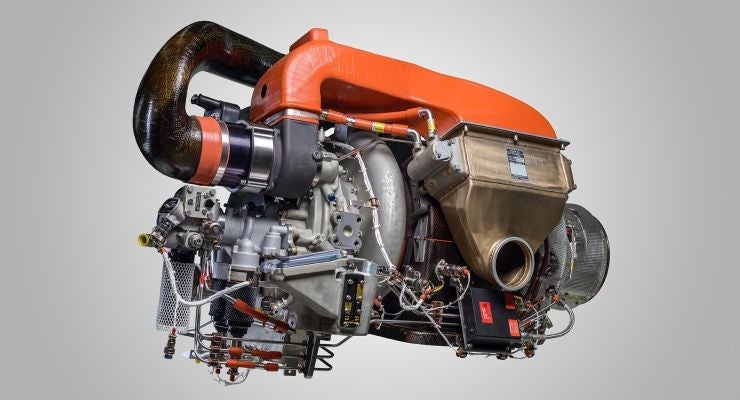
The APU is a turbine engine that sits in the tail of the aircraft. It provides no thrust. Like any jet engine, it takes in air, compresses it, adds a fuel mixture and ignites it.
Once started, the APU powers both an electrical generator and an air compressor, Plumb explained. The generator powers cabin lights and flight-deck avionics. ("Avionics" is an industry term for electronics used on aircraft.) So-called "bleed air" from the compressor powers air conditioning packs, providing either hot or cold air, and — importantly — enough compressed air to get the main motors started.
Here's how it works:
Start Me Up
"When we talk about bleed, we mean the air that is produced by the compressor; it's pretty powerful at around 40 PSI, and can be fed to the engines through bleed air pipes in the body and wing of the aircraft," Plumb explained.
"Once the APU bleed air gets to the main engine it spins a starter motor, which is effectively a small fan attached to the shaft of the engine and is strong enough to start turning the shaft and getting the whole engine fan assembly spinning," Plumb explained. "Although the engine fans are large, they spin very easily. Often as you board the aircraft you can see them spinning simply because of the wind — so 40 PSI of bleed air can really get the engine turning."
The APU also uses far less fuel than the main engines, so while the aircraft is at the gate, the APU can power the aircraft and A/C without engaging one of the big engines, for a significant cost savings. (Often, at large airports, planes plug into electrical power at the gate; the pilots then turn on the APU to start the engines.)
Why Is It At The Back?
I asked Plumb why — if the primary purpose of the APU is to provide bleed air to start the engines — the APU is not installed closer to the engines themselves. After all, coming from the end of the plane seems like an awful long way for bleed air to travel.

"Having it up in the tail and away from all the ground staff who are working on the aircraft is helpful," Plumb said. "Also, the space closer to the engines is better used for fuel tanks in the wing area of the aircraft and for cargo and baggage storage in the belly. Although it seems like a long way for the bleed air to travel, the air is at such high pressure that it is still effective."
"Typically, the APU will remain off for the whole flight and will only be started by the pilots once the aircraft has landed and is taxiing in to the parking gate," Plumb said.
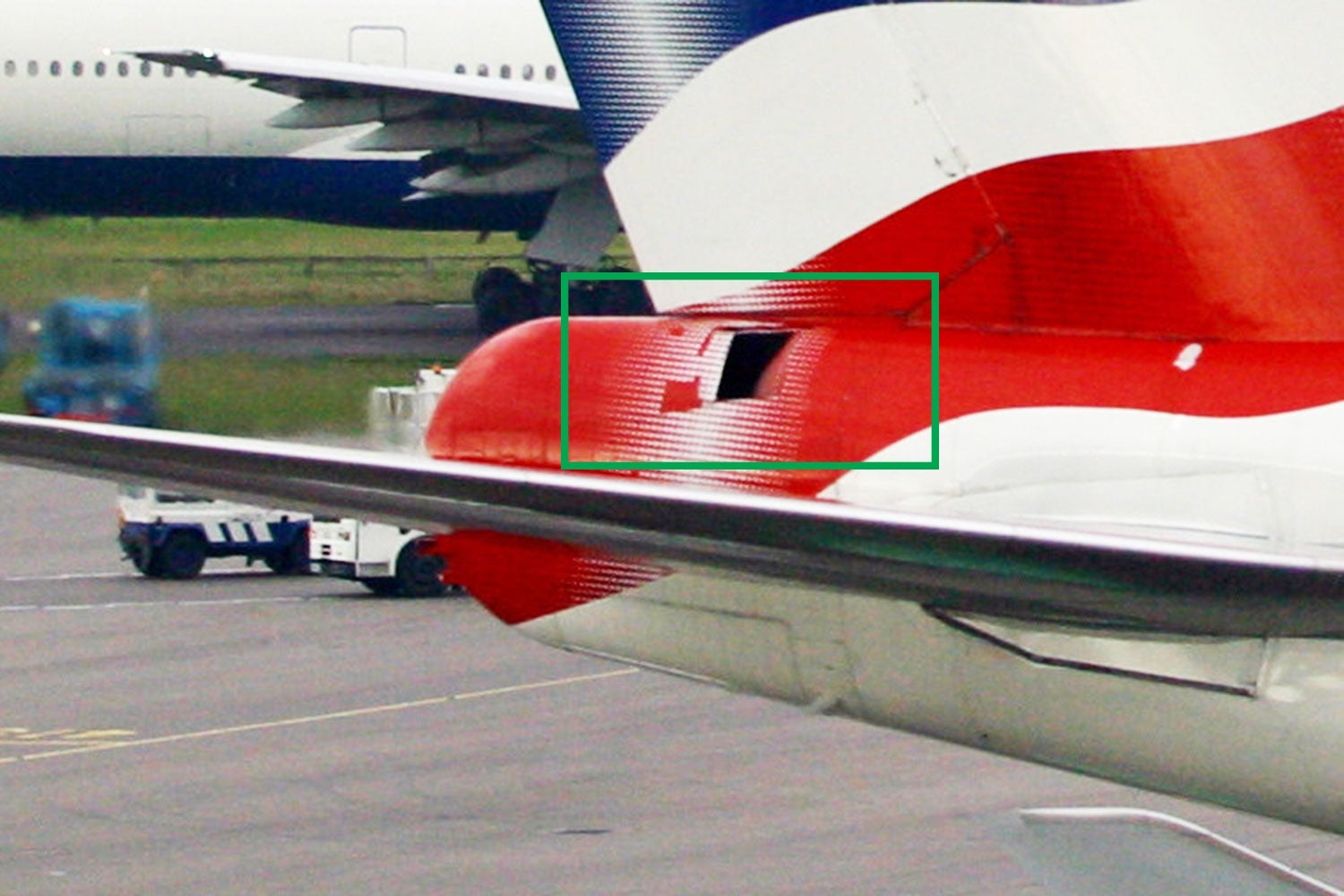
The air intake for the APU on a British Airways Boeing 747. Image courtesy of British Airways, modified by the author.
As a jet engine itself, the APU requires air to compress, and that air comes from an intake. The air intake for the APU often sits on the top side of the aircraft fuselage, which also helps keep it away from random debris. "Most APUs have a 'dirt deflector' or mesh to stop debris being ingested into the turbine," Plumb said. "The intake itself is shaped like a scoop and closes after a short cool-down period when the APU is switched off. If you use the APU in flight and are manually flying the aircraft, you can feel the subtle effect the APU air intake has as the scoop extends out into the airflow and creates a little extra drag."
Plumb pointed out that many modern jets don't just use the APU on the ground. "They use it as a backup to provide extra electrical power or bleed air in flight. This can be incredibly useful as the APU bleed air can run the air conditioning and pressurization and also provide extra electrical power if there were a main engine failure or other malfunction," he explained.
As helpfully noted by Honeywell, on US Airways Flight 1549 (the so-called "Miracle on the Hudson"), Captain Sullenberger powered on the APU when both of his engines quit. Indeed, the investigation noted that "[s]tarting the APU early in the accident sequence proved to be critical because it improved the outcome of the ditching by ensuring that electrical power was available to the airplane."
Concorde Was Cool, But It Was no 727
The first jet to have an APU in commercial service was the rugged Boeing 727. The APU allowed Boeing to offer the plane in markets without robust ground infrastructure. "As long as you have fuel on the aircraft, the APU can pretty much make the aircraft self-sufficient, which can be a real asset if it's operating to smaller, less well-equipped airports," Plumb said.
In contrast, the beautiful Concorde did not have an APU; when the main engines were off, its systems had to be connected to ground power and heating or cooling support. "Concorde was a high-performance aircraft which stretched the limits of aircraft design," Plumb said. "To operate effectively, the designers knew they had to minimize the weight of the aircraft, so they decided not to fit an APU. Instead, they relied on extra ground equipment to power and cool the aircraft during the pre-flight preparation, baggage loading, and fueling."
Next time you board a plane, look at the tail end and see if you can spot the APU's air intake. And if you see fumes coming out the back, it means the little engine that could is on — and that you'll enjoy air conditioning or heat as soon as you walk aboard.
Mike Arnot is the founder of Boarding Pass NYC, a New York-based travel brand, as well as a private pilot.
TPG featured card

at Capital One's secure site
Terms & restrictions apply. See rates & fees.
| 5X miles | Earn 5X miles on hotels, vacation rentals and rental cars booked through Capital One Travel |
| 2X miles | Earn unlimited 2X miles on every purchase, every day |
Pros
- Stellar welcome offer of 75,000 miles after spending $4,000 on purchases in the first three months from account opening. Plus, a $250 Capital One Travel credit to use in your first cardholder year upon account opening.
- You'll earn 2 miles per dollar on every purchase, which means you won't have to worry about memorizing bonus categories
- Rewards are versatile and can be redeemed for a statement credit or transferred to Capital One’s transfer partners
Cons
- Highest bonus-earning categories only on travel booked via Capital One Travel
- LIMITED-TIME OFFER: Enjoy $250 to use on Capital One Travel in your first cardholder year, plus earn 75,000 bonus miles once you spend $4,000 on purchases within the first 3 months from account opening - that’s equal to $1,000 in travel
- Earn unlimited 2X miles on every purchase, every day
- Earn 5X miles on hotels, vacation rentals and rental cars booked through Capital One Travel
- Miles won't expire for the life of the account and there's no limit to how many you can earn
- Receive up to a $120 credit for Global Entry or TSA PreCheck®
- Use your miles to get reimbursed for any travel purchase—or redeem by booking a trip through Capital One Travel
- Enjoy a $50 experience credit and other premium benefits with every hotel and vacation rental booked from the Lifestyle Collection
- Transfer your miles to your choice of 15+ travel loyalty programs
- Top rated mobile app