The difference between direct and nonstop flights

Editor's note: This story has been updated with new information.
As discussed in an episode of "Have Points, Will Travel," Ian Agrimis learned a subtle but important distinction in the airline world when he discovered that there's actually a big difference between a "direct" flight and a "nonstop" one. Confused? Don't worry, you're not the only one.
While both options will get you to the destination printed on your ticket on a single airplane, a direct flight could actually take much longer than a nonstop one. That's because direct flights can sometimes stop at multiple airports along their route, so long as the flight number stays the same.
For example, Singapore Airlines offers two options to get from New York to Singapore Changi Airport (SIN): nonstops from Newark Liberty International Airport (EWR) and John F. Kennedy International Airport (JFK). However, the airline also offers a flight from New York-JFK to Singapore with a pit stop at Frankfurt Airport (FRA).
The JFK-SIN flight is currently the longest in the world in operation, scheduled at just shy of 19 hours of gate-to-gate flying aboard an Airbus A350-900ULR across roughly 9,527 miles. Flying the nonstop will also generally cost you more — the only classes of service available on the A350 serving the route are premium economy and business. The route via Frankfurt has economy, business and first class.
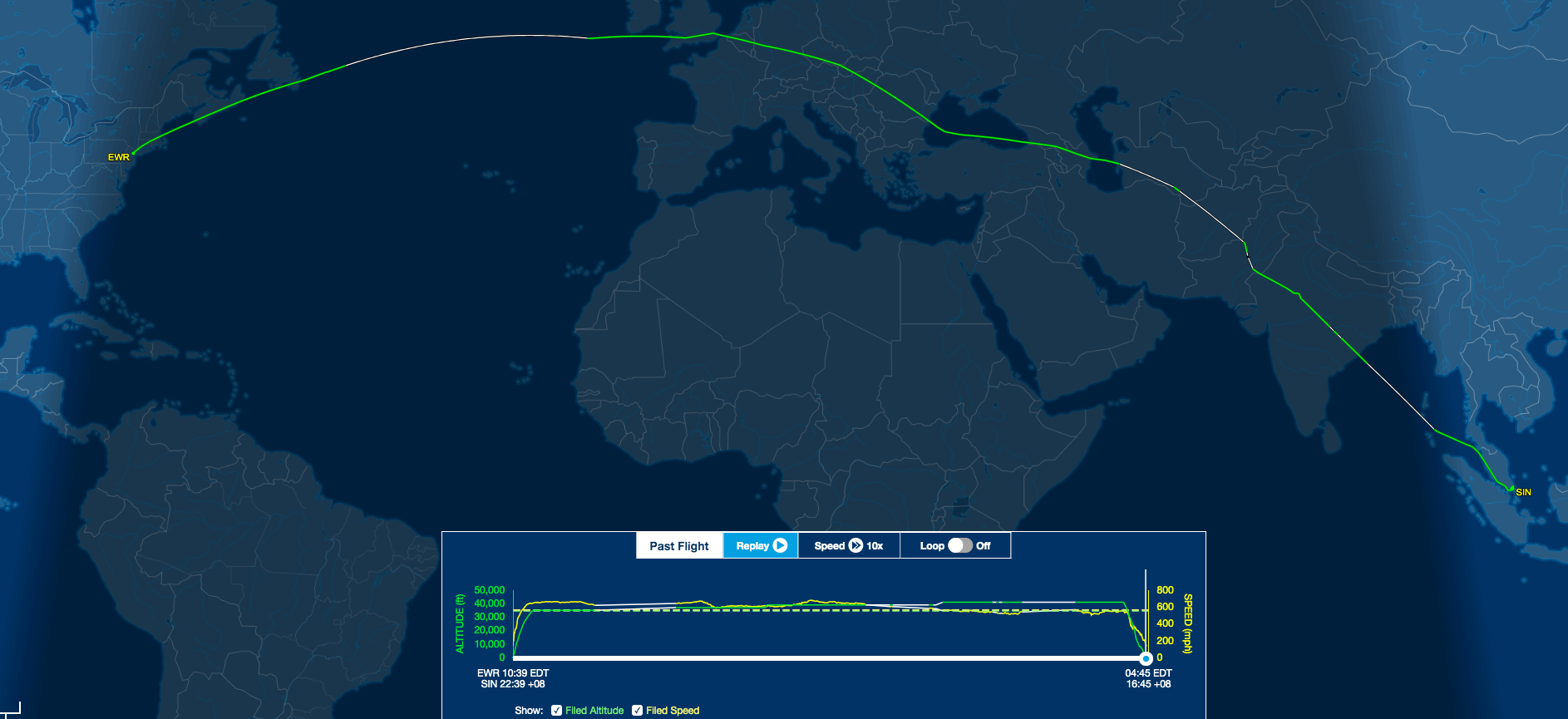
Although the nonstop is certainly the fastest way to travel from the U.S. East Coast to Singapore, the stopover, direct flight, still has some loyalists and upsides.
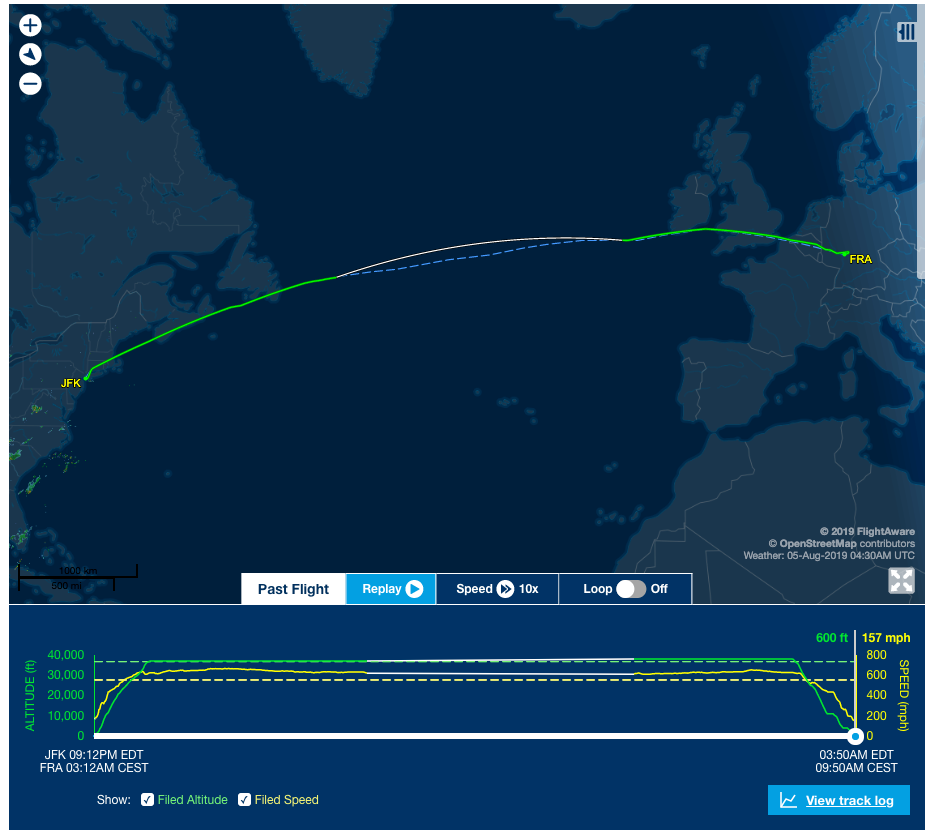
For one thing, the JFK-Frankfurt-Singapore flight is operated by a Boeing 777 with first-class seats (unfortunately not the airline's famous suites) if you're interested in flying a unique product. But beyond that, on such a long journey, some travelers prefer to get a stretching break.
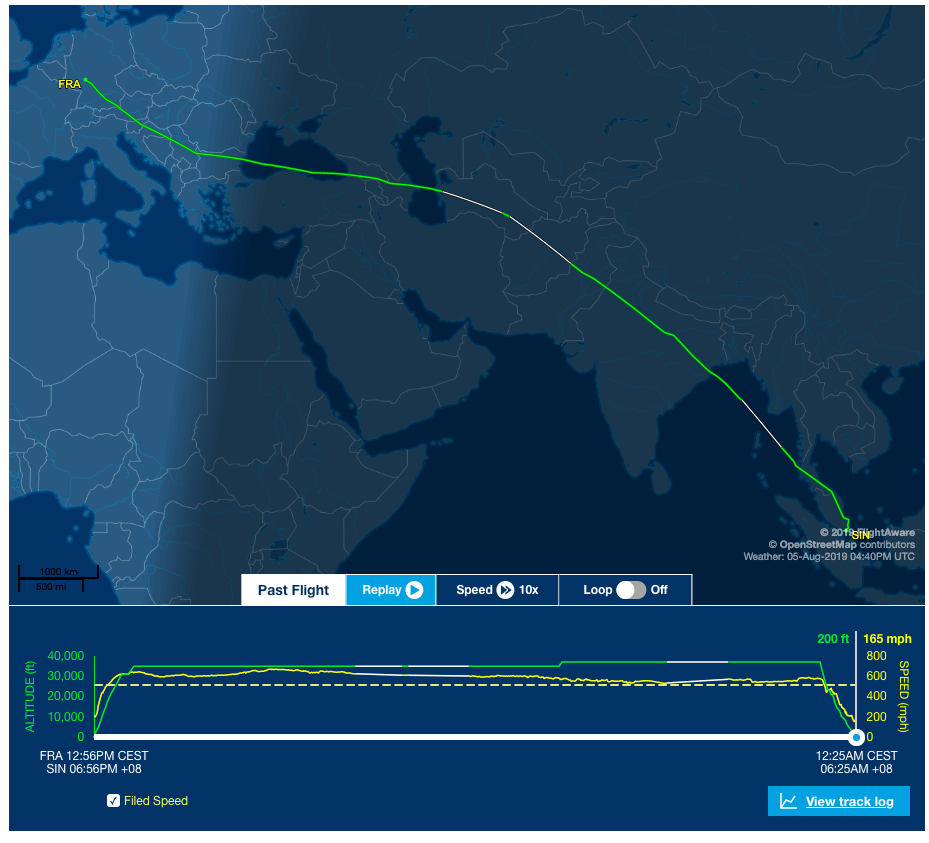
Before the 1980s, direct flights with stops were much more common. Getting to East Asia from the U.S. East Coast or Europe required stopping for fuel at least once.
"I'm old enough to remember I flew a DC-10 to Hong Kong: Geneva, Zurich, Karachi, Hong Kong," said Guillaume de Syon, a professor of history at Albright College whose research includes aviation history. "I never got off the plane."

Related: The world's longest nonstop flights
De Syon said that before the 1980s, jet engines were not reliable or efficient enough to fly such long routes nonstop.
"There's a technical shift starting in the late '70s and definitely confirmed in the 1980s that the so-called direct flights are no longer necessary," he said. "All of a sudden you've got better engines, longer ranges."
Almost overnight, he said, nonstop routes like New York to Johannesburg, which had previously always required at least one technical stop, became possible.
Today's jet engines are "much more reliable," said Gregory Alegi, an aviation historian who teaches at Luiss University in Rome. "You can basically fly nonstop between two points anywhere on Earth," he added. "You take it pretty much for granted that you can fly safely anywhere."
The rise of nonstop flights and the introduction of longer-range midsize jets like the A321XLR means the whole shape of the aviation industry is changing, according to Alegi. Aside from fewer multistop direct flights, it also means connecting flights are slowly becoming less common.
"You can think, in Europe, of places like Amsterdam: It's in a small country — a rich country, an advanced country, but with a very small local base. It thrives because people fly in there, change airplanes, and then go on to their final destination," he said. "If I can fly direct from another medium-size city to my destination, then I'm going to skip Amsterdam."
Related: Maximize your airfare: The best credit cards for booking flights
For Alegi, though, there may always be a case for stops on ultra-long routes like New York-Singapore, even if they're not technically necessary.
"Do you consider the stopover an inconvenience, which means you'll take it only if the price is cheaper, or do you think it's an advantage because you're stopping in some place you want to be and you'll take those six hours to visit the city?"
Alegi answered his own question: "I think the data shows that people want to go nonstop to a destination or stay over for a few days, rather than just doing it lightly over a few hours."
Airlines are increasingly making stopover flights more flexible, allowing passengers to spend more time (think days, not hours) in the cities where they pause.
As stopovers and connecting flights become less common, Alegi also thinks airports may shrink in size and commercial scope.
"If there are fewer stopovers, if there's less time to kill, maybe we'll see airports shrink back, shrink down, return to being more oriented to providing the technical service rather than the travel experience."
The appeal of air travel, generally, according to Alegi, is efficiency, so airlines tend to emphasize how efficient their services are.
Direct flights were once the fastest way between two points, even if they made multiple stops. The terminology stuck, even as nonstop flights took over as more time-efficient alternatives. That's part of the reason this can all be so confusing: Nonstop flights are all direct, but not all direct flights are nonstop. So next time you book a ticket, double-check: is your flight merely direct, or is it nonstop? Otherwise, you may be surprised to find yourself on the ground in some unexpected airport for a few hours
Related reading:
- When is the best time to book flights for the cheapest airfare?
- The best airline credit cards
- What exactly are airline miles, anyway?
- 6 real-life strategies you can use when your flight is canceled or delayed
- The best credit cards to reach elite status
- What are points and miles worth? TPG's monthly valuations
TPG featured card

at American Express's secure site
Terms & restrictions apply. See rates & fees.
| 3X | Earn 3X Miles on Delta purchases. |
| 1X | Earn 1X Miles on all other eligible purchases. |
Pros
- Delta SkyClub access when flying Delta
- Annual companion ticket for travel on Delta (upon renewal)
- Ability to earn MQDs through spending
- Various statement credits for eligible purchases
Cons
- Steep annual fee of $650
- Other Delta cobranded cards offer superior earning categories
- Earn 100,000 Bonus Miles after you spend $6,000 or more in purchases with your new Card within the first 6 months of Card Membership and an additional 25,000 bonus miles after you make an additional $3,000 in purchases on the Card within your first 6 months, starting from the date that your account is opened. Offer Ends 04/01/2026.
- Delta SkyMiles® Reserve American Express Card Members receive 15 Visits per Medallion® Year to the Delta Sky Club® when flying Delta and can unlock an unlimited number of Visits after spending $75,000 in purchases on your Card in a calendar year. Plus, you’ll receive four One-Time Guest Passes each Medallion Year so you can share the experience with family and friends when traveling Delta together.
- Enjoy complimentary access to The Centurion® Lounge in the U.S. and select international locations (as set forth on the Centurion Lounge Website), Sidecar by The Centurion® Lounge in the U.S. (see the Centurion Lounge Website for more information on Sidecar by The Centurion® Lounge availability), and Escape Lounges when flying on a Delta flight booked with the Delta SkyMiles® Reserve American Express Card. § To access Sidecar by The Centurion® Lounge, Card Members must arrive within 90 minutes of their departing flight (including layovers). To access The Centurion® Lounge, Card Members must arrive within 3 hours of their departing flight. Effective July 8, 2026, during a layover, Card Members must arrive within 5 hours of the connecting flight.
- Receive $2,500 Medallion® Qualification Dollars with MQD Headstart each Medallion Qualification Year and earn $1 MQD for each $10 in purchases on your Delta SkyMiles® Reserve American Express Card with MQD Boost to get closer to Status next Medallion Year.
- Enjoy a Companion Certificate on a Delta First, Delta Comfort, or Delta Main round-trip flight to select destinations each year after renewal of your Card. The Companion Certificate requires payment of government-imposed taxes and fees of between $22 and $250 (for itineraries with up to four flight segments). Baggage charges and other restrictions apply. Delta Basic experiences are not eligible for this benefit.
- $240 Resy Credit: When you use your Delta SkyMiles® Reserve American Express Card for eligible purchases with U.S. Resy restaurants, you can earn up to $20 each month in statement credits. Enrollment required.
- $120 Rideshare Credit: Earn up to $10 back in statement credits each month after you use your Delta SkyMiles® Reserve American Express Card to pay for U.S. rideshare purchases with select providers. Enrollment required.
- Delta SkyMiles® Reserve American Express Card Members get 15% off when using miles to book Award Travel on Delta flights through delta.com and the Fly Delta app. Discount not applicable to partner-operated flights or to taxes and fees.
- With your Delta SkyMiles® Reserve American Express Card, receive upgrade priority over others with the same Medallion tier, product and fare experience purchased, and Million Miler milestone when you fly with Delta.
- Earn 3X Miles on Delta purchases and earn 1X Miles on all other eligible purchases.
- No Foreign Transaction Fees. Enjoy international travel without additional fees on purchases made abroad.
- $650 Annual Fee.
- Apply with confidence. Know if you're approved for a Card with no impact to your credit score. If you're approved and you choose to accept this Card, your credit score may be impacted.
- Terms Apply.
- See Rates & Fees