Tropical transpacific flair: Hawaiian Airlines Boeing 787 Dreamliner business class

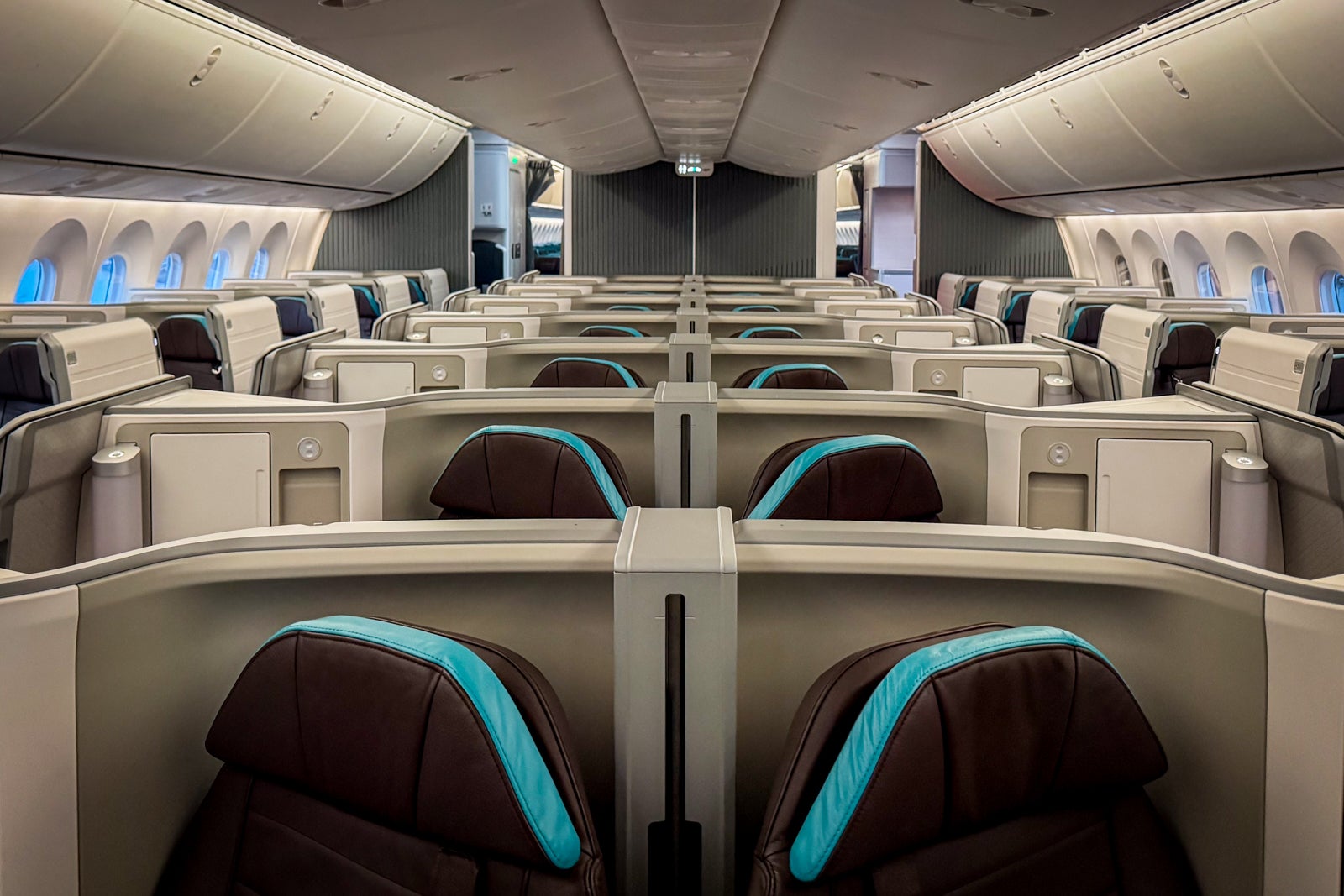
Quick take: Hawaiian Airlines' Dreamliner is a fun ride across the Pacific thanks to flavorful menus and comfortable suites — if either of the two current routes fits your travel plans.
Pros
- Suites have privacy doors and colorful finishes
- Innovative food menus offer tasty choices
- There is relatively good award availability at the Saver level
Cons
- The drinks list does not feel super premium
- Alaska and Hawaiian still only operate a limited number of flights from the U.S. mainland to Asia
- There's no onboard Wi-Fi yet.
Just as ancient Hawaiian navigators once traversed vast stretches of ocean, Hawaiian Airlines' Dreamliners now transport passengers across the Pacific.
The airline only started taking delivery of these long-haul jets two years ago, and currently has just five in its fleet. However, as Alaska Airlines began the process of acquiring Hawaiian Airlines around the same time, it quickly announced plans to put the Dreamliners into service on ambitious new transpacific and transatlantic routes.
Two of those have already launched: Seattle-Tacoma International Airport (SEA) to Tokyo's Narita International Airport (NRT) and Seoul's Incheon International Airport (ICN). Flyers will soon be able to experience the Dreamliners on Alaska's flights to London's Heathrow Airport (LHR) and Rome Fiumicino Leonardo da Vinci Airport (FCO) in May, too.
I first saw Hawaiian Airlines' first Dreamliner up close during a quick tour shortly after its delivery to the carrier, but I've been wanting to try the full flight experience since then. I finally had my chance when I spotted some award availability on the airline's route from Tokyo to Seattle in March, so I cashed in some Alaska Airlines Atmos Rewards points and packed my bag.
Here's what it was like flying Hawaiian Airlines' Dreamliner across the Pacific and how to make the most of the experience.
How much does it cost to book Hawaiian Airlines business class?
The cost of a Hawaiian Airlines long-haul business-class ticket depends on the route, dates and whether your journey is round-trip or one-way.

My one-way flight from Tokyo to Seattle would have cost $3,320. Instead, I was able to redeem 95,000 Alaska Airlines Atmos Rewards points plus $54 in taxes and fees for the flight, getting a value of over 3.4 cents per point. My other option would have been 90,000 Qantas miles plus $252.75, but I preferred to keep my taxes lower and spend a few more points.
Alaska Airlines is a 1:1 transfer partner of Bilt. You can also transfer Marriott Bonvoy points at a 3:1 ratio to Alaska.
The best way to stock up on Alaska Airlines Atmos Rewards points quickly is to apply for one of the following cobranded credit cards:
- Atmos™ Rewards Ascent Visa Signature® credit card
- Atmos™ Rewards Summit Visa Infinite® Credit Card
- Atmos™ Rewards Visa Signature® Business Card
Checking into and boarding Hawaiian Airlines business class
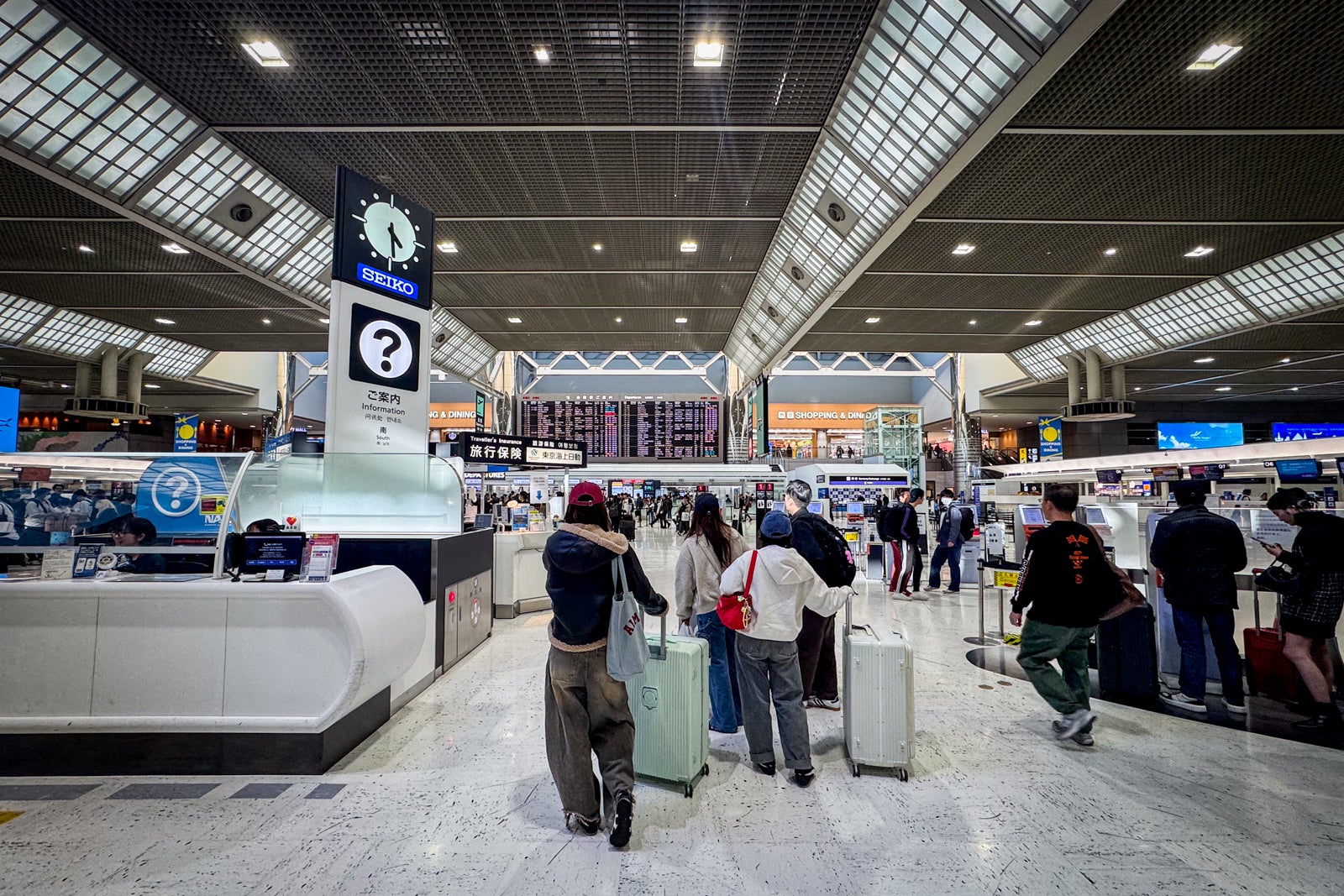
Hawaiian Airlines operates out of Terminal 2 at NRT, so it's easy to access via the Skyliner train from Tokyo's city center.
Hawaiian Airlines business-class passengers can enjoy the following priority services at the airport.
| Priority check-in | Yes |
|---|---|
Luggage allowance | Two checked bags of up to 32 kg (70 pounds) each |
Lounge access | Yes |
Does the airline participate in TSA PreCheck? | Yes |
Priority boarding | Yes |
I was unable to check in for my flight via either Alaska's or Hawaiian's apps, so I arrived at the airport more than 3 hours before my departure.
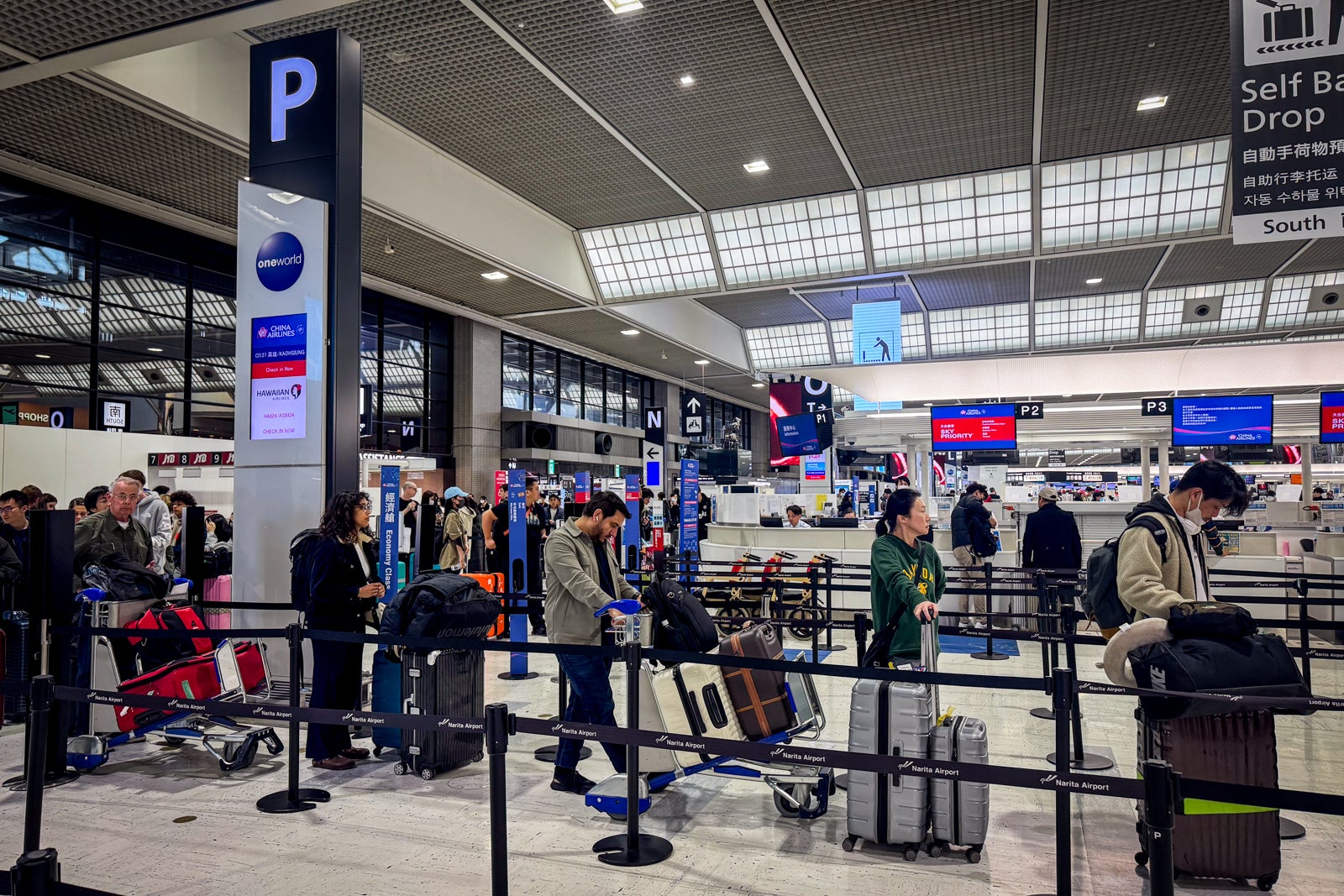
There was already a long line of passengers waiting to check into the economy cabin — but thanks to the fact that I was flying in business class, I was ushered into a much shorter queue with just two other parties ahead of me.
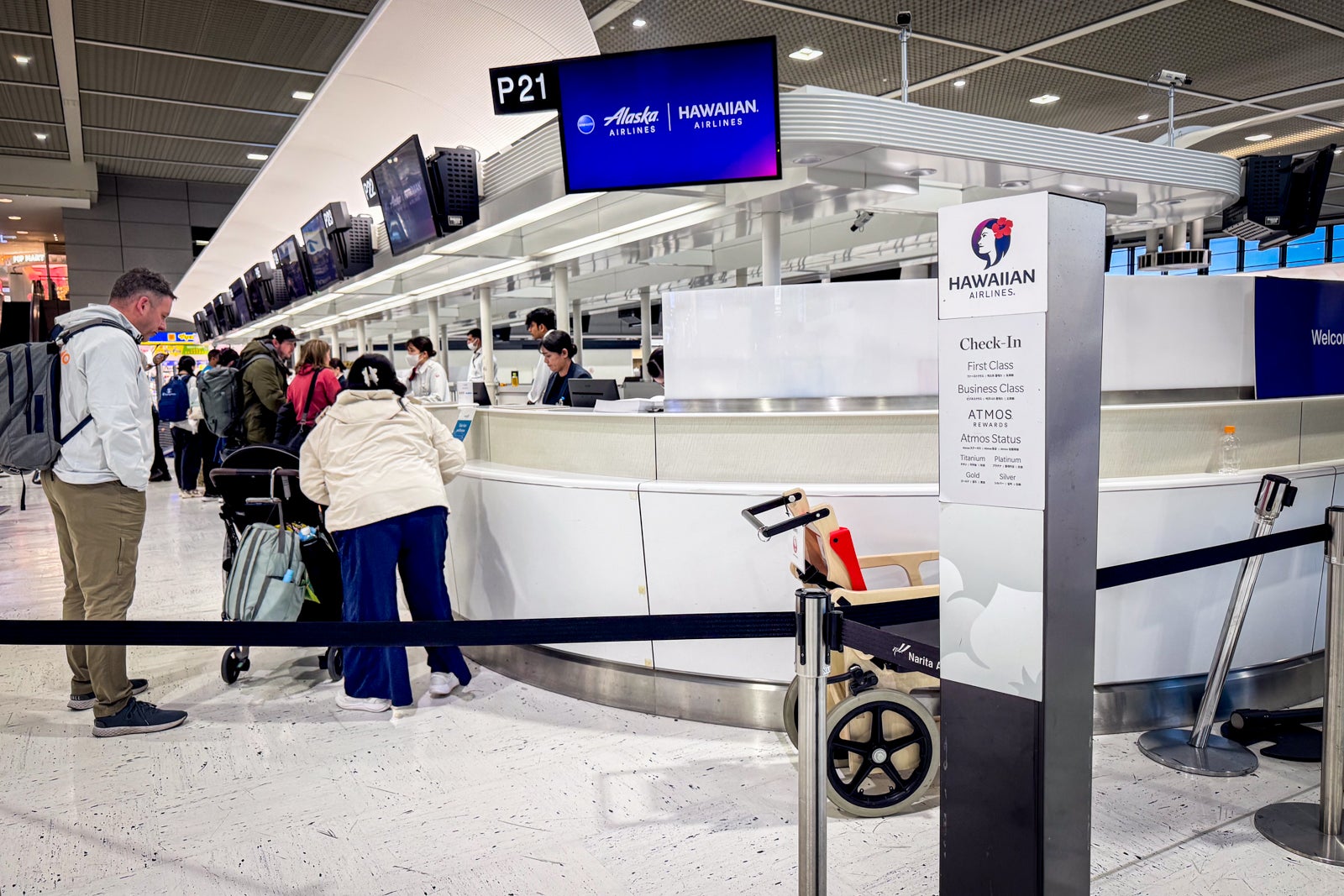
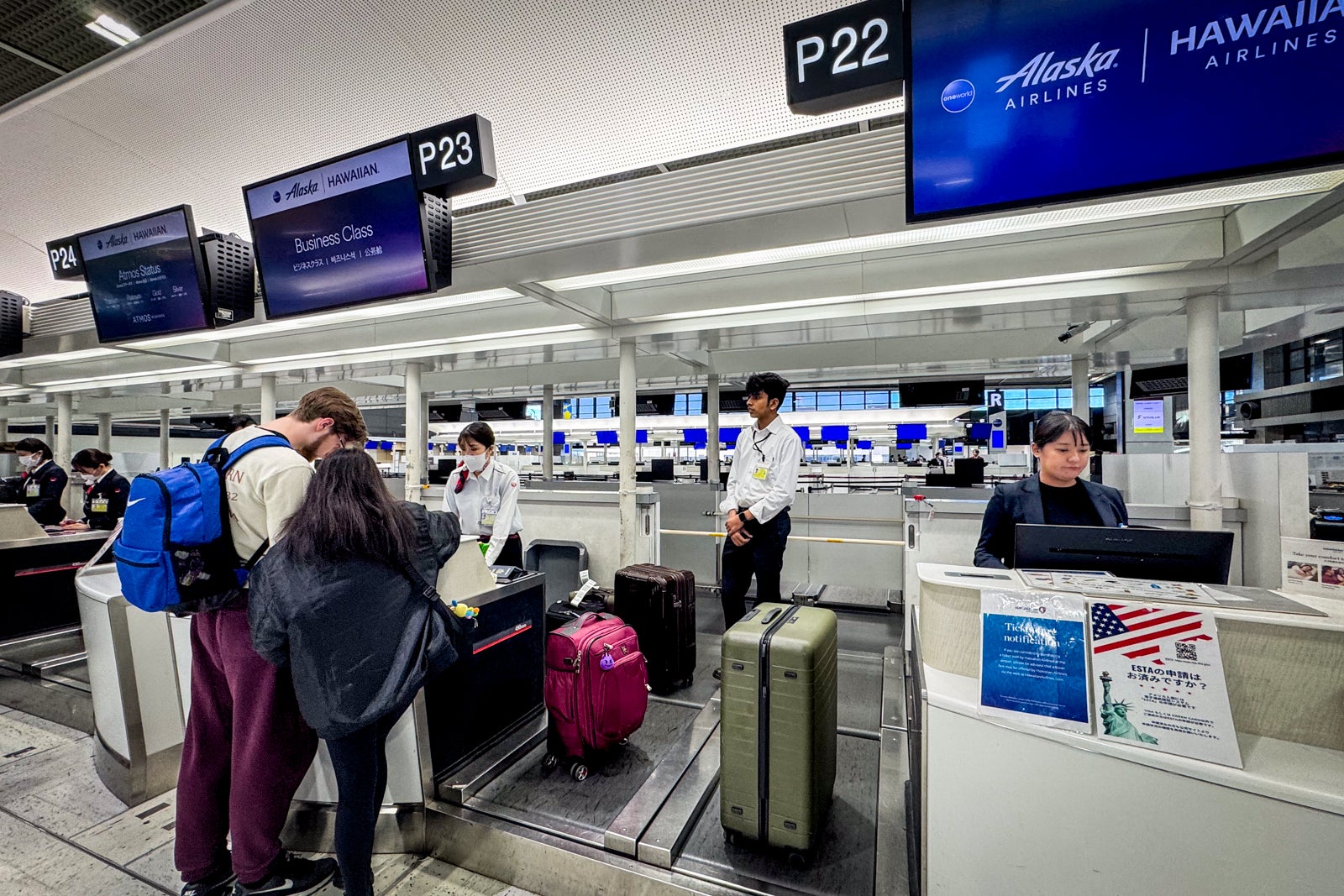
It took less than five minutes to check in and drop my bags, but then the wait to get through security and immigration ate up another 45 minutes. My advice to fellow travelers: Get there early, and plan to spend some time in line and then the lounge.
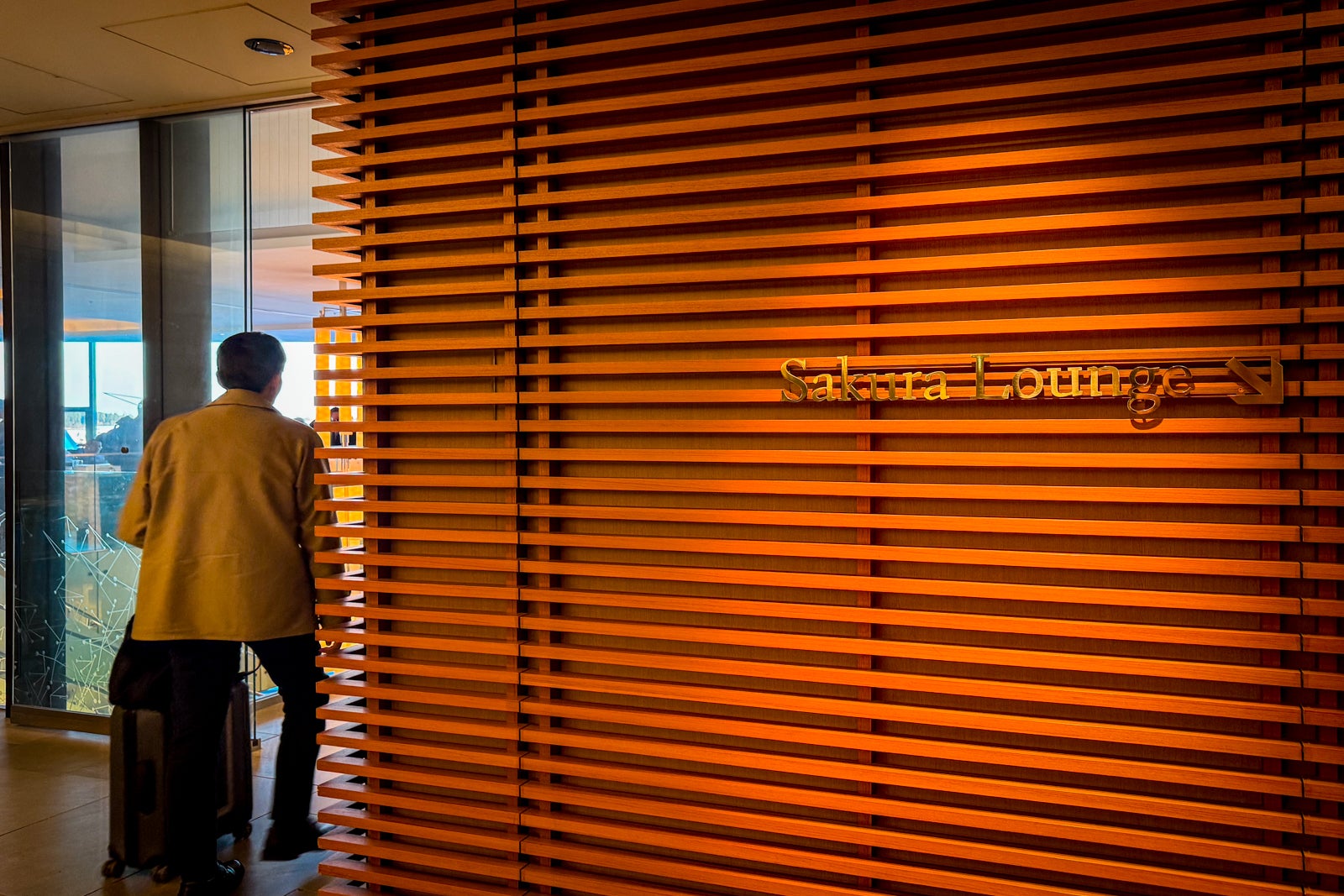
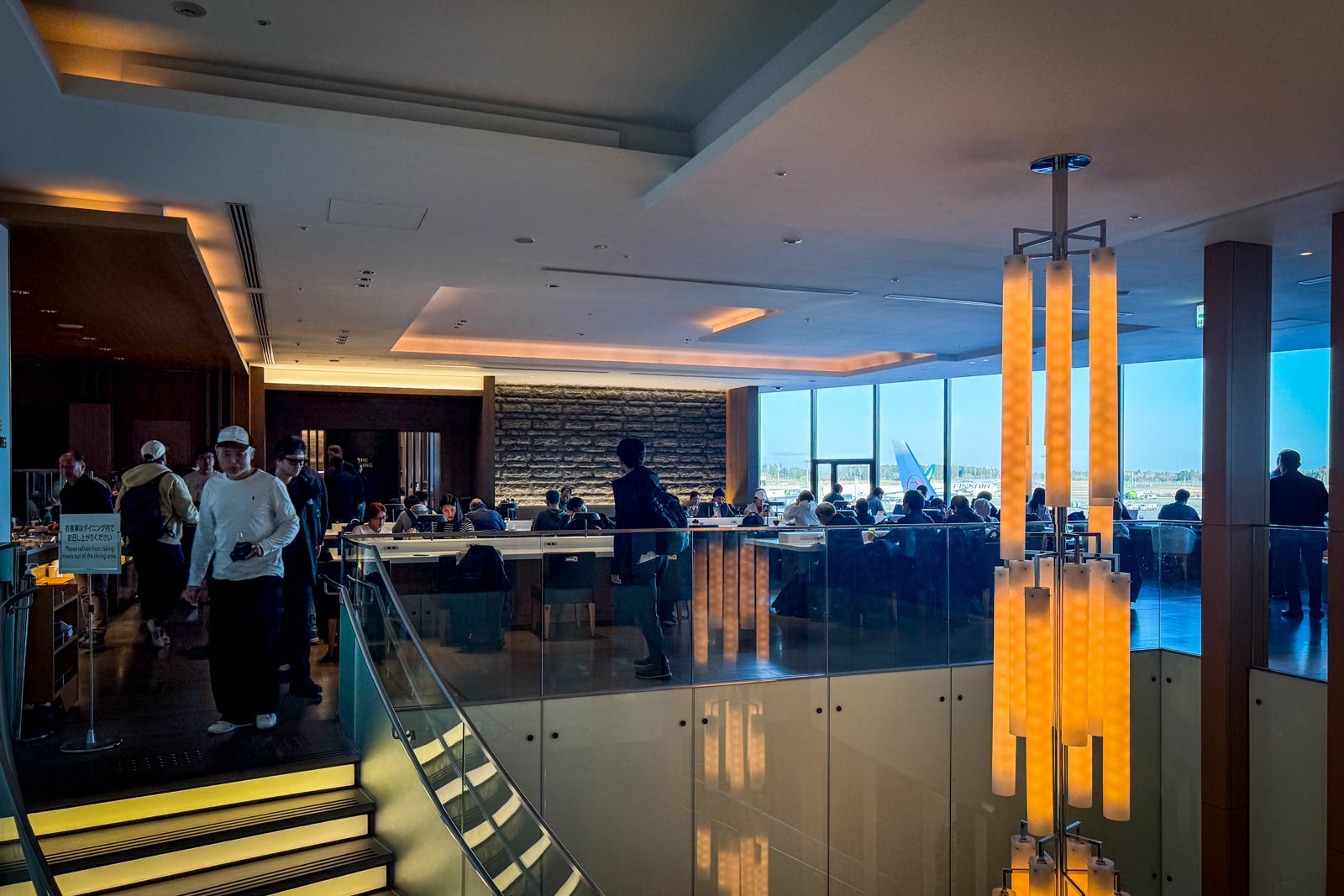
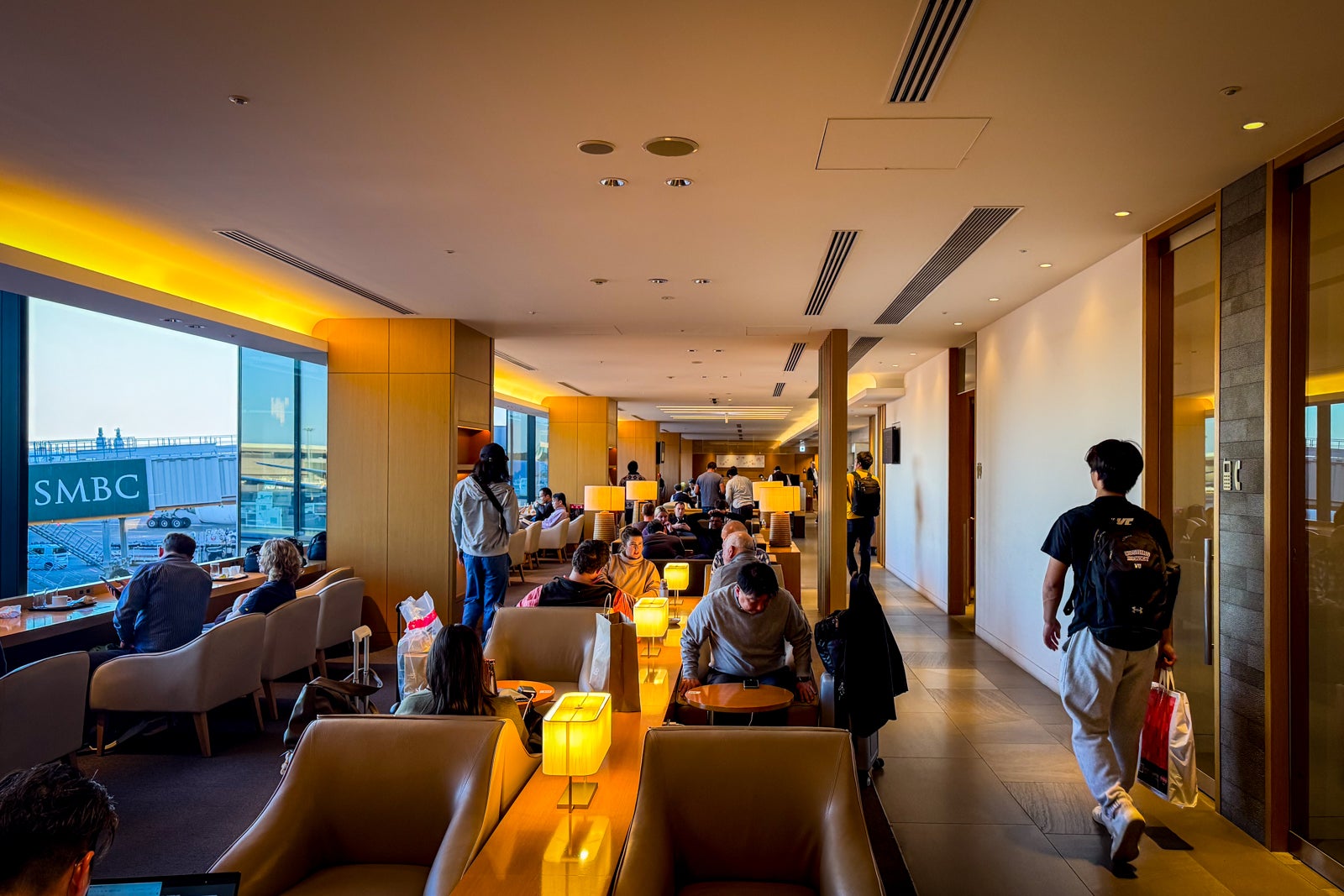
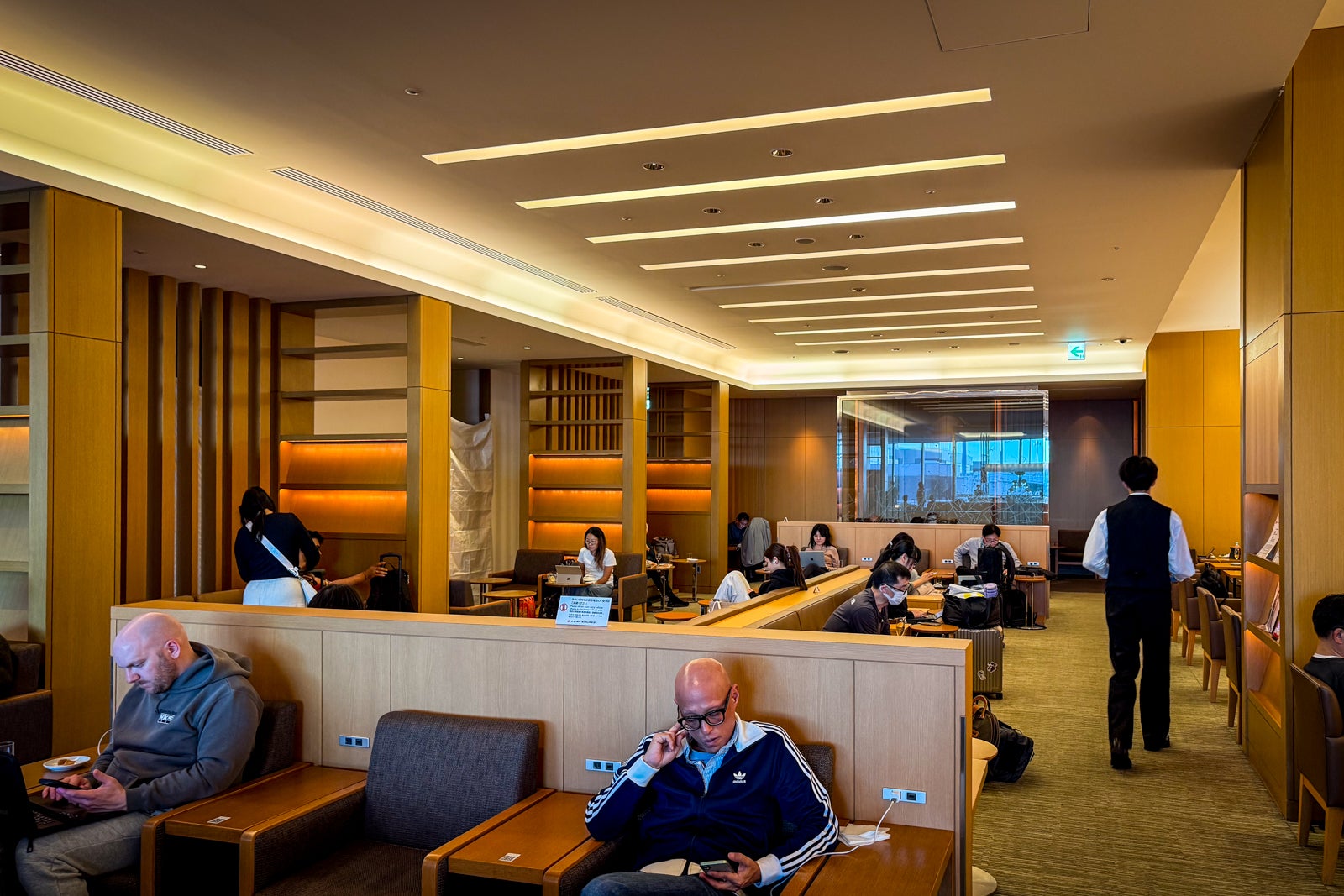
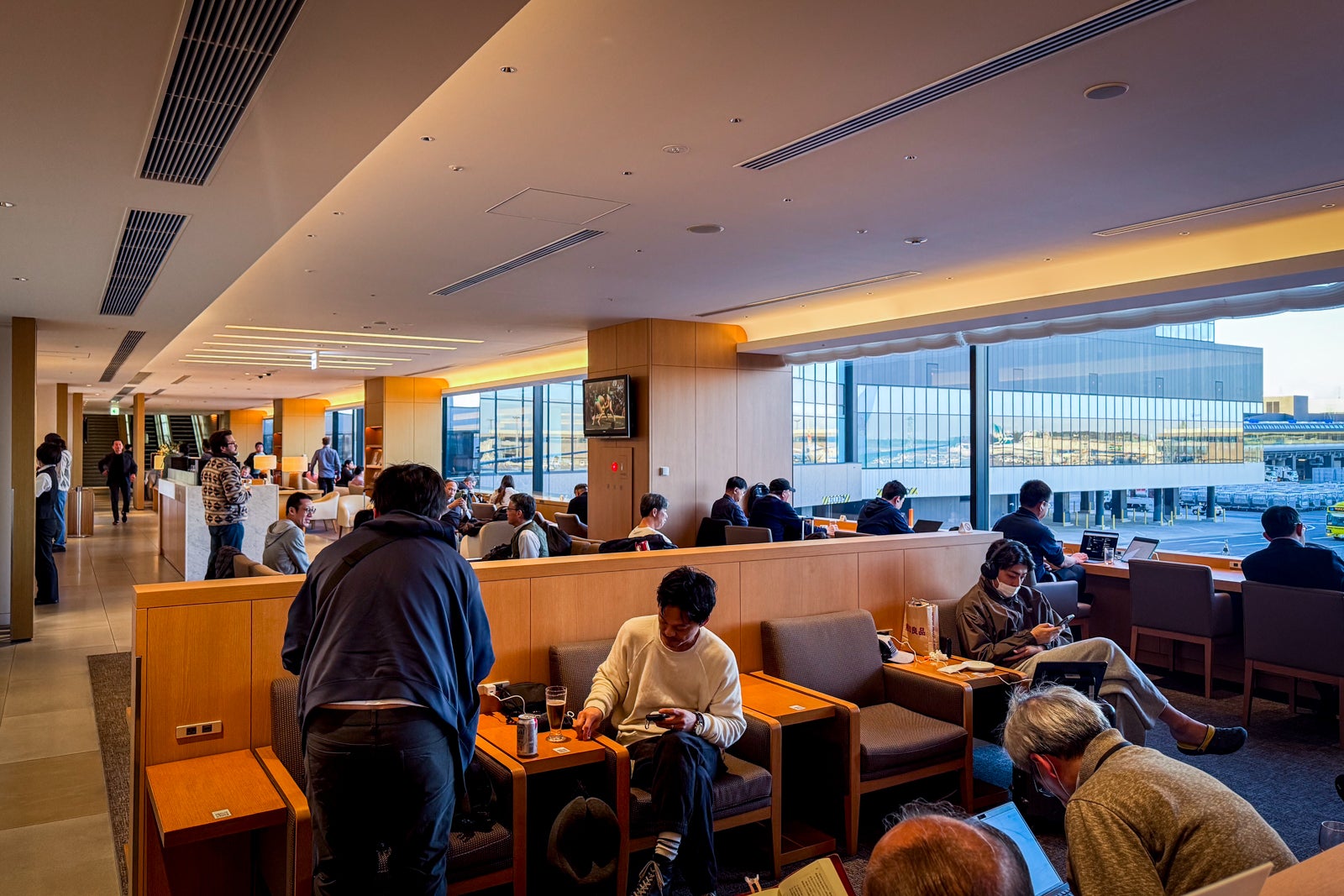
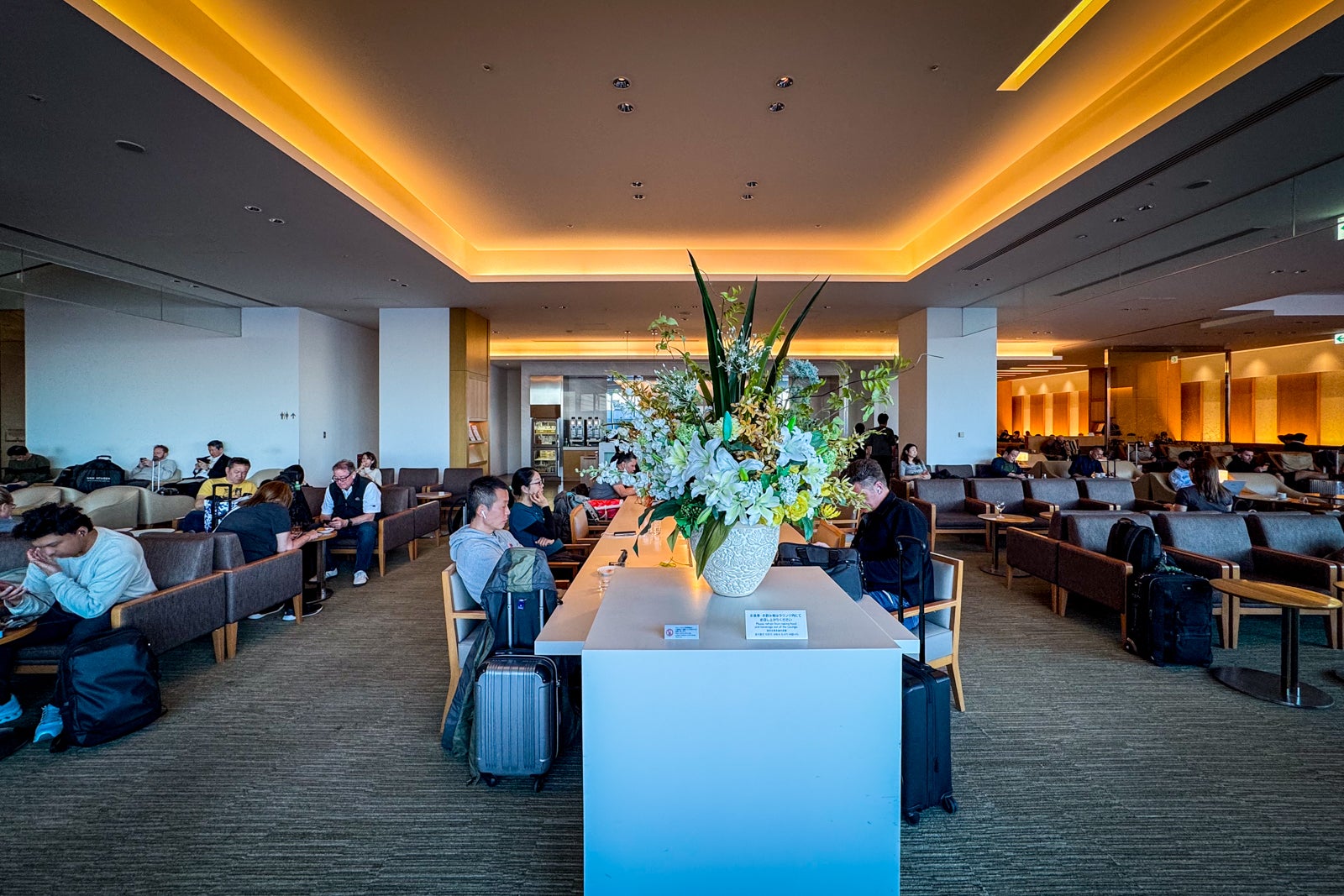
My business-class ticket gave me access to Japan Airlines' Sakura Lounge. This big multilevel space was not far from security and about a five-minute walk to the gate.
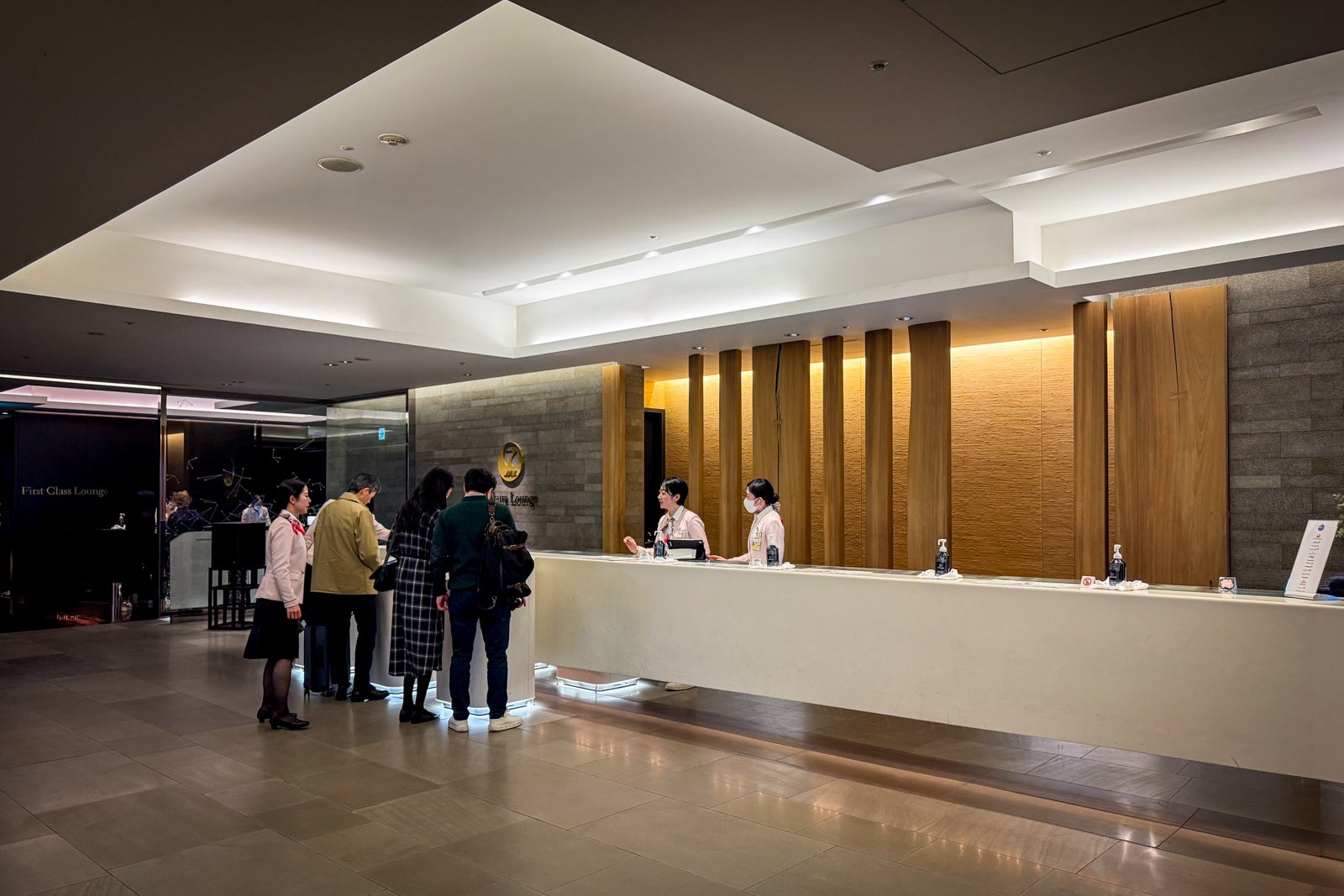
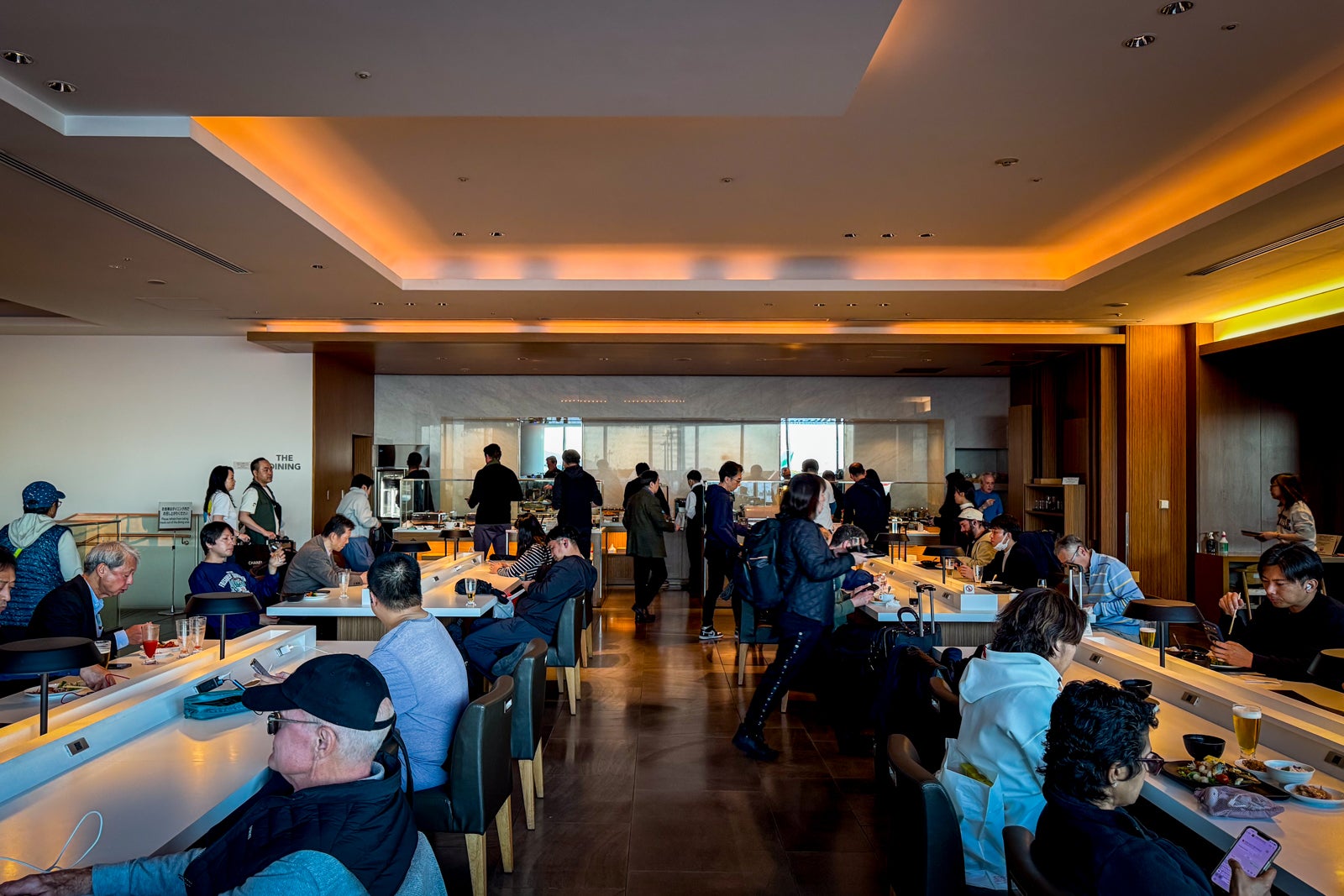
The upper floor adjacent to the reception area has two very large dining rooms, though the buffet lines were also very long, and there were very few open seats in sight.
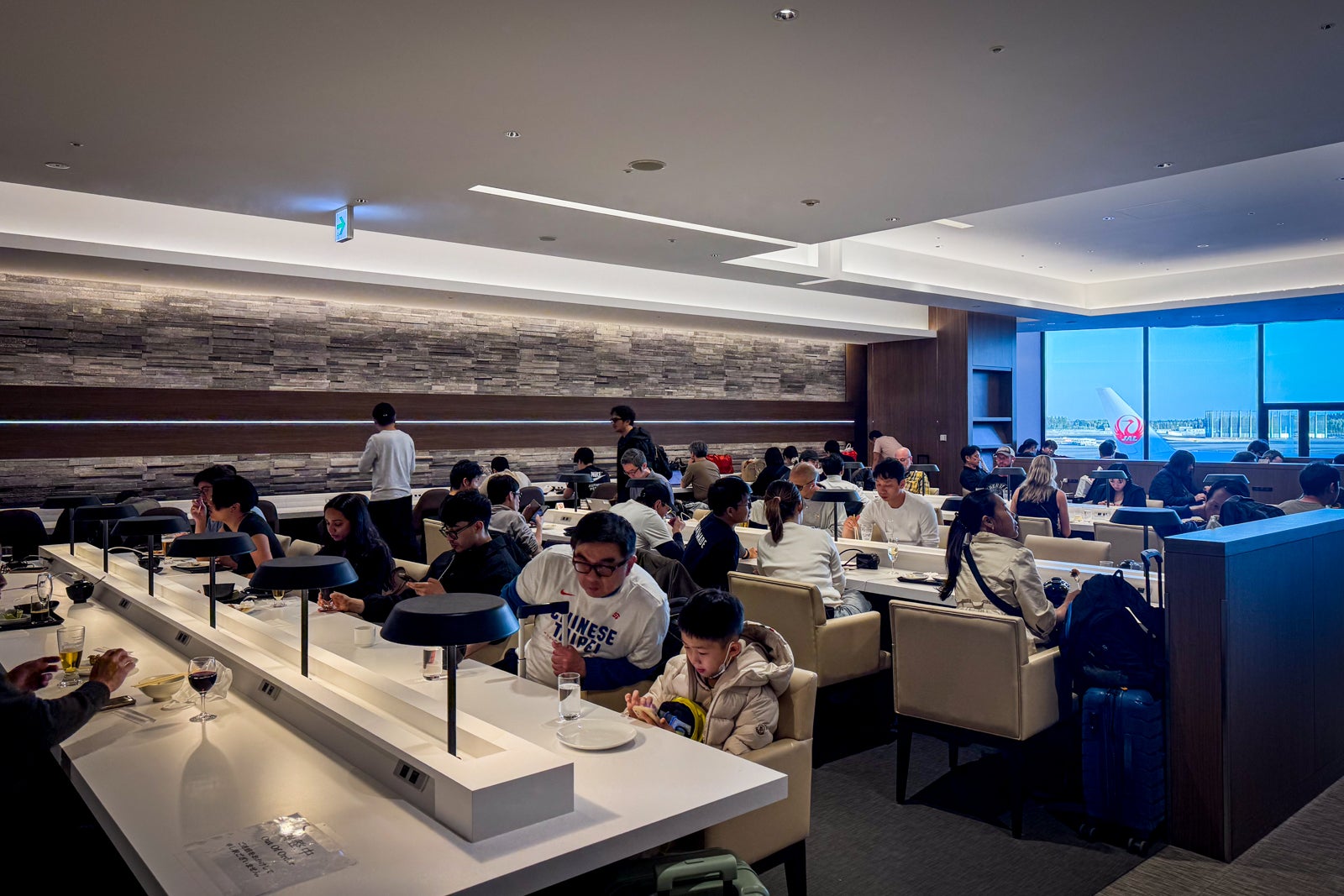
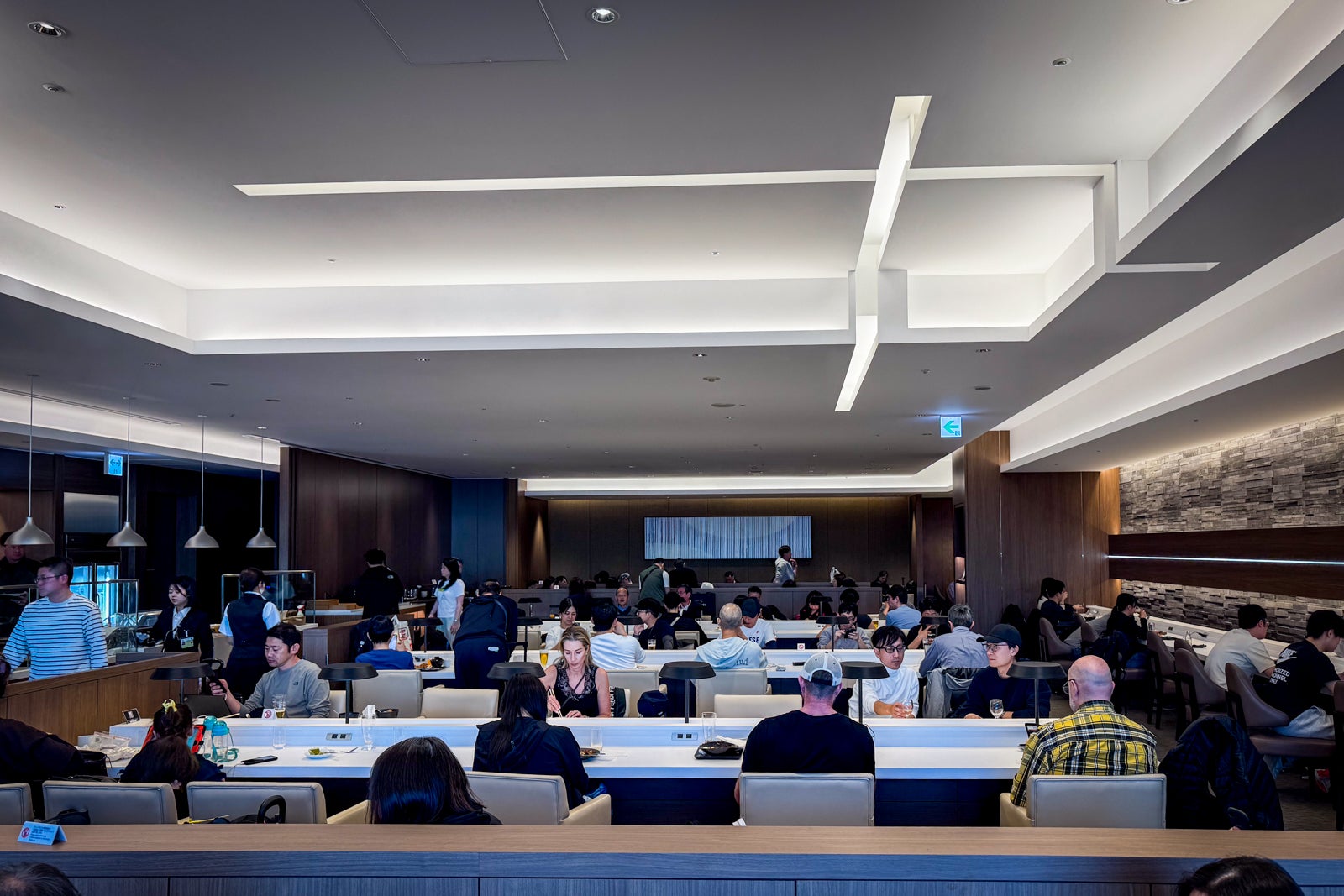
Downstairs was much calmer, but there were only self-serve drinks and a few paltry snacks on offer. It also started to get crowded due to the fact that several Japan Airlines flights also depart in the early evening for the U.S.
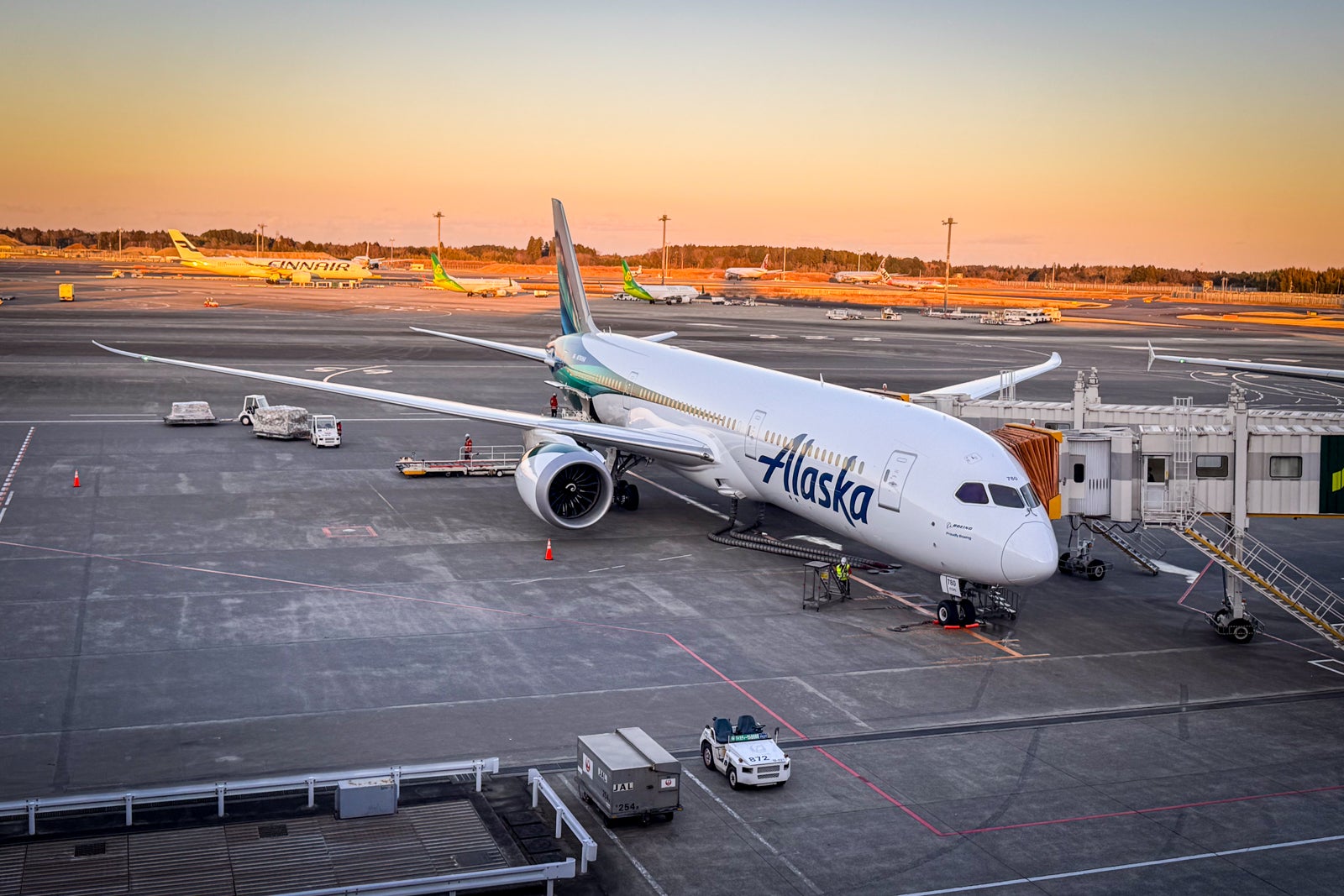
About an hour before departure, I made my way to the end of the terminal so I could be among the first to board. I spotted Hawaiian Airlines' Dreamliner … but it already had Alaska's own flashy new livery emblazoned on the exterior from the terminal. That's bound to be a bit confusing for some flyers — a Hawaiian Airlines flight but on a plane that's already painted like an Alaska Airlines jet. Still, I knew the interior was bound to sport a lot of Hawaiian touches.
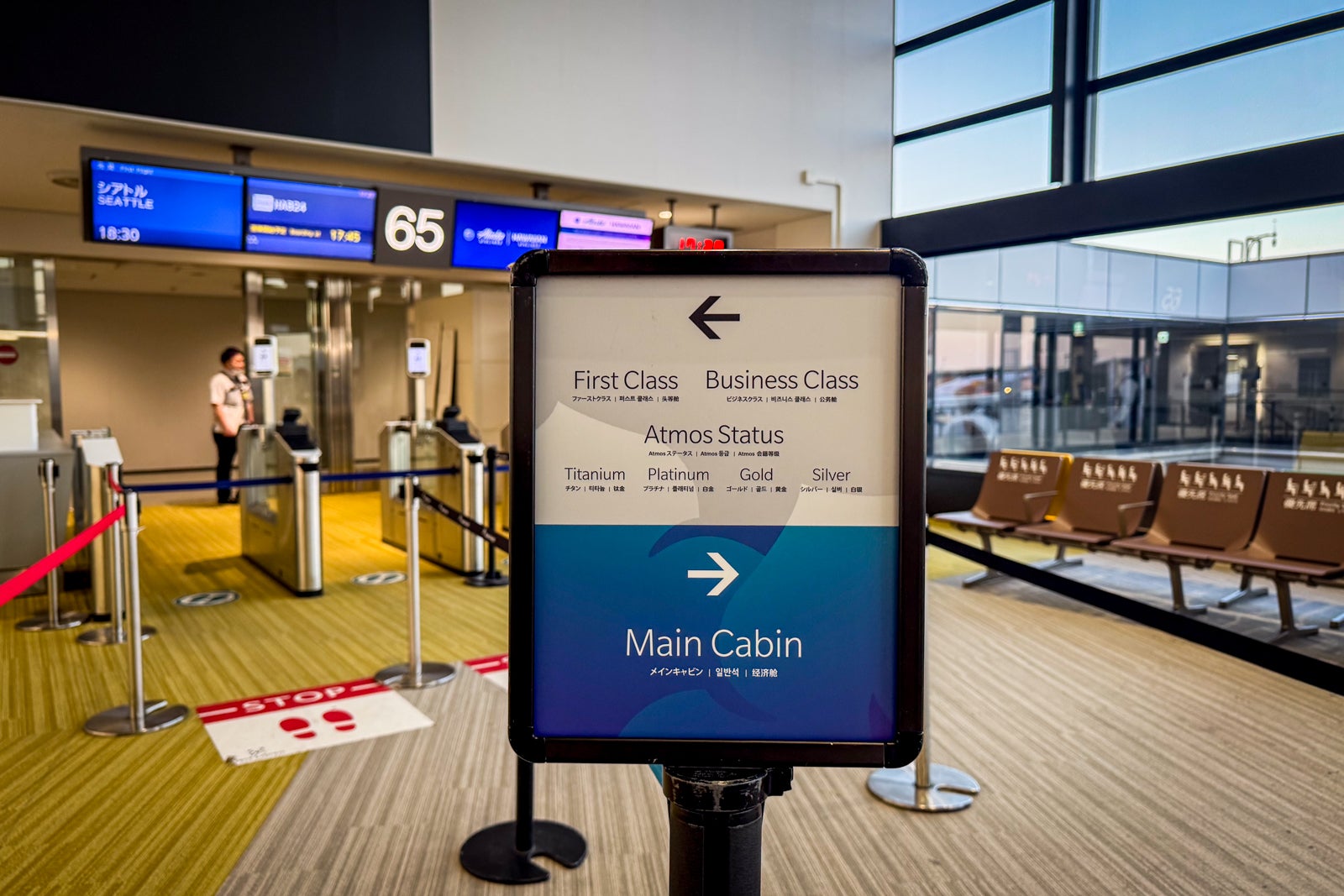
Boarding started right on time at 5:45 p.m., and I was the first on board.
How comfortable is Hawaiian Airlines Dreamliner business class?
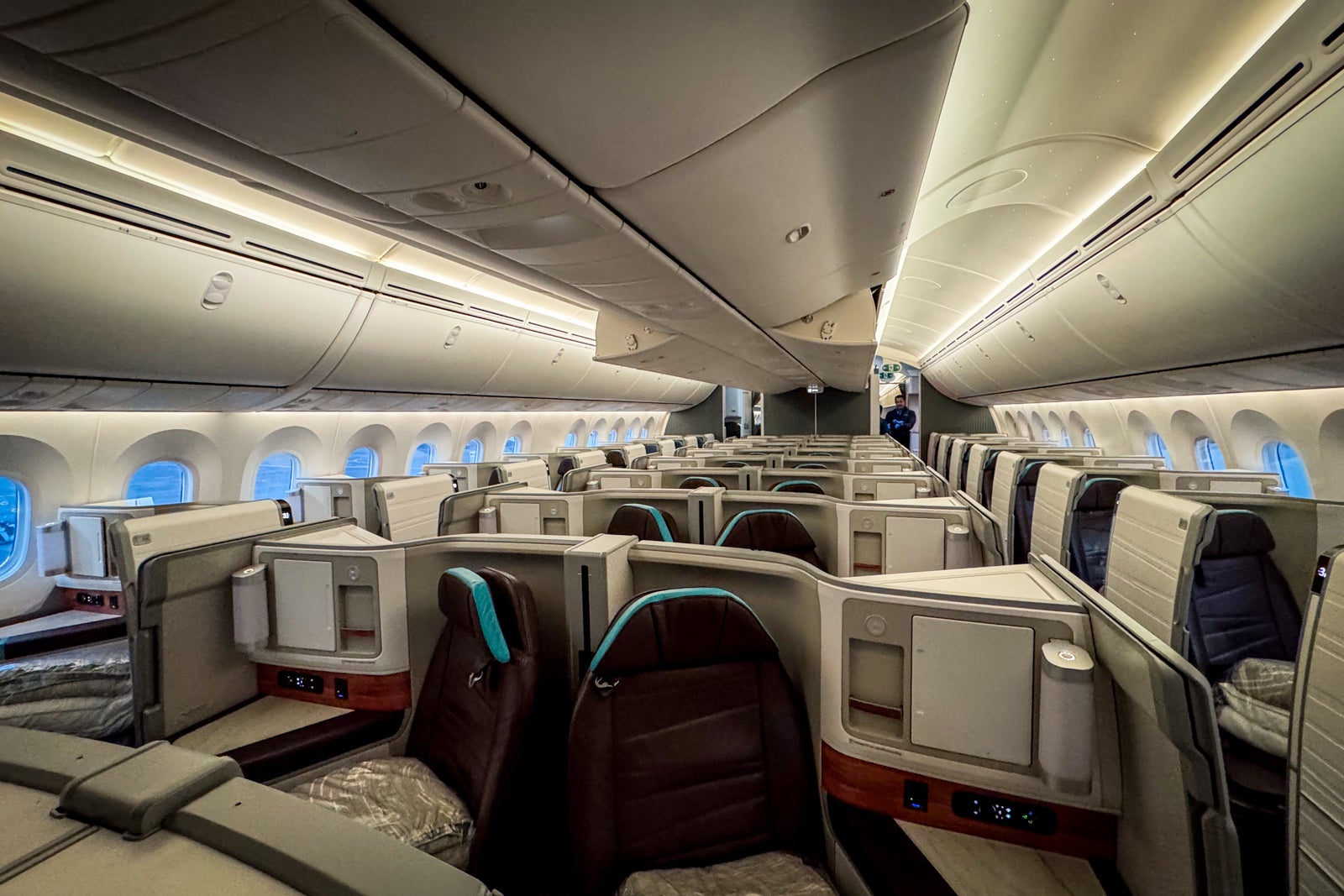
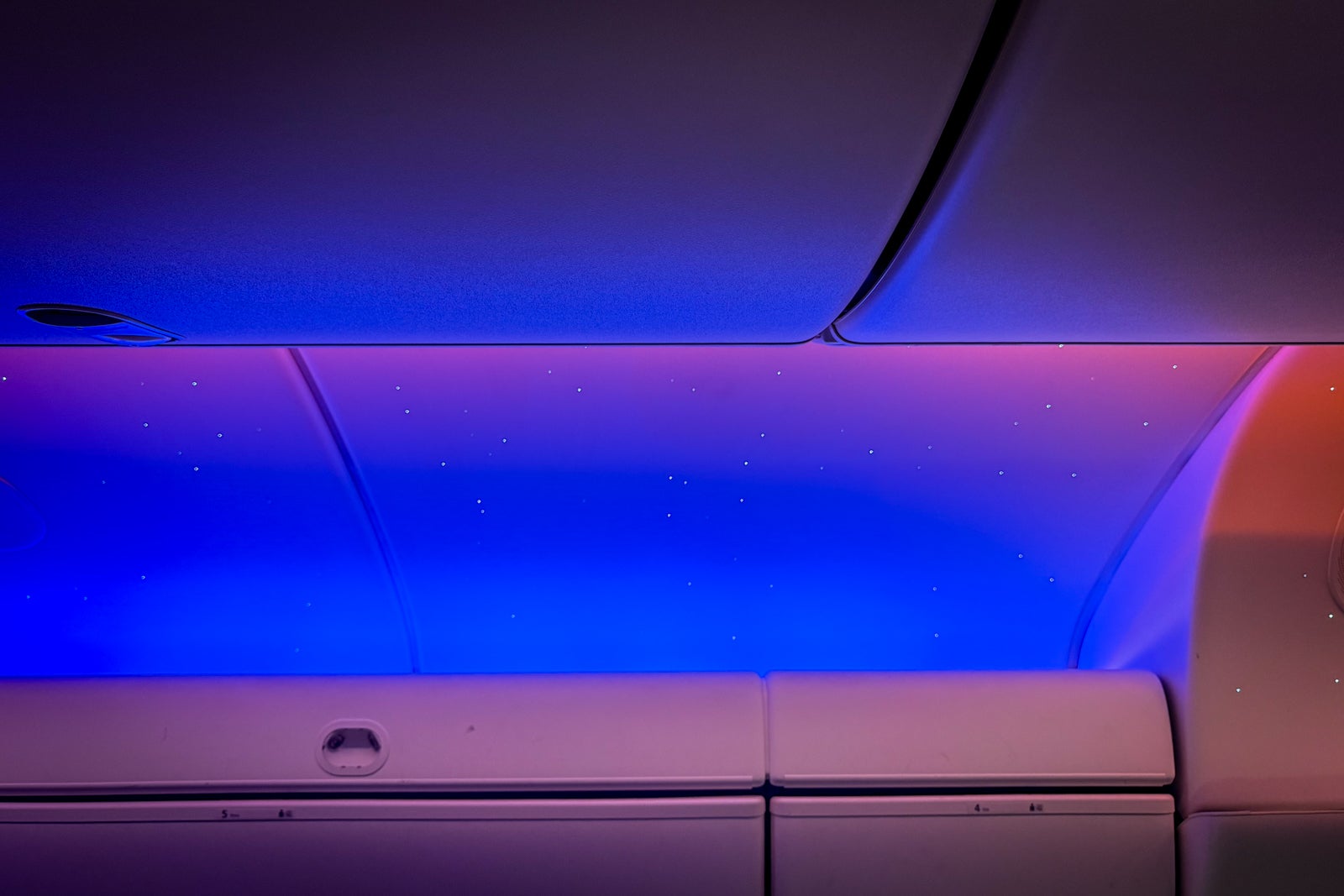
The business-class cabin was designed according to a creative concept called "leihoku," or garland of stars. Its palette is meant to hearken to Hawaii's land and seascapes, and it was just as colorful and upscale as I'd remembered.
Here's a snapshot of the layout and dimensions:
| Number of seats | 34 |
|---|---|
Cabin layout | 1-2-1 |
Seat recline | 77 inches fully flat |
Seat width | 21 inches (26 with the armrest down) |
Screen size | 18 inches |
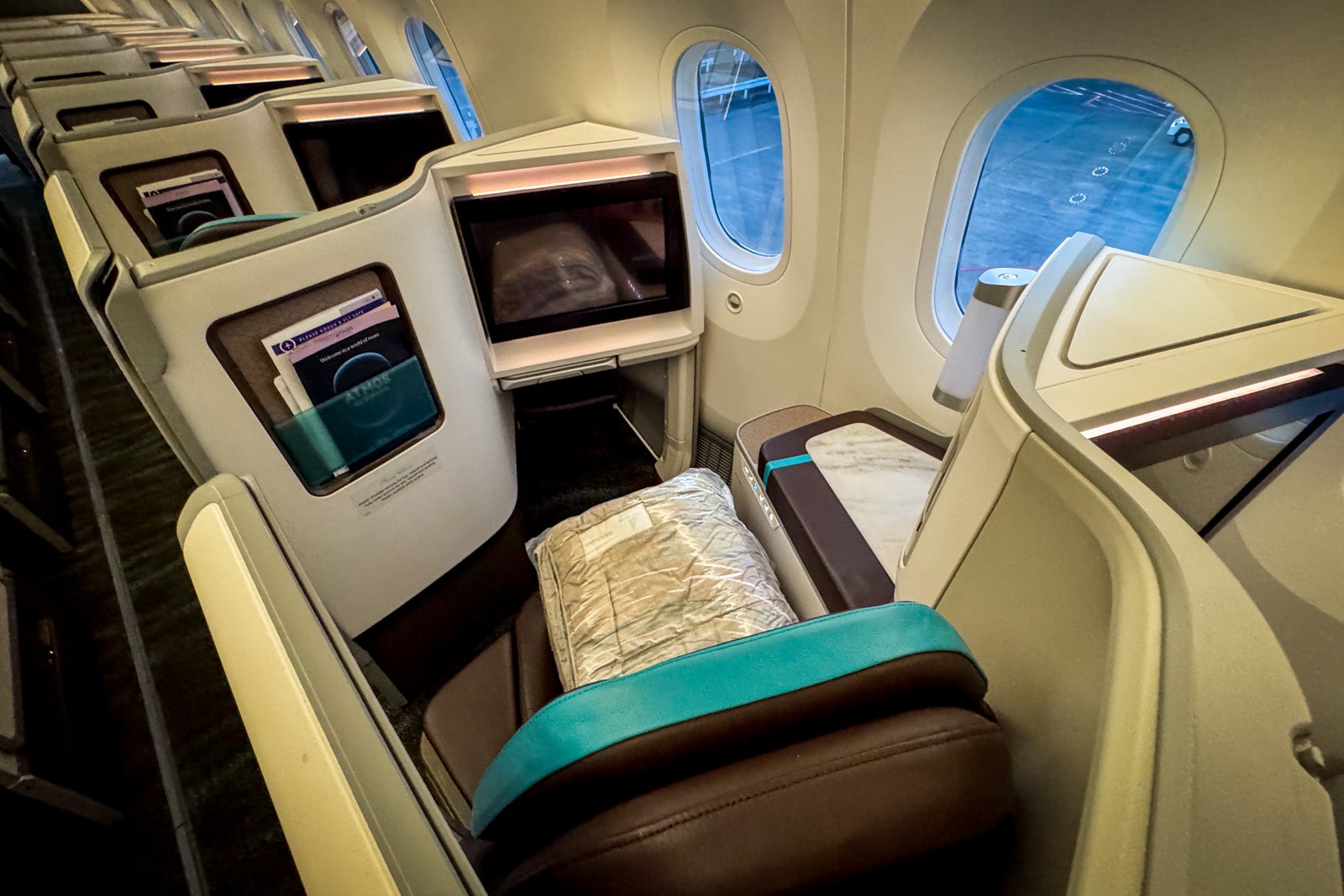
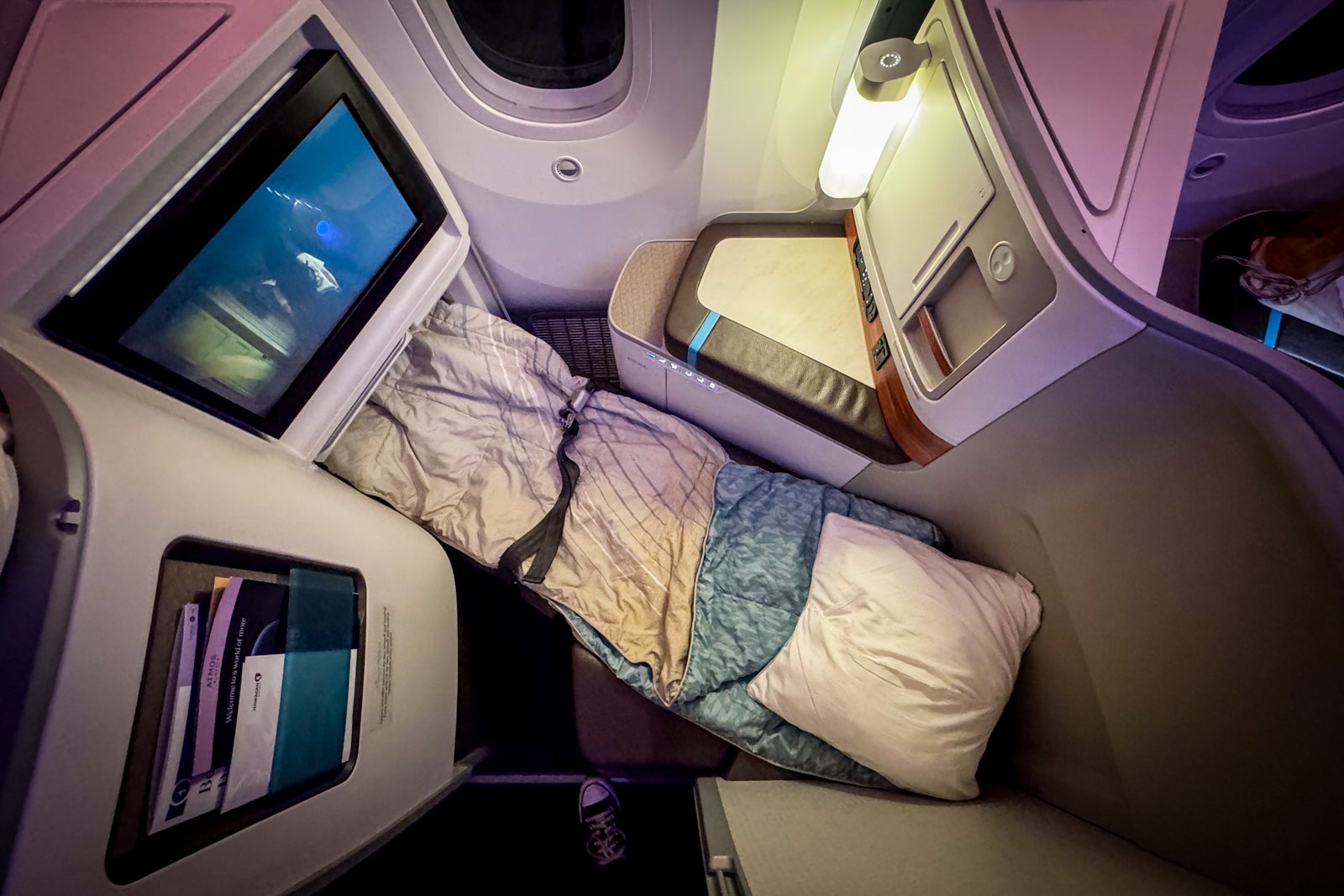
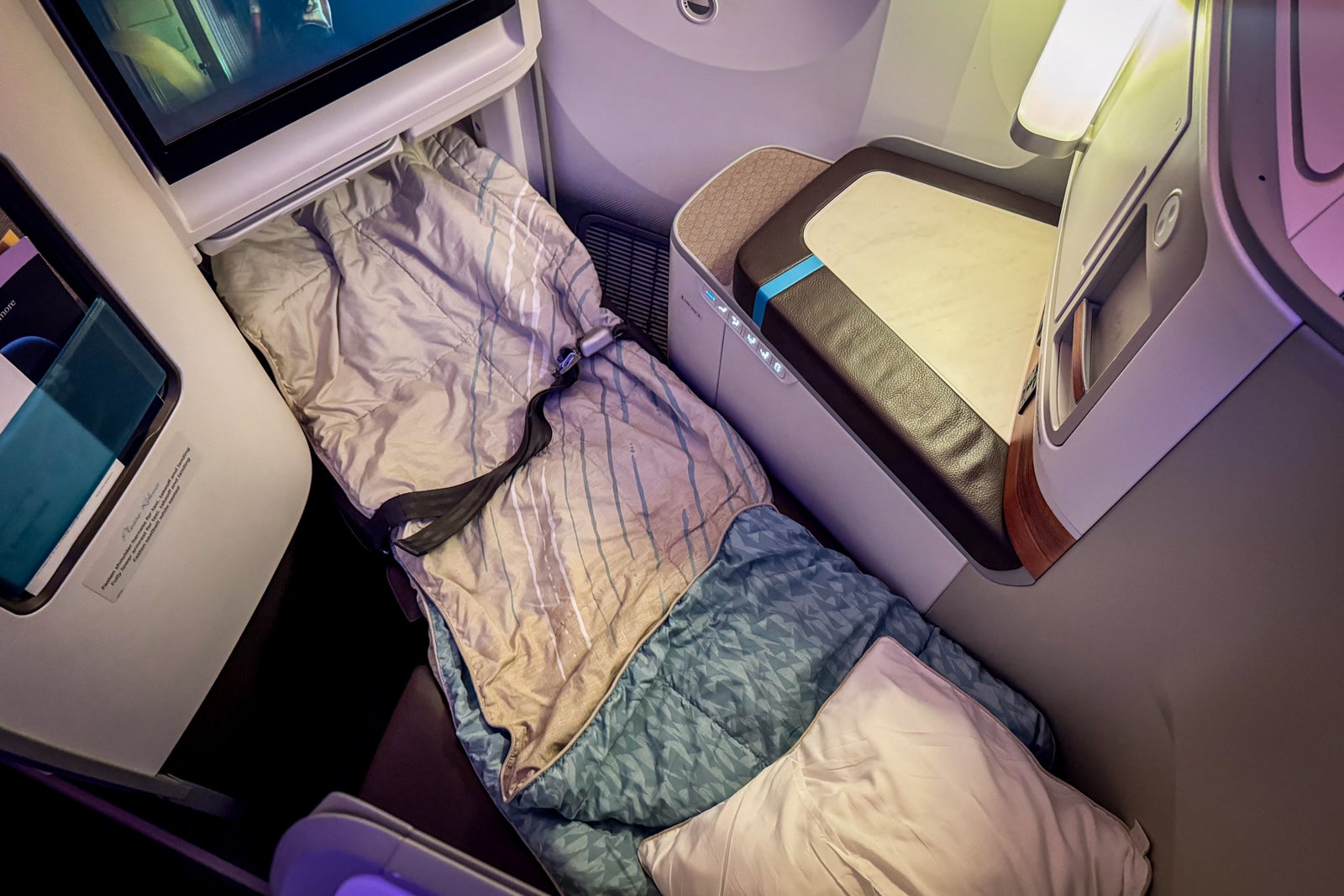
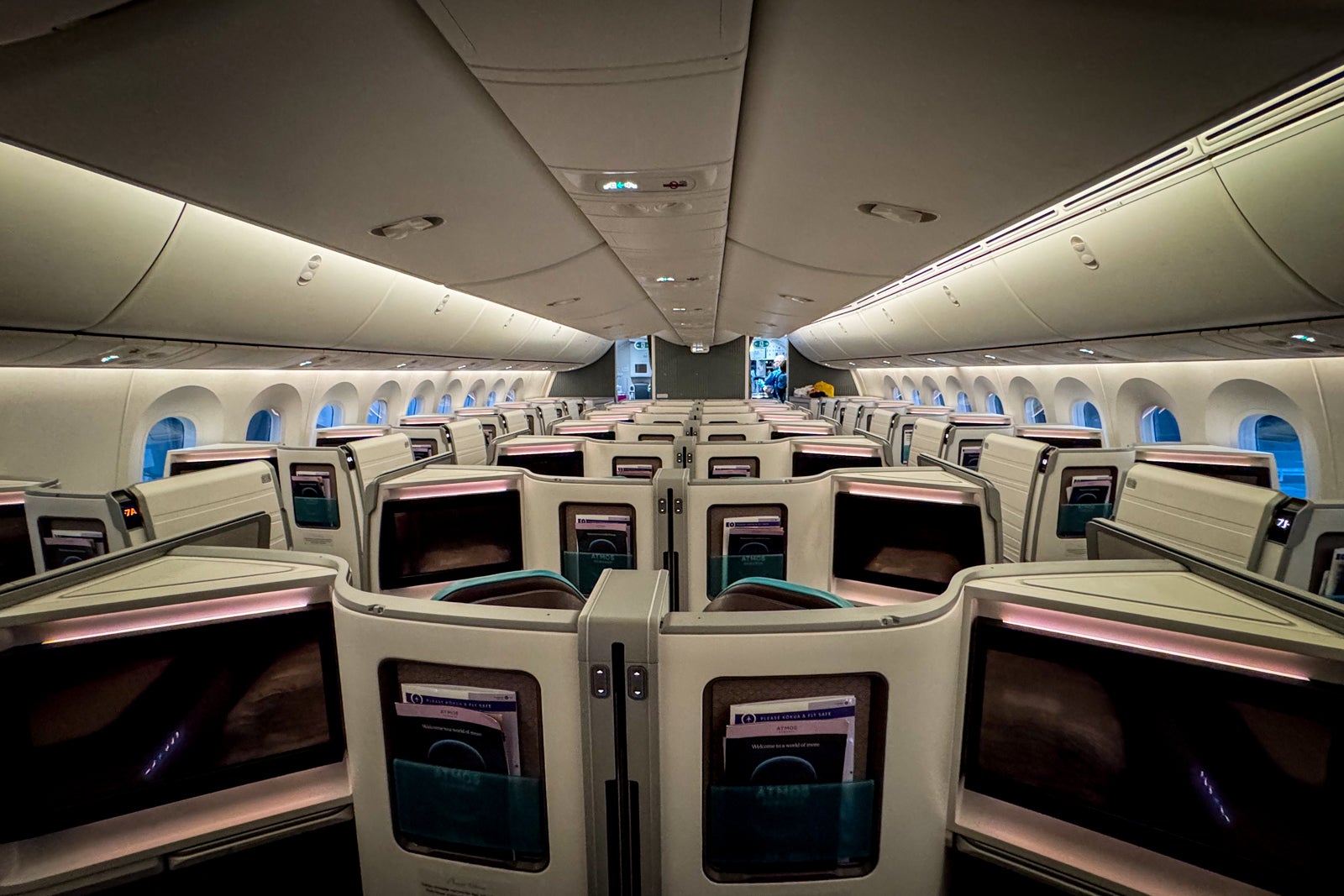
Hawaiian Airlines selected Adient Aerospace Ascent suites (try saying that five times fast) for its new business class. There are 34 of them total, with nine rows of single seats along the sides of the cabin and eight rows of paired seats running down the center.
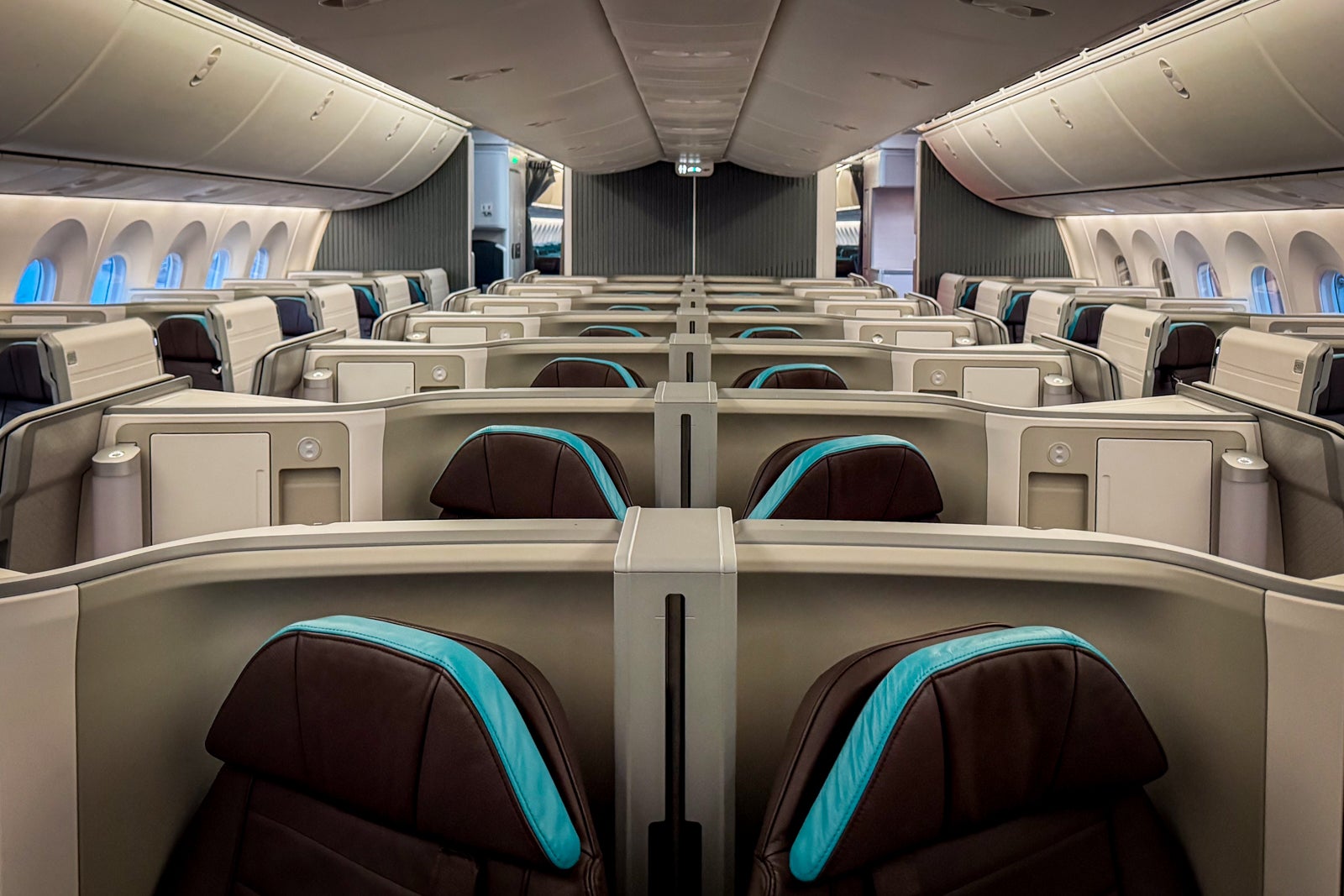
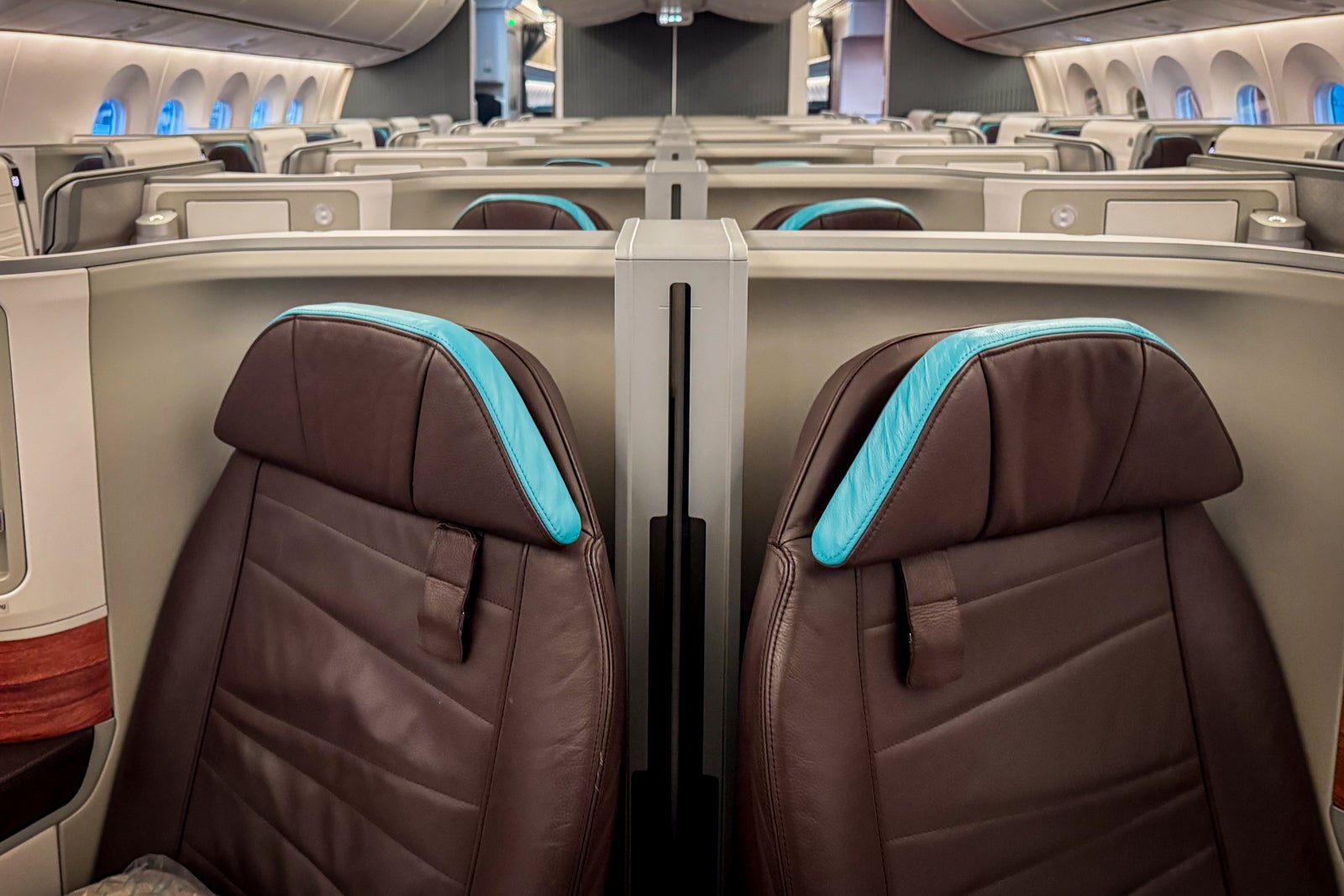
These sit in a popular 1-2-1 configuration, but are slightly different from your typical reverse-herringbone arrangement. The seats on the side of the cabin face outward toward the windows, while those in the center are also angled away from each other and toward the aisle; however, their seat backs are close together for companions traveling together. (There are large privacy dividers for solo passengers.)
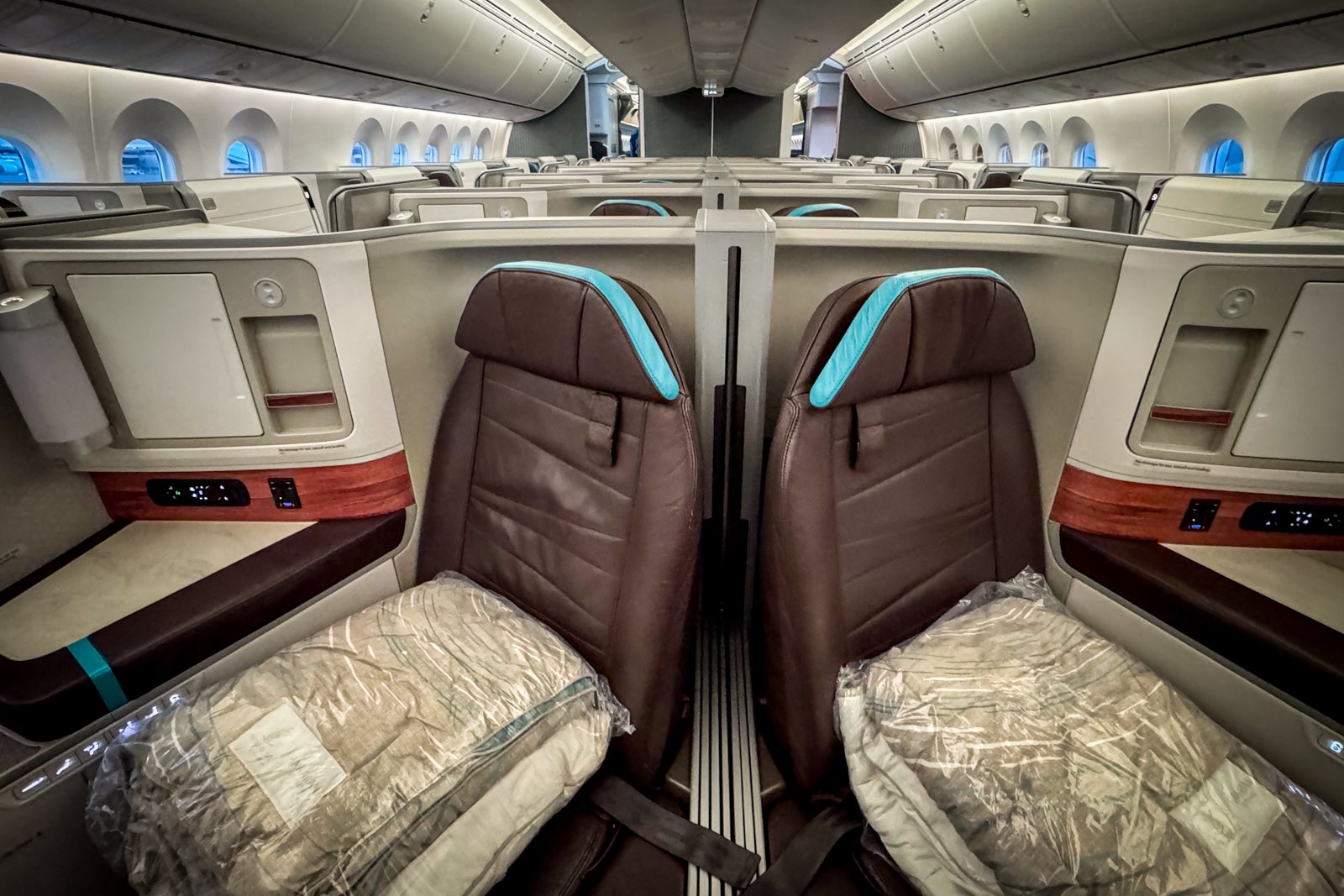
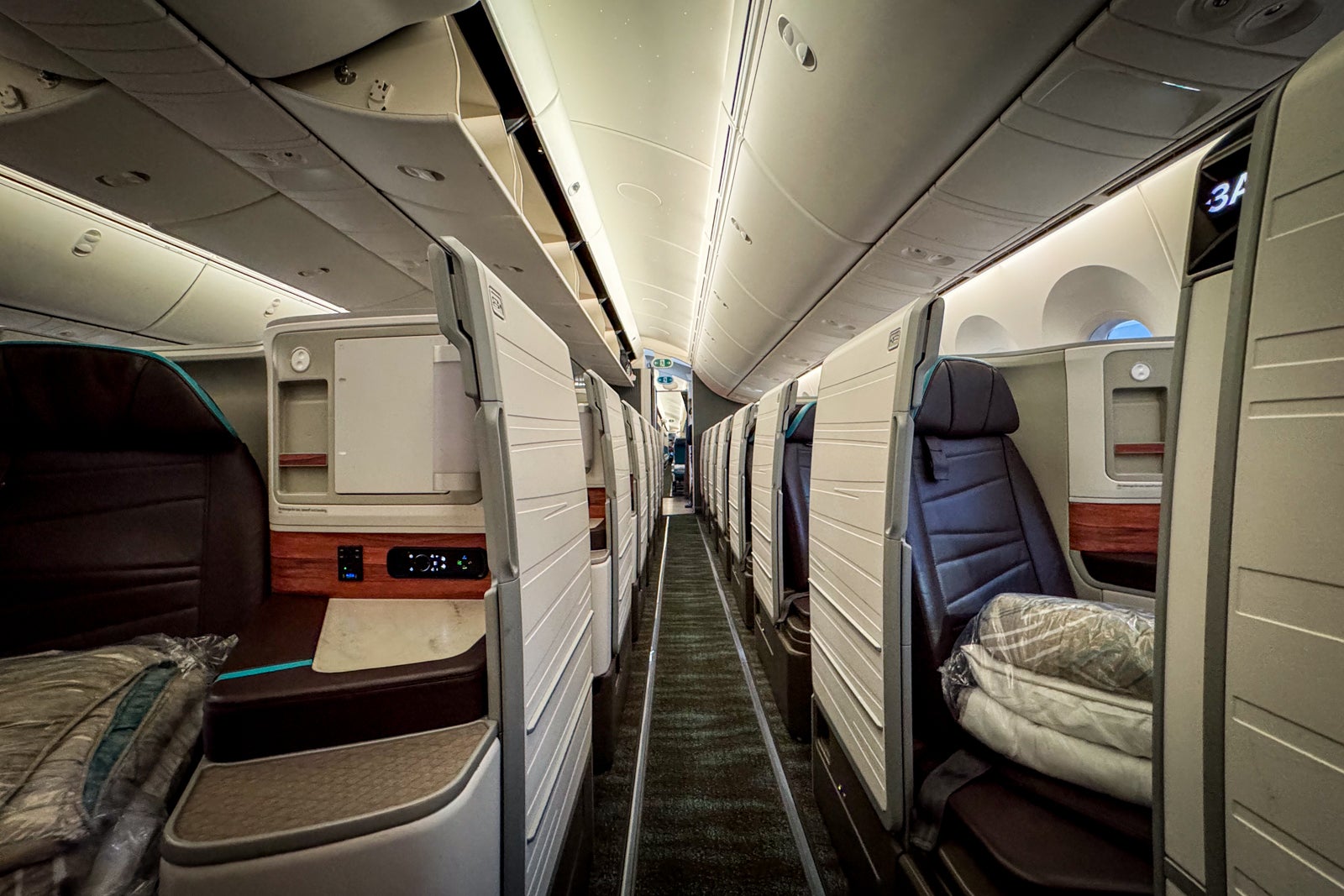
Each seat also has a closing privacy door along the aisle for more seclusion, though this is only unlocked after takeoff. There's an 11-inch gap between the bottom of the door and the floor, and it only rises to the seat shell's total height of 44 inches. Still, that's plenty tall enough to avoid noise and activity from the aisle when it's deployed.
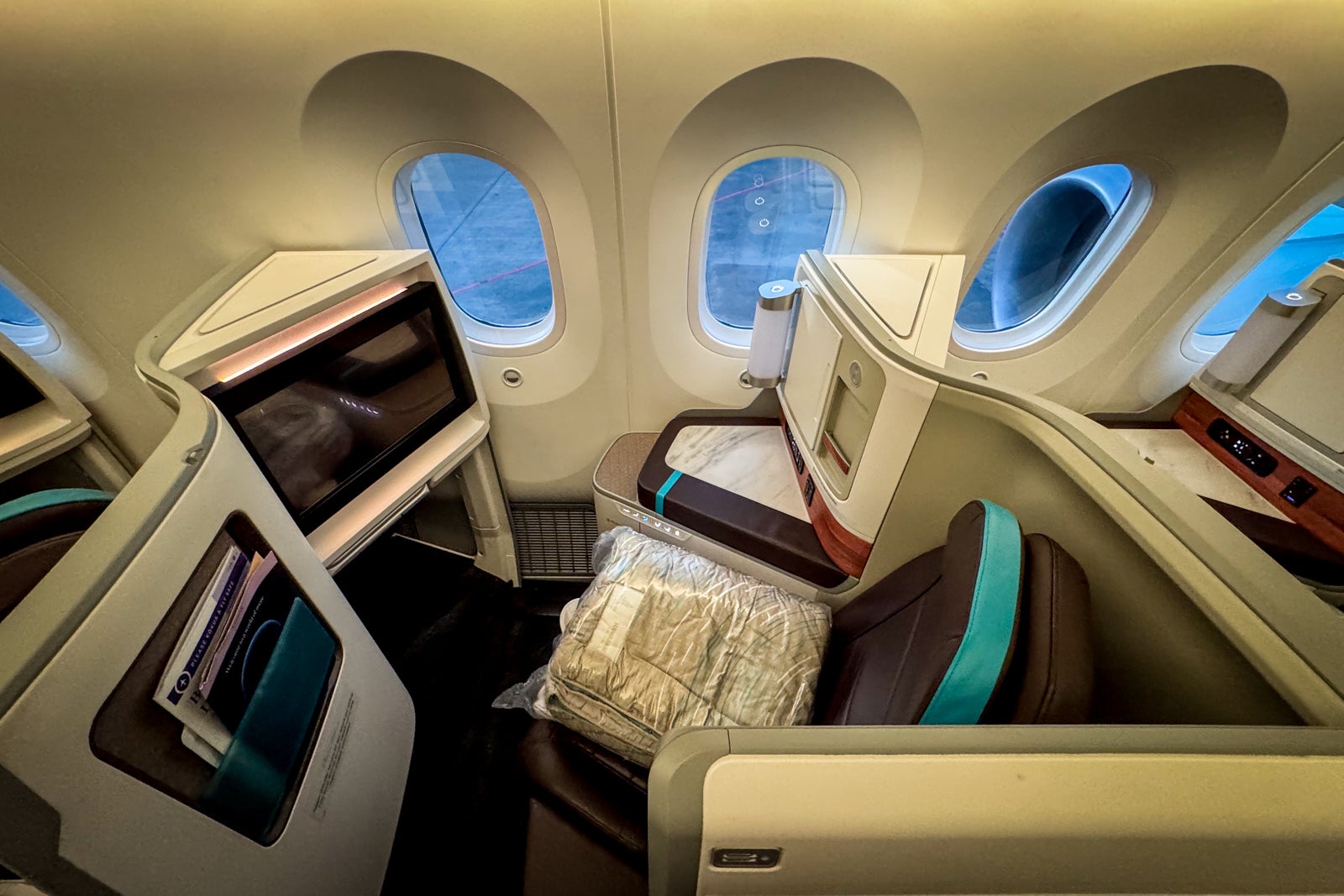
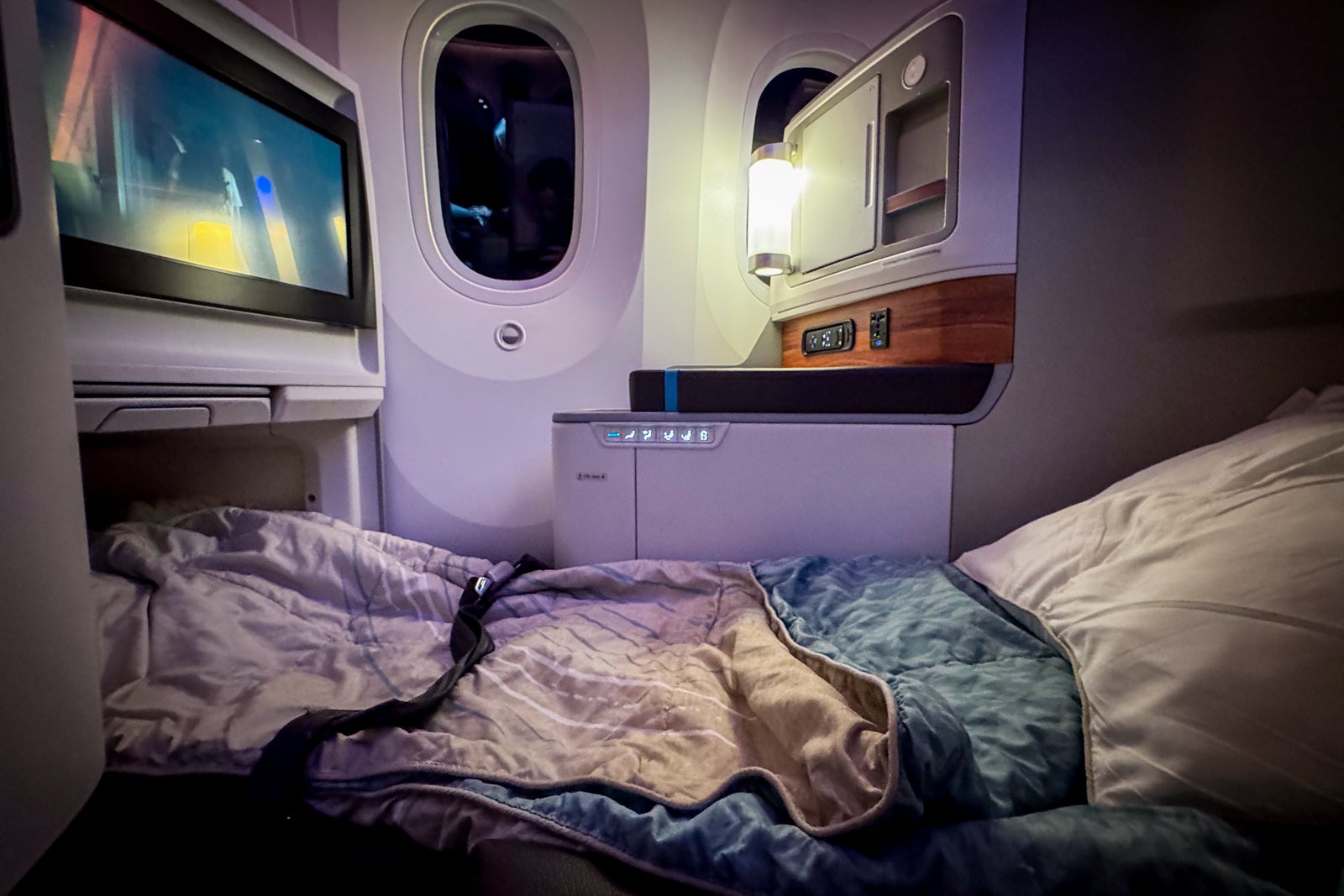
The seats have rich brown upholstery that calls to mind Hawaii's volcanic soils. The turquoise touches evoke images of the islands' tropical Pacific waters, and wood accents allude to the archipelago's hardwood forests.
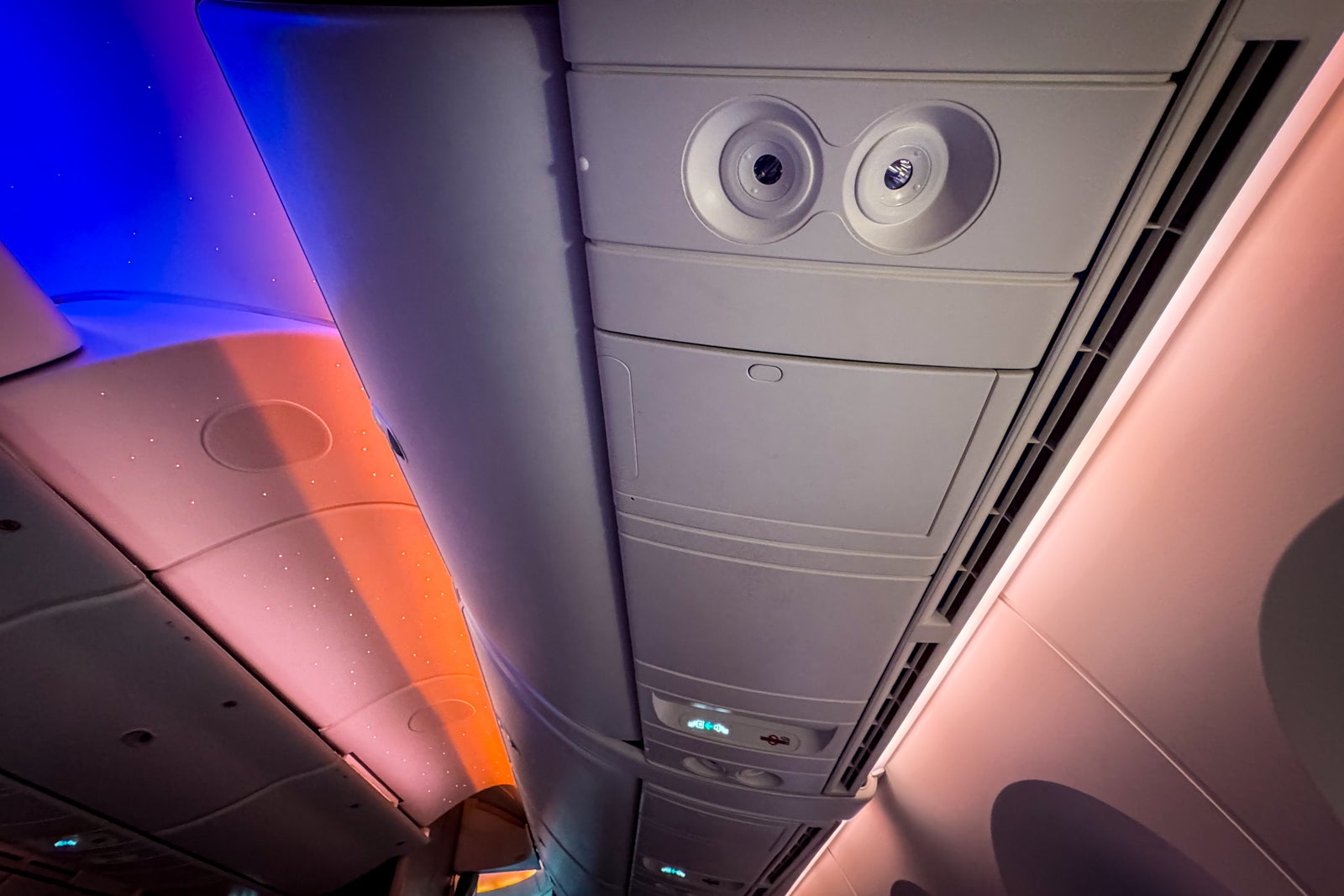
Look up and you'll notice constellations (or simulacrums of them) in the cabin ceilings, which provide a beautiful aesthetic to the cabin. The decals for the seat numbers and rows are listed alphanumerically as well as in the Hawaiian language, which is a nice subtle touch.
The seats themselves are 21 inches wide at the hips, though they have moveable armrests that flyers can lower to get an extra 5 inches of elbow room.
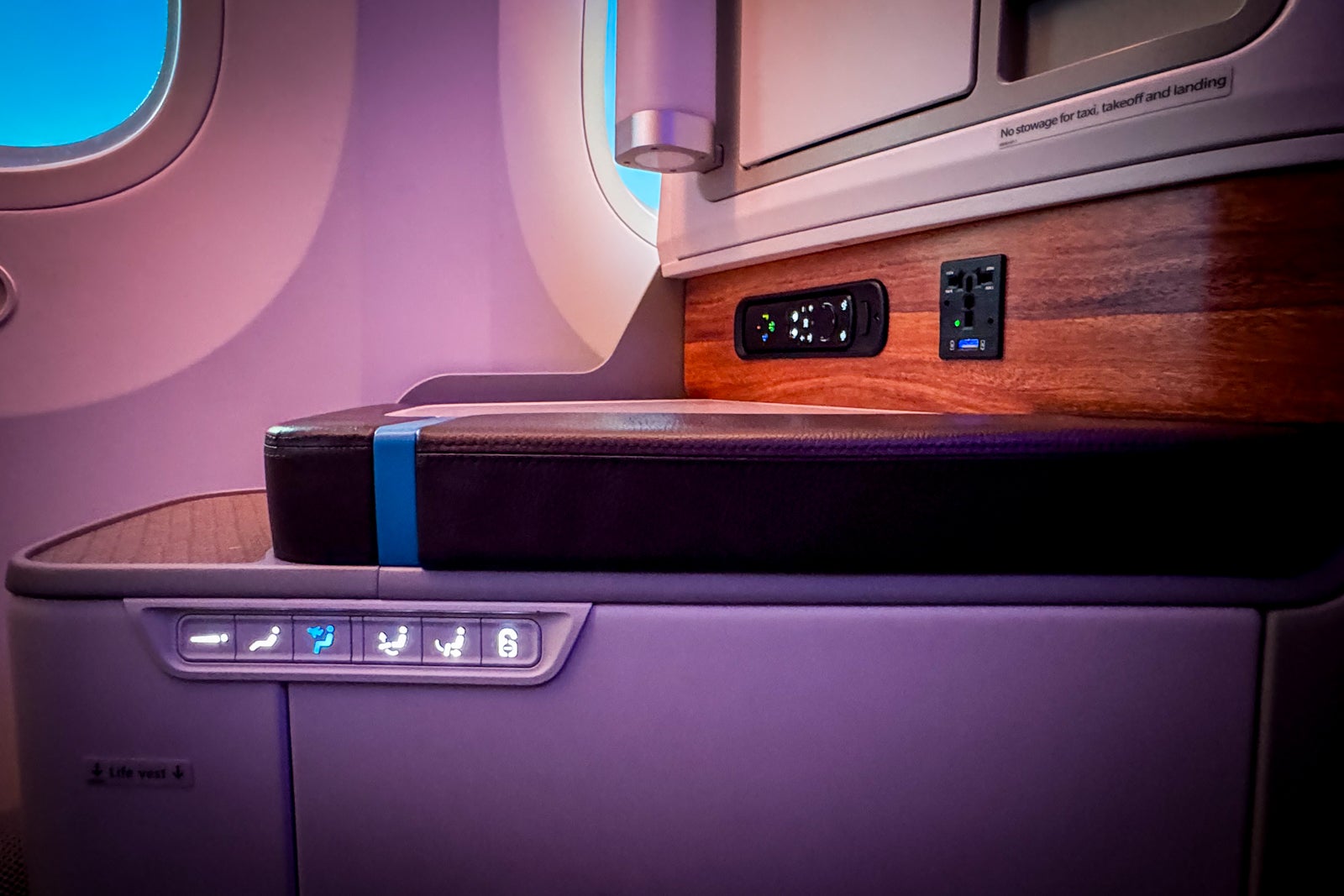
Passengers can manipulate the seats into three preset positions (upright for takeoff and landing, a lounging position and lie-flat for sleeping) as well as use separate buttons to raise and lower the leg rest. I found it easy enough to recline the seat using the lounging button and then hit the leg rest button separately to get it to a comfortable position. There is also a "do not disturb" button you can illuminate if you do not want the staff to wake you up for breakfast.
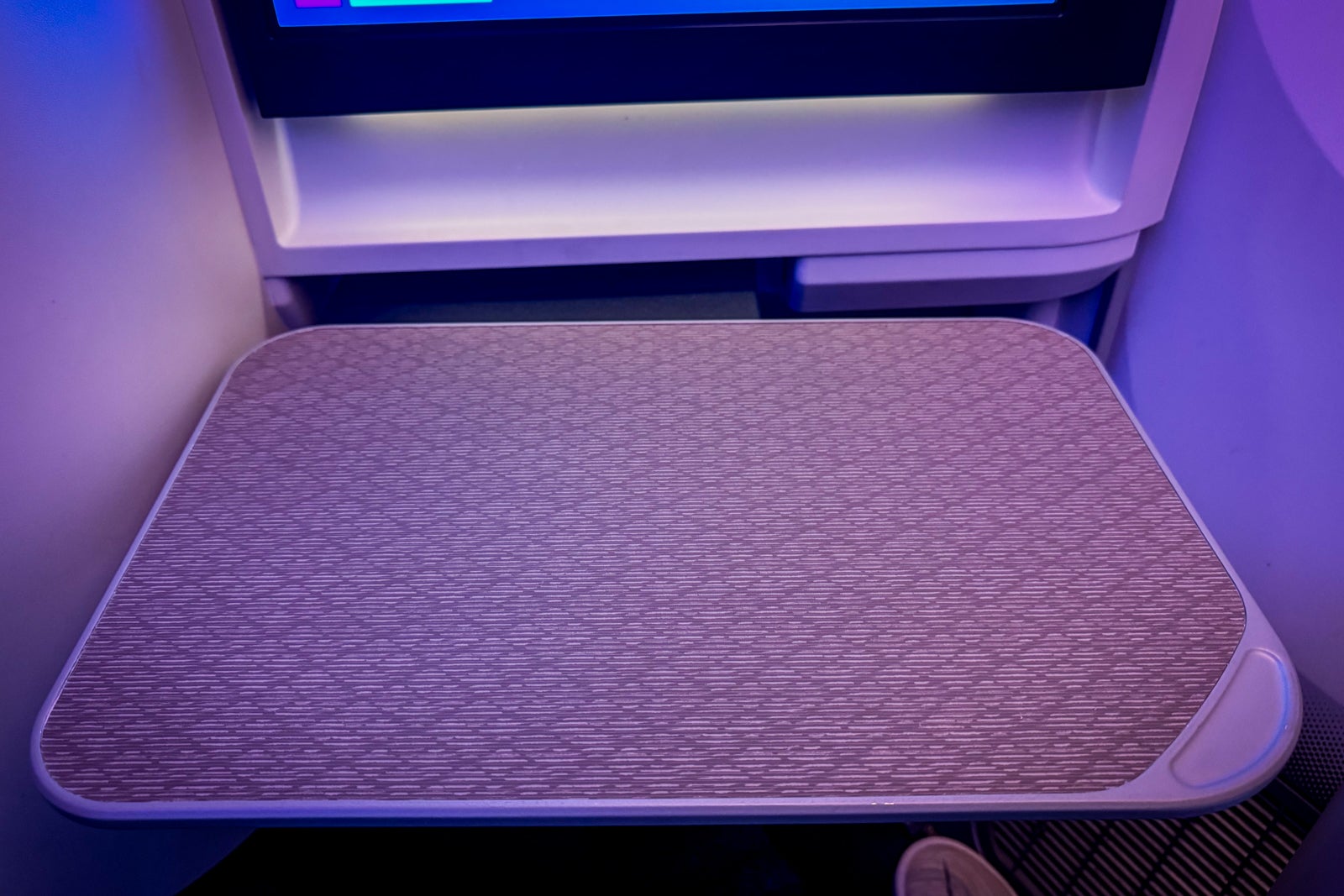
The table slides out from under the entertainment monitor and swivels into place, measuring 17 1/2 inches wide by 12 inches high. It also moves forward and back along its track, making it easy to get in and out of the seat during mealtime.
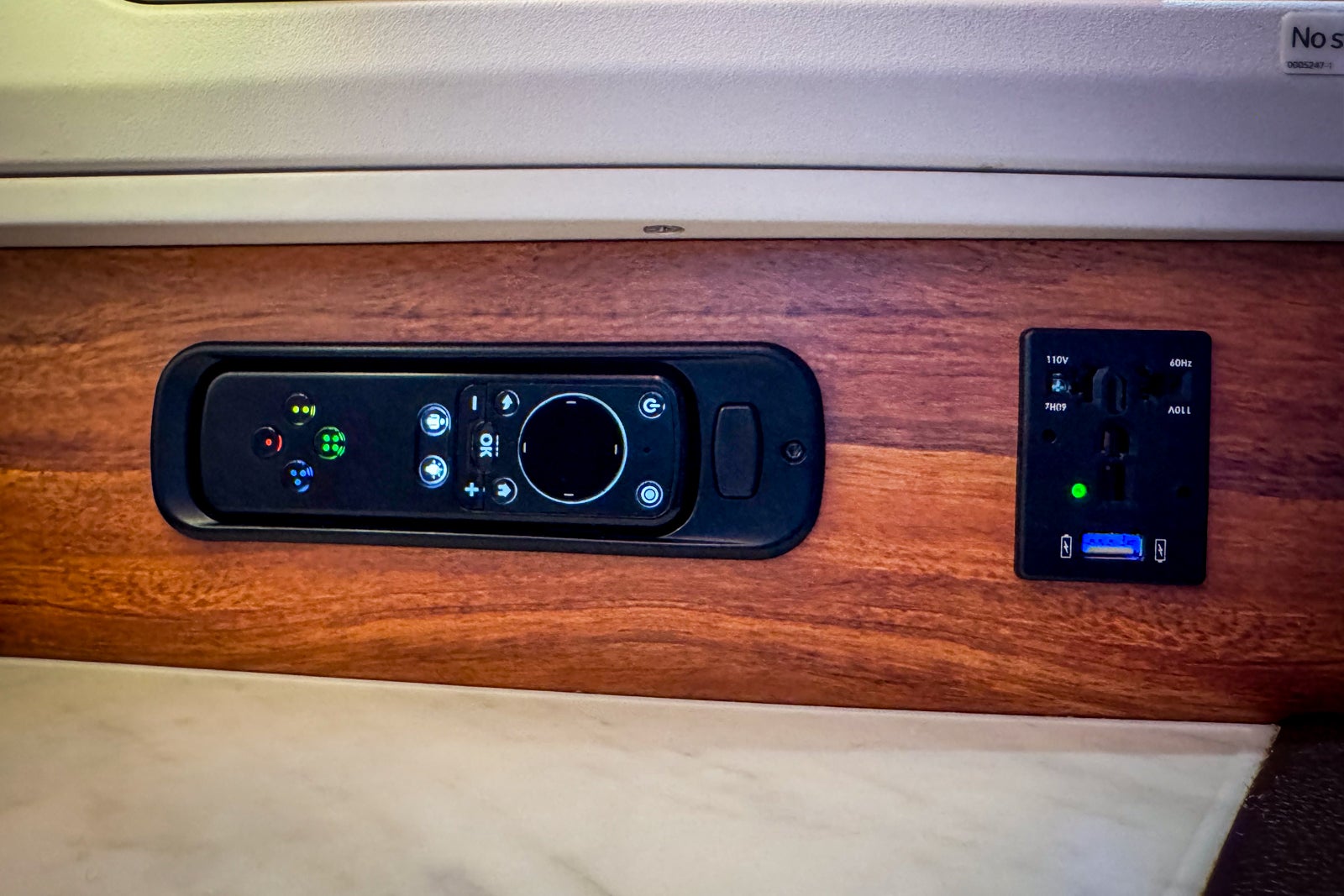
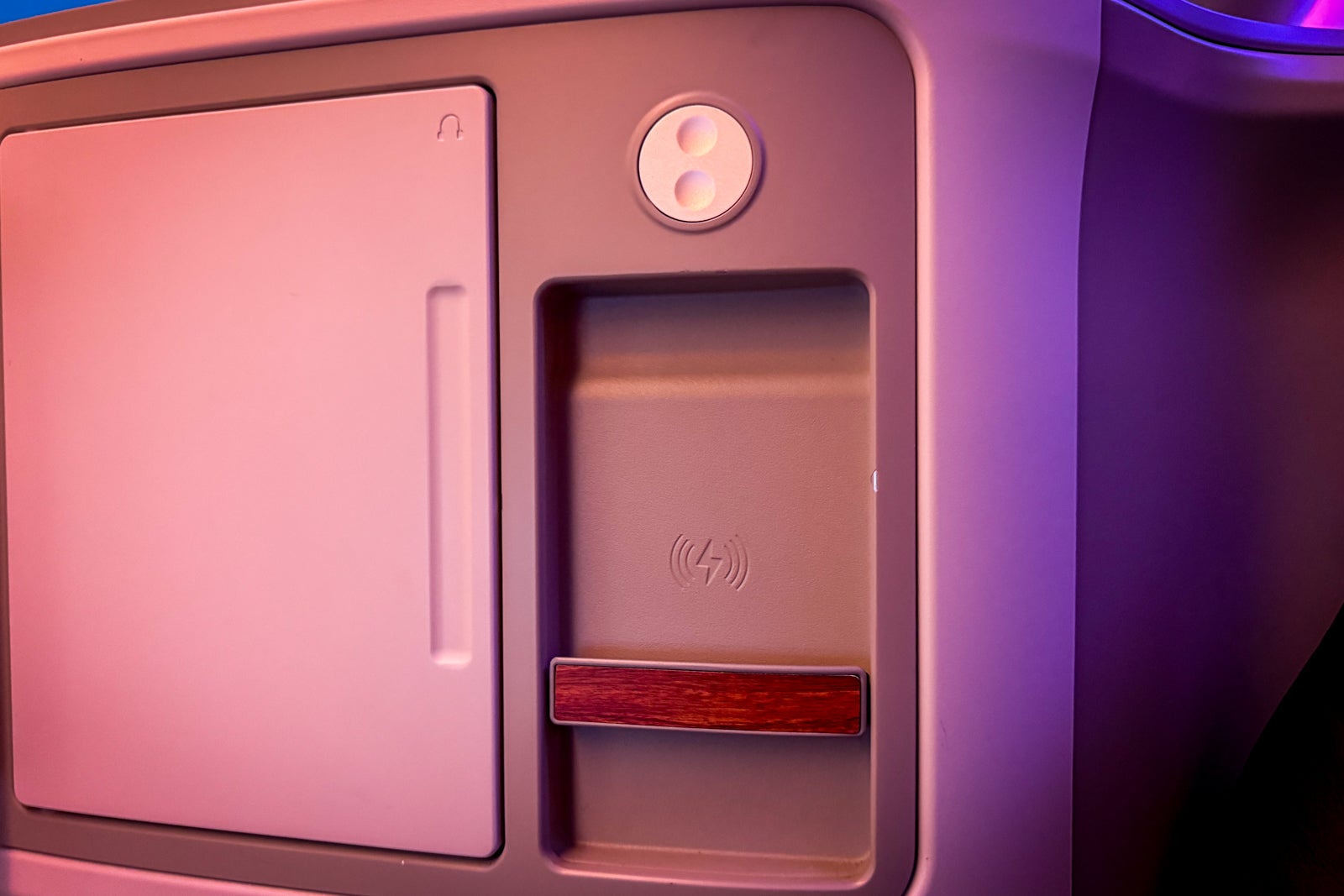
The seats have universal power plugs and USB-A ports, though no USB-C ones, which is a little odd since the seats in premium economy and economy do. However, this is compensated by the fact that they have vertical wireless charging pads for phones embedded in the seat backs; this way, they don't take up valuable surface area, and it is easy to secure your personal device in them.
My iPhone 15 charged at a rate of 1% every two minutes, even with its MagSafe case on (which isn't always the case with airplane wireless charging surfaces), so it juiced up to 100% while I was asleep.
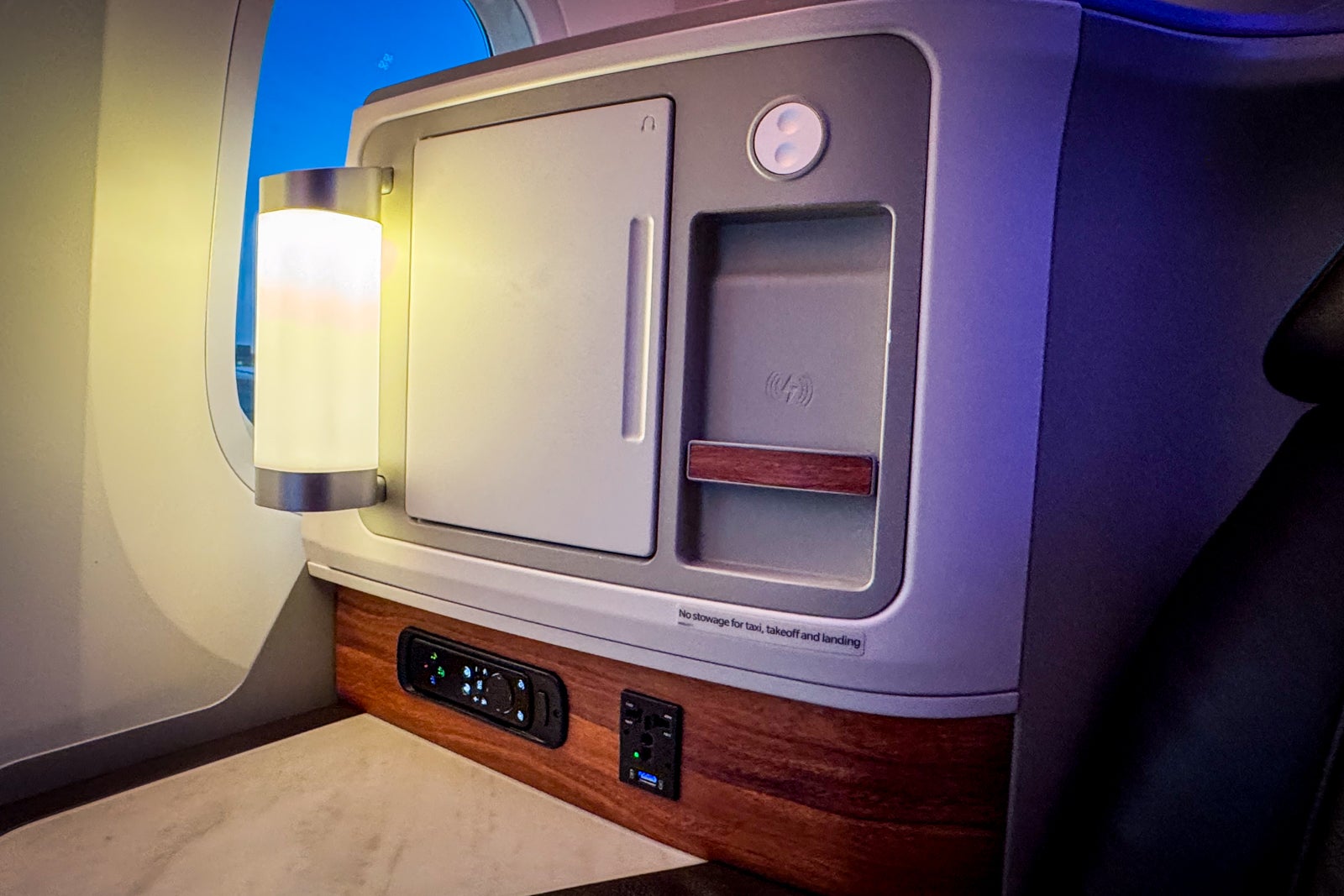
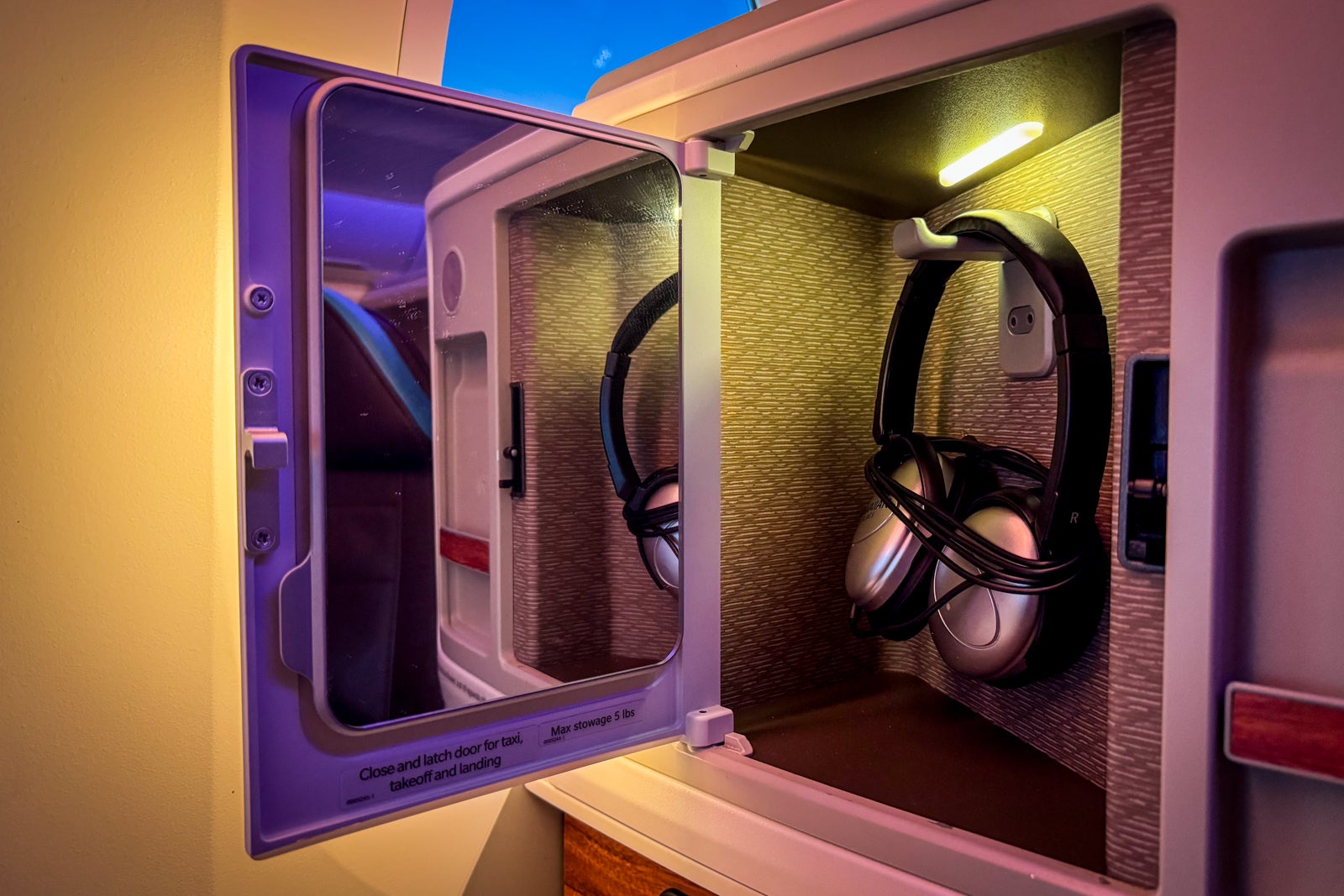
A little cubby with a mirror in the seat back also stows the provided headsets; I used it to store my small toiletries bag during the flight.
Though there aren't any other storage compartments, I didn't really miss them since I could stash my laptop on the main armrest closest to the window and tuck my phone into the wireless charging station. The seatback sconce light was a nice touch, too — bright enough to illuminate the suite without casting too big a halo during the overnight portion of the flight.
In lie-flat mode, the seat measured 77 inches long, which was plenty spacious for me. The foot cubby, however, might feel tight for some, since it's only 12 inches tall and 16 inches at its widest point. I had no trouble falling asleep and getting comfortable, though.
One final note for those who, like me, tend to run hot. Unfortunately, there are no overhead air nozzles in business class on Hawaiian's Dreamliners, but the crew kept the cabin pretty cool throughout the flight.
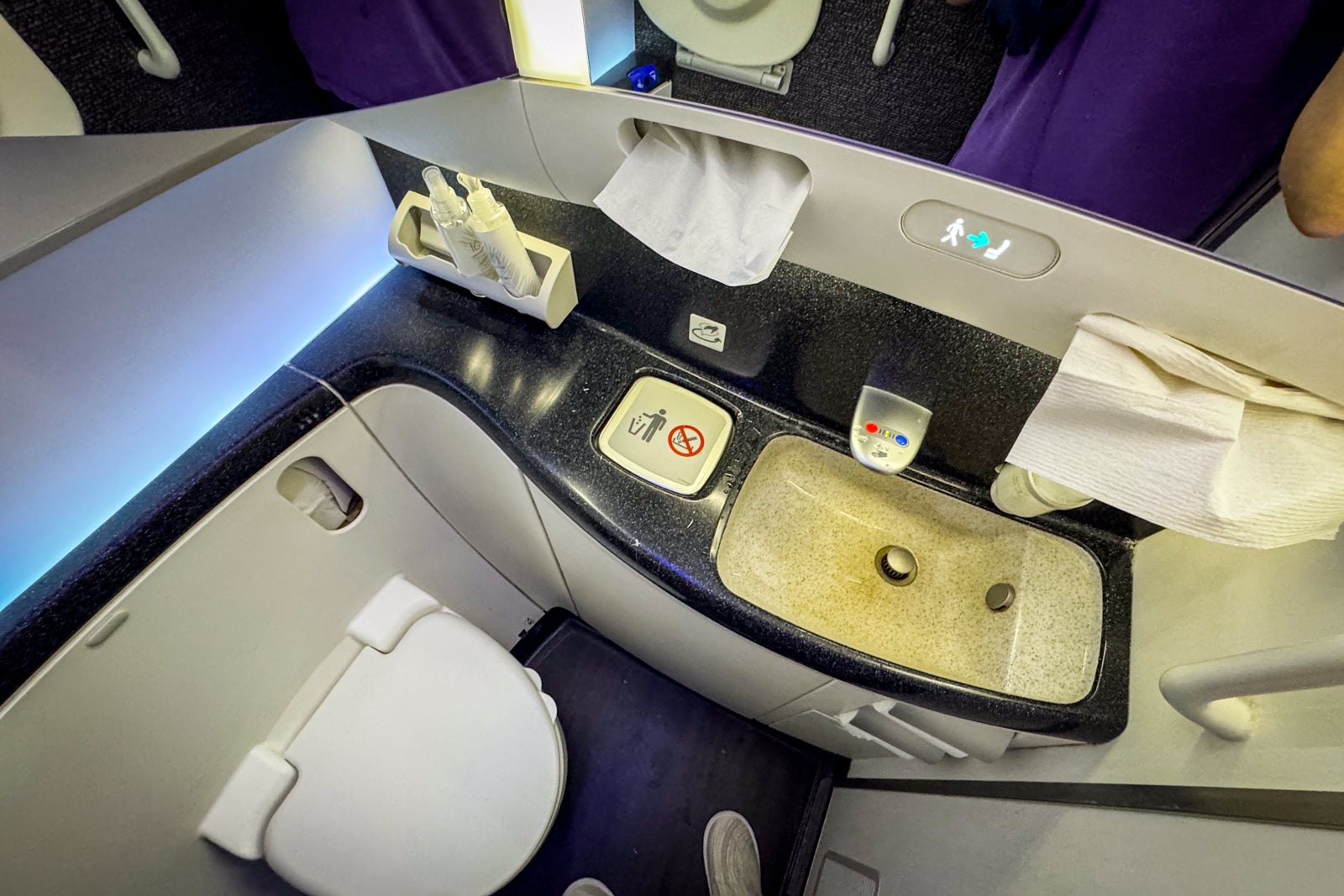
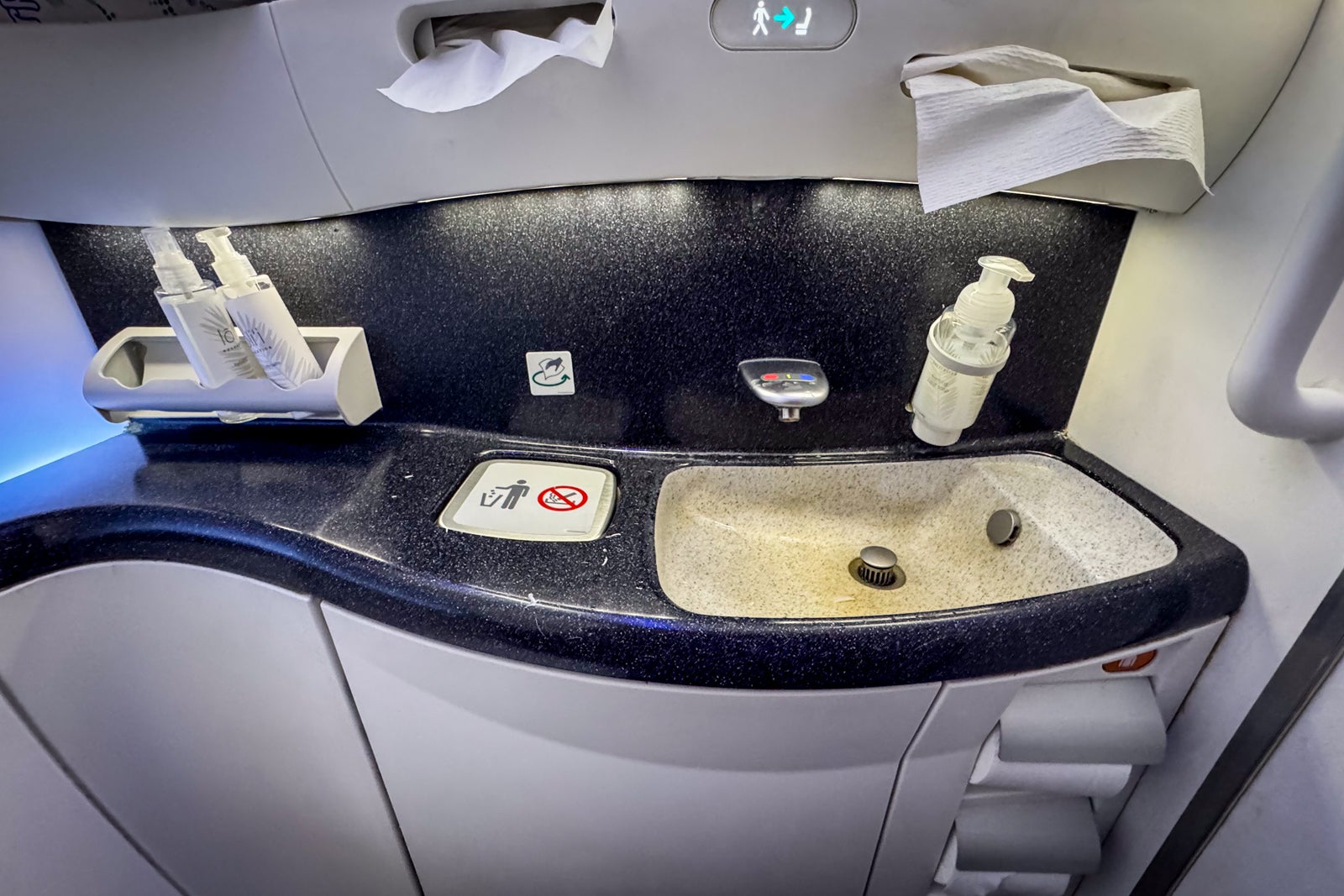
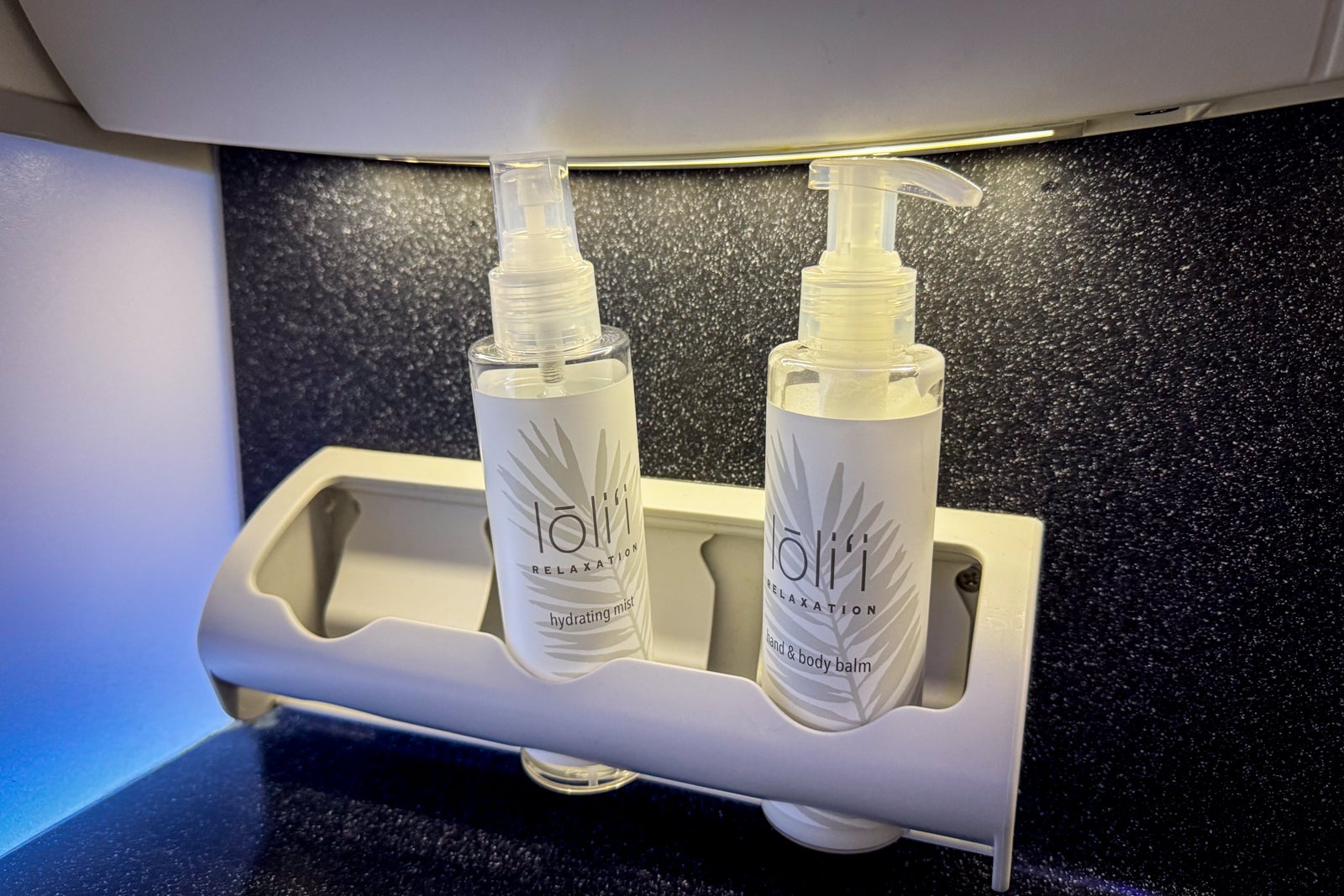
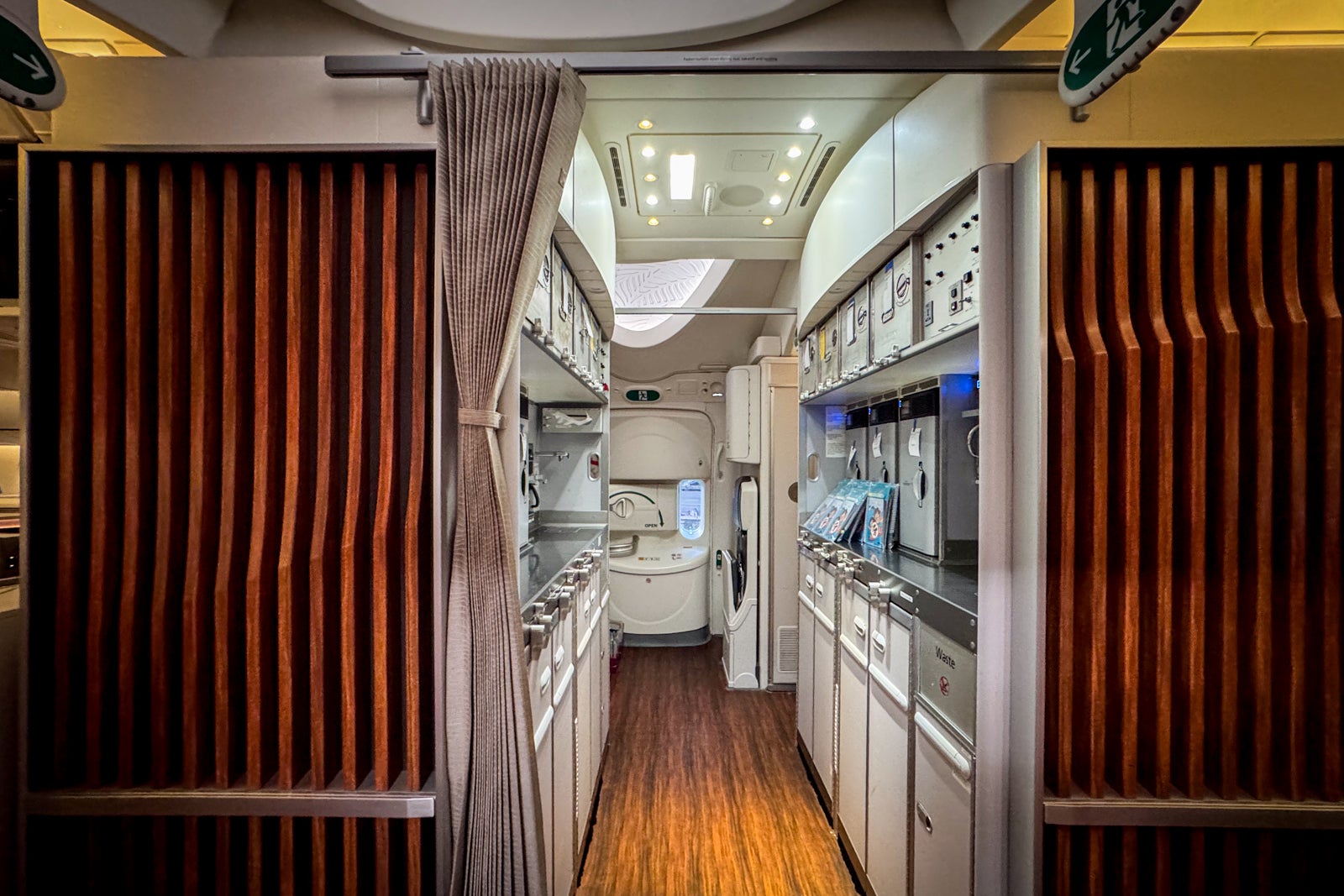
The business-class cabin has just two lavatories for all 34 passengers — one at the front of the cabin and one at the back. This meant there were some bottlenecks at busy times, like just before landing or right after meal service. However, the staff kept them clean throughout the flight. The bathrooms also had no-touch sinks and toilets, and they were stocked with the airline's private line of skincare products, Loli'i.
Amenities in Hawaiian Airlines business class
When I boarded, I found a set of bedding, including a comfortable pillow, seat cover and lightweight duvet from Noho Home by Hawaii-based designer Jalene Kanani. I especially appreciated the soft yet breathable seat cover when I put the seat into bed mode; the whole set was very comfortable for sleeping. There was also a set of soft slippers for use during the flight.
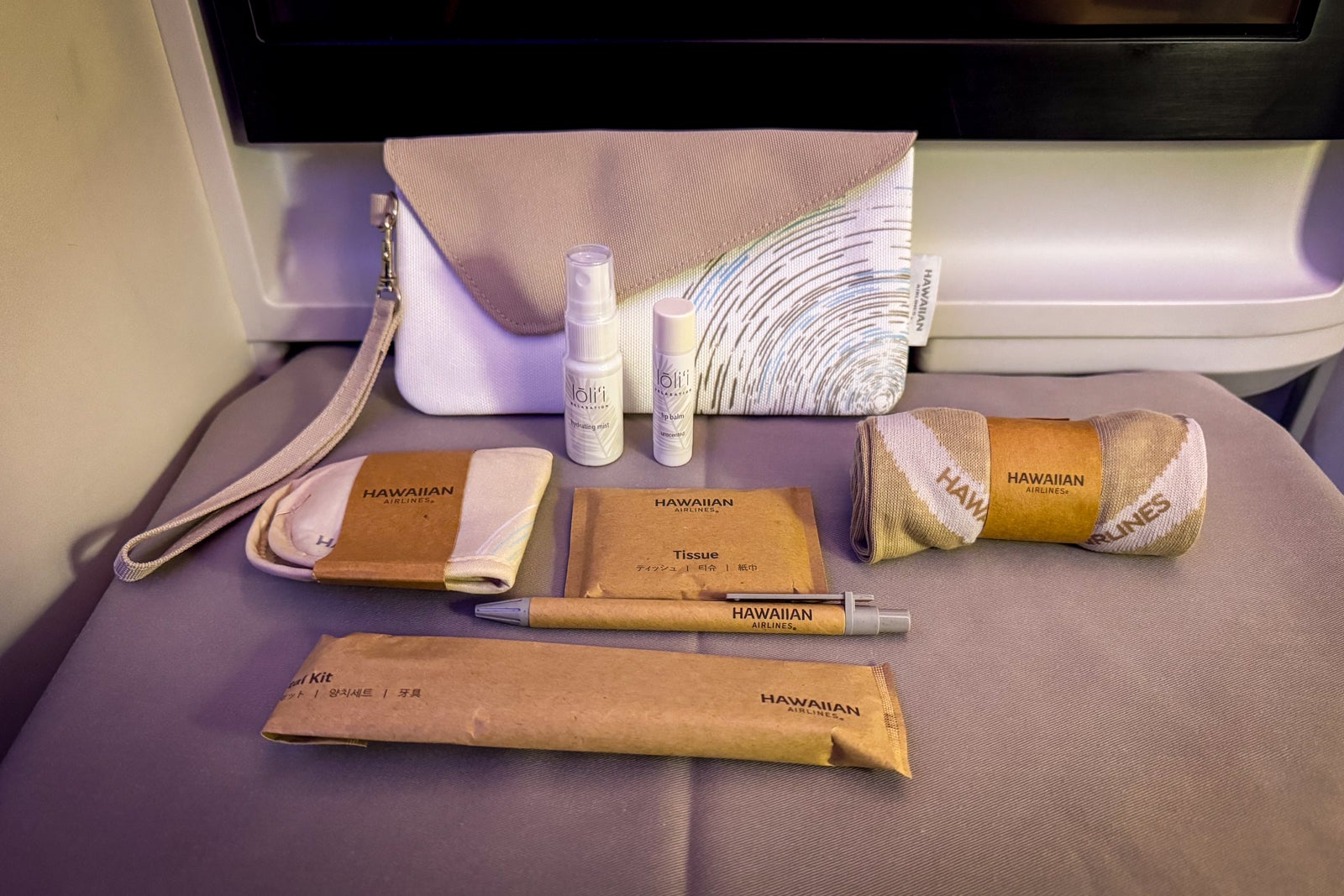
Rather than preset amenity kits, flight attendants passed through the cabin after takeoff with small pouches already stocked with earplugs and dental kits. They then invited passengers to choose from a selection of eye masks, socks, earplugs and freshening sprays and lip balms from Loli'i. It's a nice way of doing things since it cuts down on waste — as you don't have to select amenities you won't use — but it still feels special.
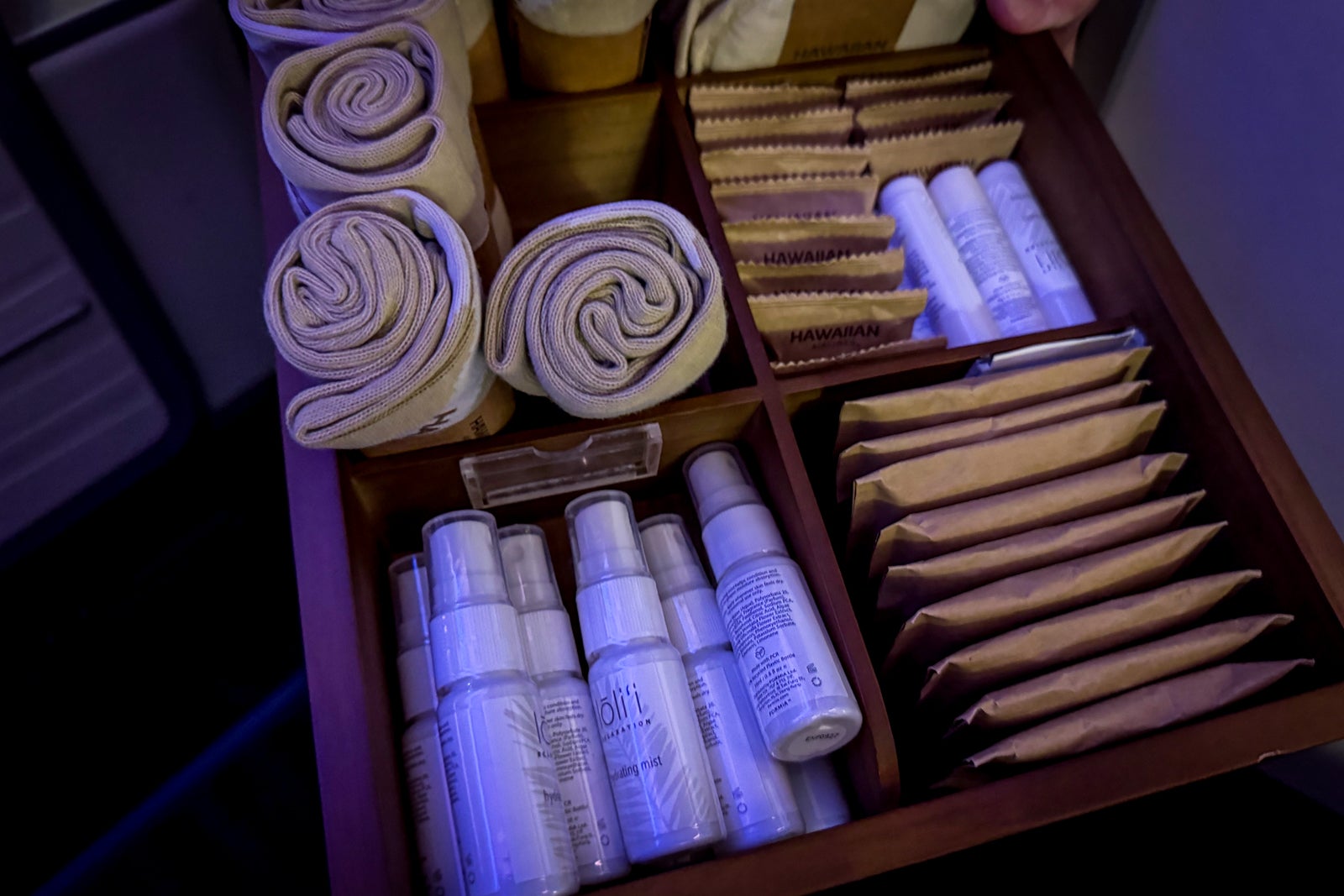
Unfortunately, no pajamas were offered on these flights, and the Starlink Wi-Fi was not yet functional either.
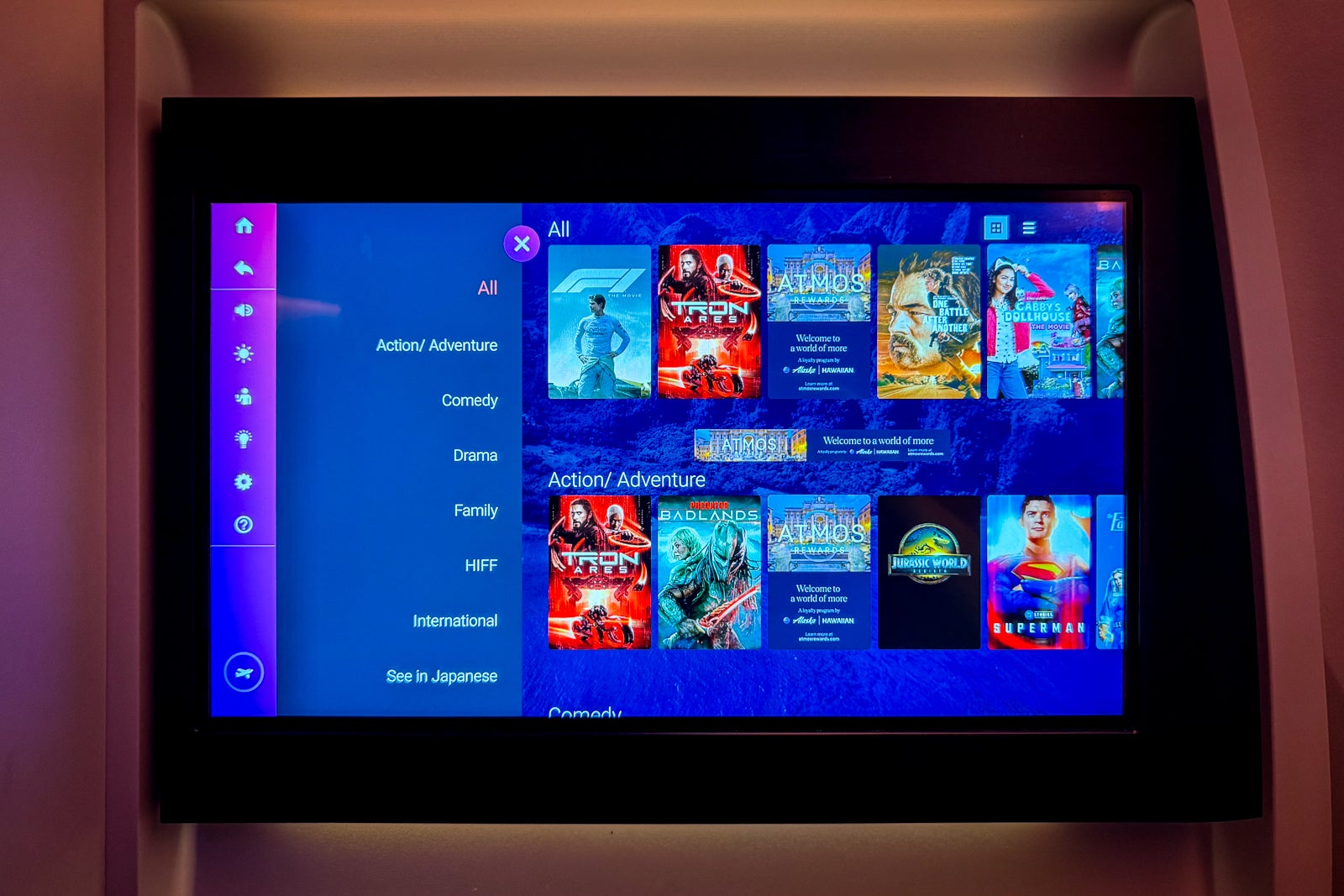
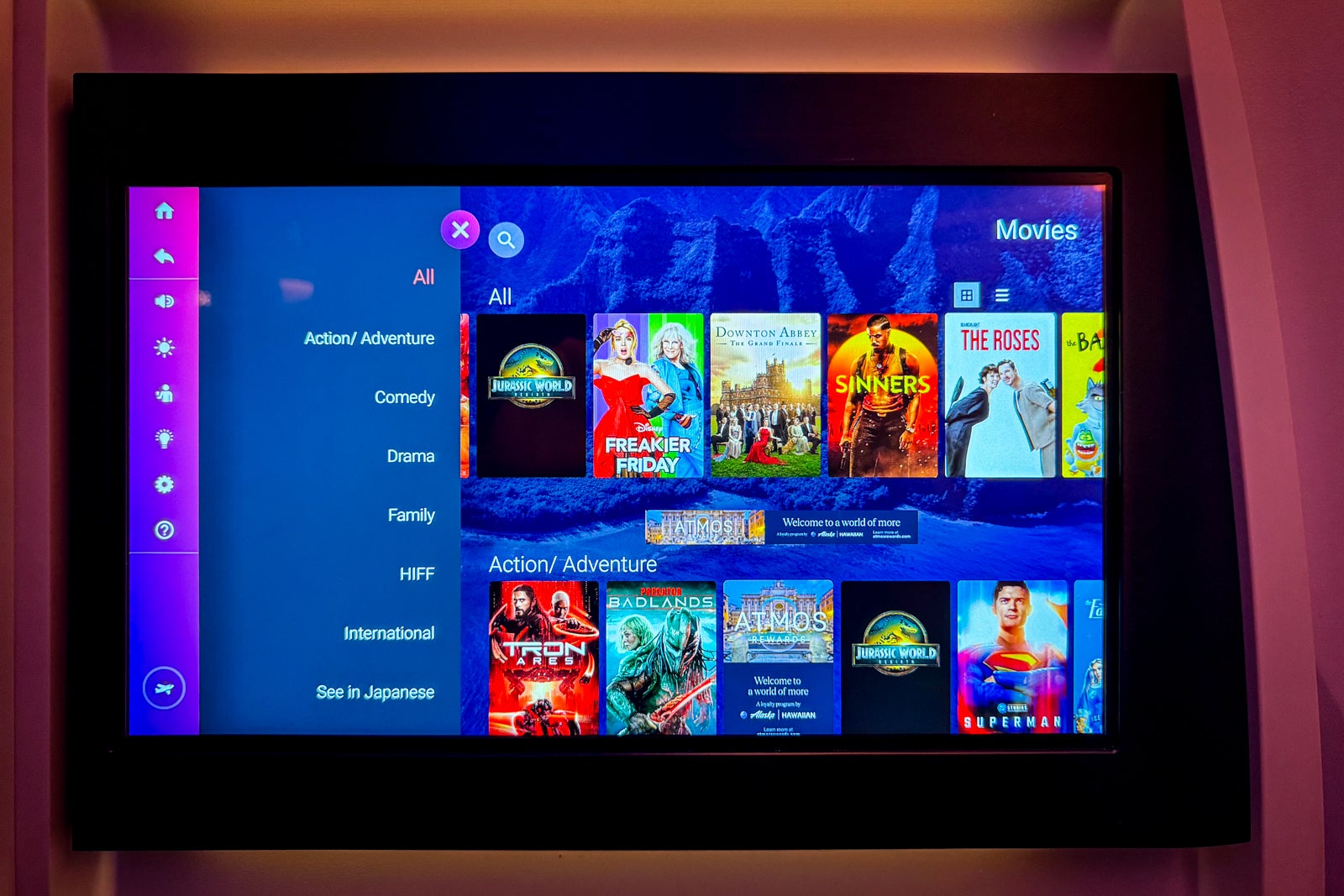
On the plus side, the entertainment systems are 18-inch touchscreens with plenty of new movies, television shows, moving maps, music and more. For the Luddites among us, there is also a wired remote embedded into the seat shell.
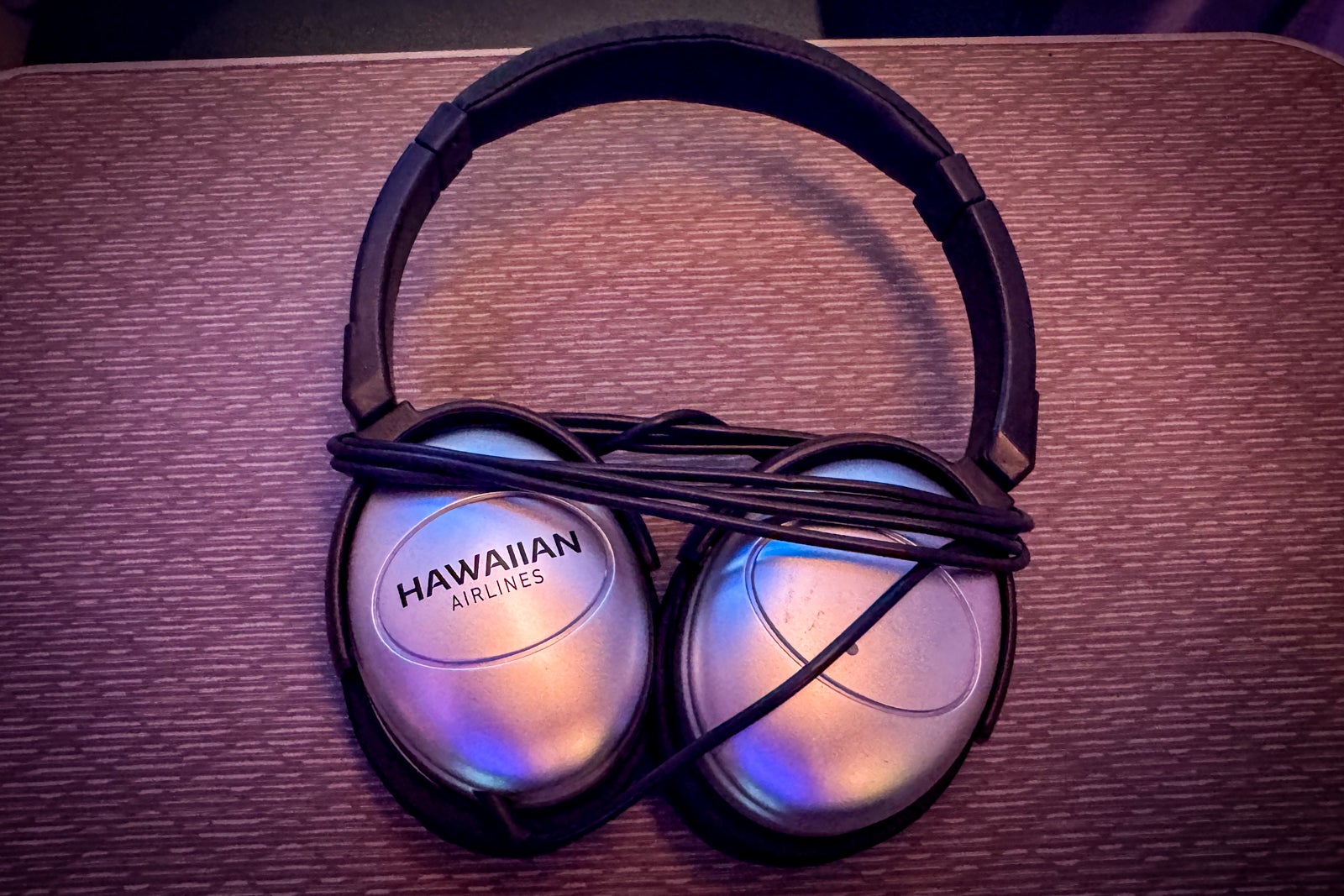
The new releases on offer during my flight included "Downton Abbey: The Grand Finale," "Freakier Friday" and "Sinners." There were also Apple TV shows like "Severance" and "Shrinking." The provided headphones were not exactly noise-canceling, but they worked just fine.
How was the food in Hawaiian Airlines business class?
Most passengers boarded through the aircraft's second door, which allowed the crew to circulate through the cabin offering menus and a selection of pre-departure beverages that included:
- Prosecco
- Ko Hana signature mai tais
- Guava juice
- Water
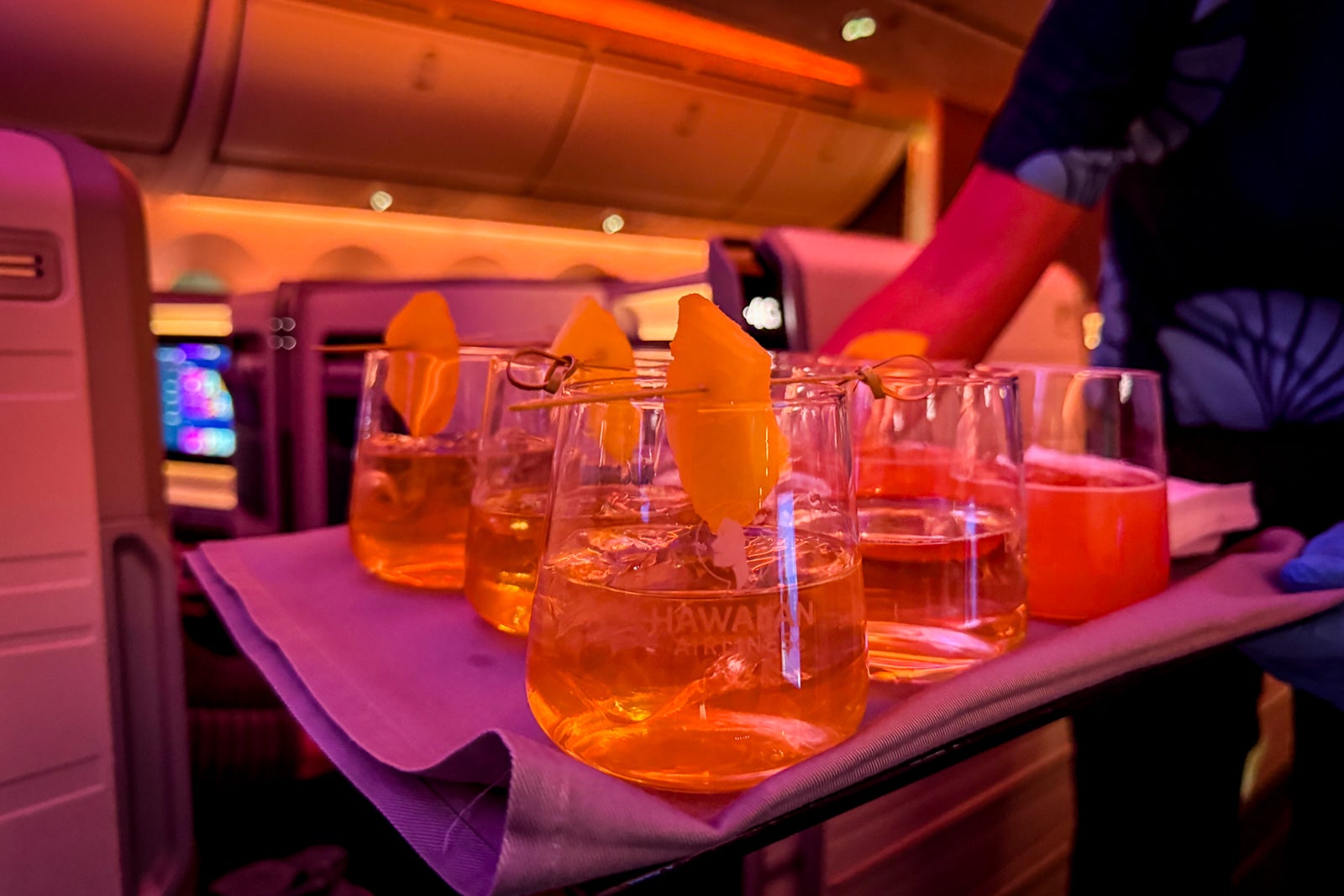
Although I don't usually go for onboard cocktails, since the pour was small, I couldn't resist a mai tai with a pineapple garnish. It was strong and tropical and definitely hit the spot after a long afternoon transiting out to NRT and navigating the airport.
Meals are available for preorder in Hawaiian Airlines business class, though (twist!), the preorder options did not match the onboard menu. I heard a few other passengers who had ordered ahead of time comment that their choice was not available, though the new options seemed to meet their needs.
Before we pushed back, flight attendants came back through taking orders for post-departure drinks (which came with ramekins of macadamia nuts), the main meal and breakfast. There were three menus to choose from for dinner.
Japanese menu
Staff served a variety of appetizers, including:
- Minced duck with egg
- Salmon kinuta maki
- Tsubukai and fish roe salad
- Sea bream filet
- Simmered prawn
- Seaweed salad
- Shiso leaf
- Wasabi paste
This was followed by a main of grilled flounder with yuan sauce, broccoli, taro, sweet potato, simmered burdock, steamed white rice, miso and Japanese pickles.
Vegetarian menu
The vegetarian menu option included a starter of rolled eggplant with ricotta, asparagus salad, hot and sour soup, and bread and butter.
Hawaiian fusion menu
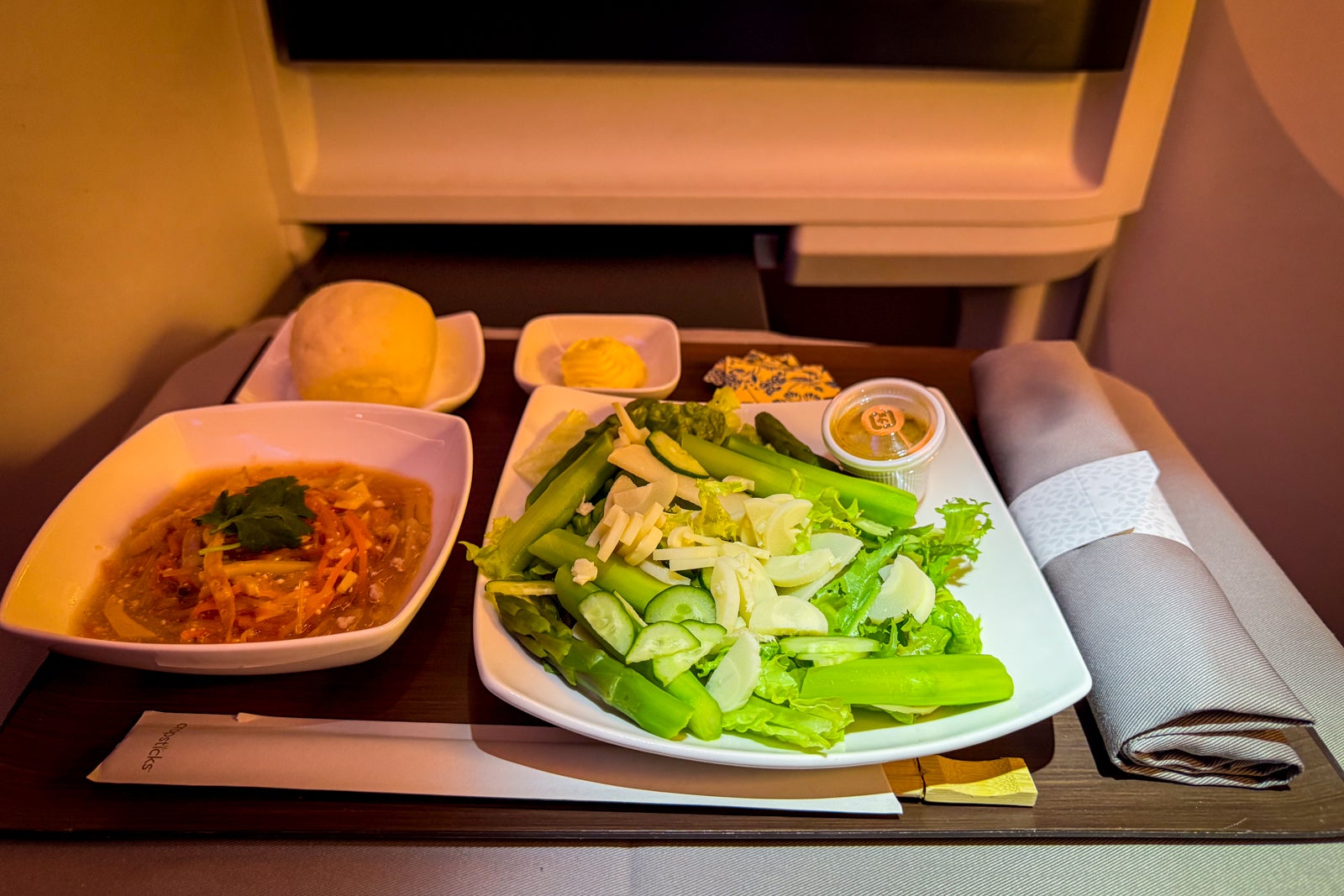
This menu, which I ordered, started with an appetizer of hot and sour soup with noodles and vegetables, asparagus salad with hearts of palm in shoyu-sherry vinaigrette, and bread and butter.
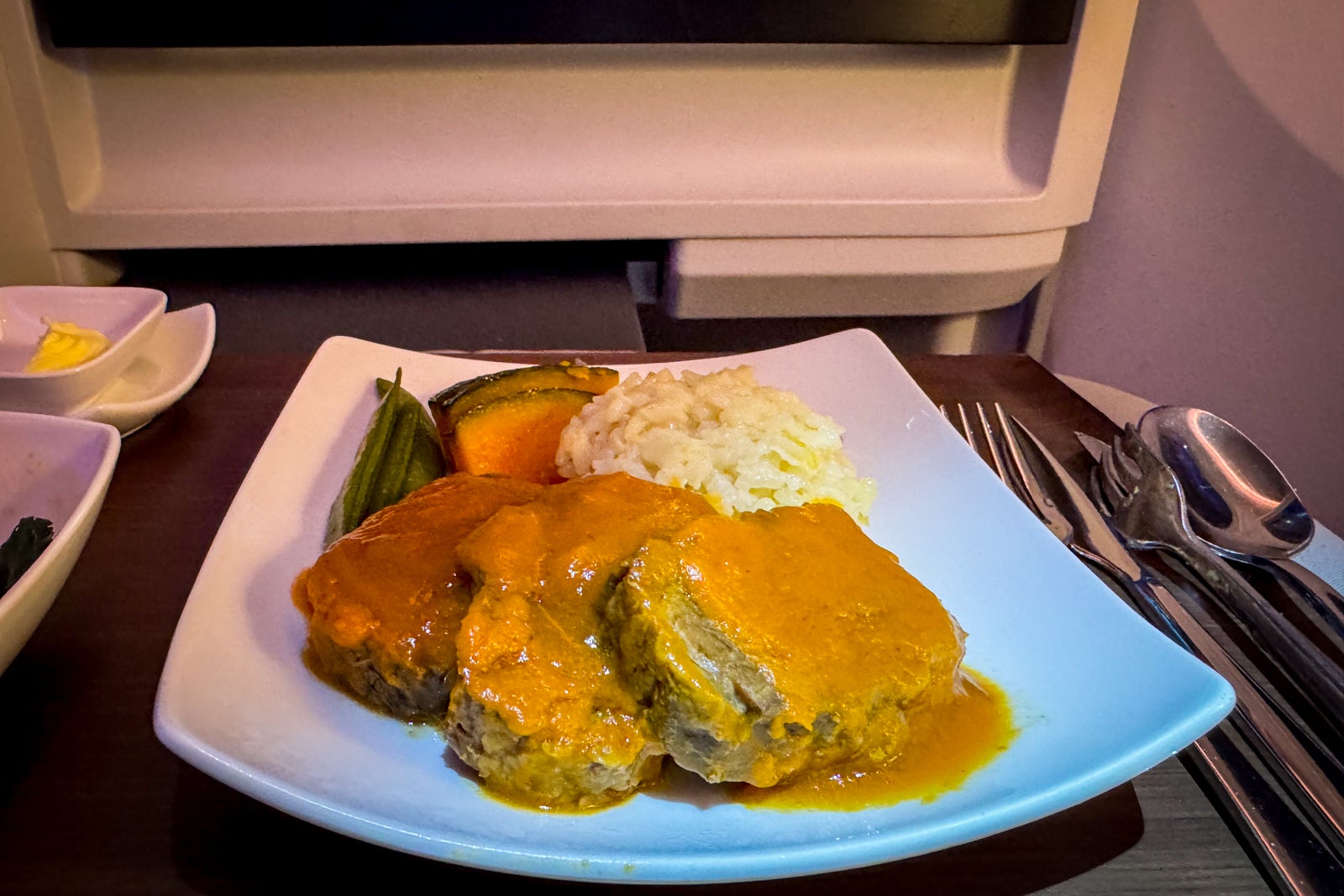
The main was braised boneless short rib in a savory sauce with scallion and ginger risotto.
I found the salad quite fresh and healthy, while the beef was tender and the sauce was flavorful.
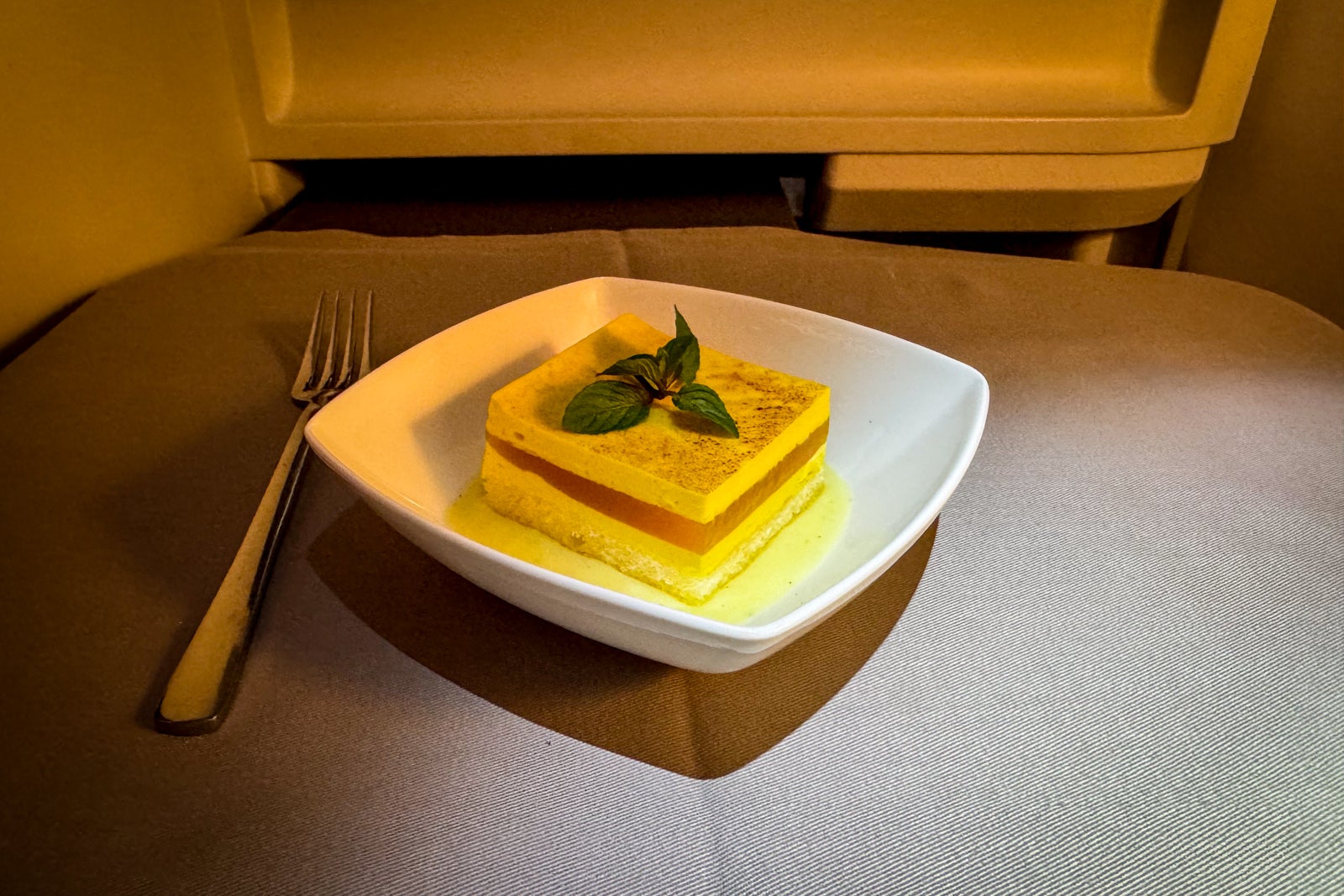
Flight attendants served dessert from a cart. There was a choice of creamy mango chiboust cake or a cheese plate with crackers and grapes. The mango chiboust was light but satisfying.
Flight attendants asked passengers if they wanted to be awakened for breakfast 90 minutes before landing. Although it would cut my sleep short on a relatively quick flight, I still wanted to try the options.
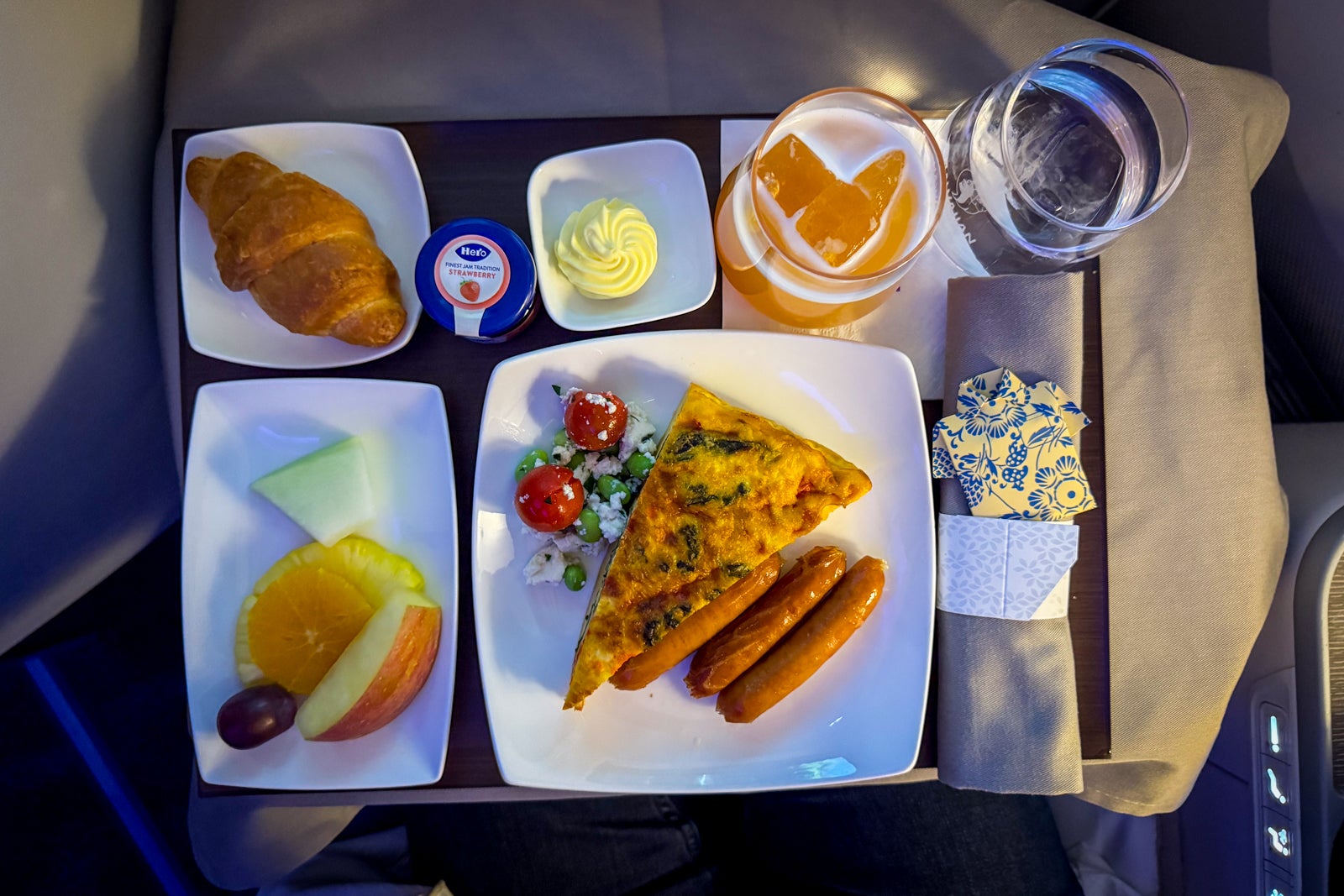
The dishes on offer included a roasted bell pepper and kale tamagoyaki omelet with chicken sausage or a sweet bread French toast with macerated berries and lilikoi syrup. I had the omelet, which was savory but light, and it came with warm croissants and a small fresh fruit platter. I skipped the coffee, since it was not Hawaiian.
The flight's wine list included:
- Lanson Pere et Fils nonvintage Champagne
- Flor Prosecco
- 21 Degrees chardonnay
- Benvolio pinot grigio
- 21 Degrees cabernet sauvignon
- La Mozza sangiovese
- HeavenSake Junmai Ginjo Label Azur sake
There were also three specialty cocktails:
- Ko Hana mai tai
- Ko Hana lilikoi daiquiri
- On the Rocks Old Fashioned
Also on offer: a variety of beer and spirits, including picks like Maui-produced Ocean vodka, Koloa Kauai white Hawaiian rum, Maui Brewing Company Bikini Blonde Lager and Big Swell IPA. Plus, there are assorted tropical juices and soft drinks as well as coffee and Tea Chest Hawaii teas.
I tried the Old Fashioned, which was pretty mellow, then had a glass of the cabernet sauvignon. It hit the spot, but don't ask me to tell you anything else about it.
Would you recommend Hawaiian Airlines business class?
Hawaiian Airlines' flagship business class aboard the Boeing Dreamliner is truly a one-of-a-kind experience.
The distinctly Hawaiian design touches, island-inspired menus and unique amenities all set this experience apart from your run-of-the-mill transpacific slog. Hopefully, a lot of these touches will remain even as Alaska and Hawaiian continue their brand integration. I'm also hopeful that onboard internet will be functional soon, since that will make these flights much more attractive to business travelers. Still, with relatively widespread award availability, they're bound to be alluring to some.
Related reading:
- The best airline credit cards
- Premium economy vs. business class: Are the differences worth an upgrade?
- Maximize your airfare: The best credit cards for booking flights
- What are airline alliances, and who's in them?
- Alaska Airlines Atmos Rewards program: How to earn and redeem points, elite status and more