Wind shear: Why pilots learn to respect the weather

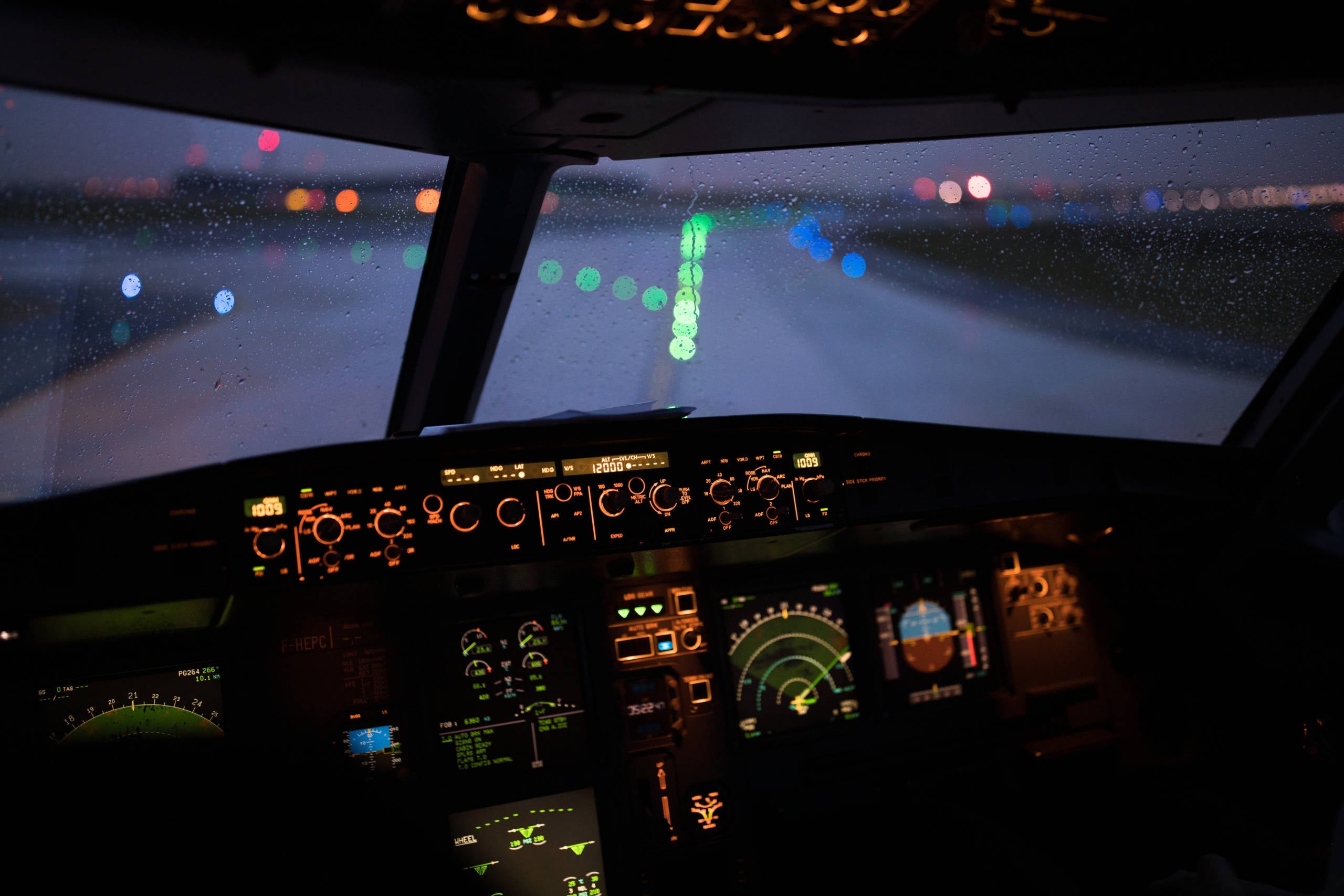
The events at Dallas/Fort Worth International Airport on 2 August 1985 played an integral role in how pilots learn to respect the weather. Right from the very start of flying school, understanding how the clouds, wind and rain affect the performance of your aircraft is key to becoming a safe pilot.
On that fateful day, from descending at a controllable 1,000 feet per minute (a normal approach will be around 700 feet per minute), the aircraft then began to descend at 1,800 feet per minute, the airspeed reducing suddenly to 130 knots. As the engines had been at idle power, it took six long seconds for the full power to come into effect. This quickly brought the speed back up to a safe level and reduced the rate of descent. After that, it began to descend at a sickening 3,000 feet per minute. When just 300 feet above the ground, this descent rate had increased to 5,000 feet per minute. Despite the best efforts of the pilots to fly the aircraft back up into the air, they hit the ground around one mile short of the runway.
Of the 163 people on board, 136 lost their lives that evening.
Wind shear — the invisible killer
What the captain had realized, tragically too late, was that the aircraft had entered wind shear conditions. Simply put, wind shear is when the wind changes rapidly in a short distance and it comes in two forms: vertical shear and horizontal shear.
Vertical shear is the change in wind strength the aircraft experiences as it climbs or descends. Horizontal shear is the change in wind strength the aircraft experiences as it moves forwards through the air. To understand why wind shear is a serious threat to the safety of a flight, we need to know what impact the wind has on an aircraft.
Contrary to popular belief, it is not the engines that make aircraft fly, it is the wings. The engines merely provide the forward acceleration.
A wing works by air flowing over its surface. When the airflow reaches a certain speed, the wing starts to provide lift. When the lift generated is greater than the weight, the aircraft climbs into the air. The engines merely provide the driving force to create that airflow over the wing. As a result, the strength and direction (velocity) of the wind is of great importance to aircraft at all stages of flight, particularly during takeoff and landing.
Read more: How and why pilots dump fuel during a flight
Microbursts
Wind shear was just one part of dangerous conditions encountered by the crew of Flight 191 that August day. What caused the wind shear was a phenomena known as a "microburst."

Microbursts happen when a cooled, heavier column of air in a thunderstorm sinks rapidly. As the column of air falls out the bottom of the cloud, it brings rain, and often hail, with it. As this "rain bomb" hits the ground, it sends out violent winds in all directions. It's like when you turn on the kitchen tap -- water hits the sink and sprays out in all directions.
Read more: Missed approach: What happens during a go-round?
This can even be seen from smaller storm clouds. Have you ever been outside when you experienced a sudden increase in wind, just a few minutes before it started pouring with rain? This is known as a gust front and comes from heavy rain falling from a cloud.
If that sudden gust of wind is strong enough, as can easily be the case from bigger storms, the change in wind speed can be enough to cause wind shear.
A lesson to be learned
So, as we put together the pieces of a microburst event, we can start to see what happened to Flight 191.
Unbeknown to the crew, due to the limitations of 1980s weather radar, they were about to fly under a massive storm cell where a heavy column of wet air was just about to fall out of the bottom. As the microburst occurred, the wind pushed out from the falling rain caused a sudden increase of air over the wings of the aircraft, increasing the airspeed.
To counter this, the first officer reduced the engine power. Yet, as the aircraft entered the downdraft beneath the cloud, the captain realized what was going on, hence his instruction to push the thrust levers all the way forwards.
The aircraft exited the downdraft and, for a moment, everything stabilized. Until the real danger came.
With the engine power now back at normal, the aircraft entered the wind on other side of the storm. This time, instead of increasing the airflow over the wings, the addition of a strong tail wind decreased the airflow. The aircraft got so slow that it started to lose lift.
The pilots applied maximum power again but it was too late. The down drafts from the storm took away any remaining hope of climbing back up into the air and slammed the aircraft into the ground.
How do pilots deal with wind shear?
One thing the aviation industry is good at is learning from past events and trying its best to ensure that they don't happen again. The 1985 crash in Dallas was a defining moment in how we handle wind shear events.
Crew training
At the time, even though crews were aware of the threat of wind shear and microbursts, the training given in how to deal with them was limited to theoretical training. No practical training in the simulator was given. In addition to this, the training focused on how pilots should cope with the situation once in it, instead of how to escape from it. Or, even better, how to not get into the situation in the first place.
Nowadays, pilots are trained how to recognize the signs of potential wind shear and microburst activity and how best not to end up in a wind shear scenario. If a thunderstorm is sitting on the approach to a runway, pilots will usually opt to enter a holding pattern and wait the 10 to 15 minutes it will take for the storm to pass through.
However, should there be no perceptible signs of potential wind shear, we have another tool at our disposal. The weather radar.
Aircraft weather radar
The weather radar on the Lockheed L-1011 aircraft was primarily designed for avoiding weather en route. As the aircraft neared the ground, the pictured painted on the pilots' screens became less and less useful. This was because the radar was only good at detecting moisture. As there is no moisture in wind, it was unable to detect the dangerous winds coming out of the storm.
As weather radar technology improved, pilots were presented with not only a better depiction of weather closer to the ground, but also the ability to detect wind shear ahead, even before encountering it. The weather radar system in today's aircraft, such as the Boeing 787 Dreamliner which I fly, are so advanced that they give us greater protection from wind shear than ever before.
Predictive wind shear
As the radar scans the sky ahead of the aircraft, it is able to detect significant changes in the wind velocity. If wind shear is detected ahead, an aural caution of "MONITOR RADAR DISPLAY!" is presented to the pilots, along with a display on their screens showing where the wind shear has been predicted. This is know as predictive wind shear.
Pilots can use this display to maneuver the aircraft to stay clear of the cone area depicted on their screens.
Read more: What do pilots do during the cruise?

Reactive wind shear
If wind shear is actually detected, depending on the stage of flight, pilots will respond in different ways.
On the takeoff run, a warning of "WIND SHEAR AHEAD!" would result in a rejected takeoff. It's much safer to stay on the ground rather than get airborne into a wind shear scenario.
Once in the air, on activation of this warning, pilots would carry out the "Wind shear Escape Maneuver." In essence, this requires them to immediately apply full power and pitch the nose up, climbing away from the ground as quickly as possible.
If on the approach, like in the case of Flight 191, there is also a predictive warning, "GO-ROUND, WINDSHEAR AHEAD!" This is the warning which could have saved Flight 191. Should the same scenario happen today, the predictive wind shear system will alert the pilots to the impending situation.
Before they even get to the point of encountering the wind shear, the crew will perform a go-round -- putting the power on and climbing back up to safety.
Ground-based radar
In addition to the radar systems on board the aircraft, most airports which are at high risk from wind shear have their own ground-based radar systems. Terminal Doppler Weather Radar detects the movement of water droplets and other airborne particles. As these elements are blown by the wind, the Doppler radar picks this up and informs ATC of wind shear conditions close to the ground. This information is then passed on to the pilots who can then asses whether it's safe to land or if it's preferable to hold off making an approach until the weather improves.
Bottom line
A good pilot will never underestimate the weather, especially when there are thunderstorms in the vicinity of an airport. Fortunately, these days we have a wealth of technology available to help us understand the weather around as thoroughly as possible. Wind shear is a threat which should never be taken lightly. Avoiding the situation in the first place is always the best option, even if this means causing a delay to the flight. However, should we find ourselves in wind shear conditions, the training we undertake in the simulator every six months ensures that we deal with the situation safely. By learning from the misfortune of those who have gone before us, we strive to continually improve flight safety for those who we carry "in the back."
TPG featured card

at Capital One's secure site
Terms & restrictions apply. See rates & fees.
| 5X miles | Earn 5X miles on hotels, vacation rentals and rental cars booked through Capital One Travel |
| 2X miles | Earn unlimited 2X miles on every purchase, every day |
Pros
- Stellar welcome offer of 75,000 miles after spending $4,000 on purchases in the first three months from account opening. Plus, a $250 Capital One Travel credit to use in your first cardholder year upon account opening.
- You'll earn 2 miles per dollar on every purchase, which means you won't have to worry about memorizing bonus categories
- Rewards are versatile and can be redeemed for a statement credit or transferred to Capital One’s transfer partners
Cons
- Highest bonus-earning categories only on travel booked via Capital One Travel
- LIMITED-TIME OFFER: Enjoy $250 to use on Capital One Travel in your first cardholder year, plus earn 75,000 bonus miles once you spend $4,000 on purchases within the first 3 months from account opening - that’s equal to $1,000 in travel
- Earn unlimited 2X miles on every purchase, every day
- Earn 5X miles on hotels, vacation rentals and rental cars booked through Capital One Travel
- Miles won't expire for the life of the account and there's no limit to how many you can earn
- Receive up to a $120 credit for Global Entry or TSA PreCheck®
- Use your miles to get reimbursed for any travel purchase—or redeem by booking a trip through Capital One Travel
- Enjoy a $50 experience credit and other premium benefits with every hotel and vacation rental booked from the Lifestyle Collection
- Transfer your miles to your choice of 15+ travel loyalty programs
- Top rated mobile app