How do pilots decide how high they fly?

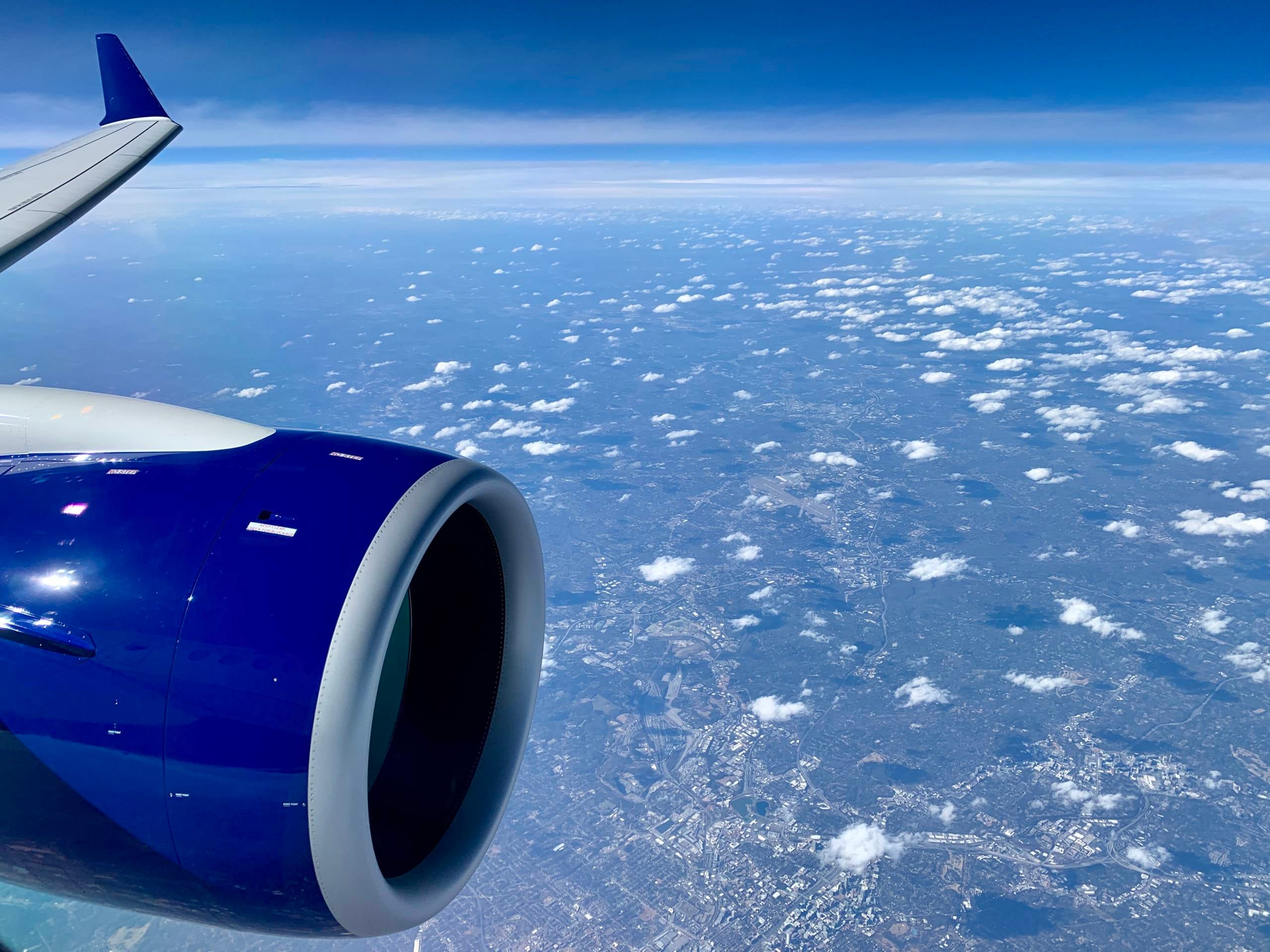
Have you ever watched the moving map on a flight? If so, you'll have observed that the height at which you fly changes from flight to flight. If you're super observant, you may have noticed that on longer journeys, this height changes a few times during the flight. But what dictates how high you fly? And why does this often change during the flight?
Height, Altitude and Flight Level
First, let's differentiate between some technical terms. Two of which you will have heard of, the other, you may not have. Even though height and altitude are easily interchangeable in common language, there's actually quite a difference between the two in the aviation world.
Height refers to the vertical distance of an object above the ground. The structure of the Air Traffic Control tower at Heathrow Airport has a height of 285 feet. This means that the distance an object would fall if you were to drop it off the top would be 285 feet. Pretty obvious.
Altitude refers to the vertical distance of an object above sea level. The important factor here is that this is very much dependent on the air pressure. As weather systems move around the world, the pressure of the air changes above a certain location on the ground. These pressure changes are like the air in an inflatable mattress. Imagine placing a model aircraft on top of your mattress and treat the floor as sea level. As you pump air into the mattress, increasing the air pressure, the aircraft rises higher than the sea. When you let air out, lowering the pressure, the aircraft sinks closer to the sea.
As a result, pilots have to be aware of the air pressure for their location in the world. To make sure they are flying the correct altitude, they have to update their altimeter accordingly.
If you're thinking that there still seems to be no difference between the two, you're forgiven. Hopefully the next bit will clear it up.
Terrain Clearance Is Key
Say you're flying over the sea at 3,000 feet altitude on the local pressure setting. Because you're over the sea, this also means that your height is 3,000 feet. So there's a lovely safe distance between you and the water. Pilots like air between them and the surface. But what happens when you reach land fall and fly toward some hills?
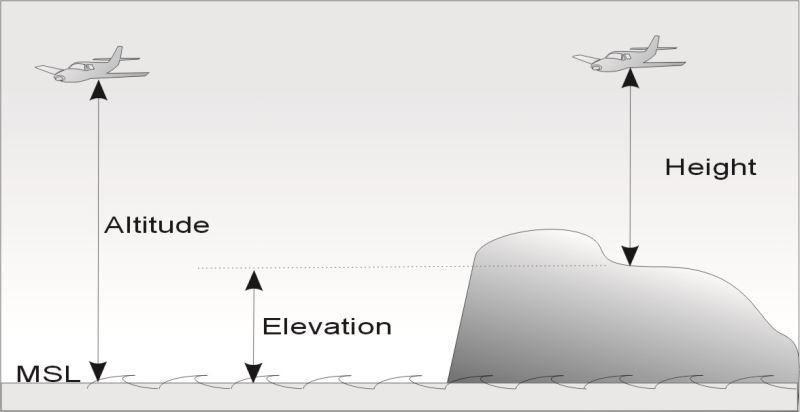
Assuming the air pressure stays the same, you're still flying at 3,000 feet altitude, but as the ground starts to rise underneath you, your height is now decreasing. If I was to tell you that the tops of hills and mountains are measured in elevation — the vertical distance above sea level — you'll understand why altitude is of far more use to pilots than height. When flying close to the ground, terrain clearance is key. If we know the elevation of the terrain below us, by ensuring we have the correct pressure set, we can ensure that we keep a safe distance between us and the terrain.
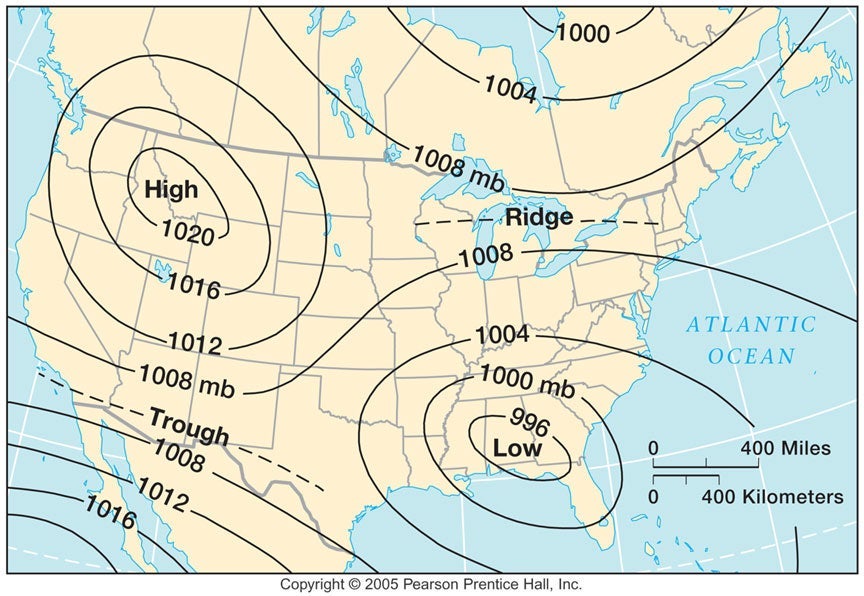
Looking at the chart below, you'll notice that for a flight from New York to San Francisco, the air pressure changes regularly. Constantly changing this for five hours would be tedious. Also, if one aircraft forgot to keep theirs updated, a loss of separation could occur. As a result, once above a certain altitude, pilots set a standard pressure setting, 1,013 Hectopascal's (the unit of pressure measurement) and fly at Flight Levels.

By flying at a Flight Level (FL), aircraft can fly for thousands of miles without having to reset their pressure setting. When climbing away from an airfield, ATC will instruct the pilots to climb to a certain Flight Level. Take the last two 0's from the altitude and you have the FL — i.e. 23,000 feet becomes FL230. The pilots will change the pressure setting to 1,013 HPA and the aircraft is now flying at a Flight Level. When approaching the destination airfield, ATC will instruct them to set the local pressure setting, the QNH, and from then on, they are flying at altitudes.
How High Can We Go?
Now that we've cleared up the differences between altitudes and Flight Level, we can start to think about why aircraft fly at certain levels and why this varies from flight to flight. First of all, let's look at the aircraft itself.
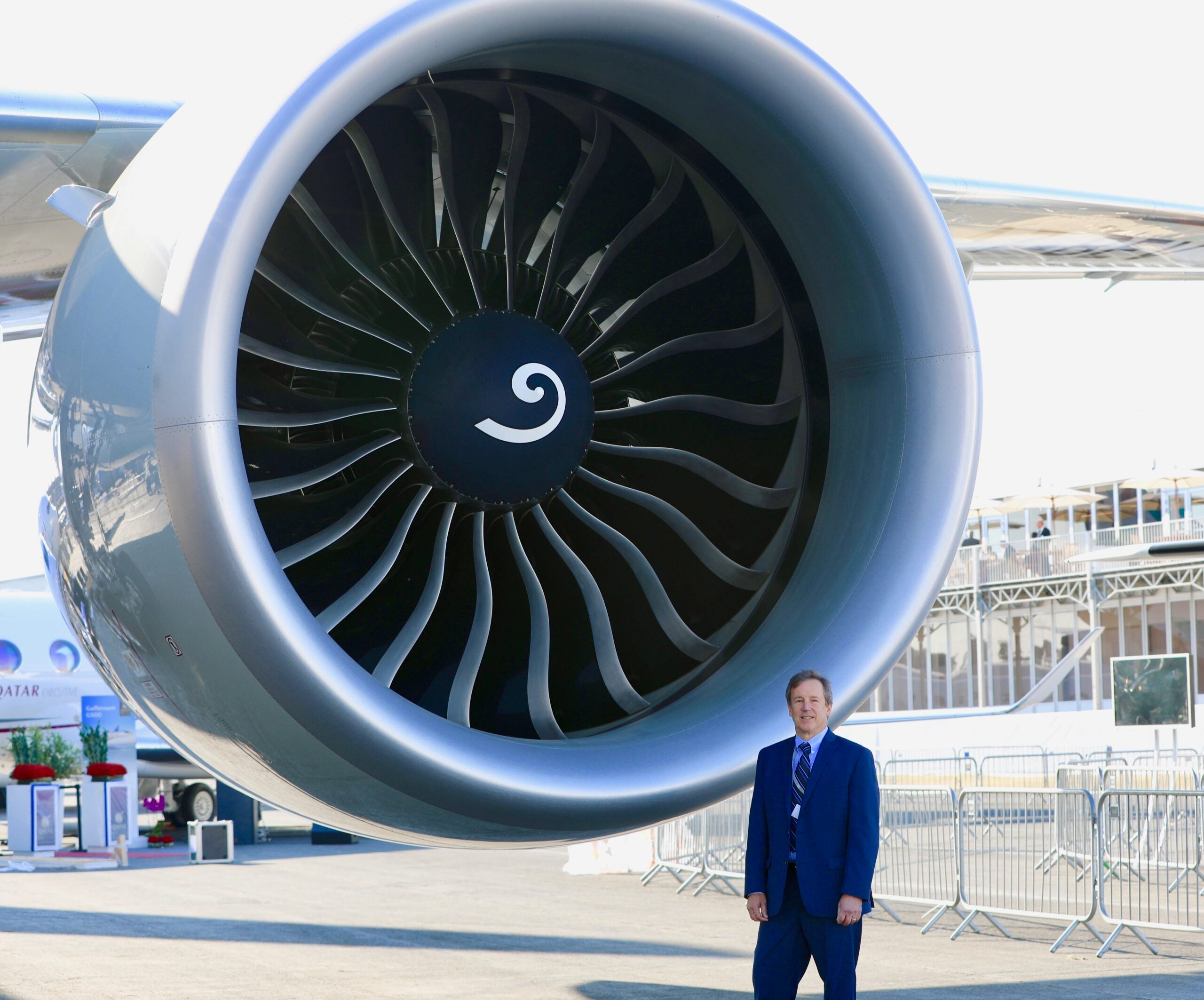
The engines on a modern jet aircraft are a phenomenal pieces of kit. The GE90-115B, which powers the Boeing 777-300, is so big that I could stand in the engine and not be able to touch the top. The way in which they are designed means that the higher they fly, the more efficient they become. This means that pilots will normally fly as high as possible to minimize their fuel usage.
However, if you read my previous article on turbulence, you'll have learnt that the lift that makes us fly is generated by the wings, not the engines. Basically, the wing relies on air molecules passing over the surface to create lift. This is all well and good at sea level, where the air is nice and thick, but as you go up in the atmosphere, it starts to thin. The higher you go, the fewer molecules there are per cubic foot of air, resulting in less lift.
This produces an interesting tradeoff. The engine wants to be as high as possible. But try to go too high and the wing may not be able to generate the lift required to reach that altitude. As a result, there will be an optimum altitude for the aircraft to fly. This level maximizes the engine efficiency but also allows the wing to provide enough lift to fly safely. This is the basic principle of level selection.
So how do you increase the lift available so that the engine can operate in the more efficient higher air?
Going back to the vary basics, an aircraft flies because thrust drives it forwards, overcoming the drag. When the lift is greater than the weight, it takes to the sky and flies. From this diagram you can see that the lift competes directly with the weight. So if you want to increase the lift, you have to decrease the weight.
Now, you could open the doors and start throwing chairs and food carts out to reduce the weight. However, passengers don't tend to like it when they have nothing to sit on and pilots don't like it when they have no tea to drink. There is a more obvious way to lose weight.
In my previous article on fuel, I explained that a long-haul aircraft may take off with around 70 tons of fuel in its tanks. When the flight takes off, there is an optimum altitude at which the aircraft will fly for its weight. As the flight progresses, fuel is burned by the engines, which reduces the weight of the aircraft. As the fuel on board reduces, the lift available becomes greater than the weight, so the aircraft is able to climb to altitudes where the engines are more efficient. This is why on a long flight you may start at 35,000 feet, a few hours later climb to 37,000 feet and then some hours later climb to 39,000 feet.
Higher Isn't Always Better
As with all things aviation, things are't always that simple. There are other external factors that affect how high we fly. First up, wind.
As a general principle, wind flows around the globe from west to east. This is why it takes longer to fly from London to New York than the other way around. At times, these winds can be so strong that they can have a major effect on the flight time. In an upcoming article, I'll be talking more about jet streams. However, for now, let's just say that they are areas of fast-moving winds.
If an aircraft can utilize these strong winds, it can cut considerable time off the flight time. The only problem is that these jet streams tend to be at a lower altitude than the engines are most efficient. Once again, there's a tradeoff to be made.
All airlines have a flight-planning department, which studies the weather patterns to plan the most efficient route for a flight. If the winds are so strong at a lower level, it may mean that the saving in-flight time outweighs the reduced engine efficiency. So, even though the aircraft could fly higher, it will fly at a lower altitude to take advantage of the strong winds. This is particularly common on overnight flights from the USA to Europe.
Having read my article on turbulence, you'll know that it's often caused by variations in the wind. The jet streams mentioned above are great if you're in the fast moving core, as conditions tend to be nice and smooth. But if you're flying in an area between the slow moving out air and the fast moving core, things can get bumpy. As a result, we like to fly at levels that either keep us in the core of the jet stream or nicely outside it.
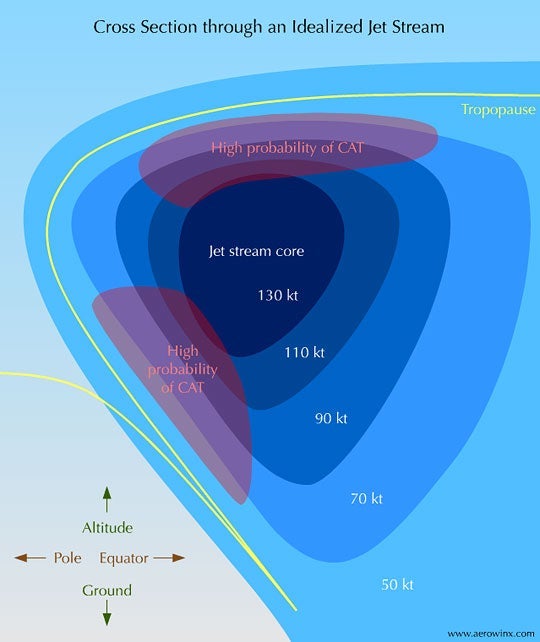
The above is all well and good if you're the only aircraft in the sky, but in today's busy airspace, separation from other traffic has a bigger impact on how high we fly.
The skies above your head are more complex than you could ever imagine. Look up on a clear day and you'll see aircraft seemingly making their own way across the sky. In fact, every movement — both laterally and vertically — is planned and coordinated with extreme precision. Very much like motorways in the sky.
These motorways follow a basic principle called the semicircular rule. Aircraft are always separated by a minimum of 1,000 feet vertically. When flying eastbound, a track across the ground of 000° to 179°, aircraft fly at odd levels. Westbound aircraft, a track of 180° to 359°, fly at even levels. Using this rule, ATC ensures that aircraft flying toward each other don't end up at the same level.
For an example, take a flight from London to Boston. Due to the structure of the traffic system over the Atlantic, there are only limited lanes of this motorway available. The only way to get more aircraft into these lanes is to put them at different levels.
As a result, due to high demand at certain times of day, the level which we would ideally prefer may not be available. We may have to take a different level, which could impact our fuel usage, as explained in my article on fuel.
Bottom Line
Aircraft don't end up at their altitude by mistake. A number of decisions have been made by flight planners, ATC and pilots to ensure that your aircraft is flying at its optimum altitude. So next time you feel your aircraft start to climb or descend during a flight, you'll know that it's done to make sure that your journey is as safe and comfortable as possible.
TPG featured card
at American Express's secure site
Terms & restrictions apply. See rates & fees.
| 4X | Earn 4X Membership Rewards® points per dollar spent on purchases at restaurants worldwide, on up to $50,000 in purchases per calendar year, then 1X points for the rest of the year. |
| 4X | Earn 4X Membership Rewards® points per dollar spent at US supermarkets, on up to $25,000 in purchases per calendar year, then 1X points for the rest of the year. |
| 5X | Earn 5X Membership Rewards® points on prepaid hotel stays booked through AmexTravel.com or the Amex Travel App™. |
| 3X | Earn 3X Membership Rewards® points on flights booked through AmexTravel.com, the Amex Travel App™, or purchased directly from airlines. |
| 2X | Earn 2X Membership Rewards® points on prepaid car rentals booked through AmexTravel.com or the Amex Travel App™ and cruises booked and paid through AmexTravel.com. |
| 1X | Earn 1X Membership Rewards® point per dollar spent on all other eligible purchases. |
Pros
- Valuable dining and food-related credits
- Flexible rewards with airline and hotel transfer partners
- Multiple travel and purchase protections
- No foreign transaction fees
- Access to Amex Offers for additional savings (enrollment required)
Cons
- Not as useful for those living outside the U.S.
- Some may have trouble using Uber and other dining credits
- You may be eligible for as high as 100,000 Membership Rewards® Points after you spend $8,000 in eligible purchases on your new Card in your first 6 months of Card Membership. Welcome offers vary and you may not be eligible for an offer. Apply to know if you’re approved and find out your exact welcome offer amount – all with no credit score impact. If you’re approved and choose to accept the Card, your score may be impacted.
- Earn 4X Membership Rewards® points per dollar spent on purchases at restaurants worldwide, on up to $50,000 in purchases per calendar year, then 1X points for the rest of the year.
- Earn 4X Membership Rewards® points per dollar spent at US supermarkets, on up to $25,000 in purchases per calendar year, then 1X points for the rest of the year.
- Earn 5X Membership Rewards® points on prepaid hotel stays booked through AmexTravel.com or the Amex Travel App™.
- Earn 3X Membership Rewards® points on flights booked through AmexTravel.com, the Amex Travel App™, or purchased directly from airlines.
- Earn 2X Membership Rewards® points on prepaid car rentals booked through AmexTravel.com or the Amex Travel App™ and cruises booked and paid through AmexTravel.com.
- Earn 1X Membership Rewards® point per dollar spent on all other eligible purchases.
- Pay It® lets you tap in the American Express® App to quickly pay for small purchase amounts throughout the month and still earn rewards the way you usually do. Plan It® gives you the option to split up big purchases into equal monthly payments with a fixed fee. You’ll know upfront exactly how much you’ll pay.
- $120 Dining Credit: Earn up to a total of $10 in statement credits monthly when you pay with the Gold Card at Grubhub (including Seamless), Buffalo Wild Wings, Five Guys, The Cheesecake Factory, and Wonder. This can be an annual savings of up to $120. Enrollment required.
- $100 Resy Credit: Get up to $100 in statement credits each calendar year at over 10,000 qualifying U.S. Resy restaurants after you pay for eligible purchases with the American Express® Gold Card. That’s up to $50 in statement credits semi-annually. Enrollment required.
- $84 Dunkin' Credit: Earn up to $7 in monthly statement credits after you pay with the American Express® Gold Card at U.S. Dunkin’ locations. Enrollment required.
- $120 Uber Cash on Gold: Enjoy up to $120 in Uber Cash annually with your Gold Card. Just add your Card to your Uber account and you'll get $10 in Uber Cash each month to use on orders and rides in the U.S. when you select an Amex Card for your transaction.
- Enjoy complimentary Hertz Five Star® Status benefits like skipping the counter at select locations, adding an additional driver at no additional cost*, and vehicle upgrades**. Benefit enrollment and Hertz Gold+ registration are required. *Additional drivers must meet standard rental qualifications and must be a spouse or domestic partner to qualify as complimentary. Other additional drivers subject to fees. **Benefits are subject to availability and vary by location. Additional Hertz program Terms and Conditions including age restrictions apply.
- Book two nights or more with The Hotel Collection through AmexTravel.com or the Amex Travel App™ and receive a $100* credit towards eligible charges at over 1,400 upscale hotels worldwide. *Eligible charges vary by property.
- Book your travel through the Amex Travel App™ with added peace of mind – backed by American Express® service and support. Only for American Express® Card Members.
- Whenever you need us, we're here. Our Member Services team will ensure you are taken care of. From lost Card replacement to statement questions, we are available to help 24/7.
- No Foreign Transaction Fees.
- Annual Fee is $325.
- Terms Apply.