To land or to divert? How pilots decide the safest option

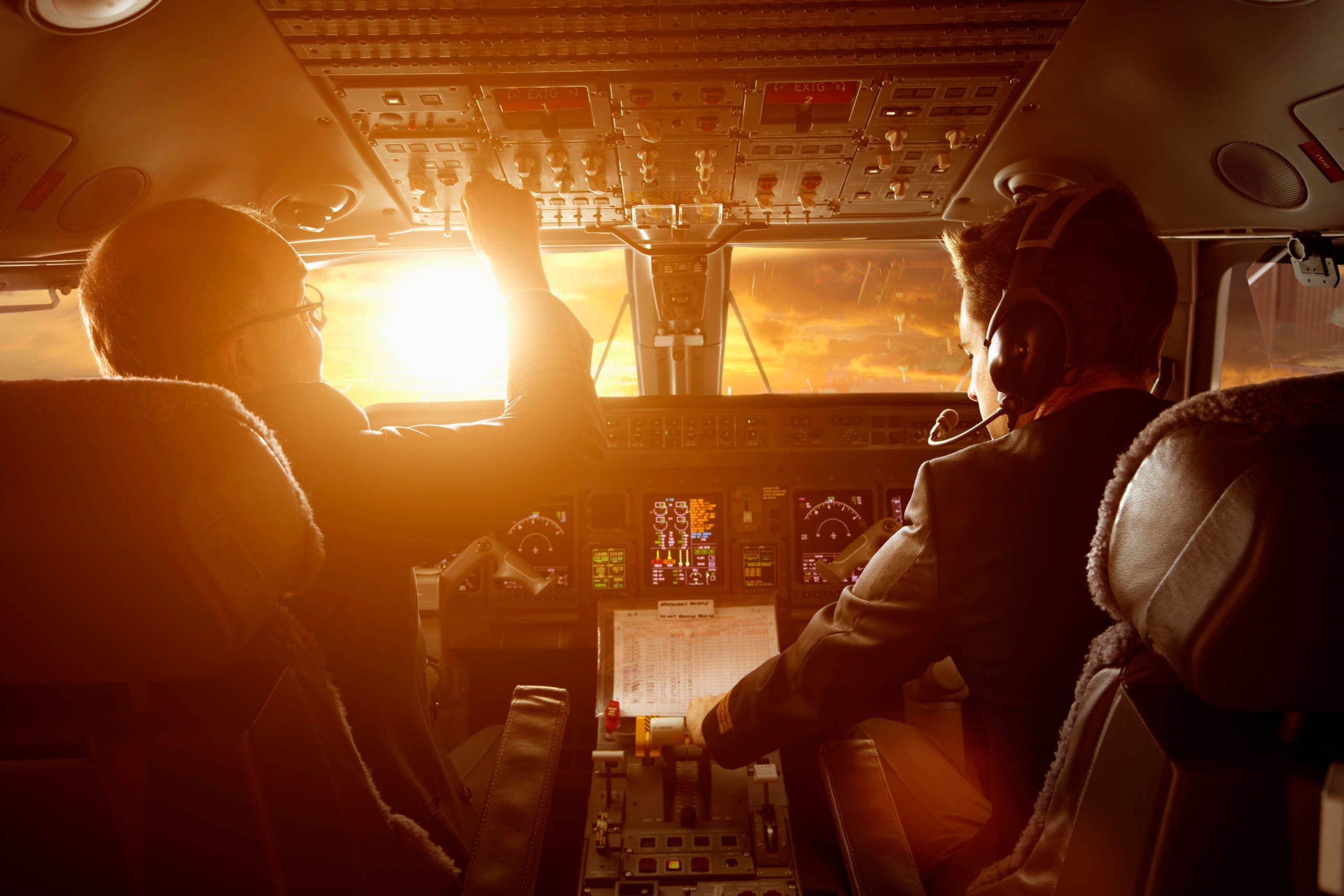
Time is a precious commodity. It can either be a pilot's best friend or their worst enemy. Having the ability to differentiate between perceived time and the actual time is a key skill of a good pilot.
So, when approaching an airport where the weather is less than ideal, pilots never want to be backed into a corner. Keeping as many options available is key to a safe outcome.
How much fuel?
Before every departure, the pilots meet up around 60 to 90 minutes beforehand to discuss the key points of the flight ahead. This includes looking at the route they plan to fly, the minimum required fuel and all relevant weather and airfield information for the destination and airfields along the way. The decisions made at this point will have a massive bearing on the outcome hours later when approaching the destination.
There are a few things in aviation which are of no use to pilots. Runway behind us, altitude above us and fuel left in the truck. We only get one chance to load more fuel. Once airborne, we only have a finite amount of time available to us until we have to find a runway to land on. As a result, the decision on how much fuel to take is absolutely key.

When the airline's flight planning department prepares a flight plan for the crew, it will also indicate the minimum amount of fuel needed for the flight. On most days when the weather is fine, this amount will normally suffice. However, when bad weather is forecast, we will take a much closer look at this figure.
Holding and diverting
The planned fuel will not only account for the flight to the destination, but it will also include two other important scenarios. First is for when there are delays on arrival. In this situation, we may have to enter a holding pattern and wait for our turn to land. This could either be dictated by ATC or by us if we decide that the conditions are not safe to land.
Secondly, should we be unable to land at the destination, fuel is carried to divert to an alternate airport. Depending on geographic location and weather, this may be an airport a few miles away. Or, in the case of islands like Seychelles, the diversion airport could be several hours away.
However, the last thing we want when needing to divert is to find that the weather at the diversion airfield is even worse than the destination. Before we know it, we only have enough fuel to reach airports where the weather is no good to land.
As a result, we will look for an alternate airfield that is "wide-open" -- meaning it has a weather forecast that would cause no issues for landing. If this airfield has to be hundreds of miles away, then so be it. We always want to have a surefire option up our sleeve should we need it. Increasing an already high workload due to a lack of fuel is not a corner we want to be backed into.

The calm of the cruise
During the cruise, we will constantly be monitoring the latest actual and forecast weather conditions at the destination and alternate. Long-haul flights can often be longer than 15 hours, and sometimes the forecasts can change significantly to what was available to us before departure.
This could result in an improved situation but also a worsening situation. If the latter is the case, we may have to start coming up with alternative plans. If the weather at the planned alternate has changed, we may have to come up with another option.
Approach brief
As the flight nears the destination, it's time for the most important part of the approach, the brief.
Before every landing, we will discuss among ourselves the major threats that could affect the safety of the aircraft. A major part of this brief is discussing the fuel and coming up with a plan should the weather not be good enough to start the approach.
The flight plan issued to us by the airline's operations department not only tells us the fuel required for the flight but also how much fuel is required to divert to the alternate airport. In the example pictured below, a 787 Dreamliner is approaching London Heathrow where the weather is stormy, with Manchester as the alternate.
From our flight plan, we know that we need 4.9 tons of fuel to leave Heathrow, fly to Manchester and land safely. We can then look at how much fuel we will have when arriving at the holding fix, the place where we enter a holding pattern to wait for our turn to land.
London Heathrow has four of these holding patterns and they are given a three-letter identifier. Ockham (OCK) to the south, Biggin Hill (BIG) to the southeast, Lambourne (LAM) to the northeast and Bovingdon (BNN) to the north.
As we knew the weather at Heathrow was going to be less than ideal, we loaded extra fuel so will be getting to OCK with 10 tons.
When the time comes to make a decision, even if our judgment at the time is clouded by mental stress, the original plan acts as a safety backstop.
Therefore, we know that we have 5.1 tons of fuel to fly around in circles waiting for the weather to improve before we have to decide if we will divert to Manchester or commit to landing at Heathrow. This can then be converted to how much time (around 1.10 hours) we have to hold -- a much more useful metric to use in a dynamic ATC environment.
Finally, we will then convert this into real-time on our watches. If we arrive at OCK at 8 a.m., if we want to divert to Manchester we must start this by 9:10 a.m. I would even set an alarm on my watch/phone to ensure that we don't miss this time.
Read more: Brace for impact! How the landing gear on the 787 Dreamliner works

The whole reason for setting a timeline like this is so that we have agreed on a plan before things get really busy. We don't want to get backed into a corner to the point where we only have one option available to us. Later in the approach, when turbulence is shaking the aircraft and we may have had a go-around after being unable to land, the workload increases massively.
We all know that when your workload increases, your spare mental capacity decreases and your ability to think clearly reduces.
By having that piece of paper clipped to the control column, the plan created in the calm of the cruise which we knew provides a safe course of action, is always close to hand. When the time comes to make a decision, even if our judgment at the time is clouded by mental stress, the original plan acts as a safety backstop.
Landing distance
Another key factor of the approach brief is to determine how much runway will be needed to bring the aircraft to a safe stop in the actual weather conditions. This is known as the landing distance.
Landing distance is defined as the horizontal distance traversed by the airplane from a point on the approach path at a selected height above the landing surface to the point on the landing surface at which the airplane comes to a complete stop.
In plain English, this means the distance required from passing over the start of the runway at 50 feet to becoming stationary. This is also known as the calculated landing distance. However, as this is the minimum distance calculated for a textbook landing, most airlines use a safety factor of 5% to 15% on top of this.
Read more: Cabin pressure: How pilots avoid disaster in the cockpit

This ensures that should the landing not be perfect, for example, if the aircraft touches down a little deeper than planned, there is still sufficient runway remaining. This is known as the required landing distance.
Therefore, in all cases, the landing distance available must be greater than the required landing distance.
When it comes to calculating the landing distance, two variable factors can have a significant effect -- tail winds and the runway surface.
Wind
For the same airspeed on touchdown, the speed over the ground will vary with the wind. Say the aircraft is flying at 100 knots -- this is the speed of air over the wings in order to generate lift. If there is a 20-knot headwind, the speed of the aircraft over the ground is just 80 knots -- the ideal situation as it results in a shorter required landing distance. This is why pilots prefer to land their aircraft into the wind. However, the reverse is the case with a tail wind.
For an aircraft approaching at 100 knots with a 20-knot tail wind, the ground speed is 120 knots. This will massively increase the required landing distance, much more than most people think. As a result, pilots are acutely aware of the wind shifting during their approach.
When calculating the required landing distance, 150% of any reported tail wind must be used, but only 50% of any headwind may be used. This ensures that a comfortable safety margin is maintained should the actual wind on touchdown differ from what was reported.
Runway surface
Once the wheels are on the ground, it's time for the wheel brakes to start to slow the aircraft. However, like in your car, the condition of the runway surface can have a huge effect on the effectiveness of the brakes.
As you might imagine, the ideal conditions to land are on a dry runway. With maximum friction between the tires and the runway, the brakes are far more effective. However, a dry runway isn't always possible, particularly in tropical parts of the world.
If the airfield weather states that it is raining, or it may rain during the time of landing, pilots will treat the runway as wet and calculate the performance accordingly. Rain is fairly common, so a wet runway is nothing abnormal. However, what happens when there has been torrential rain and the runway is slow to drain?
As the aircraft approaches the airport, we obtain the latest airfield information, including the state of the runways. If there has been heavy rain, or there is snow or ice on the runway, the type and depth of contaminant should be notified to us.
We then refer to the table below which is found in our operational manuals.
Read more: The path to becoming an airline captain — how pilots climb the ranks

Entering the table on the left, we find the row which relates to the conditions reported at the airfield, for example, greater than 1/8 of an inch (3 millimeters) depth of water. Moving to the right, this gives a runway condition code of 2 and, the most important part, a braking action of medium to poor.
Calculating the distance
Many older aircraft require the pilots to use complicated tables with multiple rows and columns to collate all the above factors and work out the required landing distance. At times of high workload and reduced personal performance from tiredness, just the smallest mistake can result in an erroneous calculation. To help combat this threat, the 787 Dreamliner has the onboard performance tool.
Using this computer, we enter all the relevant information as seen in the image below. The OPT then calculates the distance required. Not only does it reduce potential errors but it also allows us to quickly carry out a new calculation if the reported wind or runway in use changes. With some very short runways around the world, a shift in the wind could make all the difference between landing safely and going off the end of the runway.

Land or divert?
Having all this information to hand only creates the pieces of the giant jigsaw puzzle going on in the flight deck. How the pilots put them together is key. The modern-day airline pilot is more of a problem solver and a manager than the old fashioned "stick-and-rudder" pilot of years gone by.
As they fly the aircraft around the holding pattern, they are constantly thinking. Constantly coming up with new ideas and running new plans between themselves, trying to work out how best to use the pieces of the jigsaw.
At the base of all decisions should be the safety of the aircraft and its occupants. However, when the workload increase and the mind and body are put under mental and physical stress, the ability to think clearly reduces. Our mind focuses in on certain aspects and blocks out others. Tunnel vision sets in.
However, by creating an "escape plan" in the calm of the cruise, poor decisions made in the heat of the moment can be greatly reduced. If we don't like the look of the weather, or the state of the runway when we near the airport, we can enter a holding pattern. It's always safer to hold off than to chance a landing.
If we have made a fuel plan, we can use this as the backbone of our planning. If the time ticks down and we still haven't been able to make an approach, it may be time to divert to our alternate.
Bottom line
As the saying goes, safety is no accident. The culture which a CEO creates from the top of an airline will filter all the way down to the very bottom of the hierarchy. How the pilots fly the aircraft, how they are trained and the environment in which they operate is all part of the corporate safety culture.
By creating a plan in the calm of the cruise, pilots give themselves an escape plan should things diverge from the expected course of action. They should never find themselves backed into a corner with only one option on the table.
TPG featured card

at Capital One's secure site
Terms & restrictions apply. See rates & fees.
| 5X miles | Earn 5X miles on hotels, vacation rentals and rental cars booked through Capital One Travel |
| 2X miles | Earn unlimited 2X miles on every purchase, every day |
Pros
- Stellar welcome offer of 75,000 miles after spending $4,000 on purchases in the first three months from account opening. Plus, a $250 Capital One Travel credit to use in your first cardholder year upon account opening.
- You'll earn 2 miles per dollar on every purchase, which means you won't have to worry about memorizing bonus categories
- Rewards are versatile and can be redeemed for a statement credit or transferred to Capital One’s transfer partners
Cons
- Highest bonus-earning categories only on travel booked via Capital One Travel
- LIMITED-TIME OFFER: Enjoy $250 to use on Capital One Travel in your first cardholder year, plus earn 75,000 bonus miles once you spend $4,000 on purchases within the first 3 months from account opening - that’s equal to $1,000 in travel
- Earn unlimited 2X miles on every purchase, every day
- Earn 5X miles on hotels, vacation rentals and rental cars booked through Capital One Travel
- Miles won't expire for the life of the account and there's no limit to how many you can earn
- Receive up to a $120 credit for Global Entry or TSA PreCheck®
- Use your miles to get reimbursed for any travel purchase—or redeem by booking a trip through Capital One Travel
- Enjoy a $50 experience credit and other premium benefits with every hotel and vacation rental booked from the Lifestyle Collection
- Transfer your miles to your choice of 15+ travel loyalty programs
- Top rated mobile app