‘Roger, Roger. What’s our vector, Victor?’ — How pilots use radios

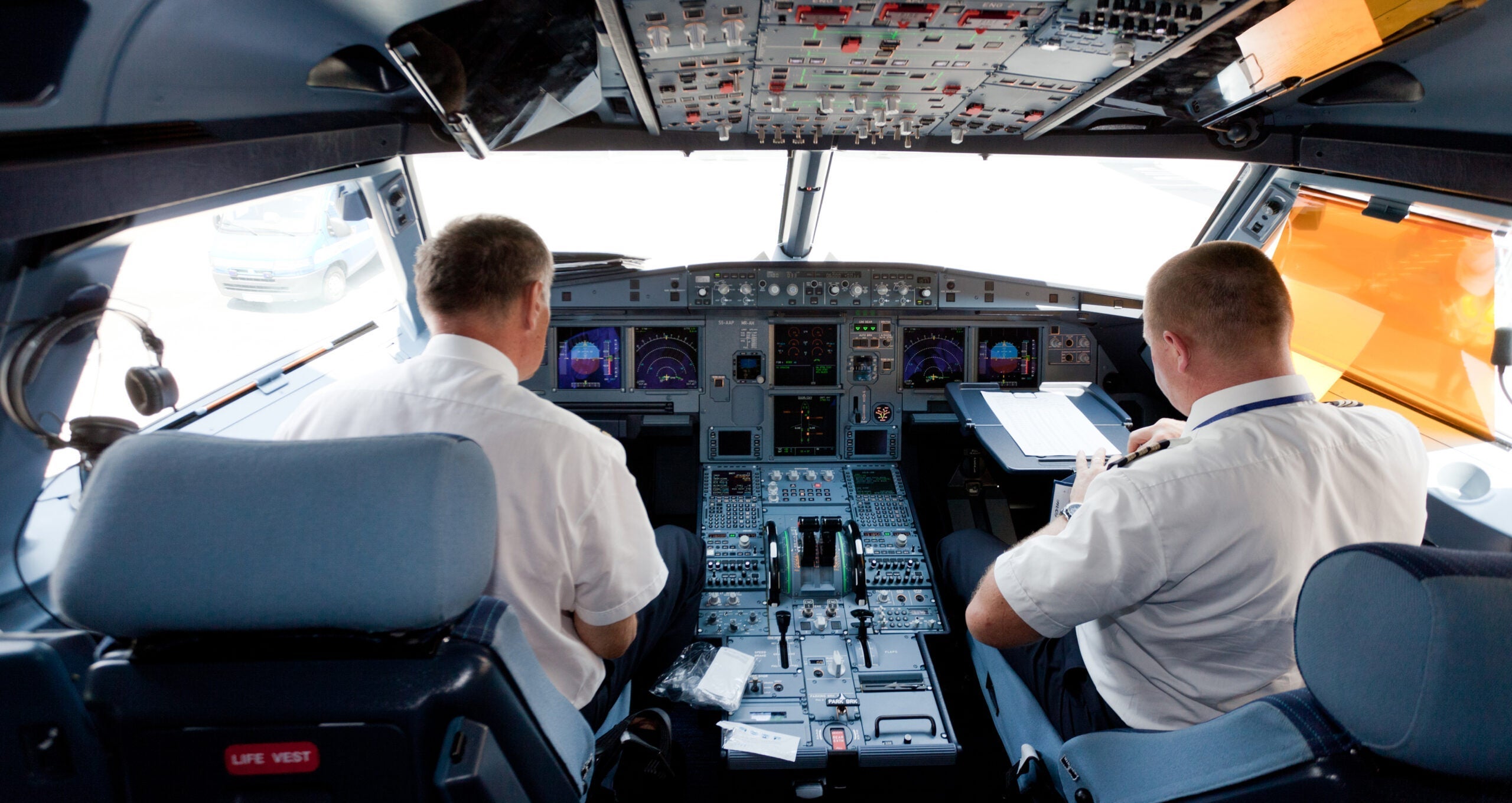
Clear communication is key in everything we do, and body language and non-verbal communication make up a large proportion of this. So how do we communicate effectively when we are unable to see the person we are talking to, who may, in fact, be hundreds of miles away at the end of a crackly radio frequency?
Pilots use radios as part of our everyday communications with ATC, engineers and, if you think about it, passengers via the PA system. As a result, knowing how to use this medium is essential to get our message across and ensuring the safety of the flight. This is how we do it.
English, the international language of ATC
Communication between aircraft and Air Traffic Control (ATC) is critical to flight safety. However, as we cross from country to country, the language used by each one changes rapidly. A flight across Europe could cover a dozen different languages.
It would be crazy to suggest that pilots learn all the languages of countries whose airspace they fly through across the world. So, since 1951, the International Civil Aviation Organisation (ICAO) recommended that English be used as the international language of aviation communications.
Even though this recommendation was widely followed, the standard of English used by both pilots and ATC varied significantly around the world. Understandably, trying to communicate effectively with another person, when English is neither of your first languages, must be incredibly difficult.
However, a number of high-profile accidents where a breakdown in communications due to language issues could not be ignored.
The Tenerife accident
The accident at Tenerife, Spain, on March 27, 1977, is still the deadliest accident in aviation history. Operating in thick fog on a single runway, the Dutch crew of a KLM 747 misunderstood the instructions, in English, from the Spanish controller.
When holding in position for takeoff, the controller gave the KLM crew instructions to follow after departure. However, these instructions included the words "takeoff" which the KLM crew interpreted as their clearance to begin the takeoff run.
Read more: How fast are we going? How pilots deal with a loss of airspeed indications

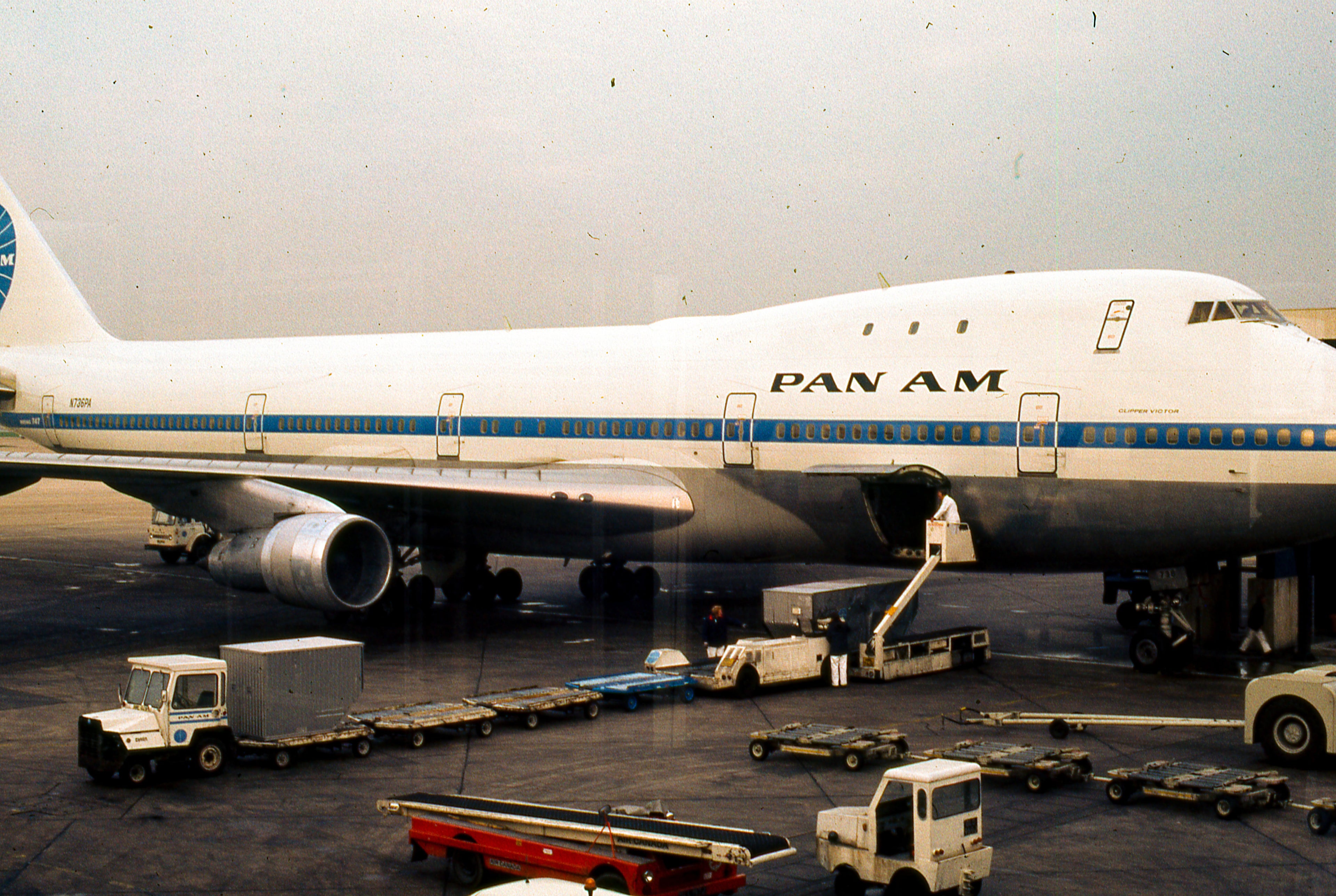
Tragically, several hundred feet down the fog-shrouded runway, a Pan Am 747 was still taxiing, trying to find its exit point. Being native English speakers, they were able to understand the rapidly developing situation. They attempted to alert the controller that they were still on the runway, but their transmission was blocked by another radio call -- one of the major downsides of radio communications.
Acutely aware of what was about to happen, the Pan Am crew did their best to exit the runway as soon as they could, but to no avail. As they appeared out of the fog, the KLM crew tried to avoid them but it was too late. A total of 583 people tragically lost their lives that day.
One of the many learning points from this accident changed the phraseology we use with ATC. We now only use the word "departure" for general topics for instance, "ready for departure" or "after departure fly heading 100 degrees" and only use "takeoff" when used in an actual takeoff clearance.
Setting a standard
Whilst the Tenerife accident was the most deadly, it wasn't the only incident to be attributed to a breakdown in communication between pilots and ATC. The 1990 crash of an Avianca Boeing 707 in New York was attributed to the Colombian pilot's inability to communicate the severity of their low fuel situation in plain language with ATC.
The mid-air collision over India between a Kazakhstan Airlines Ilyushin Il-76TD and a Saudi Arabian Airlines Boeing 747 was partly blamed on the poor language skills of the Kazak pilots. They were relying on the English of their flight engineer who did not have access to the flight instruments. A mix-up in the altitude they were cleared to descend to resulted in the deaths of 349 people.
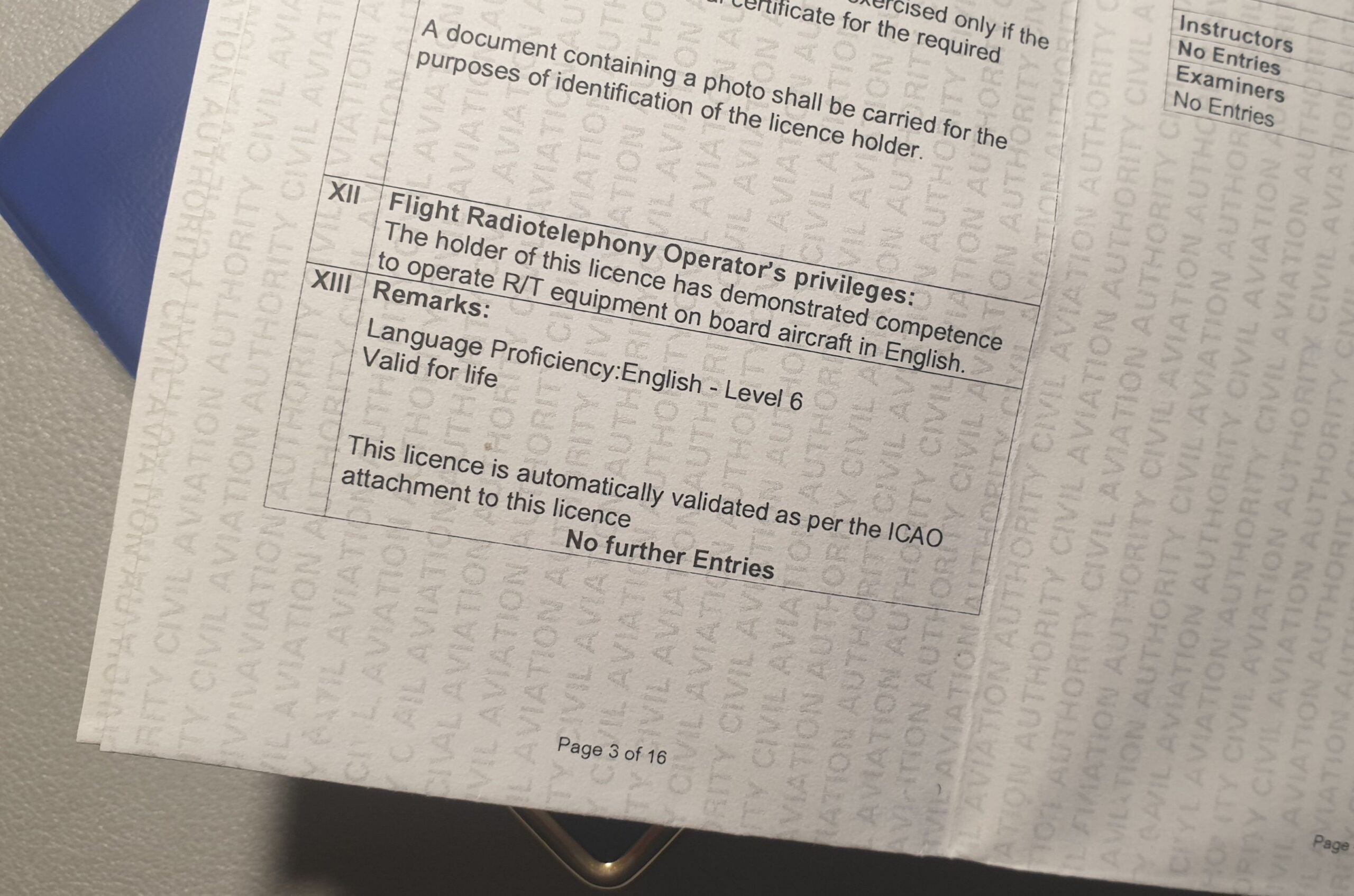
As a result of these fatal, and many other non-fatal incidents, in 2003, ICAO made amendments to the Chicago Convention requiring that pilots involved in international operations demonstrate a proficient level of spoken English.
This is done by means of a proficiency test with a minimum requirement of level 4 out of 6 needed to hold a valid license.
When English isn't the language of ATC
Whilst English is the recommended language of ATC, it doesn't mean that controllers have to use this all the time. Have a listen to this live ATC from Mexico City airport. What do you notice?
Whilst the quality of English with foreign aircraft is pretty good, communication with Mexican aircraft is in Spanish. This doesn't reduce the quality of the controlling, but it does reduce situational awareness for many of the aircraft on the frequency.
A large part of using the radio is building up a mental 3D picture of what is going on around your own aircraft by listening to the interactions between ATC and other aircraft. By doing this, we are able to identify any potential threats and resolve them before they become a real danger. However, when many of the radio calls are in a language that you may not understand, this can be a problem.
Radiotelephony general procedures
Using a radio is a pretty straightforward process -- if you know how they work. On a particular radio frequency, there is usually one Air Traffic Control Officer (ATCO) responsible for any number of aircraft. However, the key point to know is that only one station can broadcast and be heard at a time. If two stations, for example, an aircraft and the ATCO transmit at the same time, the two messages will be undecipherable.
To make matters worse, the two stations transmitting over each other will not realize that they have done so. This can waste precious seconds when the ATCO is trying to issue important instructions to an aircraft.
As a result, it is the responsibility of all stations on the frequency to use proper radio technique and etiquette to ensure that communications are clear and concise.
Transmitting technique
Like in any normal social situation, before making a transmission, it is important to make sure that we are not interrupting the conversation between the ATCO and another aircraft. You wouldn't walk into a busy room and just start talking to someone and it's the same in the air.
When transferring over to a new frequency, no matter how important the message, it is imperative that we wait and listen for a few seconds. The ATCO may be in the process of waiting for another aircraft to confirm a set of instructions. If we barge in and transmit blindly, we could inadvertently cause another aircraft to get their clearance wrong.
Read more: How pilots keep their skills sharp during COVID-19 downtime
When we are ready to make the call, it is important to use correct and precise standard phraseology. We may be talking to an ATCO whose natural tongue is also English, but it's important to remember that there may be other aircraft on the frequency whose situational awareness relies on understanding our transmissions.
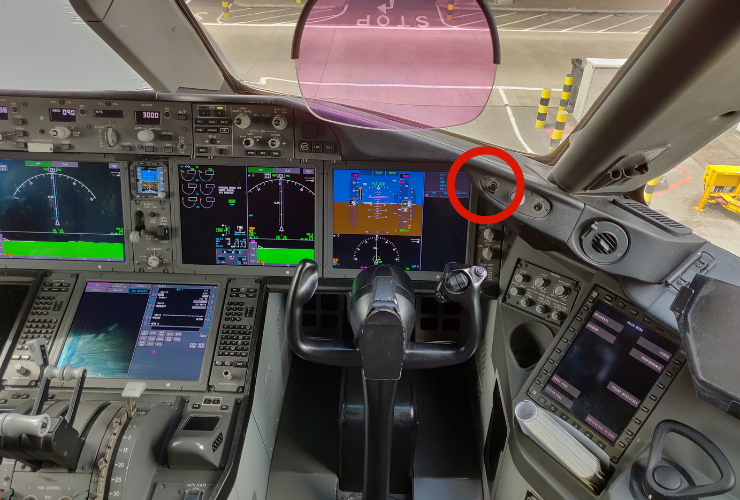
To transmit a message, we hold down the push to talk (PTT) switch. Depending on the aircraft type, there may be a number of these around the seat area. On the 787, there are three -- one on the control column, one on the radio panel and one conveniently located on the combing above the instruments. We then use a normal conversational tone, speaking at a normal pace.
Transmitting letters and numbers
Quite often, we need to transmit a series of letters and numbers as part of a communication, for example, when spelling a waypoint name or a new radiofrequency. I'm sure most readers will be familiar with the phonetic alphabet but there is also a similar procedure in place for numbers.
A single letter could be difficult to hear on a poor quality frequency so the phonetic alphabet works by replacing individual letters with full words. These create longer sounds that are easier to understand, irrespective of the natural tongue and accent of the speaker. The same goes for numbers.
Single syllable numbers can sound very similar, particularly on high frequency (HF) radio. Nine/five have the same vowel sound, two/three have the same first letter. As a result, to ensure that single syllable numbers are not lost in the transmission, they too have been turned into words as seen below with the syllables to be emphasized in bold.
- WUN
- TOO
- TREE
- FOWER
- FIFE
- SIX
- SEVEN
- AIT
- NINER
By emphasizing the correct parts, two/three now sound very different, as does nine/five.
Emergencies
Clear communication is never more important than when in an emergency situation. In the U.K., there are two levels of emergency: distress and urgency. Distress is a condition where the safety of the aircraft is threatened by serious and/or imminent danger and requires immediate assistance. When a crew finds themselves in a situation of this description, they start the radio transmission with "MAYDAY, MAYDAY, MAYDAY."
Urgency is when the crew find themselves in a situation that affects the safety of the aircraft or a person on board but does not require immediate assistance. In this case, the crew starts the emergency call with "PAN PAN, PAN PAN, PAN PAN".
Whether a situation warrants a MAYDAY or a PAN PAN very much depends on the exact details at the time. A sick passenger requiring medical assistance would most likely result in a PAN PAN call, an engine failure on a twin-engined aircraft most likely a MAYDAY.
If we are in any doubt, we will issue a MAYDAY call. It's much better to get preferential treatment from ATC and then downgrade the situation to a PAN PAN, rather than to struggle with a lack of assistance and a high workload.
To assist in relaying all the information ATC needs in an emergency call, there is a set structure of what needs to be said and in what order.
- MAYDAY, MAYDAY, MAYDAY (or PAN PAN, PAN PAN, PAN PAN)
- Name of the station being addressed (e.g. London Control)
- Aircraft callsign (e.g. Topjet 254)
- Type of aircraft
- Nature of emergency
- Intentions
- Present position, altitude and heading
- Any other useful information
From this, it is clear why having a strong grasp of the English language is essential. If pilots are unable to explain in plain English the nature of their emergency, it could be difficult for ATC to ascertain the level of danger the aircraft is in.
Minimum fuel
As the crew of the Avianca 707 which tragically crashed in New York found out, relaying your fuel status to ATC is critical to ensuring the safety of the flight. In that event, the aircraft continued to hold in bad weather, waiting for their turn to land. Even though the crew knew they were running low on fuel, at no point did they make ATC aware of the severity of the situation. Only when the engines began flaming out did they declare an emergency.
To stop a similar event from happening again, there are several levels of fuel level reporting to ATC.
In the U.K., if a crew reaches a fuel level that renders them unable to divert to any other airfield except for the one for which they are waiting to land, they must declare "MINIMUM FUEL" to ATC. However, this means that they will still land with their 30 minutes of "final reserve" fuel still intact. At this point, ATC has no obligation to provide priority landing to this aircraft.
Read more: What do pilots do during the cruise?
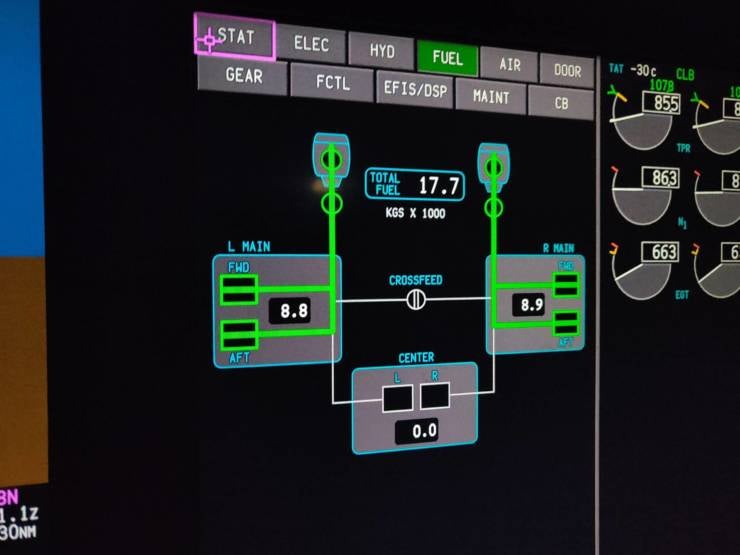
The ATCO will respond to the pilot's declaration of "MINIMUM FUEL" by confirming the estimated delay if the aircraft is still waiting to land, or by confirming the distance-to-go if they are on final approach.
If an aircraft indicates that they are short of fuel but have not declared "MINIMUM FUEL" the ATCO will ask them if they wish to declare an emergency -- a direct lesson learned from the Avianca accident.
If the pilots calculate that they will now have to eat into the 30 minutes "final reserve" fuel, they must declare a MAYDAY.
The future
The majority of interactions between pilots and ATC are still conducted by voice. It's quick to send and is quick to receive a reply. In the fast-paced environment around the airport with multiple arriving and departing aircraft, the speed of communication is key. When ATC issues us with instruction, they need a rapid response.
However, when away from the frenetic lower altitudes, an instantaneous reply isn't quite as important. As airspace begins to get busier again, more aircraft are being handled by individual controllers. With more aircraft comes increased radio transmissions and the increased chance of mistakes being made.
One aircraft replying to the call meant for another aircraft, pilots missing a call meant for them and multiple transmissions being broadcast at the same time are all common events on a busy frequency. In addition, you may have a pilot and a controller from two different countries communicating in a language which isn't their first: English. Accents can sometimes be difficult to understand and mistakes can be made as a result.
The use of a text message-based system nullifies all these problems, not only increasing flight safety but ATC efficiency as well. It's known as controller pilot data link communications (CPDLC). It relieves congestion on ATC frequencies and, as a result, reduces controller and pilot workload. This, in turn, increases the number of aircraft that can safely fly through a particular section of airspace.
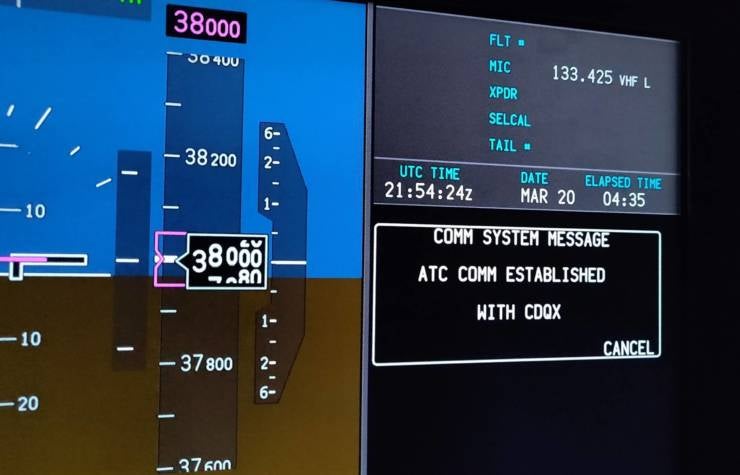
It also increases the accuracy of communications, reducing the chance of heavily accented words being misunderstood. With clear, concise written instructions on a screen in front of pilots, the chance of errors reduces.
Bottom line
Clear communication is key to ensuring the safety of an aircraft. However, when crossing the globe we come into contact with many different languages, dialects and accents. To keep things as simple as possible, English is recognized as the language of radio communications.
To make this easier for those for whom English is not their first language, set phraseology is used, particularly when it comes to emergency situations. By keeping a set structure and keeping to the essential details, communication between pilots and ATC can be simplified, reducing the risk of errors and increasing flight safety.
TPG featured card

at Capital One's secure site
Terms & restrictions apply. See rates & fees.
| 5X miles | Earn 5X miles on hotels, vacation rentals and rental cars booked through Capital One Travel |
| 2X miles | Earn unlimited 2X miles on every purchase, every day |
Pros
- Stellar welcome offer of 75,000 miles after spending $4,000 on purchases in the first three months from account opening. Plus, a $250 Capital One Travel credit to use in your first cardholder year upon account opening.
- You'll earn 2 miles per dollar on every purchase, which means you won't have to worry about memorizing bonus categories
- Rewards are versatile and can be redeemed for a statement credit or transferred to Capital One’s transfer partners
Cons
- Highest bonus-earning categories only on travel booked via Capital One Travel
- LIMITED-TIME OFFER: Enjoy $250 to use on Capital One Travel in your first cardholder year, plus earn 75,000 bonus miles once you spend $4,000 on purchases within the first 3 months from account opening - that’s equal to $1,000 in travel
- Earn unlimited 2X miles on every purchase, every day
- Earn 5X miles on hotels, vacation rentals and rental cars booked through Capital One Travel
- Miles won't expire for the life of the account and there's no limit to how many you can earn
- Receive up to a $120 credit for Global Entry or TSA PreCheck®
- Use your miles to get reimbursed for any travel purchase—or redeem by booking a trip through Capital One Travel
- Enjoy a $50 experience credit and other premium benefits with every hotel and vacation rental booked from the Lifestyle Collection
- Transfer your miles to your choice of 15+ travel loyalty programs
- Top rated mobile app