Hurricane Pilots: The Harrowing Relief Flights into Puerto Rico
Click here to donate to our fellow citizens in Puerto Rico who desperately need our help.
As they fly into a devastated Puerto Rico to bring the relief supplies the island so desperately needs, volunteer pilots are finding both their skills and their emotions tested.
"These flights are very different than our day-to-day routine flights," JetBlue pilot David Zook said. "The island's all-over devastated. It's everywhere you look — pieces of buildings everywhere. It's really sad to see." Puerto Rico's main airport itself, San Juan's Luis Muñoz Marín (SJU), is barely able to function after the devastation wrought by Hurricane Maria.
For relief-plane pilots, the work begins well before even leaving the ground. Before a pilot flies over supplies, the agency he or she works with is supposed to be coordinating with organizations on the ground in the disaster area to ensure that someone is there to receive and distribute the goods. Far too many well-meaning people send over pallets of bottled water, clothes and canned food only for the donations to end up as heaps of waste on the side of the runway — adding to, not alleviating, a stricken area's problems.
Then there are the supplies the pilots will need themselves.
"We're telling them to make sure they bring everything they could possibly need," said Eileen Minogue, executive director of Patient Airlift Services, a Long Island-based nonprofit aviation organization that uses its network of volunteer flyers for medical and disaster evacuations and emergency-supply flights to disaster areas, including Puerto Rico. "Because when they land, there's going to be no maintenance on the ground. If they get a flat tire, they need to make sure they have a spare. If you need extra oil, you bring your extra oil. Sometimes there's no place to get fuel, and even if they do, they want cash, so you need to be prepared or be ready to stop over at another island. You can't go to the local mechanic like in Philadelphia. And if you don't have a sat phone, you may run into trouble."
Only experienced pilots need apply, she added. And good copilots are a must.
"Sometimes there's debris on the runway, or it's flooded and a 6,000-foot runway is now 2,000 feet," Minogue said. "There are so many variables that we don't want people without experience going in and creating more problems."
"At the end of the day, you can't plan for something that has that many unknowns," Zook said. He has so far flown three JetBlue relief missions, in an Airbus A320 and Airbus A321, to St. Martin, the US Virgin Islands and Puerto Rico this record-breaking hurricane season. "You don't have a good sense of what you're going to be facing down there. You just have to be able to adjust and make changes while you're down there."

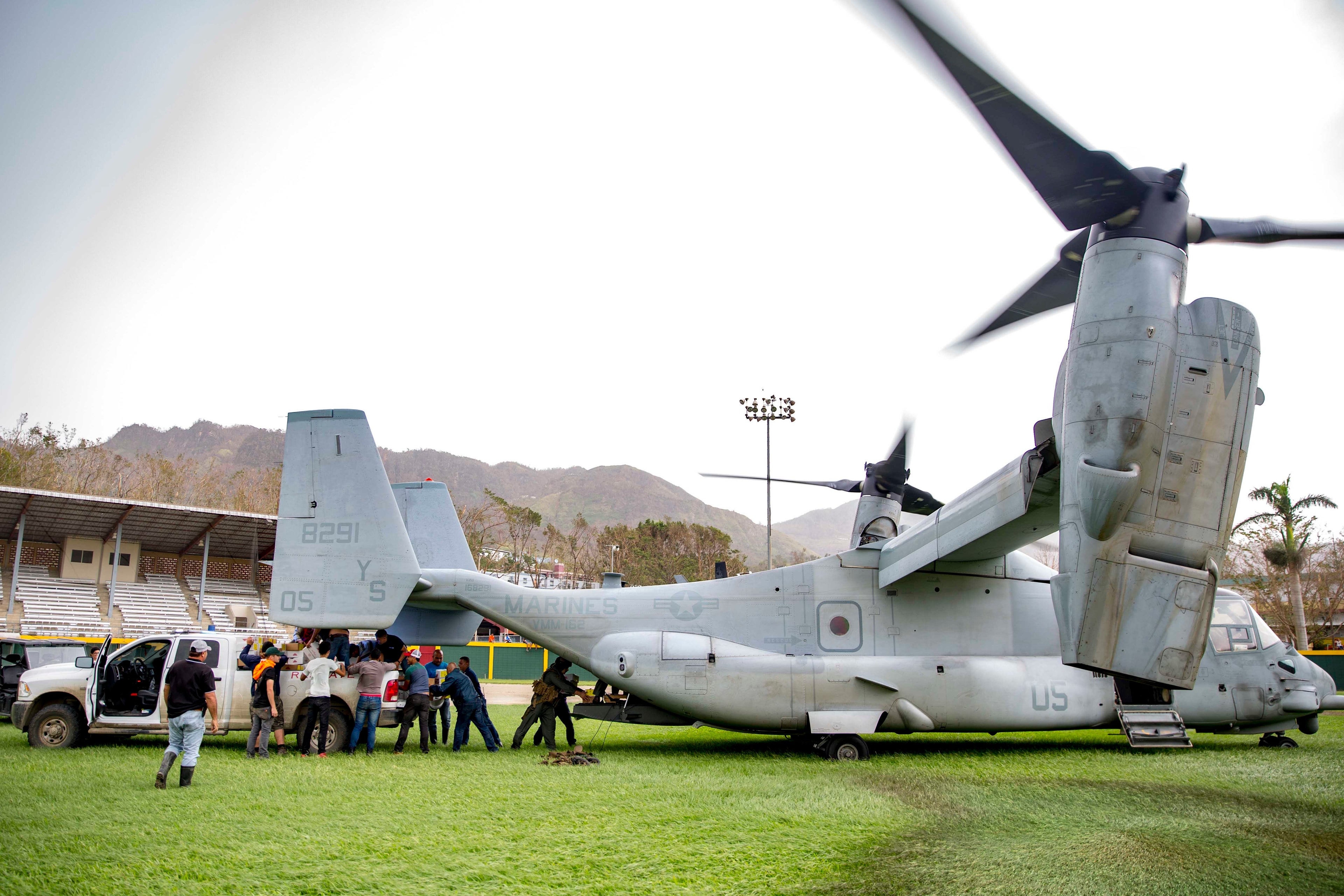
Even with all the prep work taken care of, there was no guarantee for the first few days after Hurricane Maria that relief flights would even be permitted onto the island. It's standard for the US military to take control of airports immediately after a disaster of the magnitude of the hurricane, with the priorities being evacuating people who need to get off the island, ferrying in emergency personnel and search-and-rescue teams and, if need be, getting troops on the ground to maintain order. Even now, SJU is buzzing mostly with military aircraft like helicopters, Ospreys and Beechcraft C-12 Hurons, Zook said.
At this point, though, the FAA has basically been greenlighting any legitimate relief organizations arranging flights to San Juan, Minogue said, as the gravity of the crisis has become rapidly more evident.
"It changed by the minute — one minute we heard it was open, then we heard you had to make a reservation, and then we heard you had to be there 20 minutes after the reservation," she said. "We're trying to give them notice that morning or the night before, telling them, 'Such and such a tail number is coming in.' We're not just hotdogging it in."
The first issue pilots face going to Puerto Rico is the lack of communications with the island, which forces them to eyeball the skies constantly for potential collisions.
"Normally when you fly to San Juan, you're handed off to San Juan as soon as you leave Miami's airspace, and you're under radar control the entire time," Zook said. "But now San Juan Center is inoperative, so probably the last 80 to 100 miles, you're under visual flight rules — looking out the window, turning on the traffic-avoidance systems. I wouldn't say it makes us nervous — we're paid not to be — but it does raise an extra level of caution."
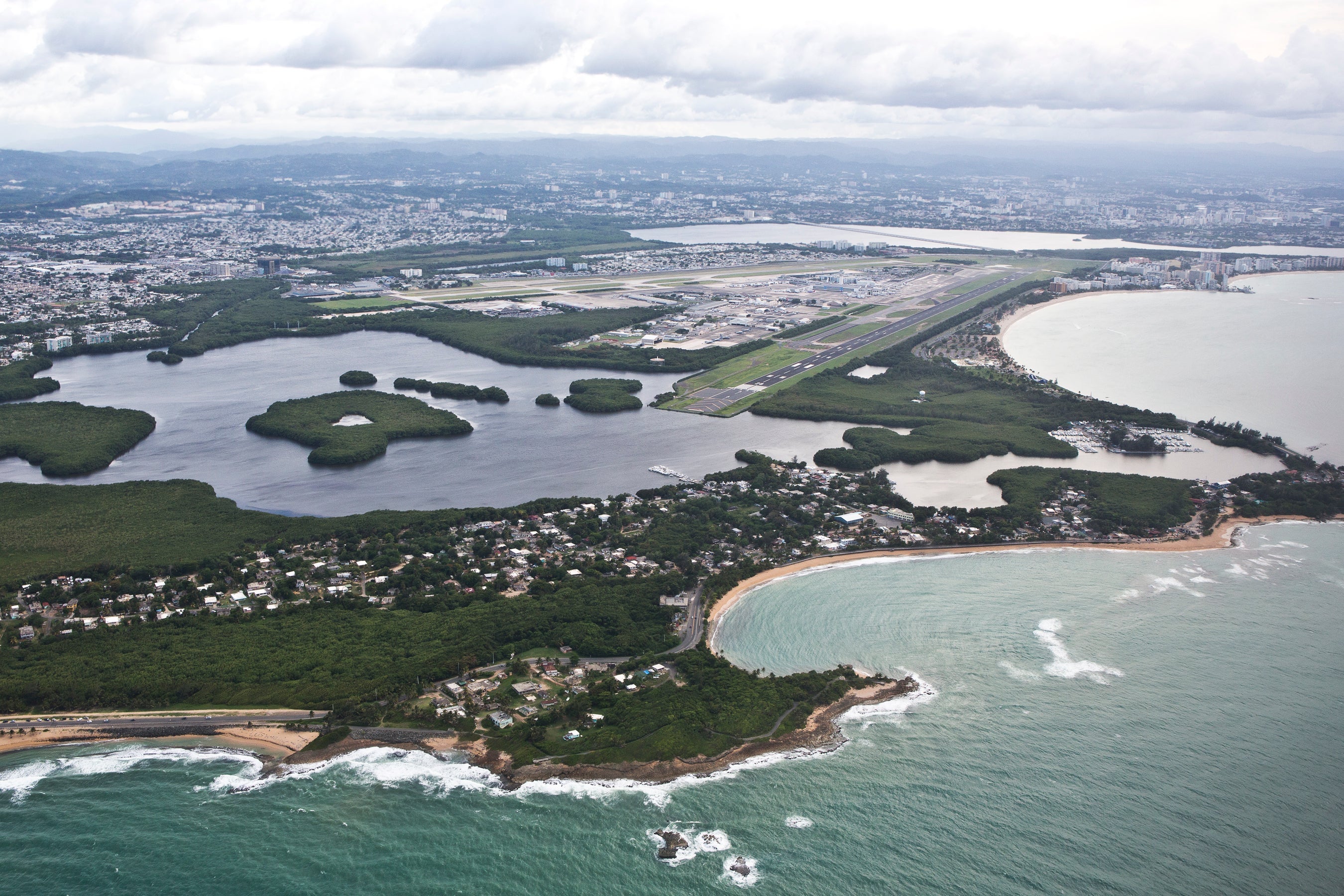
The need to be alert doesn't end once the wheels are on the tarmac in San Juan. Though the runway made it through the storm in relatively good shape, much of other infrastructure was wrecked, including the power.
"Our first flight down, we had to fly radios and communications down to them," Minogue said. "Air traffic control called us to say their generator blew up and they had no food, so we flew in and gave them support."
"The infrastructure is just not there," Zook said. " No runway lighting, no radar, no power controllers, no ground-based instruments, the approach facilities aren't up and running. Night landings and takeoffs are out of the question."
Taxiing has become something pilots largely do at their own discretion, Minogue and Zook both said, which is another reason pilots need to be experienced and ready to improvise.
"You're kind of on your own figuring out where you need to lead the airplane, but the people operating in and out of there are all highly skilled professionals who understand the system," Zook said.
And San Juan's relatively lucky. Other airports in Puerto Rico and other parts of the Caribbean are still unusable, hampering efforts to get more far-flung regions much-needed food, water, medicine and power.
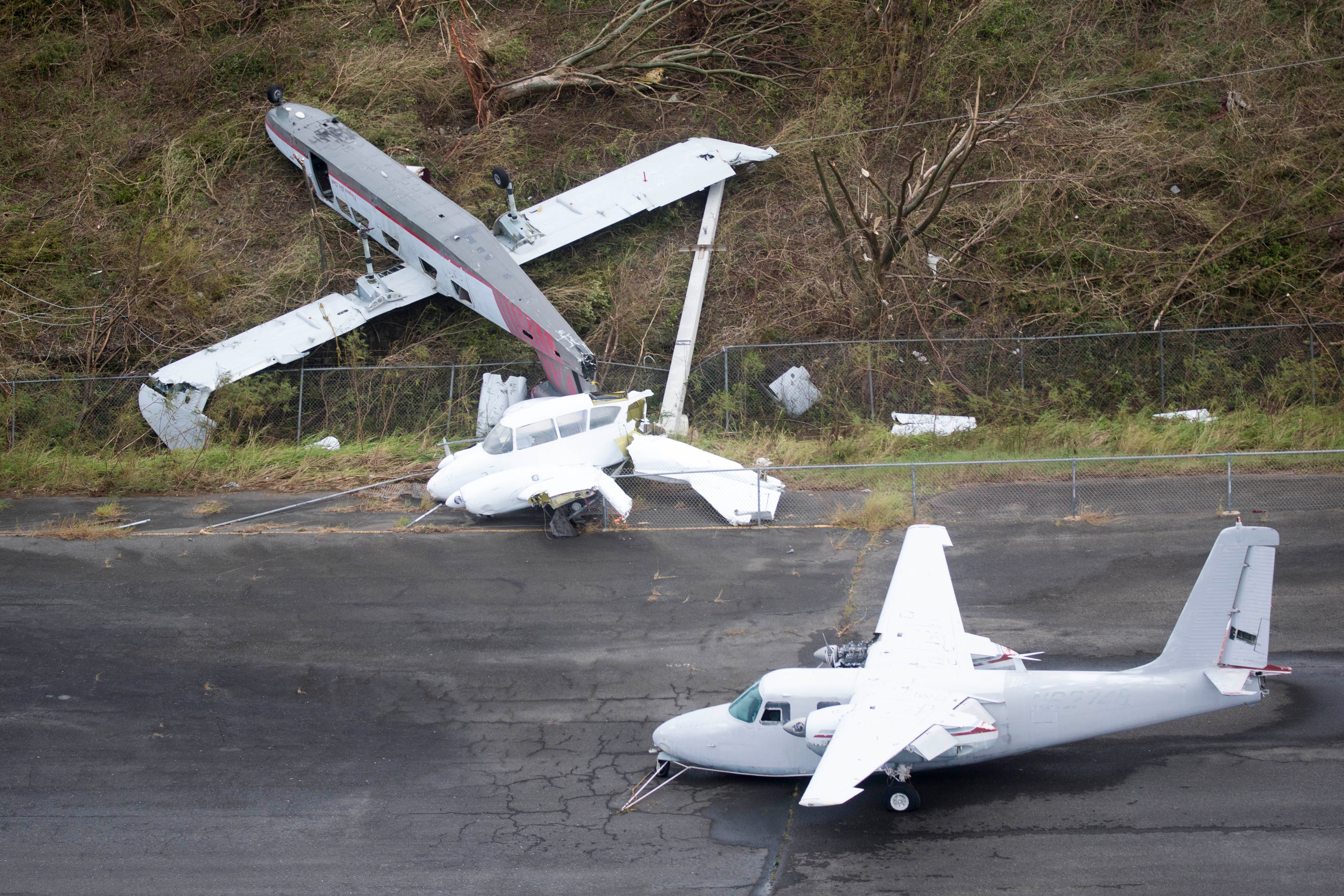
"Into St. Thomas, my pilots told me there were more planes upside down than right side up," Minogue said.
All that makes the relief missions difficult enough, but the hardest part for the pilots may be flying back home and knowing they're leaving suffering people behind.
"It's heartbreaking to decide who can and can't come aboard your plane," Minogue said. "These pilots are doing whatever they can do to get these people in desperate need out, but where are we taking them? Who are we taking them to? Do they have someone who will take care of them once they land in the States?"
"You see the pictures on TV and the internet, but when you're there yourself, to see someone you know who works at the airport whose house is flooded with water..." Zook said. "You distance yourself and you have a job to do while you're down there, but I'd be lying if I said I wasn't fighting back tears when I first saw it. But there are only so many seats on the plane, there's just so many flights you can do in a day. And as much as we're doing and as much as we're beefing up to do more, it really seems like you can't do enough."
TPG featured card

at American Express's secure site
Terms & restrictions apply. See rates & fees.
| 3X | Earn 3X Miles on Delta purchases. |
| 1X | Earn 1X Miles on all other eligible purchases. |
Pros
- Delta SkyClub access when flying Delta
- Annual companion ticket for travel on Delta (upon renewal)
- Ability to earn MQDs through spending
- Various statement credits for eligible purchases
Cons
- Steep annual fee of $650
- Other Delta cobranded cards offer superior earning categories
- Earn 100,000 Bonus Miles after you spend $6,000 or more in purchases with your new Card within the first 6 months of Card Membership and an additional 25,000 bonus miles after you make an additional $3,000 in purchases on the Card within your first 6 months, starting from the date that your account is opened. Offer Ends 04/01/2026.
- Delta SkyMiles® Reserve American Express Card Members receive 15 Visits per Medallion® Year to the Delta Sky Club® when flying Delta and can unlock an unlimited number of Visits after spending $75,000 in purchases on your Card in a calendar year. Plus, you’ll receive four One-Time Guest Passes each Medallion Year so you can share the experience with family and friends when traveling Delta together.
- Enjoy complimentary access to The Centurion® Lounge in the U.S. and select international locations (as set forth on the Centurion Lounge Website), Sidecar by The Centurion® Lounge in the U.S. (see the Centurion Lounge Website for more information on Sidecar by The Centurion® Lounge availability), and Escape Lounges when flying on a Delta flight booked with the Delta SkyMiles® Reserve American Express Card. § To access Sidecar by The Centurion® Lounge, Card Members must arrive within 90 minutes of their departing flight (including layovers). To access The Centurion® Lounge, Card Members must arrive within 3 hours of their departing flight. Effective July 8, 2026, during a layover, Card Members must arrive within 5 hours of the connecting flight.
- Receive $2,500 Medallion® Qualification Dollars with MQD Headstart each Medallion Qualification Year and earn $1 MQD for each $10 in purchases on your Delta SkyMiles® Reserve American Express Card with MQD Boost to get closer to Status next Medallion Year.
- Enjoy a Companion Certificate on a Delta First, Delta Comfort, or Delta Main round-trip flight to select destinations each year after renewal of your Card. The Companion Certificate requires payment of government-imposed taxes and fees of between $22 and $250 (for itineraries with up to four flight segments). Baggage charges and other restrictions apply. Delta Basic experiences are not eligible for this benefit.
- $240 Resy Credit: When you use your Delta SkyMiles® Reserve American Express Card for eligible purchases with U.S. Resy restaurants, you can earn up to $20 each month in statement credits. Enrollment required.
- $120 Rideshare Credit: Earn up to $10 back in statement credits each month after you use your Delta SkyMiles® Reserve American Express Card to pay for U.S. rideshare purchases with select providers. Enrollment required.
- Delta SkyMiles® Reserve American Express Card Members get 15% off when using miles to book Award Travel on Delta flights through delta.com and the Fly Delta app. Discount not applicable to partner-operated flights or to taxes and fees.
- With your Delta SkyMiles® Reserve American Express Card, receive upgrade priority over others with the same Medallion tier, product and fare experience purchased, and Million Miler milestone when you fly with Delta.
- Earn 3X Miles on Delta purchases and earn 1X Miles on all other eligible purchases.
- No Foreign Transaction Fees. Enjoy international travel without additional fees on purchases made abroad.
- $650 Annual Fee.
- Apply with confidence. Know if you're approved for a Card with no impact to your credit score. If you're approved and you choose to accept this Card, your credit score may be impacted.
- Terms Apply.
- See Rates & Fees