Are In-Flight Entertainment Screens Going Extinct?
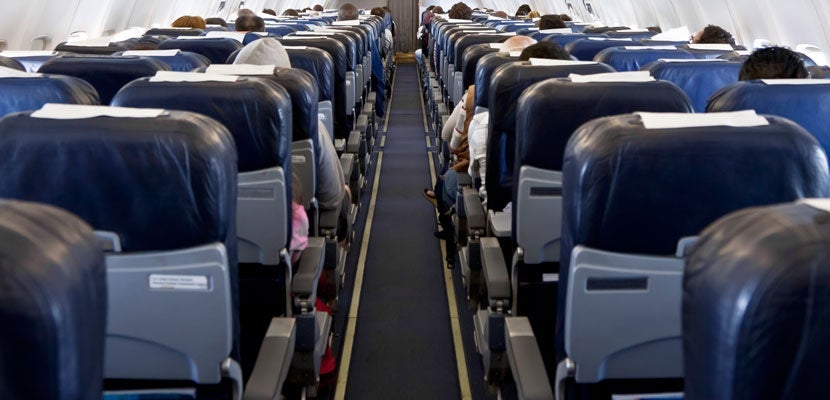
Bloomberg recently reported that American Airlines would accept delivery of new Boeing 737 domestic aircraft without in-flight entertainment (IFE) screens on the back of every seat. Nowadays, some of America's biggest carriers, including Southwest and United, are streaming movies and TV shows as part of their in-flight internet options — on passengers' devices. Although this may go against conventional wisdom for those who came of age when in-flight entertainment was a vital part of the flying experience, the IFE screens we've come to expect overhead or on every seat back are disappearing. Will seat-back entertainment screen become a thing of the past? As technology and consumer habits change, airlines are thinking much more critically about what was once considered to be a vital facet of the customer experience. Let's take a closer look.
Has New Technology Replaced the Need for Screens?
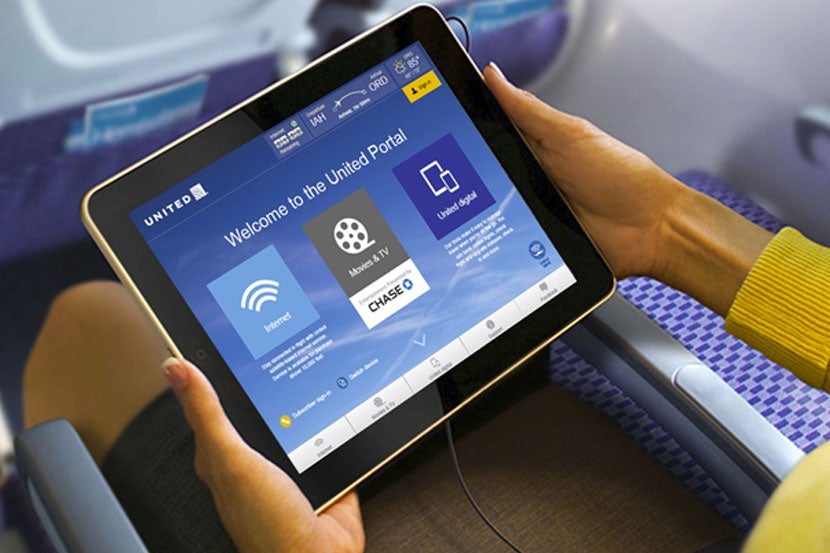
One of the leading arguments for either removing screens from aircraft or not installing them in the factory is the relentless progress of technology. When Southwest began offering live television service via personal devices on Wi-Fi-equipped Boeing 737 aircraft back in 2012, the airline boasted about the flexibility it enjoyed working through a digital partner. Three years later, United Airlines began offering in-flight entertainment for iOS and Android devices on new Embraer E-175 aircraft, saying that broadcasting entertainment directly to the passenger added to the passenger experience.
With the growth in mobile technology, the airlines anticipated a growth of smartphone and tablet usage among target customers. They were right: More Americans are using smartphones, tablets and personal computers as part of their everyday lives. According to the Pew Research Center, 68% of American adults own a smartphone, while 45% own a tablet computer. And the highest concentration is among the airlines' target customer base: college-educated people between 18 and 49 who earn more than $50,000 in household income.
More In-Flight Internet Means More Options
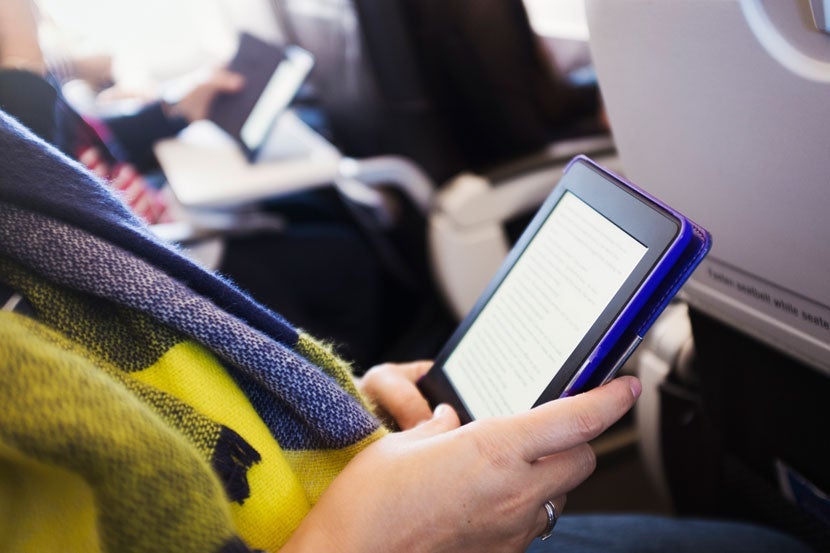
As onboard internet service improves and more people carry on at least one personal device capable of streaming video or other entertainment, IFE systems are looking less and less desirable to passengers for a variety of reasons. In 2014, in-flight wireless provider Gogo surveyed travelers about their entertainment habits in the air and found that 76% of passengers carried a personal device onboard while 33% used more than one during the flight. Moreover, passengers were apt to use their own devices to connect to wireless internet rather than use the IFE system.
Visual entertainment was still on the forefront of most passengers' minds when they took to the skies. In its 2016 annual Global Passenger Survey, the International Air Transport Association found the top activities for long-haul flyers were (in order): watching movies, sleeping or eating and drinking. (Note that watching movies was second on the list of short-haul flyers' preferred activities). Because movies are still at the top of passengers' entertainment lists, a majority (51%) told IATA they would use their own devices rather than a seat-back screen to stream films from the IFE system, an increase of 12% from 2015.
Aircraft Without Screens Are Cheaper to Operate
Airlines benefit from getting rid of built-in screens, too: Passing the device obligation from the carrier to the passenger decreases airline overhead and aircraft downtime. When Lufthansa began offering its wireless IFE solution, BoardConnect, the airline discovered it could reduce weight by decreasing the amount of equipment carried aboard. For the four-engine Airbus A340-600 carrying up to 380 passengers, the reduction in weight allowed the aircraft to save 47 metric tons (that is, roughly 103,617 pounds) of fuel per year. The technical wing of the German carrier noted the reduced weight came from removing screens from aircraft, which also reduced maintenance.

The cost savings from not maintaining as many screens aboard aircraft is significant as well, since IFE provider VTX estimates it can cost up to $6,000 replace a single seat-back screen. When spread across 380 seats, maintenance costs balloon to more than $2.2 million per vessel. With so much money saved in fuel and maintenance, it's no wonder airlines are pushing more toward streaming IFE.
The Downside of Disappearing IFE Screens
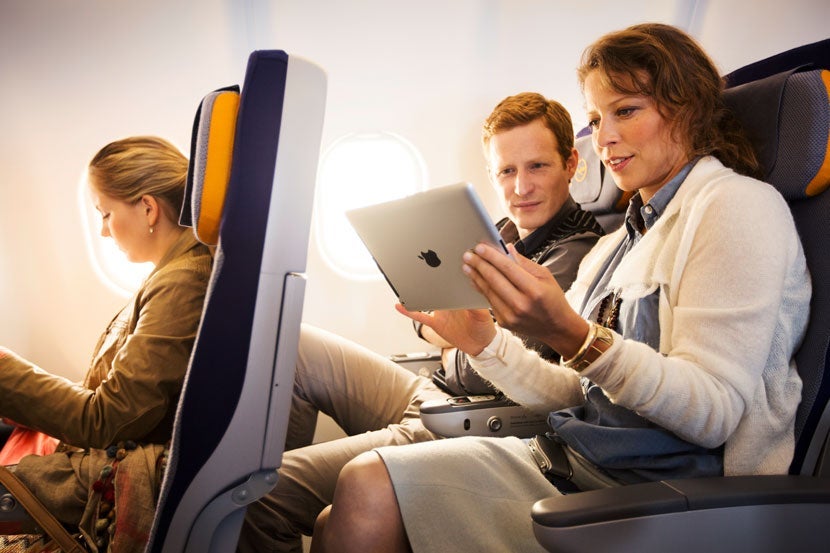
Although there are many benefits to using having passengers stream IFE via their personal devices, there are concerns, namely regarding compatibility and security. When United began offering streaming IFE options for passengers, programs were only offered for laptop computers and those with Apple devices. Only in late 2014 were Android devices eventually added to the list despite Androids being the most popular smartphones at the time. Then there's the potential for hacking. In December 2016, technology security firm IOActive discovered vulnerabilities in Panasonic Avionics' IFE systems ranging from credit card authorizations to frequent flyer information. Panasonic was immediately notified so the flaws could be patched.
Still, it seems the future belongs to streaming systems. The seat-back screen will be a sacrifice to convenience and cost savings for airlines, something that will be done in the name of improving the overall passenger experience.
TPG featured card

at American Express's secure site
Terms & restrictions apply. See rates & fees.
| 4X | Earn 4X Membership Rewards® points per dollar spent on purchases at restaurants worldwide, on up to $50,000 in purchases per calendar year, then 1X points for the rest of the year. |
| 4X | Earn 4X Membership Rewards® points per dollar spent at US supermarkets, on up to $25,000 in purchases per calendar year, then 1X points for the rest of the year. |
| 5X | Earn 5X Membership Rewards® points on prepaid hotel stays booked through AmexTravel.com or the Amex Travel App™. |
| 3X | Earn 3X Membership Rewards® points on flights booked through AmexTravel.com, the Amex Travel App™, or purchased directly from airlines. |
| 2X | Earn 2X Membership Rewards® points on prepaid car rentals booked through AmexTravel.com or the Amex Travel App™ and cruises booked and paid through AmexTravel.com. |
| 1X | Earn 1X Membership Rewards® point per dollar spent on all other eligible purchases. |
Pros
- Valuable dining and food-related credits
- Flexible rewards with airline and hotel transfer partners
- Multiple travel and purchase protections
- No foreign transaction fees
- Access to Amex Offers for additional savings (enrollment required)
Cons
- Not as useful for those living outside the U.S.
- Some may have trouble using Uber and other dining credits
- You may be eligible for as high as 100,000 Membership Rewards® Points after you spend $8,000 in eligible purchases on your new Card in your first 6 months of Card Membership. Welcome offers vary and you may not be eligible for an offer. Apply to know if you’re approved and find out your exact welcome offer amount – all with no credit score impact. If you’re approved and choose to accept the Card, your score may be impacted.
- Earn 4X Membership Rewards® points per dollar spent on purchases at restaurants worldwide, on up to $50,000 in purchases per calendar year, then 1X points for the rest of the year.
- Earn 4X Membership Rewards® points per dollar spent at US supermarkets, on up to $25,000 in purchases per calendar year, then 1X points for the rest of the year.
- Earn 5X Membership Rewards® points on prepaid hotel stays booked through AmexTravel.com or the Amex Travel App™.
- Earn 3X Membership Rewards® points on flights booked through AmexTravel.com, the Amex Travel App™, or purchased directly from airlines.
- Earn 2X Membership Rewards® points on prepaid car rentals booked through AmexTravel.com or the Amex Travel App™ and cruises booked and paid through AmexTravel.com.
- Earn 1X Membership Rewards® point per dollar spent on all other eligible purchases.
- Pay It® lets you tap in the American Express® App to quickly pay for small purchase amounts throughout the month and still earn rewards the way you usually do. Plan It® gives you the option to split up big purchases into equal monthly payments with a fixed fee. You’ll know upfront exactly how much you’ll pay.
- $120 Dining Credit: Earn up to a total of $10 in statement credits monthly when you pay with the Gold Card at Grubhub (including Seamless), Buffalo Wild Wings, Five Guys, The Cheesecake Factory, and Wonder. This can be an annual savings of up to $120. Enrollment required.
- $100 Resy Credit: Get up to $100 in statement credits each calendar year at over 10,000 qualifying U.S. Resy restaurants after you pay for eligible purchases with the American Express® Gold Card. That’s up to $50 in statement credits semi-annually. Enrollment required.
- $84 Dunkin' Credit: Earn up to $7 in monthly statement credits after you pay with the American Express® Gold Card at U.S. Dunkin’ locations. Enrollment required.
- $120 Uber Cash on Gold: Enjoy up to $120 in Uber Cash annually with your Gold Card. Just add your Card to your Uber account and you'll get $10 in Uber Cash each month to use on orders and rides in the U.S. when you select an Amex Card for your transaction.
- Enjoy complimentary Hertz Five Star® Status benefits like skipping the counter at select locations, adding an additional driver at no additional cost*, and vehicle upgrades**. Benefit enrollment and Hertz Gold+ registration are required. *Additional drivers must meet standard rental qualifications and must be a spouse or domestic partner to qualify as complimentary. Other additional drivers subject to fees. **Benefits are subject to availability and vary by location. Additional Hertz program Terms and Conditions including age restrictions apply.
- Book two nights or more with The Hotel Collection through AmexTravel.com or the Amex Travel App™ and receive a $100* credit towards eligible charges at over 1,400 upscale hotels worldwide. *Eligible charges vary by property.
- Book your travel through the Amex Travel App™ with added peace of mind – backed by American Express® service and support. Only for American Express® Card Members.
- Whenever you need us, we're here. Our Member Services team will ensure you are taken care of. From lost Card replacement to statement questions, we are available to help 24/7.
- No Foreign Transaction Fees.
- Annual Fee is $325.
- Terms Apply.