How Does Satellite Wi-Fi Actually Work on Planes?

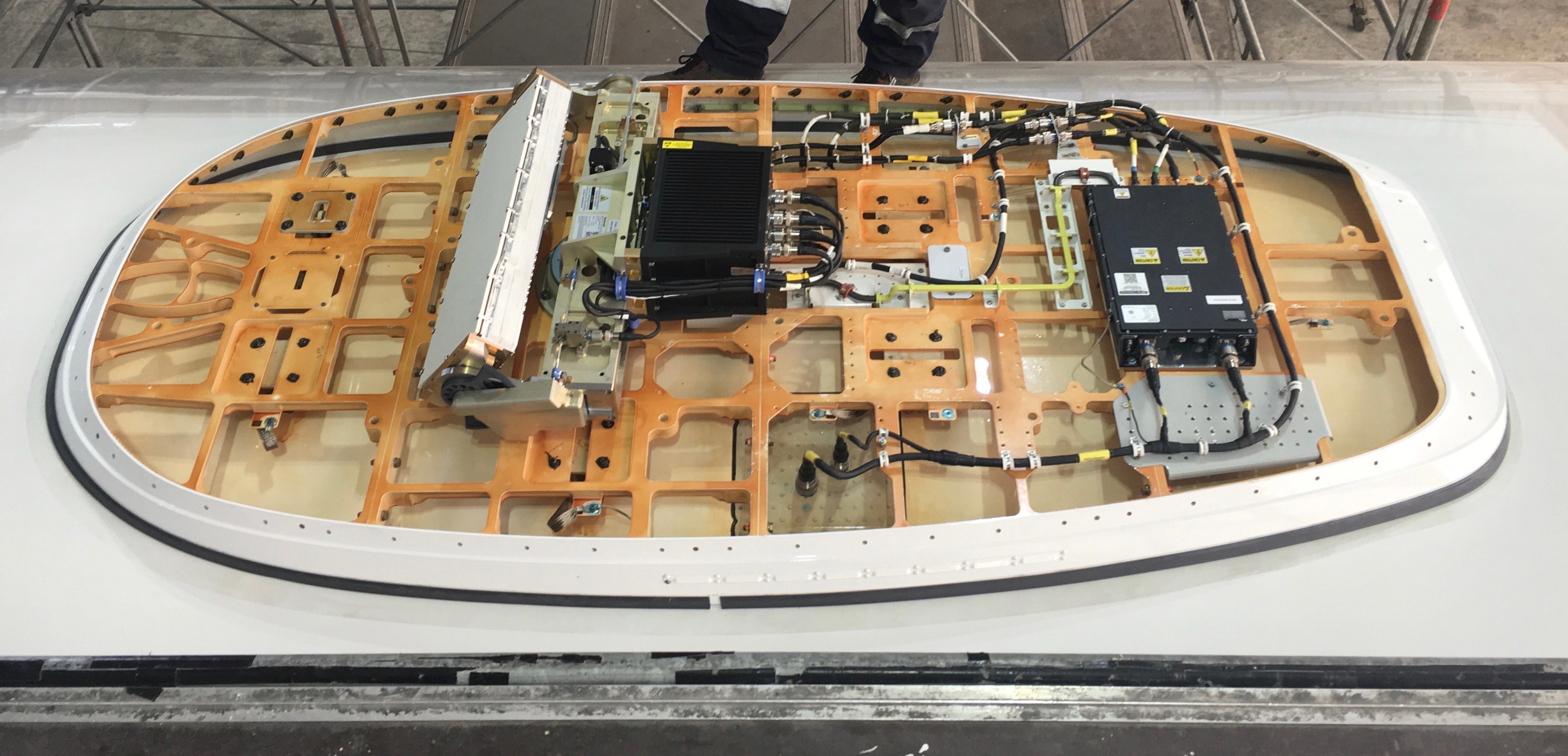
Though Wi-Fi availability is something to which we are now accustomed while flying, our experiences can range vastly in terms of both speed and connection quality, depending on the airline and aircraft type. The way these magic beams reach our laptops, tablets and smartphones is pretty incredible if you break it down and have a chance to look at what's going on over our heads while we hurtle through the air, seven miles above the earth.
I was invited to Malta last week by Lufthansa Technik (LHT) to learn about how it installs Wi-Fi on commercial aircraft. LHT doesn't only work on Lufthansa planes; it actually does work of varying degrees for over 800 airlines around the globe, in 8 countries. Last year over 5,000 employees completed more than 6,000,000 hours of work. One of the many tasks performed at LHT Malta is the installation of Wi-Fi on commercial planes.
Airlines are currently using two primary types of satellite connectivity: Ku-band and Ka-band. The Ku has a slower wavelength frequency, at 12-18GHz, while Ka runs at 26-40 GHz. As a passenger, I don't really have a preference between the two, as long as the service being offered is strong enough to meet my work and entertainment needs. There is also L-band but that's super slow in comparison. Oddly enough, some of the world's top airlines — including Emirates, Etihad and Singapore — use L-band Wi-Fi. It's like using a dial-up modem in 1992.
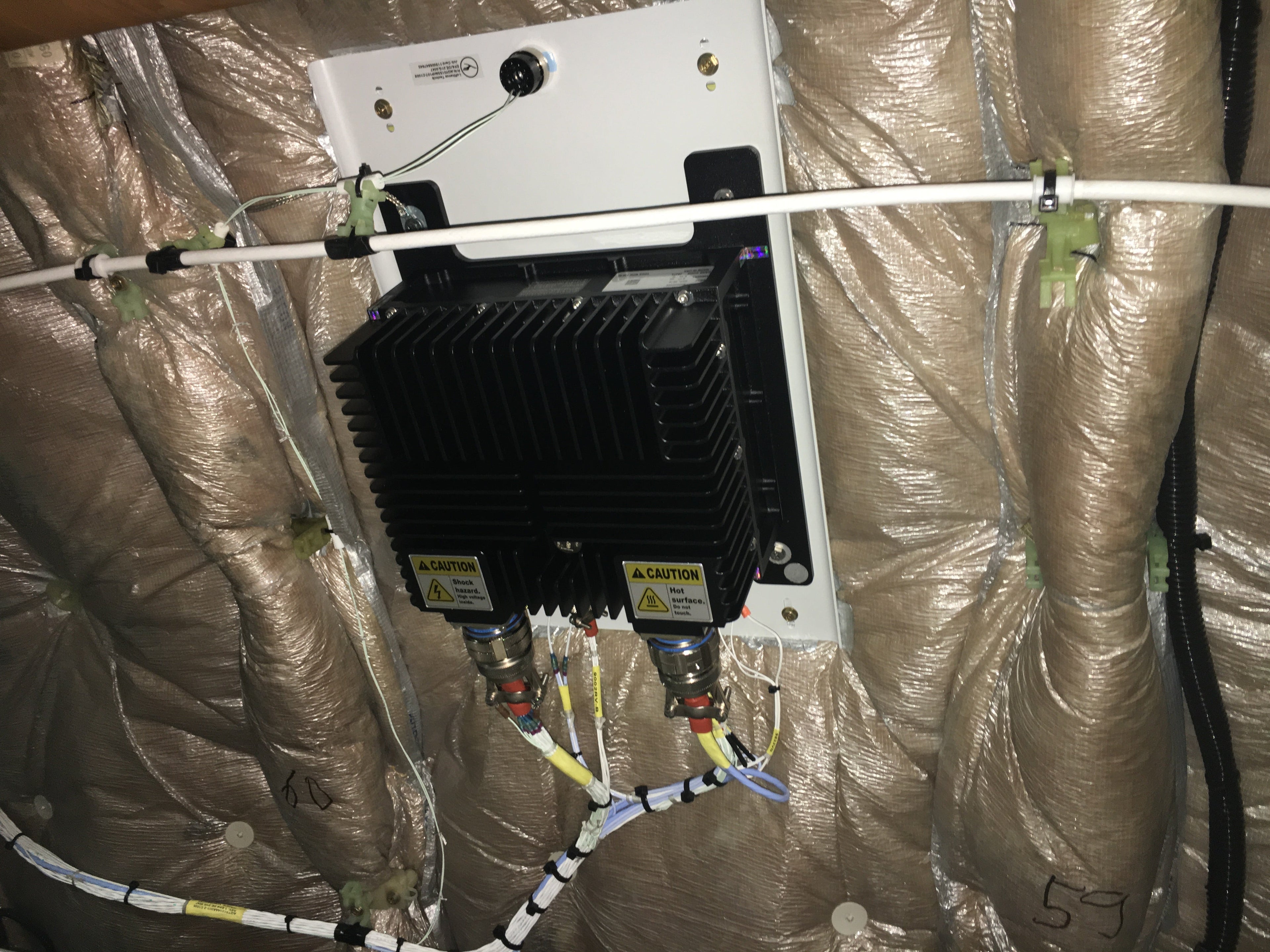
Both satellite Ku and Ka Wi-Fi types work pretty much the same way. First, the antenna on top of the plane links up with the closest satellite in orbit above the plane's path. Some services buy bandwidth from vendors. For example, Gogo gets its bandwidth from SES, IntelSat and AeroSat, who own their own satellites. But ViaSat, which provides Wi-Fi for JetBlue and Virgin America, owns its own satellites. ViaSat is scheduling the launch of its second satellite on April 25 of this year.
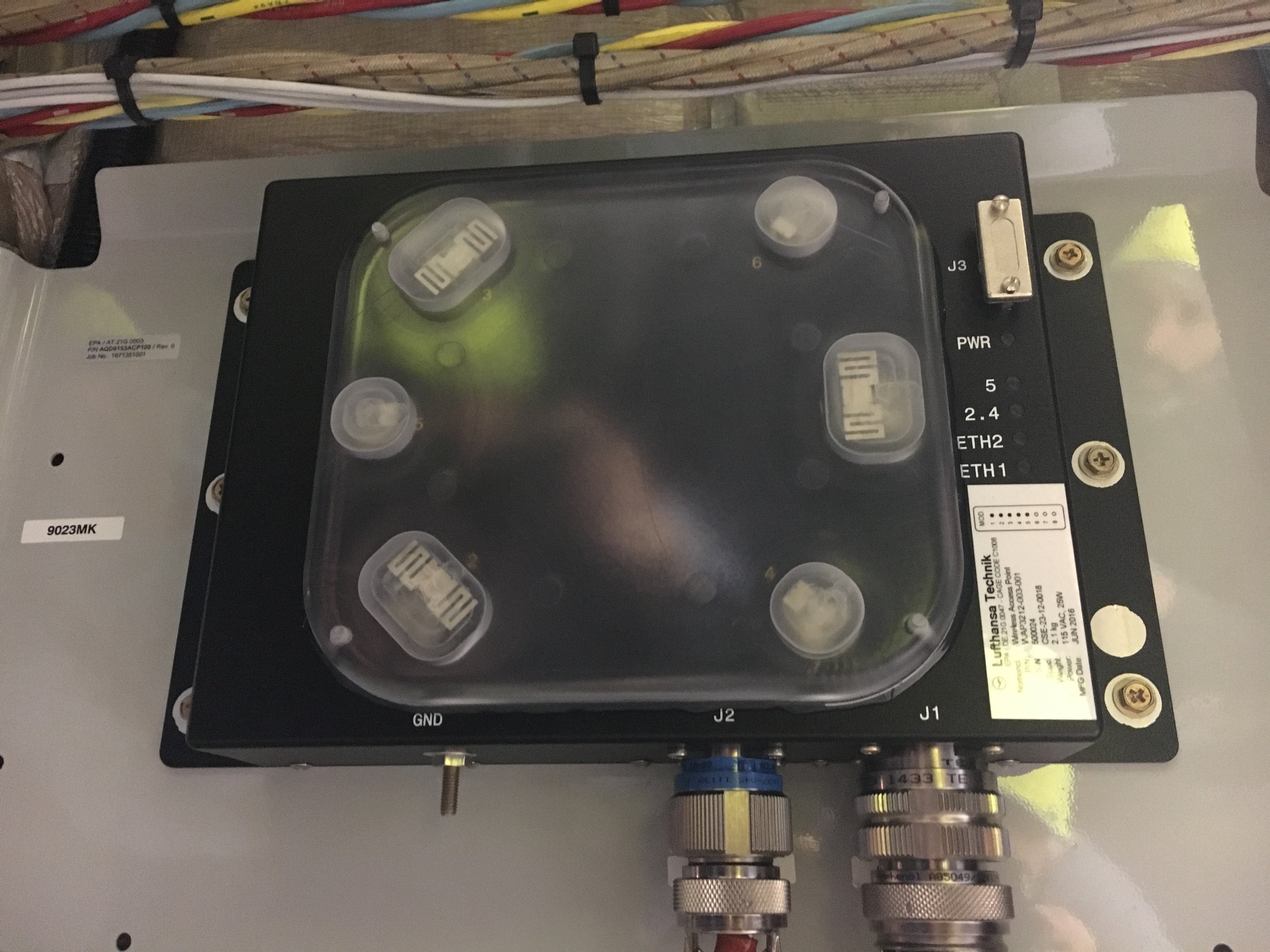
After the plane is connected to the satellite, the signal is then distributed to the Wireless Access Portal (WAP), kind of like the router you have at home for your own Wi-Fi. On airplanes, there needs to be a WAP for about every 50 people. So for the Lufthansa Airbus A321 I witnessed having Inmarsat GX Wi-Fi installed in Malta last week, there would need to be up to four WAPs, because the plane holds 190 people. Based on where you're sitting on the plane, the closest WAP will serve your device.
Later this year, a new Inmarsat network on the S-band frequency is slated to launch and support the European Aviation Network (EAN) over all 28 EU nations. The S-band is faster than L-band, but nowhere close to as fast as Ku or Ka. Inmarsat says it's developed specifically for high-traffic flight paths and busy airport hubs.

In its annual Wi-Fi report, Routehappy says that 79.8% of all US domestic seat miles flown had Wi-Fi available, while only 18.5% of flights outside the US had a full chance of Wi-Fi availability. According to the report, only Virgin America has 100% Wi-Fi availability. Southwest will join that list once its older Boeing 737-300s are phased out on September 30. Delta and United are also very close to hitting that mark.
TPG featured card
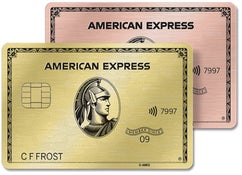
at American Express's secure site
Terms & restrictions apply. See rates & fees.
| 4X | Earn 4X Membership Rewards® points per dollar spent on purchases at restaurants worldwide, on up to $50,000 in purchases per calendar year, then 1X points for the rest of the year. |
| 4X | Earn 4X Membership Rewards® points per dollar spent at US supermarkets, on up to $25,000 in purchases per calendar year, then 1X points for the rest of the year. |
| 5X | Earn 5X Membership Rewards® points on prepaid hotel stays booked through AmexTravel.com or the Amex Travel App™. |
| 3X | Earn 3X Membership Rewards® points on flights booked through AmexTravel.com, the Amex Travel App™, or purchased directly from airlines. |
| 2X | Earn 2X Membership Rewards® points on prepaid car rentals booked through AmexTravel.com or the Amex Travel App™ and cruises booked and paid through AmexTravel.com. |
| 1X | Earn 1X Membership Rewards® point per dollar spent on all other eligible purchases. |
Pros
- Valuable dining and food-related credits
- Flexible rewards with airline and hotel transfer partners
- Multiple travel and purchase protections
- No foreign transaction fees
- Access to Amex Offers for additional savings (enrollment required)
Cons
- Not as useful for those living outside the U.S.
- Some may have trouble using Uber and other dining credits
- You may be eligible for as high as 100,000 Membership Rewards® Points after you spend $8,000 in eligible purchases on your new Card in your first 6 months of Card Membership. Welcome offers vary and you may not be eligible for an offer. Apply to know if you’re approved and find out your exact welcome offer amount – all with no credit score impact. If you’re approved and choose to accept the Card, your score may be impacted.
- Earn 4X Membership Rewards® points per dollar spent on purchases at restaurants worldwide, on up to $50,000 in purchases per calendar year, then 1X points for the rest of the year.
- Earn 4X Membership Rewards® points per dollar spent at US supermarkets, on up to $25,000 in purchases per calendar year, then 1X points for the rest of the year.
- Earn 5X Membership Rewards® points on prepaid hotel stays booked through AmexTravel.com or the Amex Travel App™.
- Earn 3X Membership Rewards® points on flights booked through AmexTravel.com, the Amex Travel App™, or purchased directly from airlines.
- Earn 2X Membership Rewards® points on prepaid car rentals booked through AmexTravel.com or the Amex Travel App™ and cruises booked and paid through AmexTravel.com.
- Earn 1X Membership Rewards® point per dollar spent on all other eligible purchases.
- Pay It® lets you tap in the American Express® App to quickly pay for small purchase amounts throughout the month and still earn rewards the way you usually do. Plan It® gives you the option to split up big purchases into equal monthly payments with a fixed fee. You’ll know upfront exactly how much you’ll pay.
- $120 Dining Credit: Earn up to a total of $10 in statement credits monthly when you pay with the Gold Card at Grubhub (including Seamless), Buffalo Wild Wings, Five Guys, The Cheesecake Factory, and Wonder. This can be an annual savings of up to $120. Enrollment required.
- $100 Resy Credit: Get up to $100 in statement credits each calendar year at over 10,000 qualifying U.S. Resy restaurants after you pay for eligible purchases with the American Express® Gold Card. That’s up to $50 in statement credits semi-annually. Enrollment required.
- $84 Dunkin' Credit: Earn up to $7 in monthly statement credits after you pay with the American Express® Gold Card at U.S. Dunkin’ locations. Enrollment required.
- $120 Uber Cash on Gold: Enjoy up to $120 in Uber Cash annually with your Gold Card. Just add your Card to your Uber account and you'll get $10 in Uber Cash each month to use on orders and rides in the U.S. when you select an Amex Card for your transaction.
- Enjoy complimentary Hertz Five Star® Status benefits like skipping the counter at select locations, adding an additional driver at no additional cost*, and vehicle upgrades**. Benefit enrollment and Hertz Gold+ registration are required. *Additional drivers must meet standard rental qualifications and must be a spouse or domestic partner to qualify as complimentary. Other additional drivers subject to fees. **Benefits are subject to availability and vary by location. Additional Hertz program Terms and Conditions including age restrictions apply.
- Book two nights or more with The Hotel Collection through AmexTravel.com or the Amex Travel App™ and receive a $100* credit towards eligible charges at over 1,400 upscale hotels worldwide. *Eligible charges vary by property.
- Book your travel through the Amex Travel App™ with added peace of mind – backed by American Express® service and support. Only for American Express® Card Members.
- Whenever you need us, we're here. Our Member Services team will ensure you are taken care of. From lost Card replacement to statement questions, we are available to help 24/7.
- No Foreign Transaction Fees.
- Annual Fee is $325.
- Terms Apply.