Do Airline Mergers Cause Fare Hikes Between Hubs?

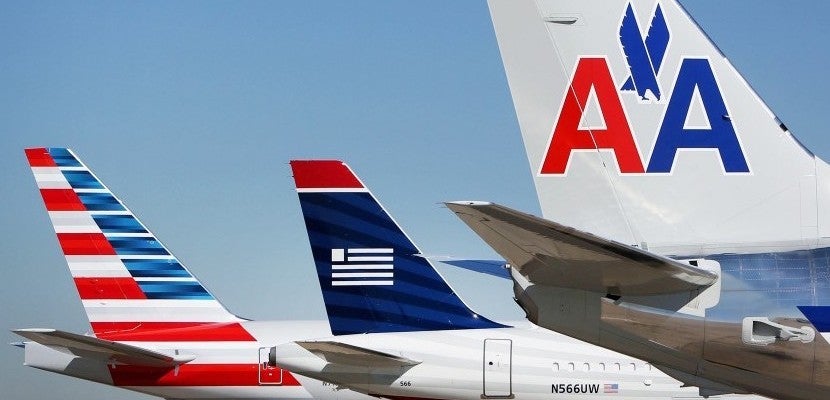
With a handful of high-profile airline mergers occurring over the last several years, many flyers may be wondering what effect they've had on fares — specifically between former hubs due to decreased competition. TPG Contributor JT Genter explores the data below.
The last decade has seen tremendous consolidation among the US-based airlines: Delta merged with Northwest, United with Continental and — most recently — American Airlines merged with US Airways.
The fear among travelers and the Antitrust Division of the US Department of Justice was that these mergers would reduce competition and increase fares. After all, in the six years before these mergers began, dozens of airlines were found to be illegally fixing prices — leading to $1.7 billion in fines. But, the airlines successfully convinced their regulators that these mergers were necessary and wouldn't result in price-gouging the traveling public.
So, how have things ended up?
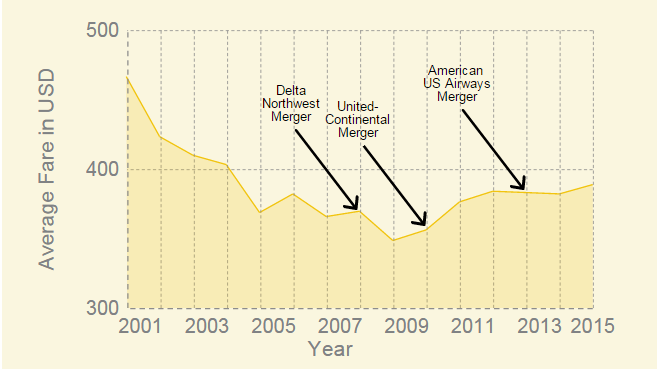
As you can see, there's a bit of a climb in average airfares since the mergers began. However, when you factor in the state of the economy through this time period, there really isn't a meaningful upward trend that could be attributable to the mergers.
Does this conclusion not feel right to your experience? Well, this chart is simply presenting average airfare across the country. As they say, your mileage may vary. If you look at fare changes city by city, there's a lot of variation.
Aviation Guru pulled the average fare data for flights between current and former hubs to study the direct impact of reduced competition. For example, would the consolidation of Delta and Northwest cause average fares to increase between Atlanta (ATL-Delta hub) and Minneapolis (MSP-Northwest hub)?
Increase (decrease) in Delta hub-to-hub fares from 2010-2015. Data complied by Aviation Guru from BTS TranStats
As you can see, hub-to-hub routes greatly increased after the Delta merger was finalized at the end of 2009. On average, these twelve routes increased ~27% from 2010 to 2015. The large outlier is clearly flights between Memphis (MEM) and ATL, which soared nearly 90% from 2010 to 2015. Only one of these twelve routes decreased post-merger: MEM-New York City (JFK).
So, what about the United-Continental merger?

Increase (decrease) in United hub-to-hub fares from 2010-2015. Data complied by Aviation Guru from BTS TranStats
While the merger was approved by regulators and shareholders in 2010, the merger wasn't completed until late 2011. Interestingly, 2010-2012 showed significant fare increases among the hubs — soaring ~28% on average in just two years.
However, once the merger was completed, fares between United and Continental hubs have returned closer to 2010 levels, with the average increase over five years being under 10%. Interestingly, if you use 2011 — instead of 2010 — as the base year, average fares between hubs dropped ~10% on average.
Bottom Line

While airfares haven't dramatically increased nationally after the big three airline mergers of the last decade, there have been some big winners and losers from the airline mergers.
On average, airfares between former Delta and Northwest hubs increased substantially — much more than the national average — demonstrating that the Delta-Northwest merger wasn't good for hub-based flyers.
However, airfares between United and Continental hubs have seen much more modest increases over the last five years, and the fares have actually decreased on average over the last four years.
For much more detailed analysis, check out the articles on this topic on Aviation Guru:
1. Did the US Airline Industry Consolidation Result in Higher Fares?
2. Delta-Northwest Merger and its Impact on Hub-to-Hub Fares
3. United-Continental Merger and its Impact on Hub-to-Hub Fares
Did you feel the pinch of increasing fares due to an airline merger?
TPG featured card

at American Express's secure site
Terms & restrictions apply. See rates & fees.
| 4X | Earn 4X Membership Rewards® points per dollar spent on purchases at restaurants worldwide, on up to $50,000 in purchases per calendar year, then 1X points for the rest of the year. |
| 4X | Earn 4X Membership Rewards® points per dollar spent at US supermarkets, on up to $25,000 in purchases per calendar year, then 1X points for the rest of the year. |
| 5X | Earn 5X Membership Rewards® points on prepaid hotel stays booked through AmexTravel.com or the Amex Travel App™. |
| 3X | Earn 3X Membership Rewards® points on flights booked through AmexTravel.com, the Amex Travel App™, or purchased directly from airlines. |
| 2X | Earn 2X Membership Rewards® points on prepaid car rentals booked through AmexTravel.com or the Amex Travel App™ and cruises booked and paid through AmexTravel.com. |
| 1X | Earn 1X Membership Rewards® point per dollar spent on all other eligible purchases. |
Pros
- Valuable dining and food-related credits
- Flexible rewards with airline and hotel transfer partners
- Multiple travel and purchase protections
- No foreign transaction fees
- Access to Amex Offers for additional savings (enrollment required)
Cons
- Not as useful for those living outside the U.S.
- Some may have trouble using Uber and other dining credits
- You may be eligible for as high as 100,000 Membership Rewards® Points after you spend $8,000 in eligible purchases on your new Card in your first 6 months of Card Membership. Welcome offers vary and you may not be eligible for an offer. Apply to know if you’re approved and find out your exact welcome offer amount – all with no credit score impact. If you’re approved and choose to accept the Card, your score may be impacted.
- Earn 4X Membership Rewards® points per dollar spent on purchases at restaurants worldwide, on up to $50,000 in purchases per calendar year, then 1X points for the rest of the year.
- Earn 4X Membership Rewards® points per dollar spent at US supermarkets, on up to $25,000 in purchases per calendar year, then 1X points for the rest of the year.
- Earn 5X Membership Rewards® points on prepaid hotel stays booked through AmexTravel.com or the Amex Travel App™.
- Earn 3X Membership Rewards® points on flights booked through AmexTravel.com, the Amex Travel App™, or purchased directly from airlines.
- Earn 2X Membership Rewards® points on prepaid car rentals booked through AmexTravel.com or the Amex Travel App™ and cruises booked and paid through AmexTravel.com.
- Earn 1X Membership Rewards® point per dollar spent on all other eligible purchases.
- Pay It® lets you tap in the American Express® App to quickly pay for small purchase amounts throughout the month and still earn rewards the way you usually do. Plan It® gives you the option to split up big purchases into equal monthly payments with a fixed fee. You’ll know upfront exactly how much you’ll pay.
- $120 Dining Credit: Earn up to a total of $10 in statement credits monthly when you pay with the Gold Card at Grubhub (including Seamless), Buffalo Wild Wings, Five Guys, The Cheesecake Factory, and Wonder. This can be an annual savings of up to $120. Enrollment required.
- $100 Resy Credit: Get up to $100 in statement credits each calendar year at over 10,000 qualifying U.S. Resy restaurants after you pay for eligible purchases with the American Express® Gold Card. That’s up to $50 in statement credits semi-annually. Enrollment required.
- $84 Dunkin' Credit: Earn up to $7 in monthly statement credits after you pay with the American Express® Gold Card at U.S. Dunkin’ locations. Enrollment required.
- $120 Uber Cash on Gold: Enjoy up to $120 in Uber Cash annually with your Gold Card. Just add your Card to your Uber account and you'll get $10 in Uber Cash each month to use on orders and rides in the U.S. when you select an Amex Card for your transaction.
- Enjoy complimentary Hertz Five Star® Status benefits like skipping the counter at select locations, adding an additional driver at no additional cost*, and vehicle upgrades**. Benefit enrollment and Hertz Gold+ registration are required. *Additional drivers must meet standard rental qualifications and must be a spouse or domestic partner to qualify as complimentary. Other additional drivers subject to fees. **Benefits are subject to availability and vary by location. Additional Hertz program Terms and Conditions including age restrictions apply.
- Book two nights or more with The Hotel Collection through AmexTravel.com or the Amex Travel App™ and receive a $100* credit towards eligible charges at over 1,400 upscale hotels worldwide. *Eligible charges vary by property.
- Book your travel through the Amex Travel App™ with added peace of mind – backed by American Express® service and support. Only for American Express® Card Members.
- Whenever you need us, we're here. Our Member Services team will ensure you are taken care of. From lost Card replacement to statement questions, we are available to help 24/7.
- No Foreign Transaction Fees.
- Annual Fee is $325.
- Terms Apply.