Dynamic currency conversion: What it is and why you should avoid it


Editor's Note
You're visiting another country and making a purchase with your credit card. Then, the credit card terminal asks if you'd like to pay in U.S. dollars or in the local currency.
This might sound like a convenient way to avoid foreign transaction fees, but it's not. Here's why: The exchange rate offered here ranges from bad to awful, and you may still pay a foreign transaction fee (if your credit card has one) since some credit card issuers base these fees on where the transaction takes place — not the currency you chose for your transaction.
This option for paying in your home currency is called dynamic currency conversion, and it can lead to hefty fees plus overpaying for your purchases. Here's how to avoid dynamic currency conversion.
How dynamic currency conversion works
Dynamic currency conversion, aka DCC, is sometimes called "cardholder preferred currency" or CPC. Whichever name you use, the idea is the same: cardholders can pay in their home or local currency when using a credit or debit card while visiting another country.
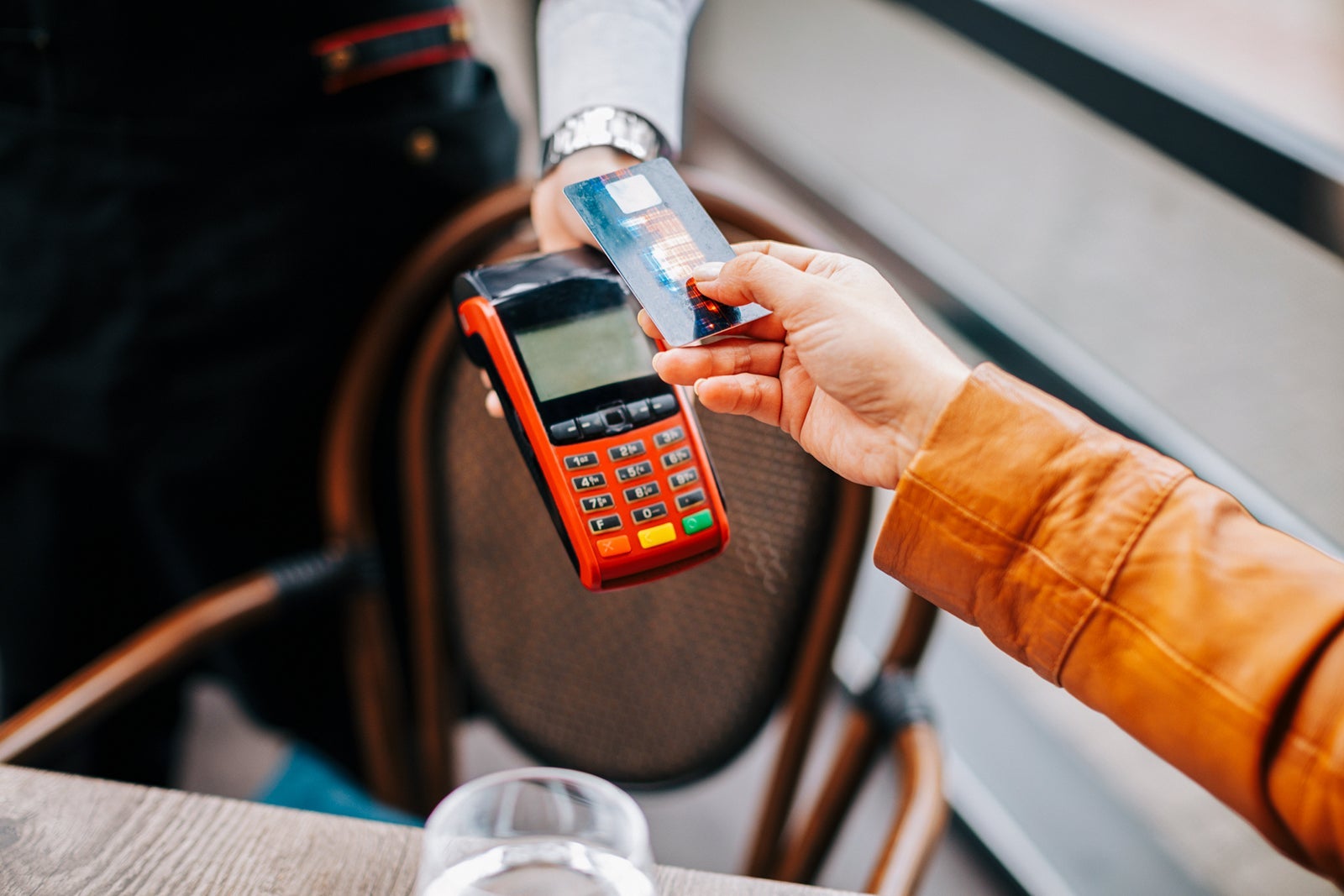
When you present your card to pay, the payment terminal may display two options: a price in the local currency and a different price in your home currency.
The price in your home currency has been converted automatically due to DCC. Unfortunately, these rates are not ideal. DCC pricing typically includes fees and profit margins for the merchant because it provides this currency exchange service.
Conversely, if you pay in the local currency, your bank will convert the charge at the most favorable conversion rates for you, billing you in your home currency — U.S. dollars, in this case. This is the one you should choose.

In short, it works similarly to currency exchange booths. You get the convenience of paying in your home currency, and they make a profit through not-perfect exchange rates. Think of DCC as an exchange fee.
DCC service providers are supposed to notify you that fees and markups are involved (such as this sample advice for merchants). Unfortunately, this isn't always the case.

DCC works the same with credit and debit card payments as it does when taking money out of an ATM. In most cases, you'll lose 3%-5% during the conversion. And, if your card has a foreign transaction fee or foreign ATM fee, you'll stand to lose another 3%-5% from that fee, as well.
Related: I fell for dynamic currency conversion — reader mistake story
How to avoid dynamic currency conversion
Avoiding DCC is simple enough: choose to pay in the local currency. While this can make you apprehensive, as you may feel unsure exactly how much you're paying, there are better solutions than overpaying for your items in the name of convenience.
When it's time to pay, you can use a currency conversion app on your phone to see the cost of your items in your home currency. In this way, you can clearly understand the price without accepting DCC.
Other ways to avoid fees
Dynamic currency conversion is just one of the myriad fees you can encounter when using your credit cards. It's important to avoid as many of them as possible.

Be sure to use a credit card without foreign transaction fees when traveling outside the U.S. You don't want to pay an extra 3% (typical fee) on top of the price for each purchase.
Similarly, use a checking account that doesn't assess fees for taking money out of a foreign ATM — or any ATM, for that matter.
Lastly, when you get home, pay off everything you purchased during your trip. Paying your credit card bills in full helps you avoid interest and is better for your credit score. Not doing so makes everything you bought on your trip more expensive.
Related: How to choose a no-foreign-transaction-fee credit card
Bottom line
Convenience is great. In many aspects of life, we're willing to pay extra for it: having your food delivered (instead of picking it up), faster delivery of items you ordered online, etc.
However, paying extra for items because you see the price in your home currency isn't worth it. Using an app to show you the price, then paying in the local currency, can lead to big savings. Don't fall for dynamic currency conversion, which is nothing but an unnecessary fee disguised as "convenience."
TPG featured card
at American Express's secure site
Terms & restrictions apply. See rates & fees.
| 4X | Earn 4X Membership Rewards® points per dollar spent on purchases at restaurants worldwide, on up to $50,000 in purchases per calendar year, then 1X points for the rest of the year. |
| 4X | Earn 4X Membership Rewards® points per dollar spent at US supermarkets, on up to $25,000 in purchases per calendar year, then 1X points for the rest of the year. |
| 5X | Earn 5X Membership Rewards® points on prepaid hotel stays booked through AmexTravel.com or the Amex Travel App™. |
| 3X | Earn 3X Membership Rewards® points on flights booked through AmexTravel.com, the Amex Travel App™, or purchased directly from airlines. |
| 2X | Earn 2X Membership Rewards® points on prepaid car rentals booked through AmexTravel.com or the Amex Travel App™ and cruises booked and paid through AmexTravel.com. |
| 1X | Earn 1X Membership Rewards® point per dollar spent on all other eligible purchases. |
Pros
- Valuable dining and food-related credits
- Flexible rewards with airline and hotel transfer partners
- Multiple travel and purchase protections
- No foreign transaction fees
- Access to Amex Offers for additional savings (enrollment required)
Cons
- Not as useful for those living outside the U.S.
- Some may have trouble using Uber and other dining credits
- You may be eligible for as high as 100,000 Membership Rewards® Points after you spend $8,000 in eligible purchases on your new Card in your first 6 months of Card Membership. Welcome offers vary and you may not be eligible for an offer. Apply to know if you’re approved and find out your exact welcome offer amount – all with no credit score impact. If you’re approved and choose to accept the Card, your score may be impacted.
- Earn 4X Membership Rewards® points per dollar spent on purchases at restaurants worldwide, on up to $50,000 in purchases per calendar year, then 1X points for the rest of the year.
- Earn 4X Membership Rewards® points per dollar spent at US supermarkets, on up to $25,000 in purchases per calendar year, then 1X points for the rest of the year.
- Earn 5X Membership Rewards® points on prepaid hotel stays booked through AmexTravel.com or the Amex Travel App™.
- Earn 3X Membership Rewards® points on flights booked through AmexTravel.com, the Amex Travel App™, or purchased directly from airlines.
- Earn 2X Membership Rewards® points on prepaid car rentals booked through AmexTravel.com or the Amex Travel App™ and cruises booked and paid through AmexTravel.com.
- Earn 1X Membership Rewards® point per dollar spent on all other eligible purchases.
- Pay It® lets you tap in the American Express® App to quickly pay for small purchase amounts throughout the month and still earn rewards the way you usually do. Plan It® gives you the option to split up big purchases into equal monthly payments with a fixed fee. You’ll know upfront exactly how much you’ll pay.
- $120 Dining Credit: Earn up to a total of $10 in statement credits monthly when you pay with the Gold Card at Grubhub (including Seamless), Buffalo Wild Wings, Five Guys, The Cheesecake Factory, and Wonder. This can be an annual savings of up to $120. Enrollment required.
- $100 Resy Credit: Get up to $100 in statement credits each calendar year at over 10,000 qualifying U.S. Resy restaurants after you pay for eligible purchases with the American Express® Gold Card. That’s up to $50 in statement credits semi-annually. Enrollment required.
- $84 Dunkin' Credit: Earn up to $7 in monthly statement credits after you pay with the American Express® Gold Card at U.S. Dunkin’ locations. Enrollment required.
- $120 Uber Cash on Gold: Enjoy up to $120 in Uber Cash annually with your Gold Card. Just add your Card to your Uber account and you'll get $10 in Uber Cash each month to use on orders and rides in the U.S. when you select an Amex Card for your transaction.
- Enjoy complimentary Hertz Five Star® Status benefits like skipping the counter at select locations, adding an additional driver at no additional cost*, and vehicle upgrades**. Benefit enrollment and Hertz Gold+ registration are required. *Additional drivers must meet standard rental qualifications and must be a spouse or domestic partner to qualify as complimentary. Other additional drivers subject to fees. **Benefits are subject to availability and vary by location. Additional Hertz program Terms and Conditions including age restrictions apply.
- Book two nights or more with The Hotel Collection through AmexTravel.com or the Amex Travel App™ and receive a $100* credit towards eligible charges at over 1,400 upscale hotels worldwide. *Eligible charges vary by property.
- Book your travel through the Amex Travel App™ with added peace of mind – backed by American Express® service and support. Only for American Express® Card Members.
- Whenever you need us, we're here. Our Member Services team will ensure you are taken care of. From lost Card replacement to statement questions, we are available to help 24/7.
- No Foreign Transaction Fees.
- Annual Fee is $325.
- Terms Apply.