United CEO Jeff Smisek Q&A At Star Megado

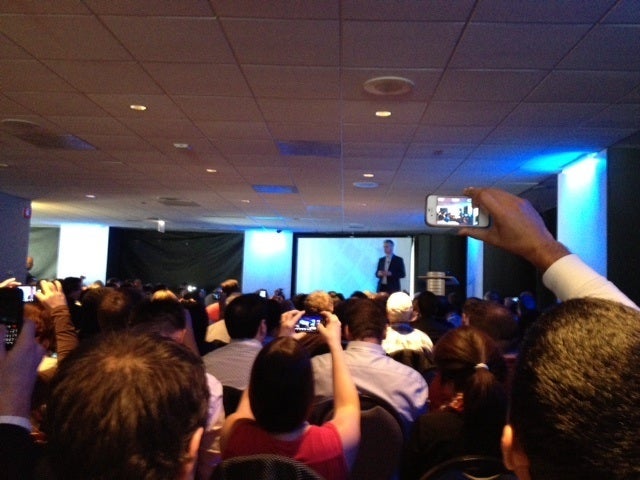
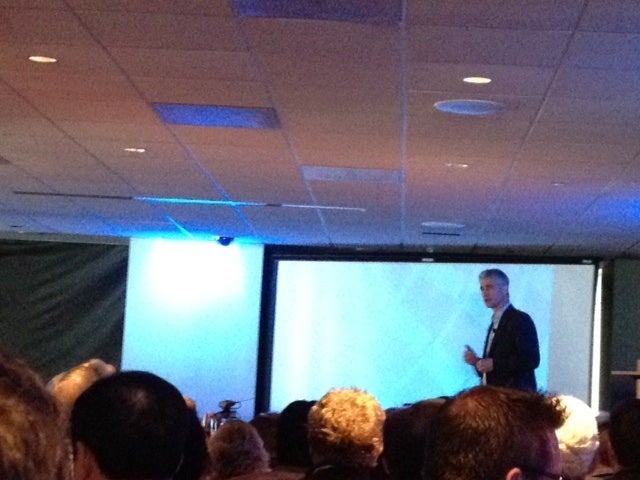
After all the jetsetting and antics on two continents, Star Megado 4 culminated with a Q&A session with United CEO Jeff Smisek on the 99th floor of Chicago's Willis Tower. You might recognize him from the promotional spots they screen before the safety videos on all United flights – but it turns out the guy has a good sense of humor, and after a little light ribbing, he answered some pre-screened questions as well as a few live ones. I took some notes during the session and below you'll find the general notes on what he had to say.
Were there any revelations? Not really, but it was still good to see an airline CEO interacting with everyday flyers, especially those as invested in the airline experience as Megadoers.
Here's how he began the session:
I didn't film the whole session, so here are some notes on what else he had to say.
Now that United has Boeing 787's, are there going to be new long-haul markets?
Jeff Smisek: Yes, but I can't tell you exactly what they are yet. The 787 is designed for really long-haul flights thanks to better cabin pressurization, humidity and higher oxygen levels. It was designed to fly out of global gateways both on new routes and to replace higher-volume 777's on seasonal routes. United only has 2 out of a total order of 50 (and potentially more) so far, so the plans for the new aircraft are still dynamic. As it is, United can fly to over 370 destinations, but it will be expanding thanks in part to the new airplanes' fuel efficiency and reliability.
What steps is United taking to bring together 2 very different cultures…ie Continental and United?
Jeff Smisek: Patience. It takes a long time to bring together cultures – so many things need to be brought together including work groups like unions that require new negotiations and terms. The key is to make sure we really mean it when we say we want to make it great place to work, we want to work together, and we want to have a successful culture. I've done over 60 CEO exchanges with workers this year, and the other board members and I always talk to crews when we fly. We're not there yet, but we're making progress.
Seriously, why SHARES? (This is the website system United uses)

Jeff Smisek: There were many reasons we chose SHARES – it was important strategically to have the intellectual property, website functionality and controls, loyalty program integration and more. Continental spent a lot of time and money and built a lot of applications and functionality off of SHARES – it can go to the market and price our products more effectively and competitively. That said, we didn't have the front-end of the user experience built in the time we needed to migrate passenger service over to the new system or to train our agents. However, we've designed 2 big apps for customers that we'll be beta-testing next month – a new booking process with a responsive design and easy-to use point and click technology. It was important to get all our operations onto one web site during the merger and we couldn't wait for the front-end technology to catch up, but we're doing it now.
What are doing to improve flight on-time reliability?
Jeff Smisek: We're very focused on operations now, especially after the horrible summer we had. A portion of fleet is under-invested – that's happens when you go bankrupt. We have some catch-up work and inventory work to do and some preventative maintenance. All of that will bring up reliability for the existing fleet, as will our new orders including those 50 Boeing 787's and 25 A350's. We are spending a lot of money, and one of the purposes of the merger was to create long-term profitability and the sustainability of our fleet.
How much longer until we begin seeing WiFi on board?
Jeff Smisek: It's true, we're late to WiFi party, but ultimately that will be to our benefit. We will install all-new satellite broadband WiFi on our fleet, so passengers can be in touch anywhere in world except China and some polar routes. Doing so will also dramatically improve customer service since our customer service can be in touch live with passengers on an airplane – for instance if they need to change something about the in-flight experience, notify them of any upcoming issues such as missing luggage, communicate better with crews, and provide both better business and entertainment options. We will own the broadband itself and the portal, and can control sites, advertising, etc. to make it a better experience for the customers. In terms of numbers, we'll have 300 airplanes done by end of next year – we're working on the A319's now and then the Boeing 747's, and then we'll push to finish off the rest as quickly as possible. The 787 does not have WiFi and it's harder to install on those because of the aircraft's structure, but Boeing is working to certify the plane for WiFi.
Does social media influence United's decisions?
Jeff Smisek: Of course. The world has evolved to a point where social media is very important – in both good and bad ways. There is now an expectation of immediacy and responsiveness, as well as changing the way word gets out. It's a more and more important aspect of society, so of course we're listening.
Why sell upgrades for tens of dollars even when Premier members haven't been upgraded? (This was a major Megadoer complaint, especially by uber-elites who watch as non-elite customers can buy upgrades on the cheap instead of having their own elite upgrades clear.)
Jeff Smisek: It's good for you when we make money – you need us to be profitable so we can provide the best experience. Airline consolidation is a good thing and helps stabilize an industry that has wild fluctuations. What you want is reliability, breadth of network, new product and technology. We can't deliver those things in a fractured, bankrupt industry. That's why we need a balance between Premier upgrades and paid upgrades. We need to be able to sell some of those seats up front to be profitable – we need to continue to bring cash in the door.
Do you think the current 10 hubs are the right answer for United?
Jeff Smisek: I cannot guarantee the existence of a hub because each hub has to continue justifying its existence with the traffic. We have very powerful hubs because they do very well for us and we continue to invest in them. I think it's unlikely we would develop a new hub because it is such an expensive and risky proposition. Right now, our we have ringed the country with some very strong hubs – Los Angeles, San Francisco, Houston, Chicago, Newark and Washington. Those are our gateways to the rest of the world – we can fly anywhere out of those and it's a strong position for us. Could levels of flying in an individual hub change? Absolutely, but we make sure each does as well as possible and maximize those profits by supporting our people there. Ultimately we decide based on economics of it.
What are you doing to fix boarding process?
Jeff Smisek: No question, it needs some work, but we will be making further changes. What you want is efficiency and recognizing your best customers by giving them advantageous boarding while still accommodating the other flyers – however, we have lots of tiers of elites, and they expect to be treated preferentially. We brought some of this mess on ourselves by charging for checked bags, so we incentivized everyone to bring the kitchen sink onboard with them in their carry on, which slows the boarding process. But airplanes don't make money sitting on the ground. We have to get them in air, so you'll see some changes. We don't have it down right yet, but we'll be making changes in procedures and in terms of physical changes at airports.
Are you worried about an American Airlines-US Airways merger?
Jeff Smisek: No. I believe airline consolidation both globally and in US is an unalloyed good for airlines and customers. Too long this industry has been fractured and in disarray, with continual bankruptcies and loyalty issues. All of those are concerns. From United's perspective, we would lose US Airways in Star Alliance, and that would hurt us. On the positive side, we'd have more consolidation and I personally believe that the benefits would outweigh the cost of losing US Airways as a partner. After going through a merger myself, though, I can say that I would enjoy watching that.
Then we came to the live Q&A portion, which was quick with only a couple exchanges. Most were pretty specific to each particular person's interests, but here was one that affects us all.
United is in Star Alliance – so why do some members like Singapore and Lufthansa not free up some of their premium products for awards for United flyers when their customers get full access to United inventory?
Jeff Smisek: Alliances are complicated and involve bilateral agreements between pairs of airlines, but not everyone has the same deals within an alliance. It's confusing for customers. We try to make alliances as seamless as we can, but we're not always successful. For example, different carriers have different lounge networks, so there can be issues with reciprocity. Lufthansa is one of our closest partners, and Singapore is another premier carrier we work very closely with. But their inventory and needs are different from ours and that can create issues for our passengers and awards.
For those of you who want to see the whole session, you can check out the full video from Milepoint TV here.
If you had been there and had the chance to ask Jeff Smisek a question, what would it have been?
[card card-name='Ink Plus® Business Credit Card' card-id='22129636' type='javascript' bullet-id='1']
TPG featured card
at American Express's secure site
Terms & restrictions apply. See rates & fees.
| 4X | Earn 4X Membership Rewards® points per dollar spent on purchases at restaurants worldwide, on up to $50,000 in purchases per calendar year, then 1X points for the rest of the year. |
| 4X | Earn 4X Membership Rewards® points per dollar spent at US supermarkets, on up to $25,000 in purchases per calendar year, then 1X points for the rest of the year. |
| 5X | Earn 5X Membership Rewards® points on prepaid hotel stays booked through AmexTravel.com or the Amex Travel App™. |
| 3X | Earn 3X Membership Rewards® points on flights booked through AmexTravel.com, the Amex Travel App™, or purchased directly from airlines. |
| 2X | Earn 2X Membership Rewards® points on prepaid car rentals booked through AmexTravel.com or the Amex Travel App™ and cruises booked and paid through AmexTravel.com. |
| 1X | Earn 1X Membership Rewards® point per dollar spent on all other eligible purchases. |
Pros
- Valuable dining and food-related credits
- Flexible rewards with airline and hotel transfer partners
- Multiple travel and purchase protections
- No foreign transaction fees
- Access to Amex Offers for additional savings (enrollment required)
Cons
- Not as useful for those living outside the U.S.
- Some may have trouble using Uber and other dining credits
- You may be eligible for as high as 100,000 Membership Rewards® Points after you spend $8,000 in eligible purchases on your new Card in your first 6 months of Card Membership. Welcome offers vary and you may not be eligible for an offer. Apply to know if you’re approved and find out your exact welcome offer amount – all with no credit score impact. If you’re approved and choose to accept the Card, your score may be impacted.
- Earn 4X Membership Rewards® points per dollar spent on purchases at restaurants worldwide, on up to $50,000 in purchases per calendar year, then 1X points for the rest of the year.
- Earn 4X Membership Rewards® points per dollar spent at US supermarkets, on up to $25,000 in purchases per calendar year, then 1X points for the rest of the year.
- Earn 5X Membership Rewards® points on prepaid hotel stays booked through AmexTravel.com or the Amex Travel App™.
- Earn 3X Membership Rewards® points on flights booked through AmexTravel.com, the Amex Travel App™, or purchased directly from airlines.
- Earn 2X Membership Rewards® points on prepaid car rentals booked through AmexTravel.com or the Amex Travel App™ and cruises booked and paid through AmexTravel.com.
- Earn 1X Membership Rewards® point per dollar spent on all other eligible purchases.
- Pay It® lets you tap in the American Express® App to quickly pay for small purchase amounts throughout the month and still earn rewards the way you usually do. Plan It® gives you the option to split up big purchases into equal monthly payments with a fixed fee. You’ll know upfront exactly how much you’ll pay.
- $120 Dining Credit: Earn up to a total of $10 in statement credits monthly when you pay with the Gold Card at Grubhub (including Seamless), Buffalo Wild Wings, Five Guys, The Cheesecake Factory, and Wonder. This can be an annual savings of up to $120. Enrollment required.
- $100 Resy Credit: Get up to $100 in statement credits each calendar year at over 10,000 qualifying U.S. Resy restaurants after you pay for eligible purchases with the American Express® Gold Card. That’s up to $50 in statement credits semi-annually. Enrollment required.
- $84 Dunkin' Credit: Earn up to $7 in monthly statement credits after you pay with the American Express® Gold Card at U.S. Dunkin’ locations. Enrollment required.
- $120 Uber Cash on Gold: Enjoy up to $120 in Uber Cash annually with your Gold Card. Just add your Card to your Uber account and you'll get $10 in Uber Cash each month to use on orders and rides in the U.S. when you select an Amex Card for your transaction.
- Enjoy complimentary Hertz Five Star® Status benefits like skipping the counter at select locations, adding an additional driver at no additional cost*, and vehicle upgrades**. Benefit enrollment and Hertz Gold+ registration are required. *Additional drivers must meet standard rental qualifications and must be a spouse or domestic partner to qualify as complimentary. Other additional drivers subject to fees. **Benefits are subject to availability and vary by location. Additional Hertz program Terms and Conditions including age restrictions apply.
- Book two nights or more with The Hotel Collection through AmexTravel.com or the Amex Travel App™ and receive a $100* credit towards eligible charges at over 1,400 upscale hotels worldwide. *Eligible charges vary by property.
- Book your travel through the Amex Travel App™ with added peace of mind – backed by American Express® service and support. Only for American Express® Card Members.
- Whenever you need us, we're here. Our Member Services team will ensure you are taken care of. From lost Card replacement to statement questions, we are available to help 24/7.
- No Foreign Transaction Fees.
- Annual Fee is $325.
- Terms Apply.