Summer Hull has been covering (and using) travel tips, rewards credit cards and loyalty programs for over a decade. She has flown close to a million miles, often on points and miles and with her family in tow.
Melanie is currently the managing editor for global features at TPG, where she oversees daily travel and lifestyle news, destination coverage, travel features and reports. Prior to TPG, Melanie was an editor at Travel + Leisure magazine, and her work has appeared in Bloomberg Pursuits, Yahoo Travel, Jetsetter, Boston Common magazine, Luxe City Guides, Thrillist and Saveur magazine, among others. She has been recognized for her journalism, poetry, prose and playwriting in various competitions and festivals, and has been featured as a travel expert by notable outlets across radio, podcasts, in print and on television, including "Good Morning America," MSNBC, Fox Business and The Weather Channel.
also contributed to this story
November 5, 2020 • 13 min read
The cards we feature here are from partners who compensate us when you are approved through our site, and this may impact how or where these products appear. We don't cover all available credit cards, but our analysis, reviews, and opinions are entirely from our editorial team. Terms apply to the offers listed on this page. Please view our advertising policy and product review methodology for more information.Editorial disclaimer: Opinions expressed here are the author's alone, not those of any bank, credit card issuer, airline or hotel chain, and have not been reviewed, approved or otherwise endorsed by any of these entities.
Comments
By commenting, you agree to our Community Guidelines to help create a positive space for conversation. The responses below are not provided or commissioned by the bank advertiser, our partners, or The Points Guy (“TPG”). They have not been reviewed, approved, or otherwise endorsed by any of these parties. All responses are submitted by individual contributors, and neither the bank advertiser, our partners, nor TPG are responsible for ensuring that all posts and/or questions are answered.
Related stories
Quick summary
The article highlights several remote destinations ideal for travelers seeking solitude and minimal crowds, including national parks, islands and rural regions.
Featured locations include Big Bend National Park in Texas, the Big Island in Hawaii, French Polynesia, Wrangell-St. Elias National Park in Alaska, North Captiva Island in Florida and the Great Western Catskills in New York.
Each destination offers unique experiences such as stargazing, secluded beaches, hiking, water activities and opportunities to disconnect from daily routines.
Travelers are advised that reaching these spots may require extra planning, including long drives, flights or ferry rides.
What to consider
Some destinations have specific entry requirements, such as negative COVID-19 tests or participation in pre-arrival testing programs.
Lodging options in these areas may be limited, with few opportunities to use loyalty points or miles for accommodations.
Transportation to remote locations can involve multiple steps, including road trips, boat transfers or small aircraft.
What you'll miss from the article
Detailed tips on how to access, stay and make the most of each crowd-free destination, including seasonal advice and local highlights.
Generated by AI with support from our editorial team.
Update: Some offers mentioned below are no longer available. View the current offers here.
Ready to start traveling, but aren't too keen on visiting a crowded destination? We can relate.
Since travel was put largely on pause, destinations around the world have been given a much-needed break to recoup from overtourism. This has certainly been a silver lining amid the chaos, but many people are badly in need of a change of scenery. Even more need an excuse to unplug, shut down Slack and decline Zoom calls.
If you're in search of some serious peace and quiet, want to avoid as many germs as possible and maybe just get a break from the news cycle, sometimes the best destination is the one with the fewest people around. It may take some extra miles or hours to get away from it all, but trust us: These crowd-free destinations are worth the effort.
If you're in the market for dark skies, wide-open spaces, river adventures, hikes and some breathtaking desert topography, look to West Texas (and we mean far west) to Big Bend National Park. Big Bend is so removed from bustling cities that, on certain nights, you can see 2,500 stars with just your eyes. For comparison, in a medium-sized city, you'll probably only spot a few hundred stars. In fact, Big Bend is often considered the best national park in the Lower 48 for stargazing.
It's also one of the best national parks to visit this time of year. Even during the winter, temperatures rarely drop below the low 40s at night, making it an ideal destination for backcountry camping.
But it's not just about starry nights at Big Bend. Be sure to budget time for some scenic drives, kayaking or canoeing on the Rio Grande and the 1.5-mile easy hike at Santa Elena Canyon for some stunning views. Just don't spend more than necessary on your national park vacation.
Where to stay: You're probably not cashing in your hotel points at Big Bend. This would, however, be a fun trip to rent an RV, book a campsite and go all-in on the intimate family fun. If that sounds like your idea of a vacation nightmare, there's the park's Chisos Mountains Lodge, but you need to book pretty far in advance.
Getting there: Big Bend isn't particularly close to any major airport, so you're going to get at least a little road-tripping in with this adventure. It's about a five-hour drive from El Paso (ELP) or a six-hour drive from San Antonio (SAT).
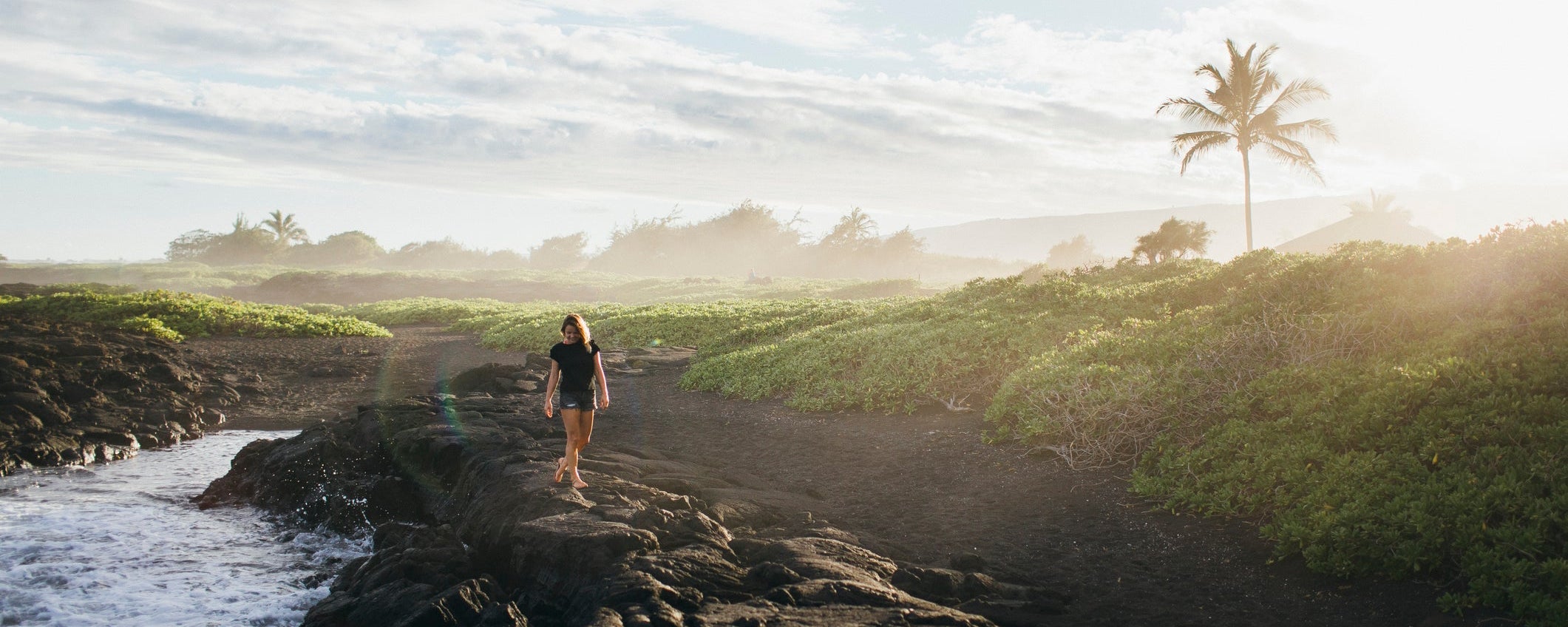
Typically, the island of Hawaii gets about 100,000 to 175,000 visitors per month (which is roughly the same number as Kauai), but since the so-called Big Island is so, well, big, those visitors are pretty spread out. The Big Island is actually larger than all the other Hawaiian Islands combined, so whether you want to go to Hilo, Kona, Volcanoes National Park or a black sand beach, you're unlikely to encounter crowds in the same way you would on Oahu — especially since travel to the Aloha State has only recently resumed.
And there are barriers to entry that should effectively keep crowds to a minimum. Travelers to the Big Island who participate in the state’s pre-arrivals testing program will avoid a mandatory 14-day quarantine but will need to take a second, free rapid antigen test at the airport upon arrival. A second negative result would allow the traveler to bypass mandatory self-isolation.
Volcanoes National Park (Photo by Summer Hull/The Points Guy)
Where to stay: For an isolated, rustic experience, you can spend under $100 a night to stay in a small cabin at Volcanoes National Park. You'll have electricity, a light and an outdoor grill, but not much more.
Getting there: Many carriers have direct flights to Honolulu (HNL), including Southwest Airlines. But you can typically fly directly into Kona (KOA) or Hilo (ITO) on the Big Island from San Francisco International (SFO), Los Angeles (LAX) or even Seattle International (SEA) on Delta, United and Hawaiian. Just know that airlines are still in the process of resuming normally scheduled flights to Hawaii.
If what you're really looking for is an international retreat, French Polynesia might be as good as it gets -- especially since the islands are one of the few destinations welcoming U.S. travelers at this time.
Located just eight hours off the West Coast, French Polynesia isn't truly a world away, but it sure does feel that way. If you go, be sure and hire a boat to get out on the water. And, while Tahiti, Bora Bora and Moorea are the most popular islands in French Polynesia, you can certainly venture farther off the beaten bath if you wish.
While Tahiti's population is around 283,000 (as of a 2017 census), charming Huahine (technically two islands) has just a handful of villages and a total of 6,075 residents. It's easy to carve out your own piece of paradise here. There's a bridge between the isles and a sandspit during low tide. Eels, which are considered sacred to locals, frequent the waters here and it's your duty to stop by and greet these blue-eyed creatures during your visit.
There are some spectacular beaches on Huahine, plus Polynesian ruins, inexpensive lodging (for French Polynesia, anyway) and some very good restaurants. No matter where you travel, just be sure to pack a negative COVID-19 test (you'll also need to take another test four days after arrival) and a face mask.
Stay at the Conrad Bora Bora with a Hilton award (Photo by Summer Hull/The Points Guy)
Getting there: From the U.S. mainland, Papeete (PPT) is typically served from both San Francisco (SFO) and Los Angeles (LAX). From there, you'll take an Air Tahiti flight onward to the island of your choice, unless you want to visit Moorea, which is accessible by ferry. You have many options for using your miles to get to Tahiti, but your flights on Air Tahiti will likely need to be paid for with old-fashioned cash. It's not cheap.
Where to stay: The Conrad Bora Bora Nui is a great use of Hilton points (be sure and lock in Hilton Gold status from a card such as the Hilton Honors American Express Surpass® Card for free breakfast). The St. Regis Bora Bora also gets pretty high marks. In any case, you're likely staying in a private villa, so you're a bit removed from people even when technically at a resort.
Photo by www.infinitahighway.com.br / Getty Images.
For nothing but sprawling, uninterrupted nature, head to Wrangell-St. Elias National Park. The largest national park in the country at 13.2 million acres, it's also one of the least-visited, thanks to its incredible remoteness.
Here, the acre-to-human ratio is ideal for intrepid travelers who are seeking a completely unplugged getaway (fewer than 80,000 travelers visited in 2018, according to National Geographic). This is a destination where serious outdoor enthusiasts can come to backpack, mountaineer, fish, boat, hike, and take in the vast splendor of the land.
Wrangell-St. Elias is a world of extremes: More than half of the highest peaks in North America can be found in this preserve. And there's no better way to appreciate the scale than by booking a "flightseeing" tour of the park. Reserve an air taxi for a backcountry drop-off, or book a tour operator based in Glennallen, McCarthy or Chitina. Really, an aerial tour will be the best way to take in the incredible scenery.
Photo of Ultima Thule Lodge by Nina Homberger/courtesy of Facebook
Where to stay: You probably won't be using points or miles to bed down at one of the wilderness lodges in Wrangell-St. Elias (such as the Ultima Thule Lodge, pictured above), so use a credit card (like the Capital One Venture Rewards Credit Card) to get rid of at least part of any purchase that codes as travel on your monthly statement.
Or, pack your sleeping back and reserve one of the rustic cabins available through the National Park Service, most of which are reachable only by backcountry airstrip. Alaska is a highly-seasonal destination, so book your travel plans accordingly. And remember, all out-of-state visitors must provide proof of a negative COVID-19 PCR test taken within 72 hours of arrival.
Getting there: Whether you plan on meeting a tour guide in McCarthy or simply want to venture out on your own, you'll first want to fly into either Anchorage (ANC) or Fairbanks (FAI), which are usually served by major hubs like Los Angeles (LAX), Denver (DEN) and Seattle (SEA), among others.
You'll find the barrier island of North Captiva off Florida's gorgeous Gulf Coast in Lee County, just north of Captiva Island. The two were connected until a 1921 hurricane carved a channel -- now called Redfish Pass -- between them. This separation is exactly what you need if you're looking for remote and crowd-free vacation spots, as half of the island is protected land owned by the State of Florida.
If you can commit to North Captiva's remote location, you'll be rewarded with incredible beaches strewn with some of the prettiest shells you'll find on this planet. Bird-watching is also world-class here and, if you adore fishing, you won't ever want to go back home.
Photo courtesy of Facebook.
Where to stay: There are only about 300 homes on the island and no points hotels. Instead, you can rent a house with a private pool and even your own dock. You can review some of the vacation rental properties at North Captiva Island Club Resort.
Getting there: Fly into Southwest Florida International Airport (RSW). There's no bridge from Captiva to North Captiva, also known as Upper Captiva, so the only way to get there is by boat (or small charter aircraft). From the airport, arrange for a private car service or use a ride-hailing app like Uber, to take you to Pine Island Marina on Pine Island (near Cape Coral) where you can board a ferry to North Captiva. Once on the island, you'll get around via foot, bike or electric golf cart.
Great Western Catskills, New York
Photo by Beautiful Destinations / Courtesy of Facebook.
Depending on where you live, you may not have to venture all that far from home to escape the crowds. For decades, burnt-out New Yorkers have been heading north, to the mountainous, sometimes rural areas of the Catskills. The exodus has been traced back to the 1920s, but city dwellers have been coming here since long before that. It's an area of undulating terrain punctuated by rambling rivers and waterfalls, perfect for scenic hikes and drives, and afternoons spent skiing or fishing.
The Catskills are in the midst of another resurgence, making it easy for even frequent visitors to experience a new, undiscovered part of the sprawling wilderness areas. So, pack up your car (or rent one) and drive north, leaving the city squarely in the rearview. The farther west you go, veering away from the Hudson River, the more remote and crowd-free the Catskills become. While the eastern and southern Catskills (Ulster and Sullivan counties) are the easiest to reach, they're also arguably the most popular. Even the northern Catskills (Greene County) was put on the map back in 2016 by Scribner’s Catskill Lodge, a property located near Hunter Mountain, originally built in the mid-1960s. So, set your sights instead on the westernmost subregion, the Great Western Catskills (Delaware County).
But, no matter what part of the Catskills you choose, you won't have any trouble finding a quiet mountainside to explore, a collection of antique shops to peruse or a provincial farmstead to visit.
Photo of a Mansion room at The Roxbury at Stratton Falls courtesy of The Roxbury.
Where to stay: Check in to the whimsical Roxbury Motel, which officially welcomed a significant expansion at Stratton Falls this summer. (Book either a room at a reimagined 19th-century estate, the Mansion or stay in one of eight new cottages.) This themed experience isn't for everyone, so for a more traditional Catskills stay, try one of the many inns and lodges in the area.
Getting there: Depending on traffic, the Great Western Catskills region is about three hours northwest of Manhattan. So, be sure to break up the drive with lunch in one of the charming towns along the Hudson River.
By commenting, you agree to our Community Guidelines to help create a positive space for conversation. The responses below are not provided or commissioned by the bank advertiser, our partners, or The Points Guy (“TPG”). They have not been reviewed, approved, or otherwise endorsed by any of these parties. All responses are submitted by individual contributors, and neither the bank advertiser, our partners, nor TPG are responsible for ensuring that all posts and/or questions are answered.