The Points Guy believes that credit cards can transform lives, helping you leverage everyday spending for cash back or travel experiences that might otherwise be out of reach. That's why we publish a variety of editorial content and card comparisons: to help you find a great card to turn your goals into reality.
Our site may earn compensation when a customer clicks on a link, when an application is approved, or when an account is opened with our partners, and this may impact how or where these products appear. While we don't cover all available credit cards, our editorial team creates and maintains all of the analysis of these cards, and our content is not influenced nor subject to review by any credit card company, bank or partner prior to (or after) publication. Please view our advertising policy and product review methodology for more information.
Advertiser disclosure
The Points Guy believes that credit cards can transform lives, helping you leverage everyday spending for cash back or travel experiences that might otherwise be out of reach. That's why we publish a variety of editorial content and card comparisons: to help you find a great card to turn your goals into reality.
Our site may earn compensation when a customer clicks on a link, when an application is approved, or when an account is opened with our partners, and this may impact how or where these products appear. While we don't cover all available credit cards, our editorial team creates and maintains all of the analysis of these cards, and our content is not influenced nor subject to review by any credit card company, bank or partner prior to (or after) publication. Please view our advertising policy and product review methodology for more information.
Guides
Is it worth it? 5 things I consider before paying for a seat upgrade
Chris Nelson is a credit cards writer for TPG. He specializes in budget travel, hotels, earning elite status through minimal spending and redeeming points for maximum value.
November 13, 2025 • 7 min read
The cards we feature here are from partners who compensate us when you are approved through our site, and this may impact how or where these products appear. We don't cover all available credit cards, but our analysis, reviews, and opinions are entirely from our editorial team. Terms apply to the offers listed on this page. Please view our advertising policy and product review methodology for more information.Editorial disclaimer: Opinions expressed here are the author's alone, not those of any bank, credit card issuer, airline or hotel chain, and have not been reviewed, approved or otherwise endorsed by any of these entities.
Comments
By commenting, you agree to our Community Guidelines to help create a positive space for conversation. The responses below are not provided or commissioned by the bank advertiser, our partners, or The Points Guy (“TPG”). They have not been reviewed, approved, or otherwise endorsed by any of these parties. All responses are submitted by individual contributors, and neither the bank advertiser, our partners, nor TPG are responsible for ensuring that all posts and/or questions are answered.
Related stories
Quick summary
Upgrading to business class on international flights can be appealing, especially for lie-flat seating on longer routes.
A general rule is to avoid paying more than $100 per hour of flight time for an upgrade, with a target closer to $60 per hour.
Key factors beyond price include flight duration, departure time, seat type and aircraft, flight occupancy and the purpose of travel.
Tools like detailed seat maps and load-factor trackers can help inform upgrade decisions.
What to consider
Upgrades are more worthwhile on overnight or long-haul flights, particularly when sleep is a priority.
The specific aircraft and seat configuration can impact comfort, with wide-body jets and direct aisle access being preferable.
Flight occupancy may influence value, as empty rows in economy can offer similar comfort to an upgrade.
What you'll miss from the article
A detailed framework for evaluating when a business-class upgrade is worth the cost, including practical examples and decision tools.
Generated by AI with support from our editorial team.
Flying business class is often the goal, but more often than not, it doesn't make financial sense. I fly internationally fairly often, and on almost every flight, I’m presented with the opportunity to pay for an upgrade from economy class with either cash or airline miles. It's always something that has my brain spinning.
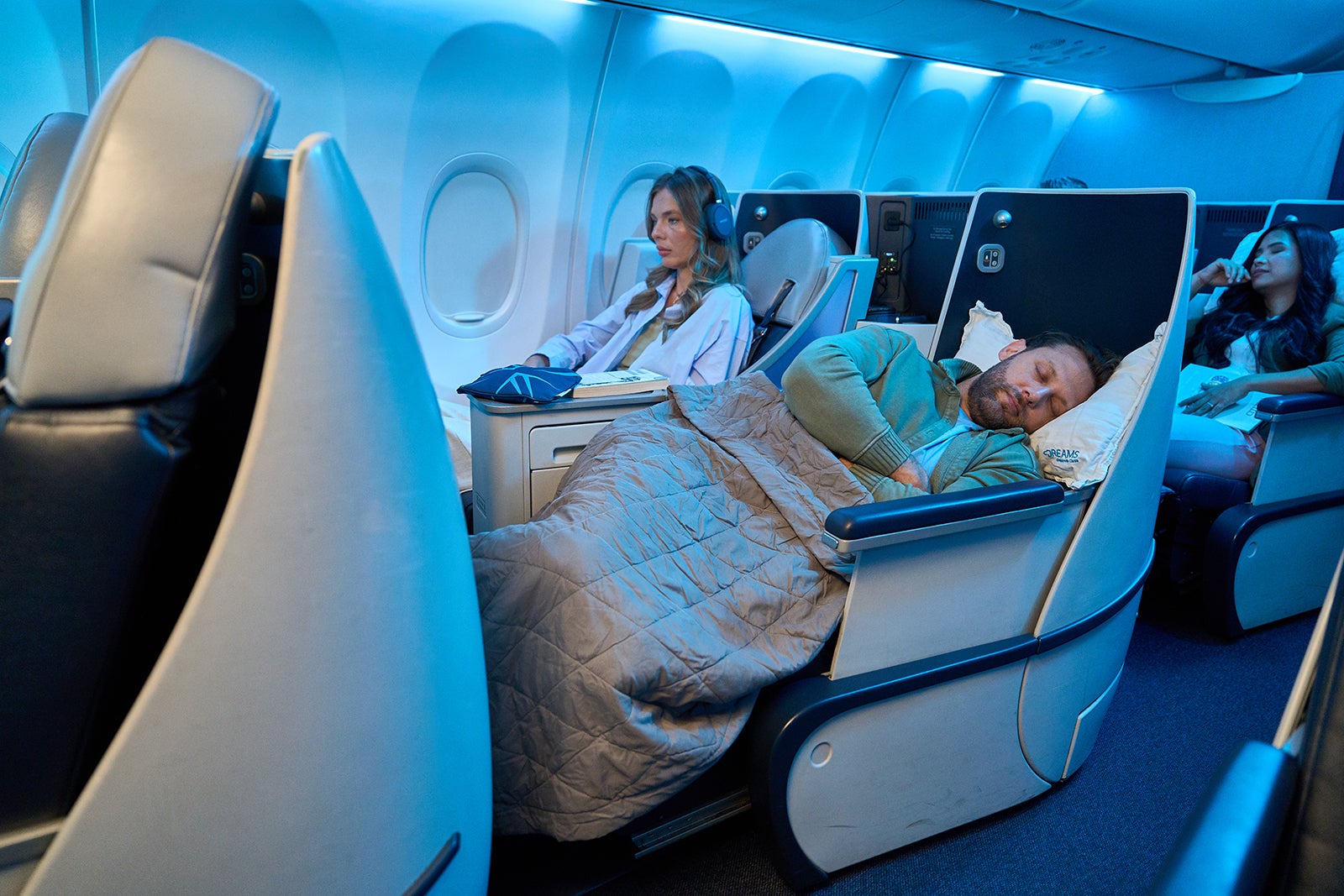
When it comes to paying for business-class upgrades, specifically on international flights, lie-flat seating is the biggest reason I splurge on a higher fare class.
Before paying for an upgrade, I tend to follow a simple rule of thumb: Pay no more than $100 per hour of flight time, though I strive to stick to around the $60 per hour range. For example, if I'm on a 10-hour flight, I’d want to pay no more than $1,000 for my business-class upgrade.
However, the price is not the only factor I consider when deciding whether to upgrade. Whether you're willing to pay more or less for an upgrade, here are five factors outside of price to consider when determining if it makes sense to hit the "buy upgrade" button.
How long is the flight?
The first thing I ask myself when considering an upgrade is: How long is the flight? If it’s less than seven hours, I tend not to bother upgrading unless it’s a stellar deal.
I’m 6 feet, 4 inches, so as long as I have an extra-legroom seat, I'm generally content most of the time.
However, for anything over seven hours, I’m more open to considering an upgrade. I typically avoid upgrading to premium economy as, in my experience, it’s often not much cheaper than business class. Additionally, it makes more sense to opt for the cabin with lie-flat seating instead.
SWISS
I fly to Europe the most, and flights from the East Coast clock in at under eight hours. Once you factor in takeoff, taxi and landing time, at best, I get around four to five hours of sleep — essentially a long nap — and that’s assuming it’s an overnight flight. In most cases, it just isn’t worth paying to upgrade.
On the other hand, if I’m leaving from the West Coast, where flights to Europe can be as long as 13 hours, I’m much more inclined to ask about upgrade availability at check-in.
A no-brainer upgrade for me was last month when I flew from Newark Liberty International Airport (EWR) to Johannesburg's O.R. Tambo International Airport (JNB), a nearly 16-hour overnight flight. This business-class upgrade cost me 84,700 United MileagePlus miles and was worth every mile.
The time of day a flight departs plays a significant role in whether I decide to upgrade. I've found that more and more international routes are now daytime flights. During the day, you’re less likely to sleep, so my thought process is: Why spend money on an upgrade I won’t fully take advantage of?
I’m not quite a digital nomad, but I travel frequently and often work on flights. If it’s a daytime flight, or even one where two-thirds of the flight occurs during the day, I’ll usually stay put in economy, open my laptop and get some work done.
However, if it’s a longer red-eye flight that arrives in the morning at the destination, that’s where I’m far more likely to upgrade. Being able to get some solid sleep before landing is a game changer.
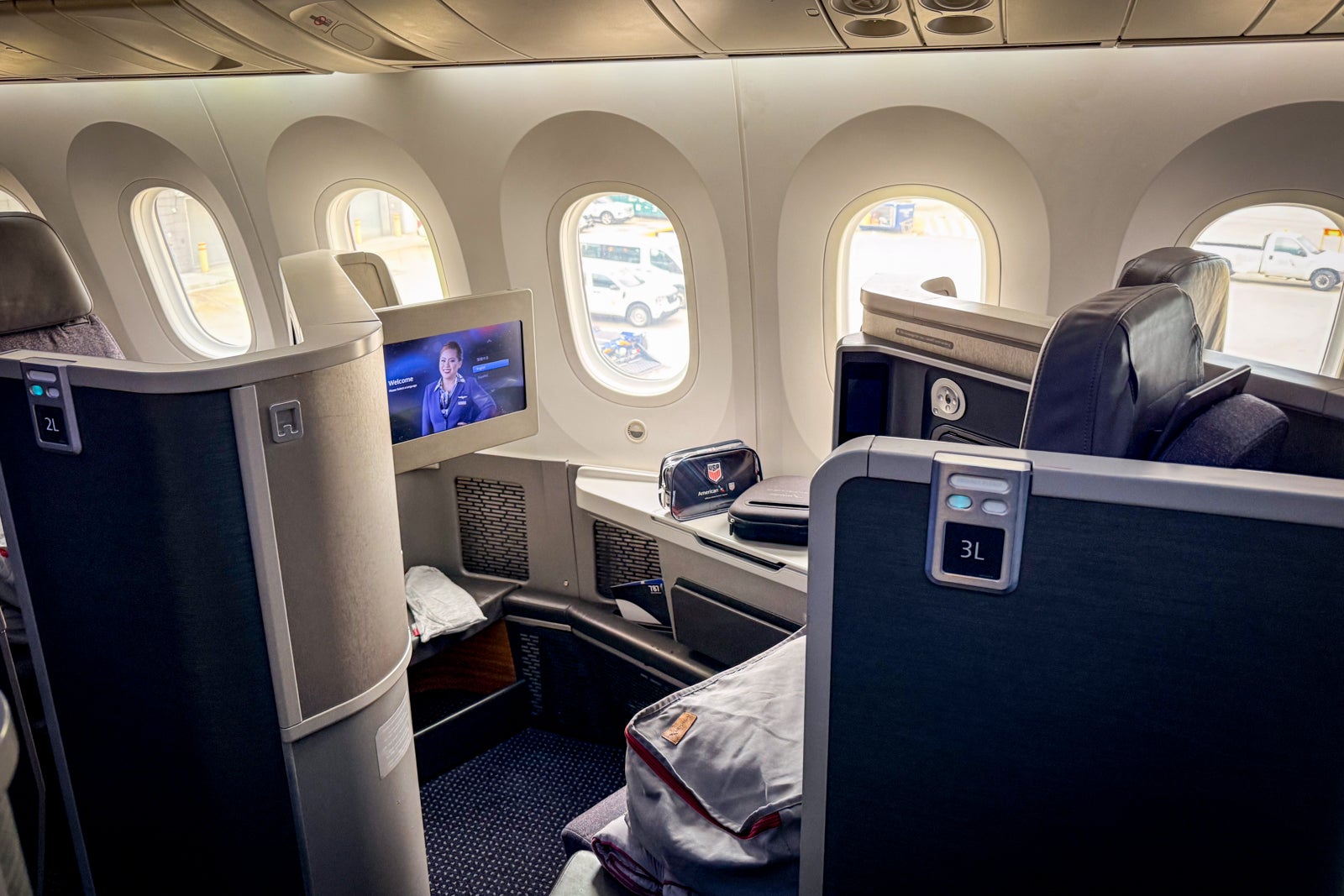
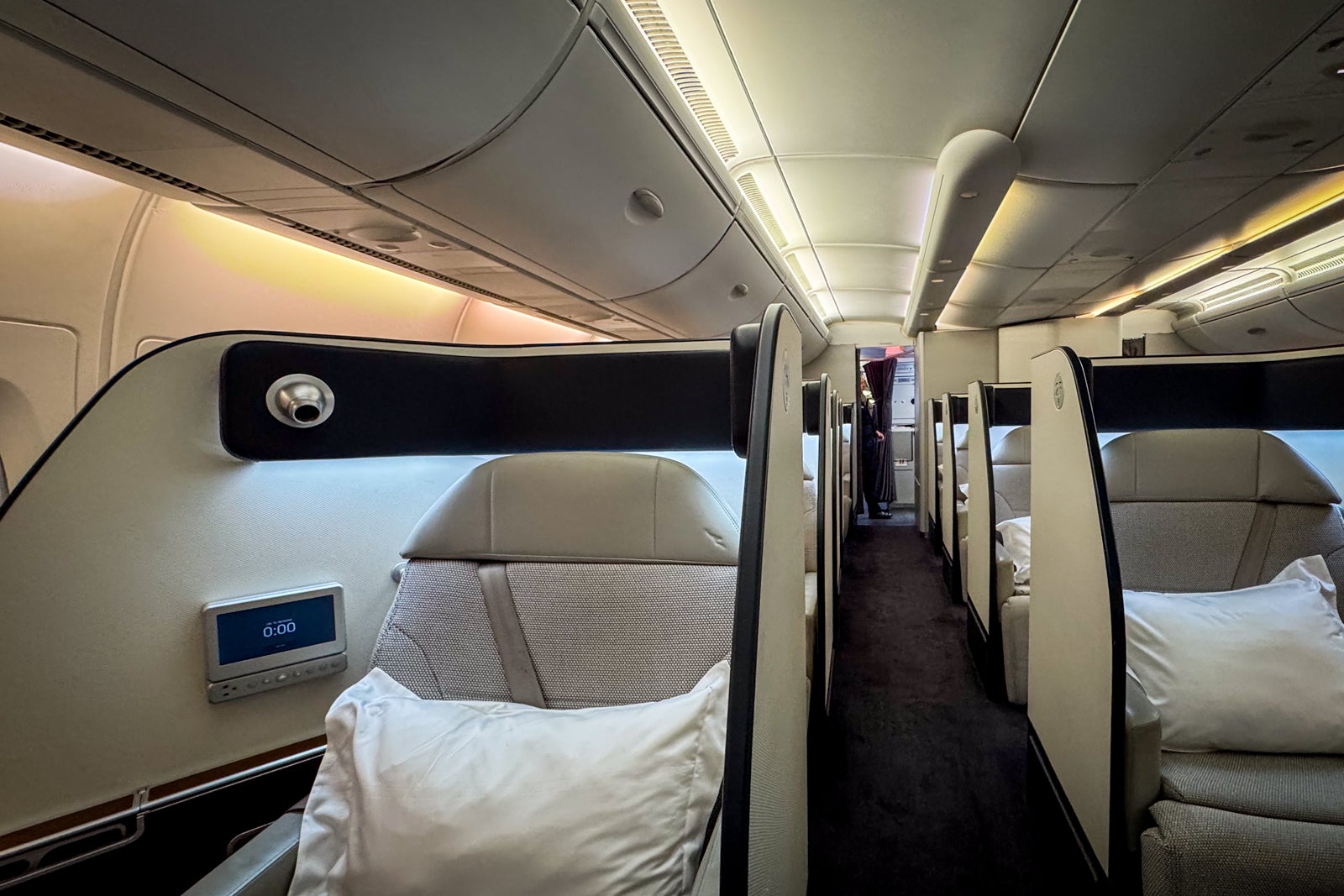
Not all business-class seats are created equal. For example, the Big Three airlines, American Airlines, Delta Air Lines and United Airlines, have multiple business-class products. Some seats are newer than others, some have wider footwells and some are more cramped than others. I've flown in United's Polaris business class multiple times this year, and each time, the experience has been wildly different, primarily due to the onboard service aspect. I prefer the Boeing 777 business product over the carrier's Boeing 787 Dreamliner or 767 products, as the seats are slightly roomier on the 777.
Additionally, the aircraft type is particularly important due to space constraints. A lie-flat seat on a narrow-body jet is most likely going to be more cramped than a lie-flat seat on a wide-body jet.
ZACH GRIFF/THE POINTS GUY
Another thing I consider before upgrading is whether each seat has direct aisle access. If I have to interrupt someone to get out of my seat, that strongly deters me from wanting to upgrade.
I use a tool called AeroLopa, which has in-depth seat maps and seat descriptions for most airlines and their aircraft types. I always check the airplane I will be on beforehand and determine if it's a seat I think is worth purchasing as an upgrade.
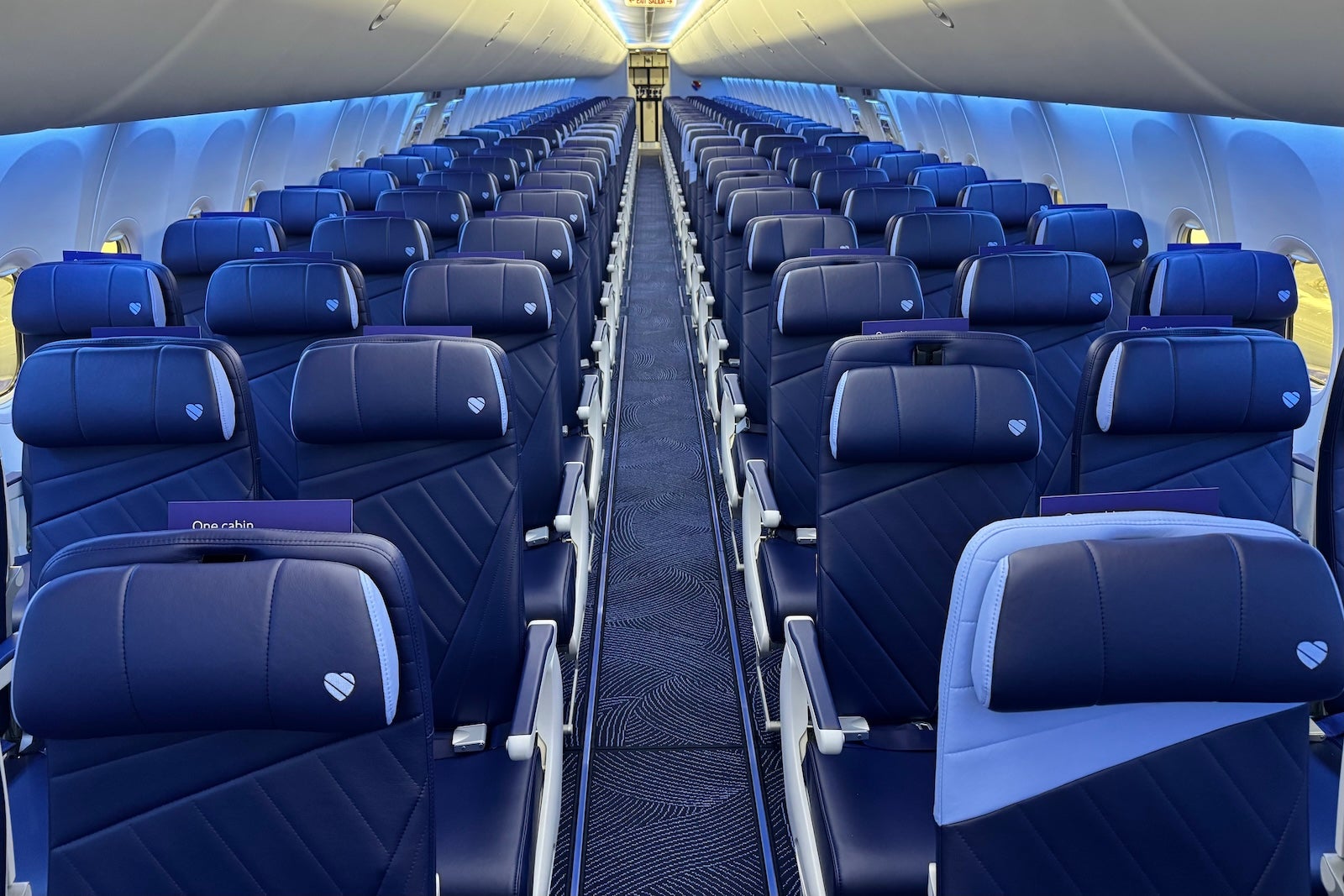
I always check the flight's occupancy before considering an upgrade. I'm like a hawk when it comes to looking at seat maps. If the airline gods decide to favor me and leave me with an open seat next to me or, even better, an open row, I'm content staying in economy and not upgrading.
Premium economy on American Airlines' Airbus A321XLR. ARTURO BARBERA/AMERICAN AIRLINES
Now, if the flight is full and the price is right, I'm taking the upgrade offer every time.
For example, on a flight earlier this year from Dublin Airport (DUB) to Las Vegas' Harry Reid International Airport (LAS), I debated upgrading. The flight left Dublin at 3 p.m. local time and arrived in Las Vegas at 5 p.m. local time, a long daytime haul. Upgrading would have cost $400, but I had an entire four-seat row to myself. In the end, I stayed in economy, got plenty of work done and even stretched out across the row and got a few hours of sleep.
You can use tools like ExpertFlyer, which is owned by TPG, to help estimate flight load factors.
Lastly, before upgrading a flight, I also ask myself what the purpose of the trip is. Is the flight you're taking for work or leisure? If it's for work, you may be more inclined to upgrade so you can sleep and arrive refreshed for meetings. In some scenarios, comfort can become an investment in your productivity.
D3SIGN/GETTY IMAGES
If I'm traveling for vacation or leisure, I usually skip the upgrade and put that money or those miles toward experiences once I arrive, unless it's an irresistible deal.
And if it’s a mix of both, I weigh whether rest on the plane or saving that money for excursions will make the bigger difference.
Overall, I typically weigh these five factors before deciding whether I should pay for an upgrade.
By commenting, you agree to our Community Guidelines to help create a positive space for conversation. The responses below are not provided or commissioned by the bank advertiser, our partners, or The Points Guy (“TPG”). They have not been reviewed, approved, or otherwise endorsed by any of these parties. All responses are submitted by individual contributors, and neither the bank advertiser, our partners, nor TPG are responsible for ensuring that all posts and/or questions are answered.