
Whenever I fly, my mother always reminds me to get up and walk around to prevent blood clots. I typically nod my head in response without any intention of following through.
But it turns out Kathleen isn't just being an overly cautious parent — you should actually prioritize movement when traveling for sustained periods of time.
"When you are sitting for prolonged periods during a flight in a tight space, you can get some blood pooling in the veins of the lower extremities, as your leg muscles are not as engaged to help the blood pump," says Dr. Allyson Pishko, a hematologist at Penn Medicine. "For most, this is not significant enough to cause a blood clot, but in patients who are susceptible to blood clot formation, travel can be a risk factor for clot formation."
So, while the average person is not at risk of developing blood clots while traveling, it's still helpful to know what symptoms to look out for to avoid the onset of deep vein thrombosis (DVT) and the steps to take to minimize its likelihood.
How does traveling increase the risk of blood clots?
"DVTs, [which are] blood clots that form in your lower extremities, can occur with prolonged sitting — whether in a plane, car or train," says Dr. Jenny Yu, chief health officer for RVO Health, which is owned by TPG's parent company, Red Ventures.
"The blood clots are most likely to occur either in a person's legs (deep vein thrombosis) or lungs (pulmonary embolism)," said Dr. Andrew Peseski, a hematologist at Duke Health.
According to Peseski, while the possibility of a travel-induced blood clot increases on journeys of four hours or more, the risk remains "mild" for most people.
This was also supported by Dr. Jay Bishop, a vascular medicine specialist at Cleveland Clinic.
"Short airline flights less than four hours probably don’t increase the risk of blood clots, and even flights over four hours have a small overall risk," said Bishop.
What makes you more likely to develop blood clots?
Several factors can make a person more susceptible to developing a blood clot, including preexisting conditions such as blood clot disorders, recent surgery or injury, cancer treatments, older age, obesity, use of estrogen-containing birth control or hormone replacement therapy, pregnancy and limited mobility, among others.
"The common themes with [all of these] is thickened blood and stagnation," Yu noted.
If you fall into one of these categories, take extra precautions to help prevent blood clots and keep an eye out for any symptoms.
What are the symptoms of a blood clot?
Knowing you have a blood clot can be tricky, as you can often write off the symptoms as something else — but there are a few key warning signs to pay attention to when traveling. If you experience these symptoms, you should seek medical help immediately, especially if one leg feels it more than the other.
"Swelling, pain, discoloration, warmth of the skin of your lower or upper extremities are signs of a blood clot," said Dr. Yu. "Shortness of breath, chest pain, increased heart rate and cough should cause someone to seek attention."
Yu also noted that someone could have symptoms of a pulmonary embolism without the symptoms of deep vein thrombosis.
For example, when TPG’s former social media director developed a blood clot during a six-hour flight home from Iceland, she woke up with aching calves and felt dizzy, hot and lightheaded.
If you experience any of these symptoms during a flight, inform the airline crew immediately.
How can you prevent a blood clot?
Now you know what symptoms to look for — but what critical steps can you take to avoid getting a blood clot in the first place?
As is always the case with traveling, you should make it a priority to stay hydrated, since dehydration can thicken your blood and slow circulation.
"Aim to drink 90 to 120 ounces of water per day and avoid excessive caffeine or alcohol, which can contribute to dehydration," said Jessica Lefkowitz, PT, DPT from Bespoke Physical Therapy Times Square. "The changes in altitude and pressure during air travel can also affect your hydration levels, so be mindful of drinking water throughout your flight."
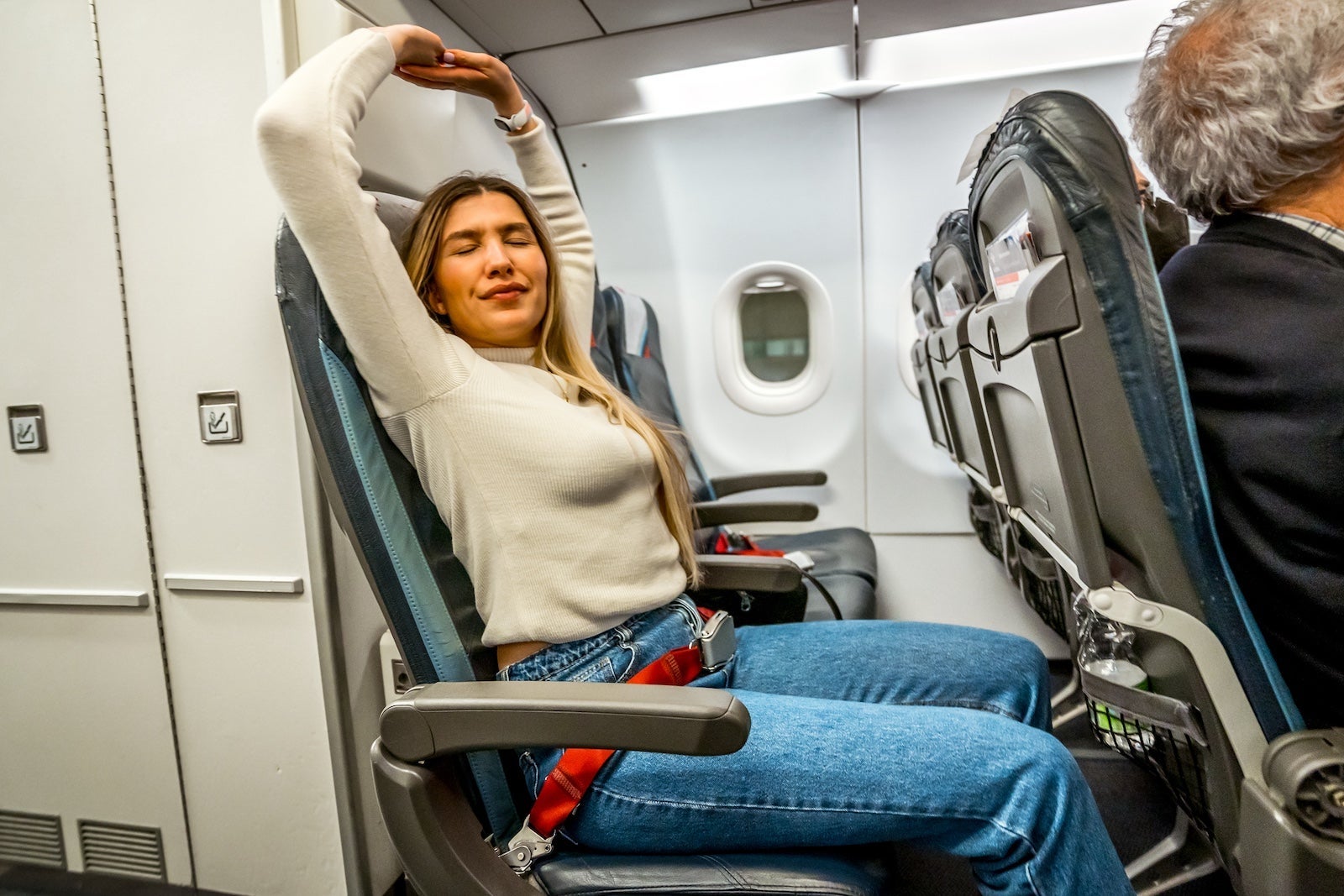
The second tip is to your keep your extremities moving, as my mother tells me to do.
"This can include stopping more frequently and walking around if driving or getting up and doing a few laps in the aisles of an airplane every two hours," recommends Dr. Peseski.
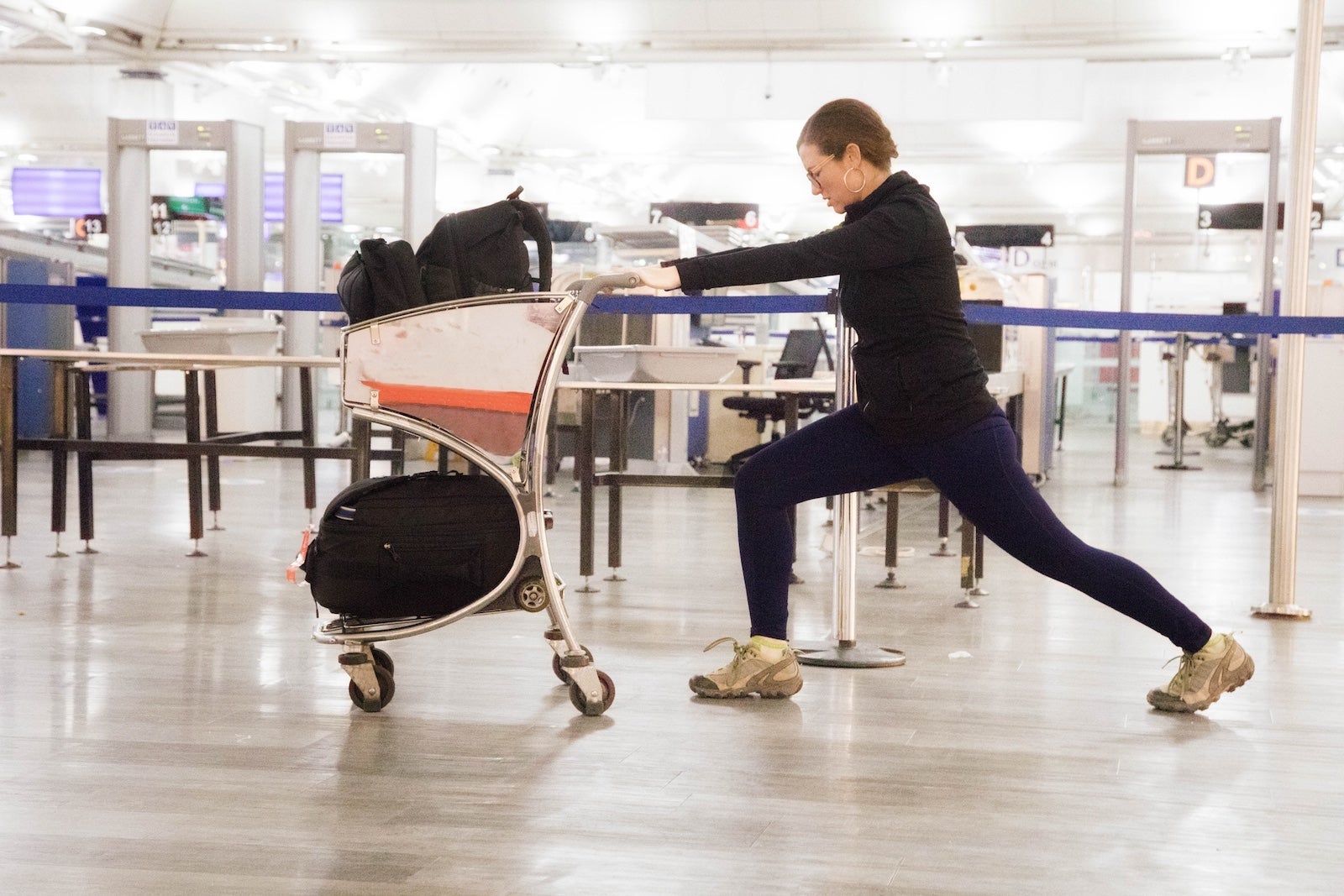
Lefkowitz also suggests stretching — specifically your calves, hamstrings, quadriceps and hip flexors — to promote blood flow.
I think about this on all travel days. I'll work out before the flight and take a walk to get some extra steps in. If you have an early morning flight, even a walk at the airport before boarding is better than nothing. I also try to stand as much as possible ahead of boarding in anticipation of sitting for a while.
"Doing simple body exercises while seated is helpful, including neck rolls, shoulder stretches, ankle circles, foot pumps and knee to chest stretching," said Dr. Bishop at Cleveland Clinic.
If you are a traveler at risk for blood clots, consult your doctor ahead of travel to see if they would recommend taking a low dose of a blood thinner, such as baby aspirin, advises Yu.
"Wearing knee-high compression socks can assist blood circulation by aiding blood return from the feet to the heart," says Lefkowitz. "The changes in altitude during flight can increase swelling and fluid retention in the legs, and compression socks can help reduce this."
Some TPG staff favorites include:
- Wanderlust Travel Compression Socks: $19.98
- Companions Knee-High Compression Socks: $28
- Ostrichpillow Bamboo Compression Socks: $29
- NEWZILL Medical Compression Socks: $36
And of course, for travelers who have a history of blood clots or are currently on medication to prevent such, Dr. Pishko advises taking medication before travel and packing it in their carry-on.
Bottom line

Certain people are more at risk of developing blood clots during flying. If you have preexisting conditions or a family history of blood clots, be sure to consult your doctor for specific advice when traveling.
Certain steps, like hydration and preflight movement, are beneficial for all travelers in minimizing the risk of developing a blood clot.
Related reading: