What you need to know about electronics search and seizure at the border
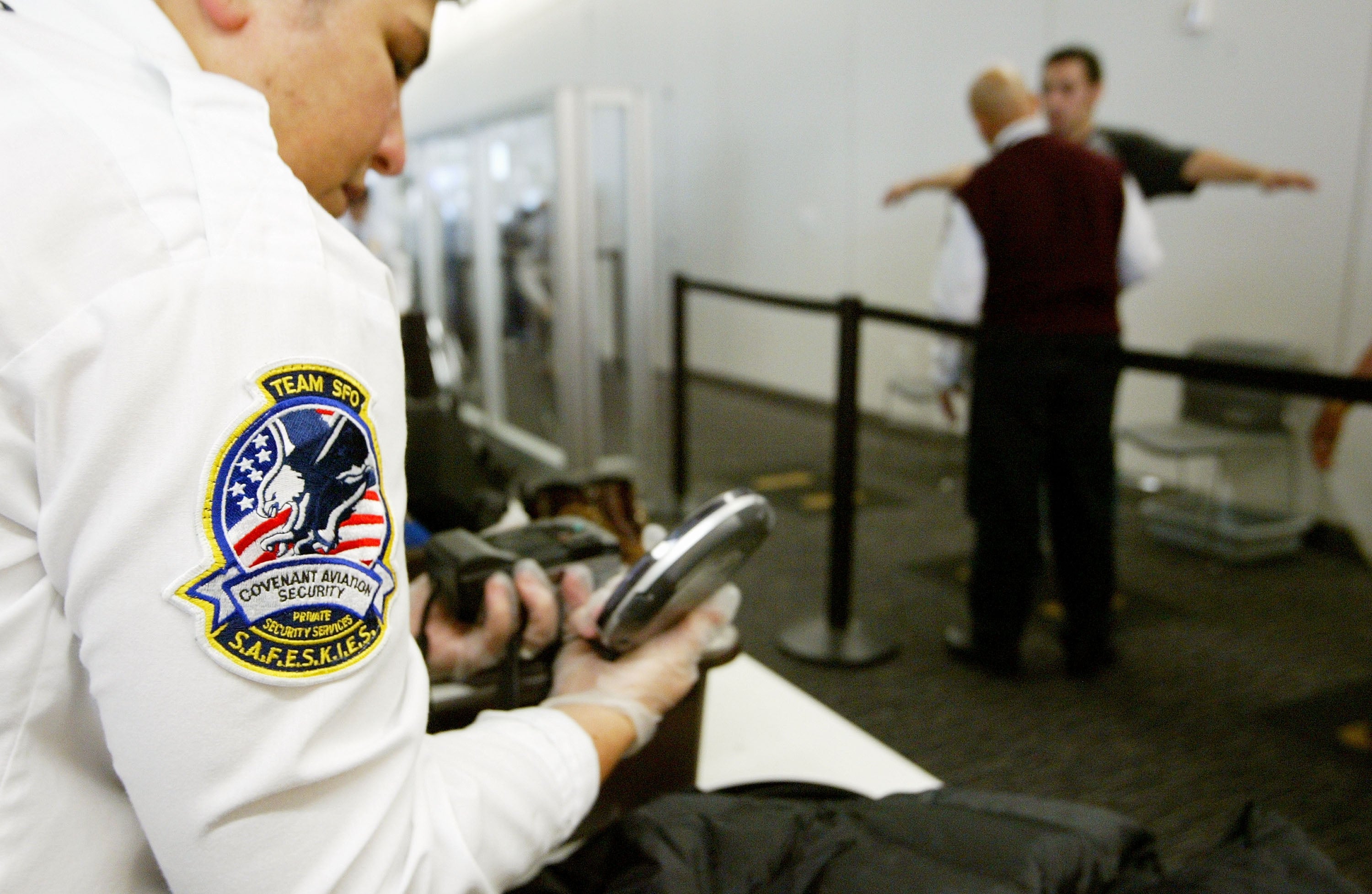
In April, the Canada Border Services Agency (CBSA) confiscated the smartphone and laptop of Nick Wright, a Toronto-based lawyer at Toronto's Pearson Airport after he refused to give a CBSA officer the passwords to search his electronic devices.
Wright refused to hand over the passwords because both devices contained confidential information that he insisted were protected by attorney-client privilege.
He was told that the devices would be sent to a government lab, where they would be hacked and searched. In May, he filed a lawsuit against the Canadian government that stated any files on electronic devices discovered without probable cause or warrants is in breach of the Canadian Charter of Rights and Freedoms.
The Wright incident is not an anomaly. In the last several years, suspicionless searches of electronic devices at U.S. border crossings have been increasing exponentially. Our smartphones and laptops store so much critical personal and professional information detailing every aspect of our lives that the search and seizures of these devices is becoming of great concern to both American and Canadian travelers and to privacy rights advocates from both countries.
Why has there been a rise in searches of electronic devices at the border?
In fiscal year 2017, the U.S. Customs and Border Protection (CBP) conducted 30,200 border searches both inbound and outbound of electronic devices compared to 19,051 in fiscal year 2016. That's approximately 0.007 percent of arriving international travelers processed by CBP officers.
The reason for the increase is driven by CBP's mission "to protect the American people and enforce the nation's laws in this digital age. As the world of information technology evolves, techniques used by CBP and other law enforcement agencies must also evolve to identify, investigate, and prosecute individuals who use new technologies to commit crimes," according to the agency.
As electronic devices have become an essential part of everyday life and people have become more reliant on those devices to store sensitive information, the American and Canadian governments have become more aggressive in their searches of those devices. A search can allow them to download all the information stored on a device and make copies of that information or they can do a more extensive forensic search of a device.
The government can keep a device for five days or longer if there are "extenuating circumstances." If they do not find evidence of criminality, they are required to destroy the information they've uncovered after 21 days.

What are the rights of Americans when it comes to search and seizure of electronic devices at the border, and what's going on in Canada?
Laws regulating searches of devices on the border in both the U.S. and Canada are both similarly unsettled and both governments have asserted wide latitude when conducting warrantless and suspicionless searches.
A U.S. citizen or lawful permanent resident cannot be held by CBP agents for refusing to unlock their device or give agents their passwords. But agents do have the right to seize those devices if they are not granted access. Those who encounter suspicionless and warrantless searches of their devices may not be told why unless and until they are being criminally charged.
"The U.S. government currently claims they can check data like they do any piece of luggage and at the ACLU, we dispute that," said Esha Bhandari, a staff attorney at the American Civil Liberties Union, Speech, Privacy and Technology Project.
"The Canadian government has taken the same approach. Data is not the same as luggage. I do think what we are seeing is a trend where governments are taking legal authority and extending it to new technologies which have profound impact for privacy," Bhandari added.
"Canadian courts have generally recognized that people have reduced expectations of privacy at border points," according to the Office of the Privacy Commissioner of Canada's website. "The Canadian courts have not yet ruled on whether a border officer can compel a person to turn over their password and on what grounds, so that their electronic device may be searched at a border crossing."
In September 2017, The ACLU of Massachusetts and the Electronic Frontier Foundation (EFF) sued the Department of Homeland Security on behalf of 11 travelers whose smartphones and laptops were searched without warrants at the U.S. border (Alasaad v. Duke).
Bhandari, who is one of the lawyers for the plaintiffs, says that she's fearful that as American and Canadian officials ramp up these searches, constitutional rights are being trampled on and that our actions give foreign governments license to do the same to American citizens traveling abroad.
"It raises the scary spectre that world travelers have no privacy rights when it comes to turning over their devices," she says. "It creates a dystopian world, a race to the bottom that is extremely troubling."
What are the best way to protect your devices and information privacy?
Travelers should consider what devices they need to bring along for personal or business travel. A good rule of thumb is not to travel with devices containing sensitive information and to encrypt sensitive data. Although a citizen can't be held at the border for refusing to disclose a device password, tourists who are not citizens could be denied entry if they do not hand over passwords.
There are steps U.S. citizens can take to protect their information and privacy, according to an article published by Bhandari and several of her ACLU colleagues in 2017. She further elaborated on these measures in her interview with TPG.
- Travel with as little data and as few devices as possible. The fewer devices being carried, the less there is to search.
- Consider shipping encrypted devices to locations in advance.
- Encrypt devices with strong and unique passwords and shut them down when crossing the border.
- Store sensitive data in a secure cloud storage account. The CBP has announced that it is against policy for border agents to search cloud-stored data on electronic devices.
- Turn on airplane mode for all electronic devices before crossing a border checkpoint.
What could be the implications of the Alasaad v. Duke case on device searches at the border?
This case was brought in 2017, on behalf of 11 travelers who had smartphones and laptops that had been searched at the U.S. border without a warrant. Several of their devices were confiscated for weeks or months, but none of the 11 were ultimately accused of any wrongdoing.
Plaintiffs all complained of humiliating experiences at the hands of border agents. Akram Shibly, an independent filmmaker who lives in upstate New York, was crossing the U.S.-Canadian border after a social outing in Toronto, and says that after he refused to hand over his phone to border officials he was physically restrained while officials took the phone from his pocket and held it for more than an hour before giving it back. His reason for refusing to hand over his device was because just three days earlier, the CBP had searched his phone after another border crossing.
"Because government scrutiny of electronic devices is an unprecedented invasion of personal privacy and a threat to freedom of speech and association, searches of such devices absent a warrant supported by probable cause and without particularly describing the information to be searched, are unconstitutional," according to the Alasaad complaint.
During a July hearing, the government hit back against the ACLU and the EFF. "They are bringing a claim that is breathtaking in scope that would undermine the authority of border officers that has been established for centuries," said Michael Drezner, of the U.S. Department of Justice, Civil Division.
A victory for the plaintiffs could place limits on how future searches are conducted while a victory for the government would continue or expand the power to conduct warrantless device searches at the border.
Most recent developments
On August 30, privacy advocates were alarmed by the deportation of a Harvard University student, who was sent back to Lebanon after an agent at Boston Logan International Airport searched his electronic devices and confronted him about his friends' social media posts. According to the EFF, these "allegations raise serious concerns about whether the government is following its own policies regarding border searches of electronic devices and constitutionality of these searches and of social media surveillance by government."
Last May, a bipartisan group of senators introduced the "Protecting Data at the Border Act," a bill that would require agents to obtain a warrant or written consent before they're able to search travelers' digital devices. "The border is quickly becoming a rights-free zone for Americans who travel," said Sen. Ron Wyden, D-Ore., a co-sponsor of the bill with Sen. Rand Paul, R-Ky. "The government shouldn't be able to review your whole digital life simply because you went on vacation or had to travel for work."
TPG featured card

at Capital One's secure site
Terms & restrictions apply. See rates & fees.
| 5X miles | Earn 5X miles on hotels, vacation rentals and rental cars booked through Capital One Travel |
| 2X miles | Earn unlimited 2X miles on every purchase, every day |
Pros
- Stellar welcome offer of 75,000 miles after spending $4,000 on purchases in the first three months from account opening. Plus, a $250 Capital One Travel credit to use in your first cardholder year upon account opening.
- You'll earn 2 miles per dollar on every purchase, which means you won't have to worry about memorizing bonus categories
- Rewards are versatile and can be redeemed for a statement credit or transferred to Capital One’s transfer partners
Cons
- Highest bonus-earning categories only on travel booked via Capital One Travel
- LIMITED-TIME OFFER: Enjoy $250 to use on Capital One Travel in your first cardholder year, plus earn 75,000 bonus miles once you spend $4,000 on purchases within the first 3 months from account opening - that’s equal to $1,000 in travel
- Earn unlimited 2X miles on every purchase, every day
- Earn 5X miles on hotels, vacation rentals and rental cars booked through Capital One Travel
- Miles won't expire for the life of the account and there's no limit to how many you can earn
- Receive up to a $120 credit for Global Entry or TSA PreCheck®
- Use your miles to get reimbursed for any travel purchase—or redeem by booking a trip through Capital One Travel
- Enjoy a $50 experience credit and other premium benefits with every hotel and vacation rental booked from the Lifestyle Collection
- Transfer your miles to your choice of 15+ travel loyalty programs
- Top rated mobile app