How to Keep Seaweed and Algae from Ruining Your Beach Vacation

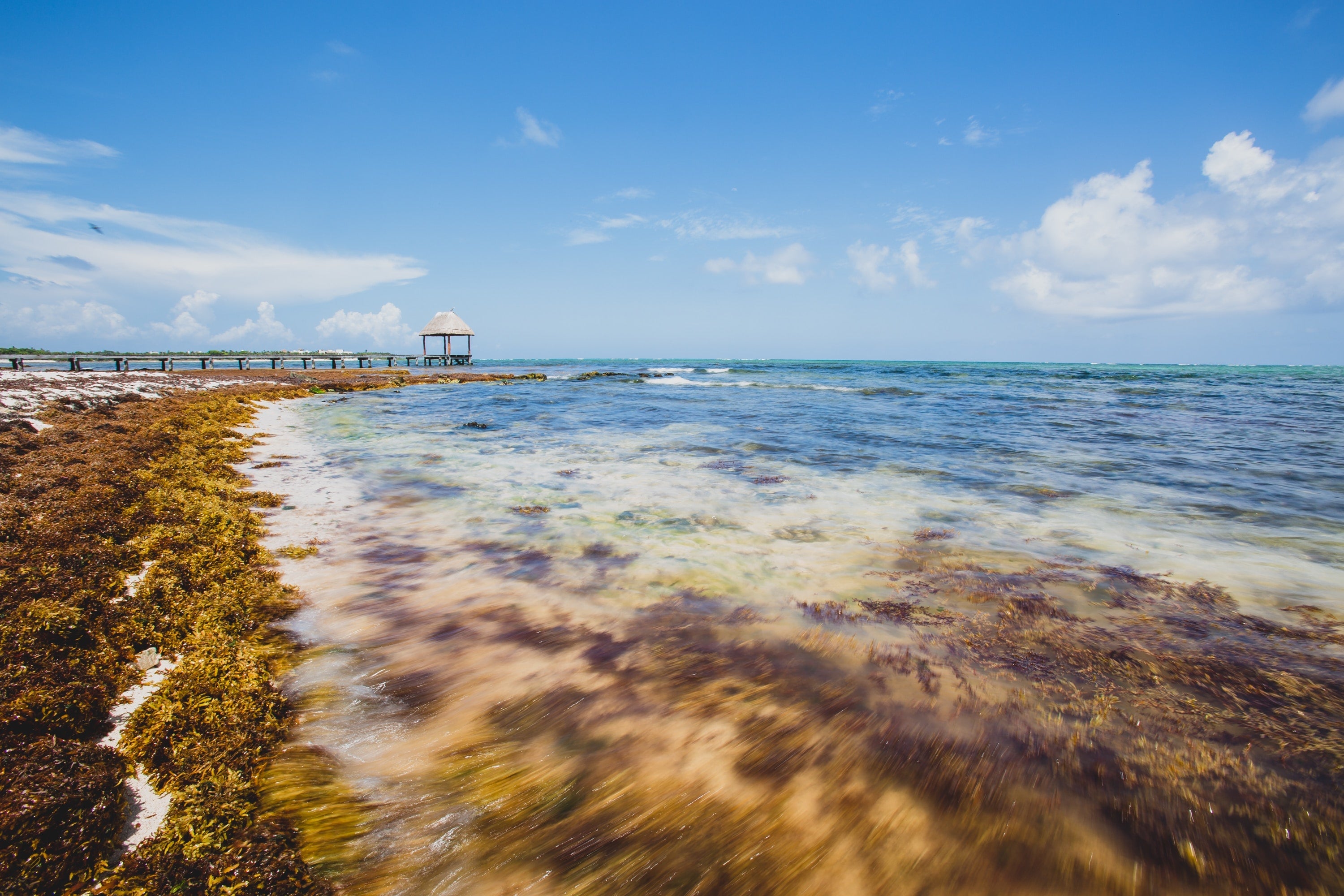
There are several things that could ruin a perfectly nice beach vacation: bad weather, sharks, jellyfish and ... seaweed?
Yes, in certain parts of the world, the seaweed known as sargassum is becoming more than just a minor nuisance — it's causing some places to declare a state of emergency. According to Vice, the largest macroalgae bloom in world history — the Great Atlantic Sargassum Belt (GASB) — is currently floating off the coast of Florida, and when it washes up on the shore and starts to decompose, the stench can be unbearable.
Quintana Roo — the Mexican state that's home to popular beach towns like Tulum and Cancún — has declared a state of emergency in order to access the funds necessary to clean up its beaches. Last year, the government of Barbados declared a national emergency. And scientists foresee the problem getting worse, not better.
"This phenomenon is likely to be a new normal," Mengqiu Wang, the lead author of a recent report published by Science, told Vice, adding, "I think we have a high chance to see [blooms] again in the coming years."
Though it seems the blooms may be linked to runoff from the Amazon River, it's unclear exactly what has been causing them to grow every year since 2011. What we do know is that satellite images have shown the GASB stretching from the Gulf of Mexico all the way to the western coast of Africa.
Meanwhile, a toxic blue-green algae bloom has caused all 21 of Mississippi's Gulf Coast beaches to close. According to a statement released by the Mississippi Department of Environmental Quality, "The algae can cause rashes, stomach cramps, nausea, diarrhea and vomiting." The agency is advising people to avoid any contact with the water and not to eat any fish taken out of the water until further notice.
In Florida, Lake Okeechobee has been plagued by harmful blue-green algae since at least 1986, but the frequency of their appearance is increasing. According to the Tampa Bay Times, exposure to the algae has harmful effects in both the short term and the long term.
Red tides are another form of toxic algae blooms, which often — though not always — appear a rusty red color. They're most commonly found in the Gulf of Mexico, off the coast of California and in the Gulf of Maine. National Geographic reported, "Scientists predict that climate change will increase the frequency and intensity of hurricanes, potentially moving blooms to new locations."
So, how can you avoid the piles of smelly seaweed and toxic algae blooms?

For one, it's important to choose the right beach, because sometimes you can avoid ribbons of seaweed just by being strategic with your seat selection. For now, it might be best to avoid the Gulf Coast and some areas on the Atlantic Coast of Florida and Mexico.
And while it's not uncommon for luxury resorts to hire workers to clear away the seaweed that collects on the beaches in the morning, budget hotels might not put as much effort into keeping the beaches clean. When in doubt, call the resort and ask.
Florida maintains websites that provide residents and travelers updates on red tide and algae across the state.
Mississippi also maintains a statewide database of beach closures.
You can also check the forecasts released biweekly by the National Oceanic and Atmospheric Administration (NOAA), which partners with NASA to review satellite images that show the blooms.
TPG featured card

at Capital One's secure site
Terms & restrictions apply. See rates & fees.
| 5X miles | Earn 5X miles on hotels, vacation rentals and rental cars booked through Capital One Travel |
| 2X miles | Earn unlimited 2X miles on every purchase, every day |
Pros
- Stellar welcome offer of 75,000 miles after spending $4,000 on purchases in the first three months from account opening. Plus, a $250 Capital One Travel credit to use in your first cardholder year upon account opening.
- You'll earn 2 miles per dollar on every purchase, which means you won't have to worry about memorizing bonus categories
- Rewards are versatile and can be redeemed for a statement credit or transferred to Capital One’s transfer partners
Cons
- Highest bonus-earning categories only on travel booked via Capital One Travel
- LIMITED-TIME OFFER: Enjoy $250 to use on Capital One Travel in your first cardholder year, plus earn 75,000 bonus miles once you spend $4,000 on purchases within the first 3 months from account opening - that’s equal to $1,000 in travel
- Earn unlimited 2X miles on every purchase, every day
- Earn 5X miles on hotels, vacation rentals and rental cars booked through Capital One Travel
- Miles won't expire for the life of the account and there's no limit to how many you can earn
- Receive up to a $120 credit for Global Entry or TSA PreCheck®
- Use your miles to get reimbursed for any travel purchase—or redeem by booking a trip through Capital One Travel
- Enjoy a $50 experience credit and other premium benefits with every hotel and vacation rental booked from the Lifestyle Collection
- Transfer your miles to your choice of 15+ travel loyalty programs
- Top rated mobile app