New fires threaten Yosemite as some areas reopen

Editor's Note
As firefighters in Yosemite National Park get a handle on the Washburn Fire — which has been burning the southern part of the park for more than two weeks — a new and larger wildfire, the Oak Fire, has begun sweeping the forests near Midpines, about 12 miles west of the park.
The Oak Fire is currently raging across 16,000 acres (about 26 square miles) in the forested foothills of the Sierra Nevada range in Mariposa County. While firefighters are making progress limiting the perimeters of the blaze, the fire is still considered just "10% contained" by Cal Fire as of the morning of July 25.
Air quality in Yosemite is low, and Highway 140 accessing the western entrance of the park is currently closed. But Yosemite's south entrance via Highway 41 is now open, and the Wawona Hotel and nearby homes and rental properties in the southern section of the park are scheduled to reopen July 28.
Here's what you need to know about the Yosemite fires and their impact on travel there (as well as some safety advice for planning national parks trips during this summer of repeated natural disasters).
The Oak Fire near Yosemite
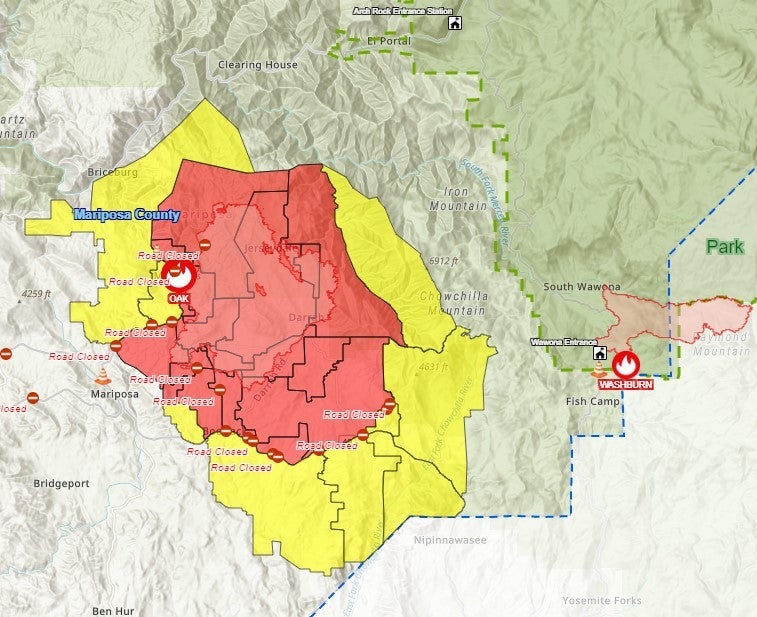
The Oak Fire is burning across 16,791 acres of Mariposa County as of the morning of July 25. The fire is about 12 miles from the borders of Yosemite National Park, though the driving distance is farther. Multiple road closures and mandatory evacuation orders are in place across Mariposa County.
The Oak Fire has forced the closure of Highway 140 accessing the park's western gate at Arch Rock Entrance Station. However, the entrance station can still be reached via Highway 121, and remains open. Firefighters have made "good headway" in holding the line along the northern edge of the fire, according to the July 25 Cal Fire report, so the highway may reopen soon. Check in with Caltrans for highway closure updates.
The Oak Fire is negatively affecting air quality throughout Yosemite and the surrounding communities, with unhealthy levels measured in Yosemite Valley. Visitors are advised to be cautious during outdoor activities, particularly in the cases of those with existing health conditions. Keep in mind that prevailing wind conditions can change hourly, driving smoke in different directions.
The Washburn Fire in Yosemite
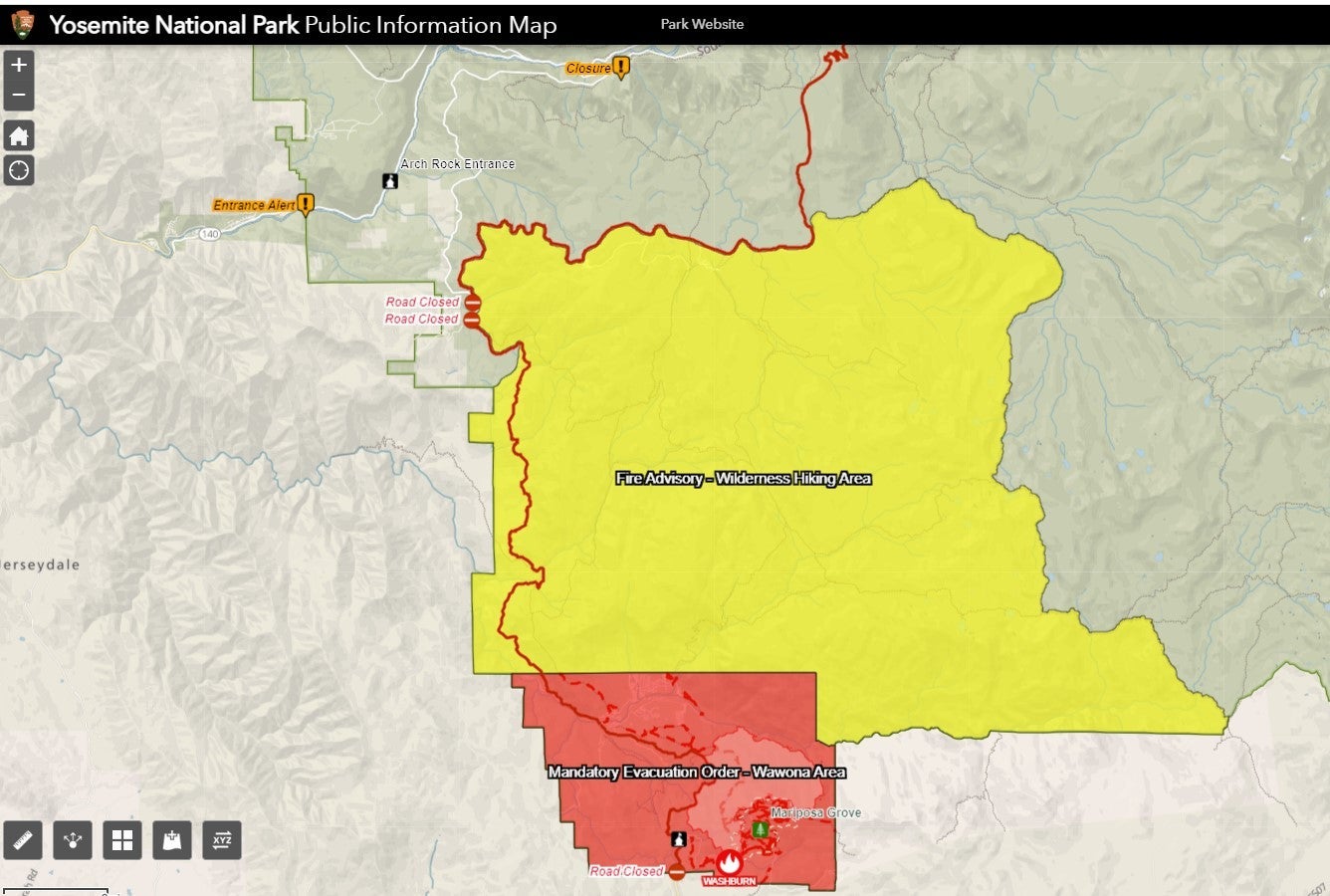
The Washburn Fire within the park is now "87% contained," according to the park's incident report. Firefighters are suppressing ongoing hot spots and smoldering underbrush in more remote areas of the park, but evacuation orders have been lifted and the southern entrance from highway 41 in now open. The Wawona Hotel and nearby homes and rental property areas are scheduled to reopen as of July 28.

The fire burned more than 4,800 acres of the park, threatening but not reaching the giant sequoias of Mariposa Grove (which remains closed until further notice).
The giant sequoias at Yosemite's Mariposa Grove received special attention from firefighters. Workers have installed sprinkler systems near the trees to raise the humidity in the grove and provide a damp protective area in the undergrowth. They are also operating bulldozers to clear out brush and deadwood that may provide fuel for the expanding fire.
The northern areas of Yosemite remain open (to visitors with reservations, at least), and the entrances on the western and eastern sides of the park are operating under normal conditions. However, traffic is likely to be heavy along Highway 121 as the 140 is currently closed.
The main Yosemite Valley area — which includes popular spots such as Yosemite Falls, Half Dome and El Capitan — is fully open. Even so, smoke is obscuring views, and it may pose a breathing problem to some visitors, particularly those hiking at high elevations on challenging terrain.
As of the morning of July 25, Yosemite Valley's air quality index was an unhealthy 237, according to the Purple Air tracking system. This means "the risk of health effects is increased within 24 hours of exposure."
The weather is, unfortunately, likely to contribute to the fire's spread: Hot and dry conditions are expected to continue around Yosemite. Winds are fortunately light at this time, although changing directions may make the spread of smoke over the rest of the park unpredictable.
If you're planning a trip to Yosemite, check in regularly with the park planning website or @YosemiteFire on Twitter, both of which provide the latest alerts about the fires and park-area closures.
Related: A beginners guide to visiting Yosemite National Park
How to prepare for national park trips
Yosemite's wildfires are just the latest in a series of natural disasters at national parks in the U.S.
Yellowstone National Park closed due to serious floods last month. The park has almost fully reopened, save for its northern entrances which remain closed to most traffic. Full road repairs in that section are not expected to be completed until early winter.
Wildfires shut down significant sections of Yosemite in 2018 which resulted in mandatory tourist evacuations. Nearly annual California wildfires in the region have affected the park's air quality, occasionally making hiking difficult and obscuring the views for which the park is famous.
While there's nothing you can do to prevent torrential rainstorms, lightning-sparked wildfires or other natural disasters, you can engage in mindful practices during your visits to protect the environment and yourself. The National Park Service outlines 10 essentials for visitor safety and provides tips for preparing for variable weather — with particular guidelines for safe practices when hiking during extreme summer heat.
When preparing for a trip to a national park (or any outdoor destination prone to wildfires, flooding or other natural disasters), there are also some general steps you can take to protect your trip investment.
Review the cancellation policies of your hotel or vacation rental
Airbnb took some heat recently after guests received little or no warning of wildfires near rental areas; these visitors then faced challenges getting refunds. While some hotels and vacation rentals have refund policies in place if mandatory road closures or area evacuations prevent guests from accessing a property, cancellation due to poor air quality is a gray area.
Purchase travel insurance — and read the fine print
Travel insurance can provide peace of mind and financial protection in case you have to cancel your travel plans, but some policies may exclude natural disasters. Even if they do cover natural disasters, they may not cover your trip costs if you cancel due to disaster-related reasons like poor air quality or lack of activities due to damage. So, be sure to read the insurance policy's fine print, or invest the extra money for a "cancel for any reason" policy.
Stay connected for updates
Particularly when traveling to areas with ongoing problems (or high-risk or remote areas), come prepared and stay connected for updates. While this may be difficult to do — particularly in remote areas with little cellphone coverage — try your best to regularly review alerts from national parks, local police and highway alert programs (via Twitter or their websites). In Yosemite's case, @YosemiteFire is a good source for the latest conditions. Regular updates are also broadcast on local radio stations, which may provide coverage when cellphones don't. When arriving in parks, be sure to check in at the visitor center or ranger stations to get personal updates from staff on the ground there. Also, take the opportunity to connect with other travelers to ask what they've been seeing and hearing.
TPG featured card

at Capital One's secure site
Terms & restrictions apply. See rates & fees.
| 5X miles | Earn 5X miles on hotels, vacation rentals and rental cars booked through Capital One Travel |
| 2X miles | Earn unlimited 2X miles on every purchase, every day |
Pros
- Stellar welcome offer of 75,000 miles after spending $4,000 on purchases in the first three months from account opening. Plus, a $250 Capital One Travel credit to use in your first cardholder year upon account opening.
- You'll earn 2 miles per dollar on every purchase, which means you won't have to worry about memorizing bonus categories
- Rewards are versatile and can be redeemed for a statement credit or transferred to Capital One’s transfer partners
Cons
- Highest bonus-earning categories only on travel booked via Capital One Travel
- LIMITED-TIME OFFER: Enjoy $250 to use on Capital One Travel in your first cardholder year, plus earn 75,000 bonus miles once you spend $4,000 on purchases within the first 3 months from account opening - that’s equal to $1,000 in travel
- Earn unlimited 2X miles on every purchase, every day
- Earn 5X miles on hotels, vacation rentals and rental cars booked through Capital One Travel
- Miles won't expire for the life of the account and there's no limit to how many you can earn
- Receive up to a $120 credit for Global Entry or TSA PreCheck®
- Use your miles to get reimbursed for any travel purchase—or redeem by booking a trip through Capital One Travel
- Enjoy a $50 experience credit and other premium benefits with every hotel and vacation rental booked from the Lifestyle Collection
- Transfer your miles to your choice of 15+ travel loyalty programs
- Top rated mobile app