Why Hasn't Airline Travel Gotten Any Faster Since the 1960s?
Quora.com is a question-and-answer site where content is written and edited by its community of users. Occasionally we syndicate content from the site if we think it will interest TPG readers. This article originally appeared on Quora.com in response to the question,Why Hasn't Airline Travel Gotten Any Faster Since the 1960s?, and was written by Blake Scholl, Founder and CEO of Boom Supersonic, a company that's trying to bring back supersonic air travel.
There are lots of interrelated causes, but we biffed [botched] the introduction of supersonics in the 1970s — building large SSTs before we had the tech to make them efficient — and then banned supersonic flight over land, busting the business case for supersonic development. With speedups off the table, big aerospace focused on incremental improvements to efficiency. Fortunately, the technology and business cases have converged, and a supersonic renaissance is finally just around the corner.
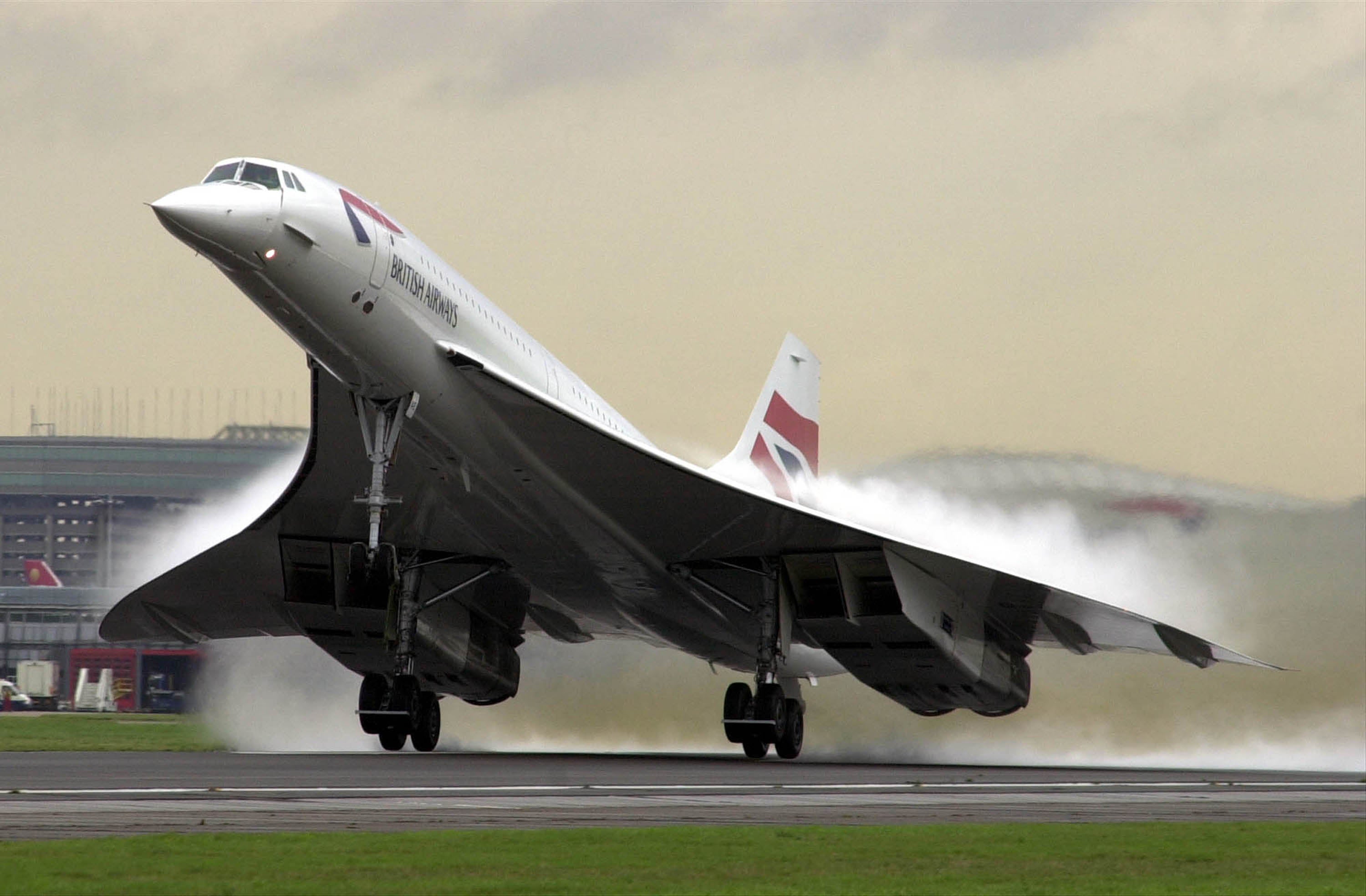
Less than a decade after the dawn of the jet age, supersonic transport (SST) projects were launched in Europe, USSR and the US. Unlike the majority of jet airliner projects, the SST projects were government-led with requirements set by Cold War oneupmanship rather than practical economics. So we got the Concorde: a technological marvel with unworkable airline economics.
Concorde was a joint venture between the French and British governments. With afterburners and 1960s-era systems and aerodynamics, Concorde was a gas guzzler, requiring higher ticket prices — ultimately $20,000. Yet Concorde had 100 seats: it's hard to find 100 people who can afford that price for routine travel. As a result, there wasn't much of a market, and there were no economies of scale.
The American "Concorde-killer," the Boeing 2707, would have been even worse. Taxpayers footed most of the development bill and the federal government set requirements for glory, not practicality: a 300 seat, Mach 3 airliner. The seats would have been impossible to fill at the required fares, and the SST had little hope of earning a profit for airlines. Boeing cancelled development in the early 1970s after Congress pulled the massive subsidy.
Then something rotten happened: supersonic flight over land was banned in the US. Ostensibly, this was about sonic boom noise concerns — but in my honest opinion it was really about protecting US aerospace from Concorde competition: had noise been the real concern, there would have been a noise limit, not a speed limit.

It would be natural for supersonic travel to start with business jets ("SSBJs"): relatively small vehicles, easier to make quiet, aimed at a market willing to pay a premium for time savings. But the supersonic overland ban busts the business case for SSBJs: 75% of bizjet miles are flown over land and buyers are loathe to pay top dollar for an aircraft not faster most of the time. Business jet makers like Dassault, Gulfstream, and Cessna have looked at the SSBJ market and concluded it doesn't make sense until you can fly supersonic over land.
So, instead of private supersonic aircraft paving the way for mainstream supersonic travel, we've had to wait until the technology was ready to serve a large market, despite the overland supersonic ban.
Finally, that day has arrived: with carbon fiber composites, modern aerodynamics and turbofan engines, one can build a small supersonic airliner profitable at business-class fares. Thanks to globalization-driven increases in travel, there is a market for over 1,000 such aircraft, even without supersonic flight over land. That's a large enough market to justify the development costs.
TPG featured card

at Capital One's secure site
Terms & restrictions apply. See rates & fees.
| 5X miles | Earn 5X miles on hotels, vacation rentals and rental cars booked through Capital One Travel |
| 2X miles | Earn unlimited 2X miles on every purchase, every day |
Pros
- Stellar welcome offer of 75,000 miles after spending $4,000 on purchases in the first three months from account opening. Plus, a $250 Capital One Travel credit to use in your first cardholder year upon account opening.
- You'll earn 2 miles per dollar on every purchase, which means you won't have to worry about memorizing bonus categories
- Rewards are versatile and can be redeemed for a statement credit or transferred to Capital One’s transfer partners
Cons
- Highest bonus-earning categories only on travel booked via Capital One Travel
- LIMITED-TIME OFFER: Enjoy $250 to use on Capital One Travel in your first cardholder year, plus earn 75,000 bonus miles once you spend $4,000 on purchases within the first 3 months from account opening - that’s equal to $1,000 in travel
- Earn unlimited 2X miles on every purchase, every day
- Earn 5X miles on hotels, vacation rentals and rental cars booked through Capital One Travel
- Miles won't expire for the life of the account and there's no limit to how many you can earn
- Receive up to a $120 credit for Global Entry or TSA PreCheck®
- Use your miles to get reimbursed for any travel purchase—or redeem by booking a trip through Capital One Travel
- Enjoy a $50 experience credit and other premium benefits with every hotel and vacation rental booked from the Lifestyle Collection
- Transfer your miles to your choice of 15+ travel loyalty programs
- Top rated mobile app