I could have entered Australia at any time during the pandemic – here's why I waited until now


Australia has finally reopened its borders after a two-year ban on foreign tourists that spanned the pandemic.
I'm an Australian citizen (and passport holder) residing in the United Kingdom. As such, I have legally been able to enter Australia during the pandemic ... under certain conditions. Conditions that, until now, discouraged me from returning.
Since my family is still in Adelaide, South Australia, and I lived in Melbourne, Victoria, for eight years before moving to the United Kingdom, I've kept a close eye on the developments in both states over the past two years as well as on Australia in general.
Of course, I've missed my family terribly during the rollercoaster of the pandemic, but there were a number of reasons why I have stayed away for two years. Until now.
Here's why I was finally ready to go back to Australia.
[table-of-contents /]
Mandatory hotel quarantine
In late March 2020, as the world locked down and international travel largely ground to a halt, Australia acted very quickly to stop the spread of COVID-19. In addition to banning foreigners from entering the country for almost any reason whatsoever, the Australian federal government imposed mandatory hotel quarantines for all international arrivals, regardless of their citizenship, where they arrived from or their reason for travel.
This meant incoming visitors could expect 14 days isolated in a hotel room, with no exceptions: no going outside for exercise, to collect a food delivery in the lobby, nothing. Your hotel room door was locked and the only time it would be opened was when food was delivered and COVID-19 tests were performed.
There was no choice of hotel type, location or room choice (though Australian hotels did often try to allocate the larger rooms for families traveling together). Many rooms had no balcony, courtyard or outdoor space, and many windows did not even open a crack, which I understand was by design for both safety, and to help regulate the temperature across the hotel.

No housekeeping meant no laundry or clean sheets for two weeks. Just 14 days of living in your own 'nest' trying to pass the time.
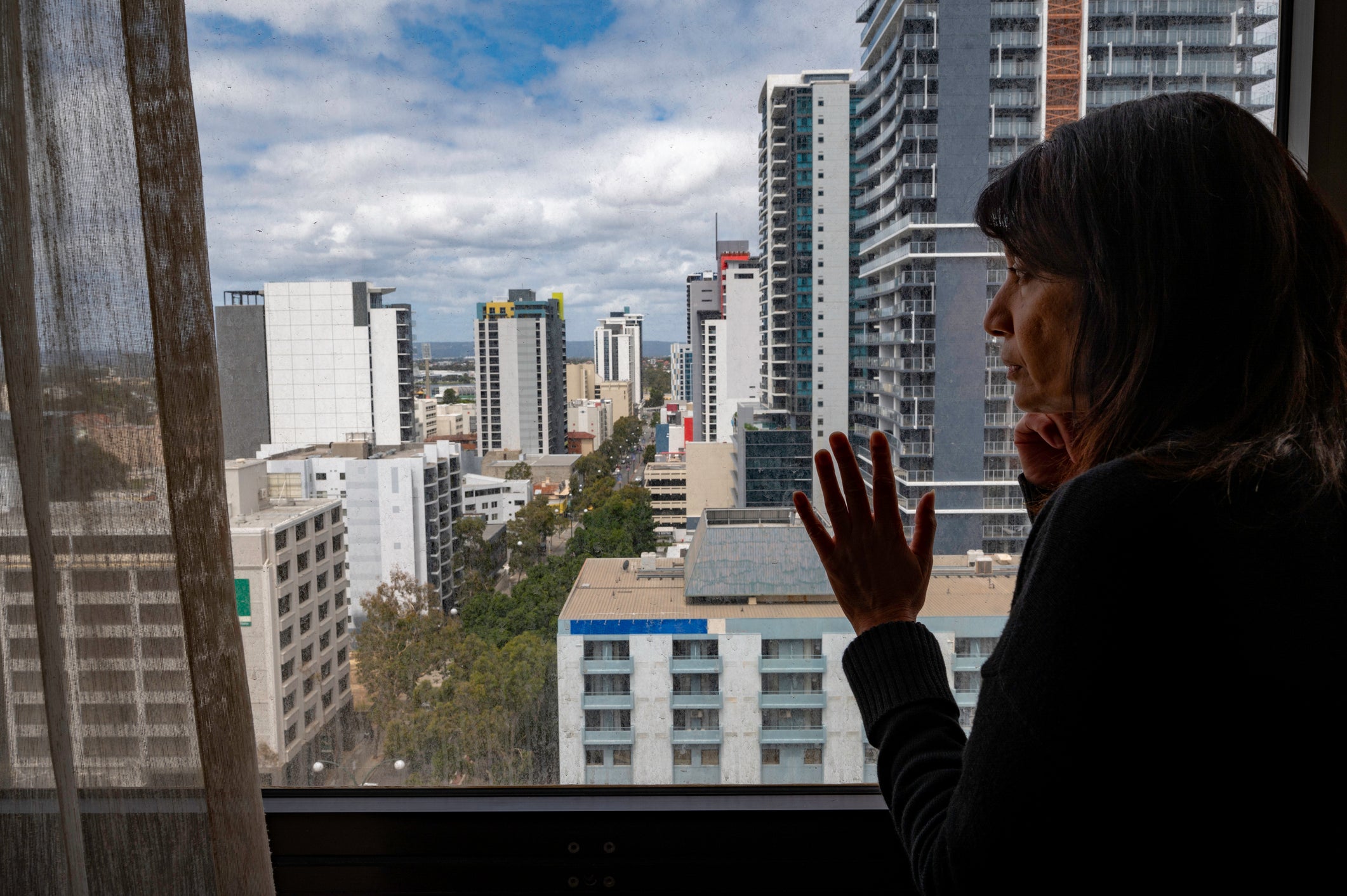
Initially, the quarantine program was provided for free to all arrivals. Almost everyone entering Australia in the first few months of the pandemic was an Australian returning home, either because they had been on holidays abroad as lockdown hit, or they had decided to move home permanently amid all the uncertainty.
While the hotel quarantine program did not seem particularly enjoyable to me, at least it was free and allowed those Australians who were able to get on a flight to come home. I had no immediate need to return home, though. I had just been to Australia in January for my best friend's wedding. So I figured I'd bide my time and see how things developed.
Operating the quarantine system in this strict manner proved expensive for the Australian government. On top of paying the hotels for the thousands of rooms they needed to house arrivals, there were the three meals per day, multiple PCR tests for each guest, transport from the airport to the hotel and plenty of security to control every step of the process and keep COVID-19 out of the community.
Within weeks, the Australian government announced that travelers would have to pay for their own hotel quarantine at a rate of around $2,000 per person, with a discount for two or more people sharing a room. Not only did anyone entering the country from abroad have to remain tightly locked up in a room for 14 days, but they now had to pay handsomely for that privilege.
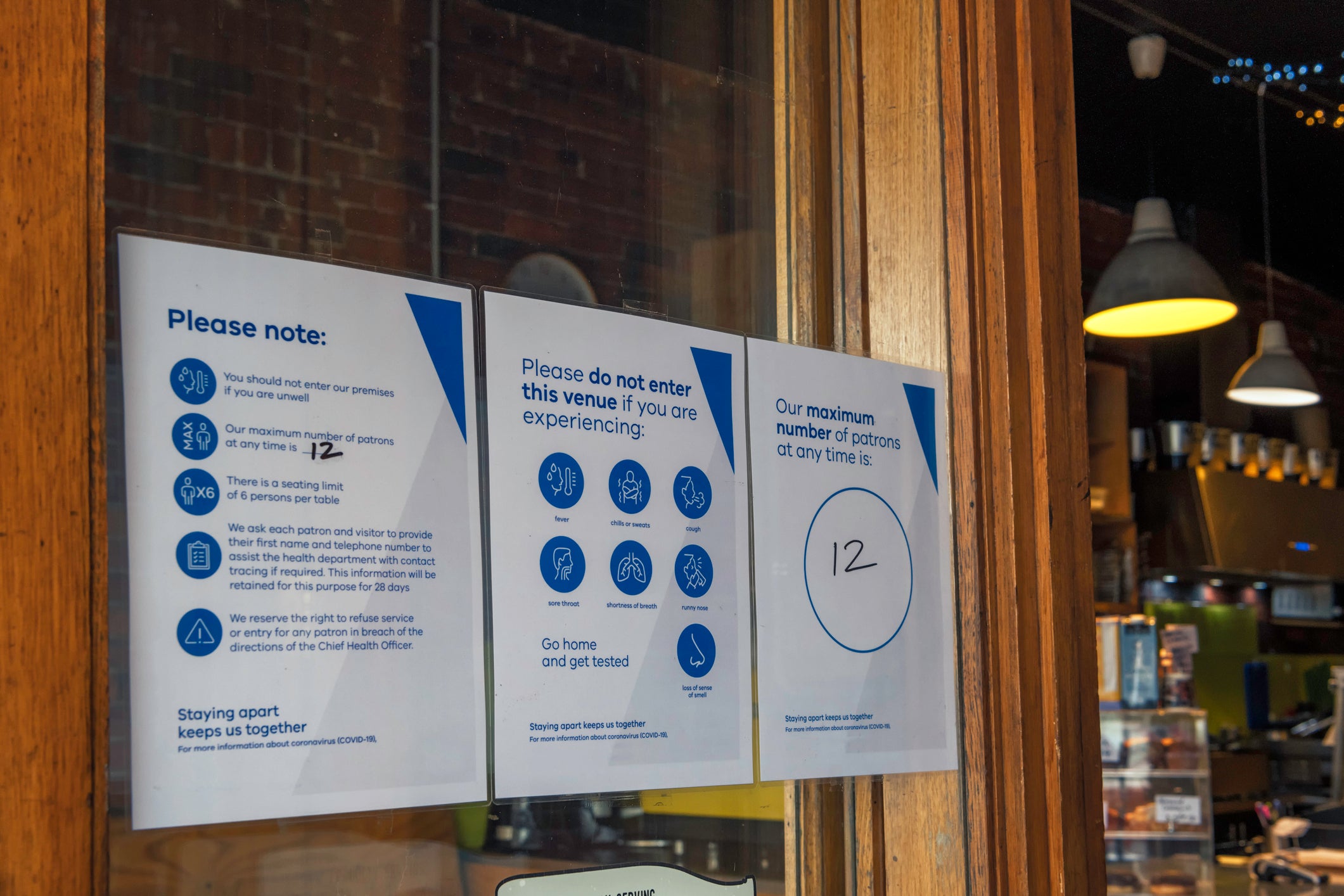
This alone was not enough to completely deter me from entering Australia and seeing my family and friends. While the quarantine would be an expensive exercise, I could potentially just work from the hotel room for the 14 days (it was either that or watch Netflix) and then I could enter the coronavirus-free community, confident that I also didn't have COVID-19.
Then came the passenger caps.
Limits on passenger arrival numbers
Even with passengers paying over $2,000 for the hotel quarantine, processing arrivals was still a huge financial burden for the Australian government.
So, in July 2020, with tens of thousands of Australians still trying to return home, the Australian government implemented strict limits on how many people could arrive in the country each week.
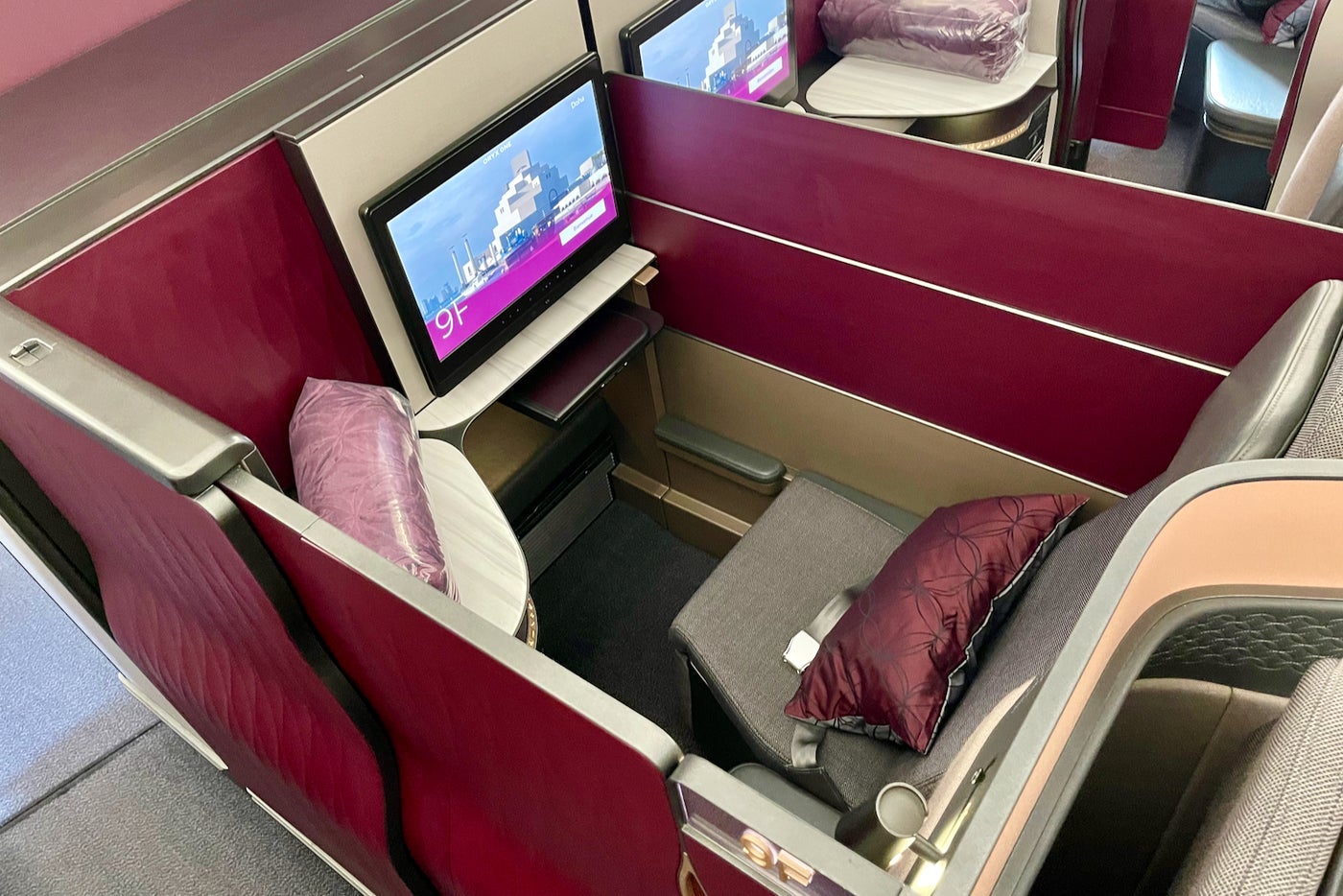
How this worked in practice was that the few international airlines who were still flying into Australia were limited as to how many tickets they could sell on each flight -- often a cap of only 50 seats on an aircraft that might have seated upwards of 400 passengers otherwise. While this was good for social distancing on board, it made the flights commercially unviable. Some airlines stopped flying to Australia altogether, while others, such as Qatar Airways, took the unusual step of only selling business-class tickets on their flights, with the economy cabins going out completely empty.
With Australians banned from leaving Australia for nonessential purposes and no foreign tourists, the flights departing Australia were almost empty, too.
The logic was that, if the airlines could only sell 50 seats on a flight, the only way to justify operating the flight was to sell those 50 tickets at around $5,400 each, rather than the normal method of selling 400 tickets at prices ranging from about $700 to $7,000) each.
That meant getting to Australia would require me to purchase a full-fare business-class ticket, then pay for a 14-day quarantine in a potentially airtight hotel room. Using miles and points? Forget about it -- availability was nonexistent on airlines still operating flights. It looked like I wasn't getting home anytime soon.
Related: The best ways to use points and miles to fly from the US to Australia
The caps on international arrivals had a polarizing effect on the people of Australia. Some argued the caps were cruelly low and stopped Australian citizens who did not have deep pockets from being able to return home for legitimate reasons. If you were living overseas and became unemployed, as so many people did because of the pandemic, you would need to spend thousands of dollars to have any chance of returning home.
Other Australians were less sympathetic. I read plenty of comments on social media in 2020 that travelers had many weeks at the start of the pandemic to return home with no arrival caps and free hotel quarantine, and so should not have waited to make plans.
For people like me, they were even less sympathetic — that I would dare to travel for leisure (if simply visiting your family could be considered a leisure trip) during a global pandemic and take the space from someone trying to return home permanently or for compassionate reasons. I think that, for most people trying to return home permanently several months into the pandemic, it was because of an unexpected change in their situation abroad. I had no immediate need to return to Australia permanently, and I also didn't want to take a seat from someone who needed it more.
Christmas came and went with the caps and quarantine still in place. I had my first-ever Christmas in London and tried to make the best of a bad situation, but it was certainly tough seeing my family together enjoying a very normal Christmas without restrictions (Australia's zero-COVID strategy was working) and without me.
In the depths of another bleak U.K. lockdown and a ban on leisure travel in January of 2021, I found some cheap round-trip Qatar Airways business-class flights to Australia for only $2,345 per person and booked flights home for Christmas of that year. Finally, something to look forward to!
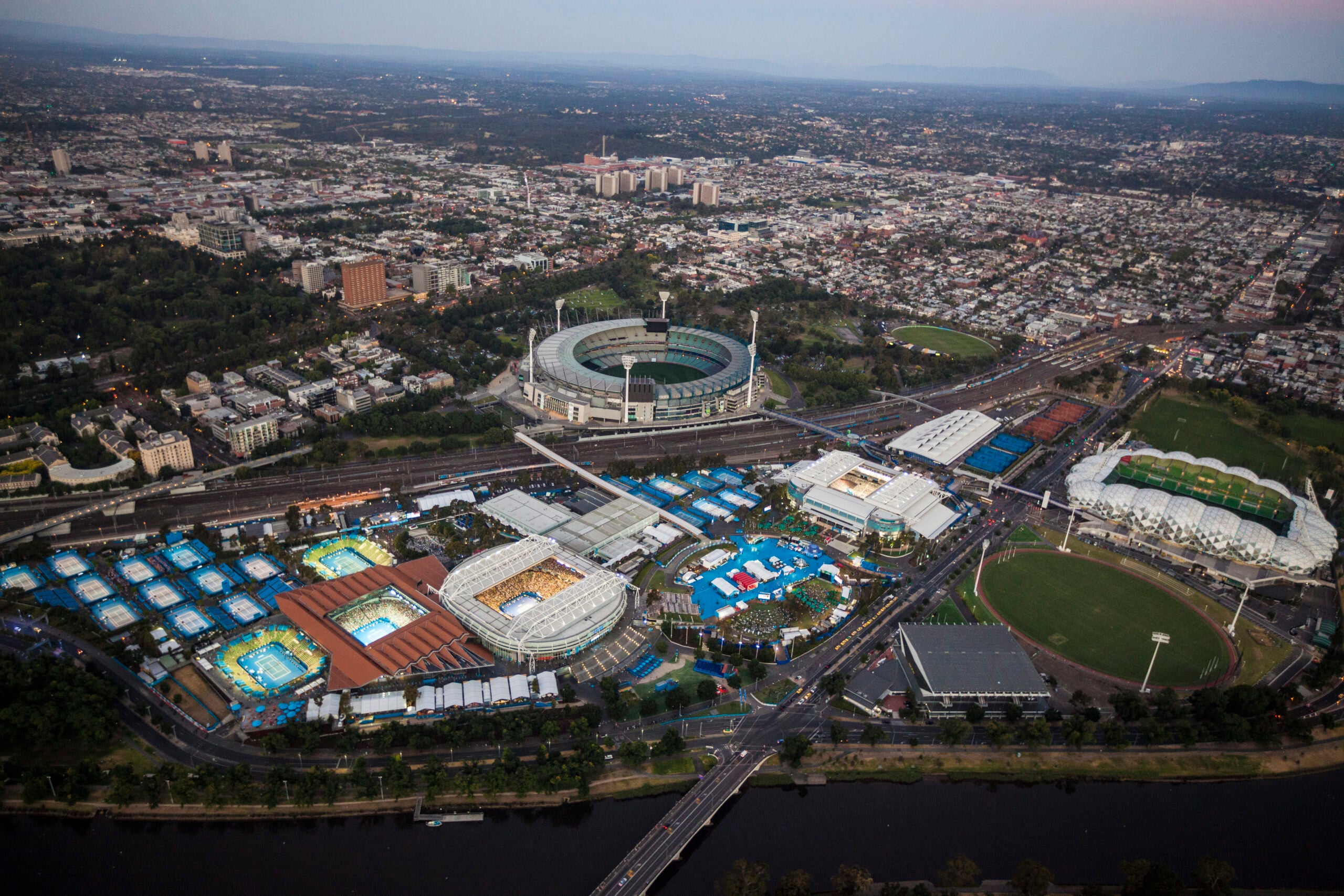
But in July, when the delta variant began taking hold, the Australian government halved the cap on international arrivals to only 3,000 people per week. More flights were canceled and airfares became even more expensive.
At the same time, Melbourne became one of the most locked-down cities in the world.
Vaccine rollout and omicron
In October of 2021, certain Australian state governments announced they would begin allowing some fully vaccinated arrivals to quarantine at home or in a private residence, rather than in a supervised hotel and that the quarantine period would be reduced from 14 to seven days.
This was an exciting development for me -- the idea of doing my quarantine in a private residence or Airbnb of my choice with space, a backyard, exercise and fresh air seemed much better than paying thousands of dollars to be locked in a hotel room. I monitored my Christmas flights home on Qatar Airways which were still listed as operating despite some regular but minor schedule changes.
Then the omicron variant arrived.
Some states that had previously not seen major community transmission of COVID-19 suddenly saw a surge in cases. The country was progressing with its vaccine program, but it still lagged behind countries such as the United Kingdom. Rather than going back into lockdown, state governments focused on increasing vaccination rates as their defense against omicron.
I sat tight and watched and waited, still hopeful my Christmas trip would proceed, even if it meant a quarantine period at home with my family.
Related: Which airports are the best to connect in when flying to Australia?
Testing woes and rule changes
The plan for my Christmas trip was to fly into Melbourne for around a week and then head to Adelaide for Christmas. South Australia kept changing their entry requirements every few days for international arrivals (which included those coming from other states who had been overseas in the past 14 days). The constant rule changes were incredibly frustrating as I was trying to plan a trip to the other side of the world, which required certainty.
Melbourne's rules were more stable. Provided I tested negative on arrival, I would only need to quarantine for 72 hours, which seemed like a piece of cake compared to the 14 days required by the state of Victoria previously.
But an unexpected problem arose in December as I prepared to pack my bags: testing.
In the United Kingdom, it was easy to find a test. You could get a free National Health Service test if you had COVID-19 symptoms, or if you had been close to someone who has tested positive. If you needed a test for travel, you had to purchase one from a private provider.
In Australia, the testing situation was very different. At that stage, PCR tests were freely available to anyone who wanted one for any reason, mostly administered by drive-thru or walk-in clinics set up in major public spaces.
With thousands of new cases of the new omicron every day appearing in multiple states just weeks before Christmas, the public was nervous. Would their Christmas be ruined because someone at the pub had the omicron variant?
So, Australians got tested in the tens of thousands.
They flocked to testing centers, resulting in wait times that exceeded six hours in some locations. Some slept in their cars overnight in order to be tested the following morning. With the rules as they were at Christmas, I would have had to take a test on arrival, quarantine until I received a negative test result and then take three more PCR tests in the first 14 days.
Each of these had to be performed at a drive-thru or walk-in testing center. Paid private tests were unavailable because they were booked solid for months ahead of time by people trying to avoid the hours-long wait times.
The last thing I wanted to do on Christmas was sit in a car for hours on end in the heat — multiple times. Plus, testing centers closed regularly when temperatures exceeded 95 degrees Fahrenheit, which meant I wouldn't know if and when my testing would actually occur.
Oh, and while processing times were expected to be around 24 to 36 hours, some people ended up waiting three or four days for their results. Some never received them as South Australia Health was overwhelmed with an unprecedented demand for testing right when staff members were trying to take Christmas holidays.
What sort of Christmas would it even be in Australia, I thought to myself, if I even make it there to begin with? Family and friends were too scared to leave the house for fear of catching COVID-19 and then passing it to their loved ones at Christmas, so I might not even be able to connect with many people.
My visit home was looking increasingly less realistic.
The final straw was when South Australia yet again changed its entry rules to deem that anyone who had been overseas in the past 14 days would be required to complete 14 days of home quarantine. This made it impossible to get into the state and out of quarantine before Christmas, the sole purpose of my intended trip.
So, with a very heavy heart, just a week before departure, I canceled the Qatar Airways tickets I had been holding onto for nearly a year.
Related: Why you might want to wait before booking a trip to Australia this Christmas
I continued to follow the daily cases and changes to testing and restrictions with a mixture of interest and frustration since Christmas.
The good news is things have stabilized since the pre-Christmas panic and South Australia is no longer changing its rules every few days. While most Australian states are still experiencing over 1,000 new COVID-19 cases every day, the numbers have remained steady, and are mostly decreasing.
PCR tests on arrival have now largely been abandoned and replaced with a single at-home lateral flow test. I suspect this is simply because testing centers could not cope with the demand for tests, rather than a government preference for lateral flow tests.
Related: 10 new hotels in Australia you can visit now that the country is reopening to tourists
Why I feel comfortable visiting Australia now
Australia is not the coronavirus-free fortress it was 12 months ago. New cases are being recorded in communities across the country, and masks and social distancing mandates are probably going to remain for many months. Still, with the exception of Western Australia, Australia has now mostly abandoned its strict "zero-COVID" strategy and is now "living with the virus," similar to the U.S. and the U.K.
Entry requirements have been dramatically eased, as have on-arrival testing requirements.
Given the stability of the situation over the last month and the significant steps to reopen the borders to international tourists starting Feb. 21, I figured now was as good a time as any to visit my family. I have missed them terribly, and when my mother called me recently to tell me she had received some unexpected health news, I was able to cheer her up a bit by telling her I was coming home.
Related: What are the travel rules for visiting Australia now it's reopened to tourists?
Was it worth it?
That was the question at the heart of my travel conundrum, and I can now say without question that returning to Australia, finally, was unequivocally worth it.
After landing in Australia late last week, life here looks surprisingly normal once you get past the mask-wearing and contact-tracing check-ins which have become a normal part of life here over the last two years. With the exception of Western Australia, the rest of the country is very much "living with the virus" right now.
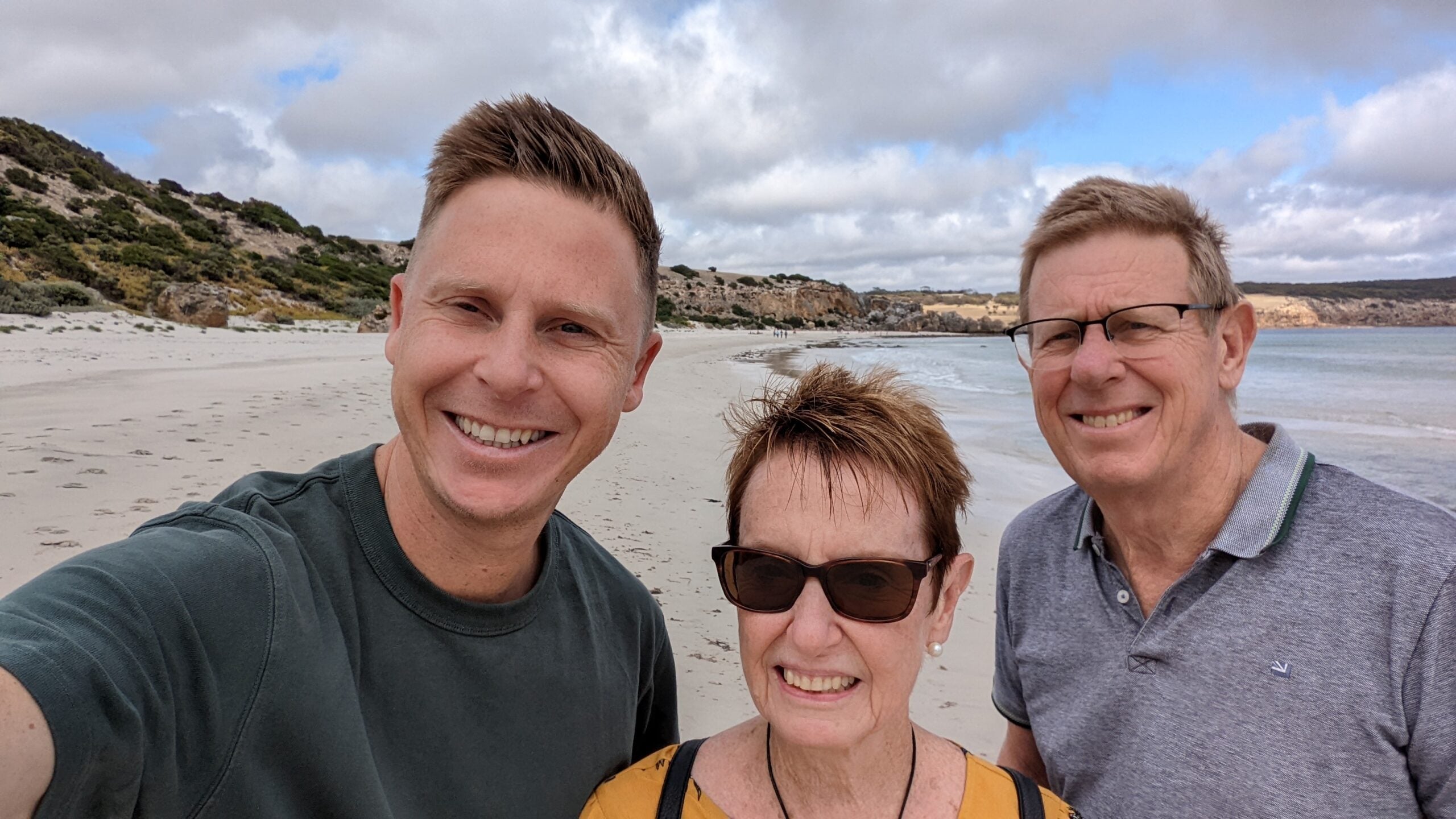
While I always enjoy spending time with my Australian friends, it was seeing my parents that was the most emotional experience for me. The tears streaming down my face and my parents' as I was finally reunited with them in the arrivals hall was a moment I will never forget.
They have admitted they may never be able to make the journey to visit me in Europe again because of increasing health issues (they usually made the journey once a year before the pandemic). And being so far from my loved ones with no easy way to see them has taken a significant toll on all of us. It made me realize that life can throw you some real curveballs. All the more reason to make the most of every situation whenever you can -- as I'm attempting to do with my visit.
Bottom line
The pandemic has seen loved ones separated, important life plans put on ice and endless disappointments. Remember when U.K. Prime Minister Boris Johnson effectively canceled Christmas in 2020?
Even more than before, traveling from Europe to Australia is a big undertaking, and though I have done the marathon journey countless times, I wanted to be comfortable I could enter the country and enjoy my time there, rather than spending it locked in a quarantine hotel room, or sweltering for hours queued up for COVID-19 tests.
The conditions at this particular moment finally made it the right time for me to undertake that journey. I could enter Australia easily, avoid long quarantines and see my loved ones with minimal risk involved. And so far, it has been well worth the trip.
If you have been unable to see your family abroad during the pandemic I would encourage you to consider doing so. It was worth every mile, COVID-19 test, time change and second spent wearing a face covering.
TPG featured card

at Capital One's secure site
Terms & restrictions apply. See rates & fees.
| 5X miles | Earn 5X miles on hotels, vacation rentals and rental cars booked through Capital One Travel |
| 2X miles | Earn unlimited 2X miles on every purchase, every day |
Pros
- Stellar welcome offer of 75,000 miles after spending $4,000 on purchases in the first three months from account opening. Plus, a $250 Capital One Travel credit to use in your first cardholder year upon account opening.
- You'll earn 2 miles per dollar on every purchase, which means you won't have to worry about memorizing bonus categories
- Rewards are versatile and can be redeemed for a statement credit or transferred to Capital One’s transfer partners
Cons
- Highest bonus-earning categories only on travel booked via Capital One Travel
- LIMITED-TIME OFFER: Enjoy $250 to use on Capital One Travel in your first cardholder year, plus earn 75,000 bonus miles once you spend $4,000 on purchases within the first 3 months from account opening - that’s equal to $1,000 in travel
- Earn unlimited 2X miles on every purchase, every day
- Earn 5X miles on hotels, vacation rentals and rental cars booked through Capital One Travel
- Miles won't expire for the life of the account and there's no limit to how many you can earn
- Receive up to a $120 credit for Global Entry or TSA PreCheck®
- Use your miles to get reimbursed for any travel purchase—or redeem by booking a trip through Capital One Travel
- Enjoy a $50 experience credit and other premium benefits with every hotel and vacation rental booked from the Lifestyle Collection
- Transfer your miles to your choice of 15+ travel loyalty programs
- Top rated mobile app