Why Airbus planes sometimes 'bark,' and Boeings don't
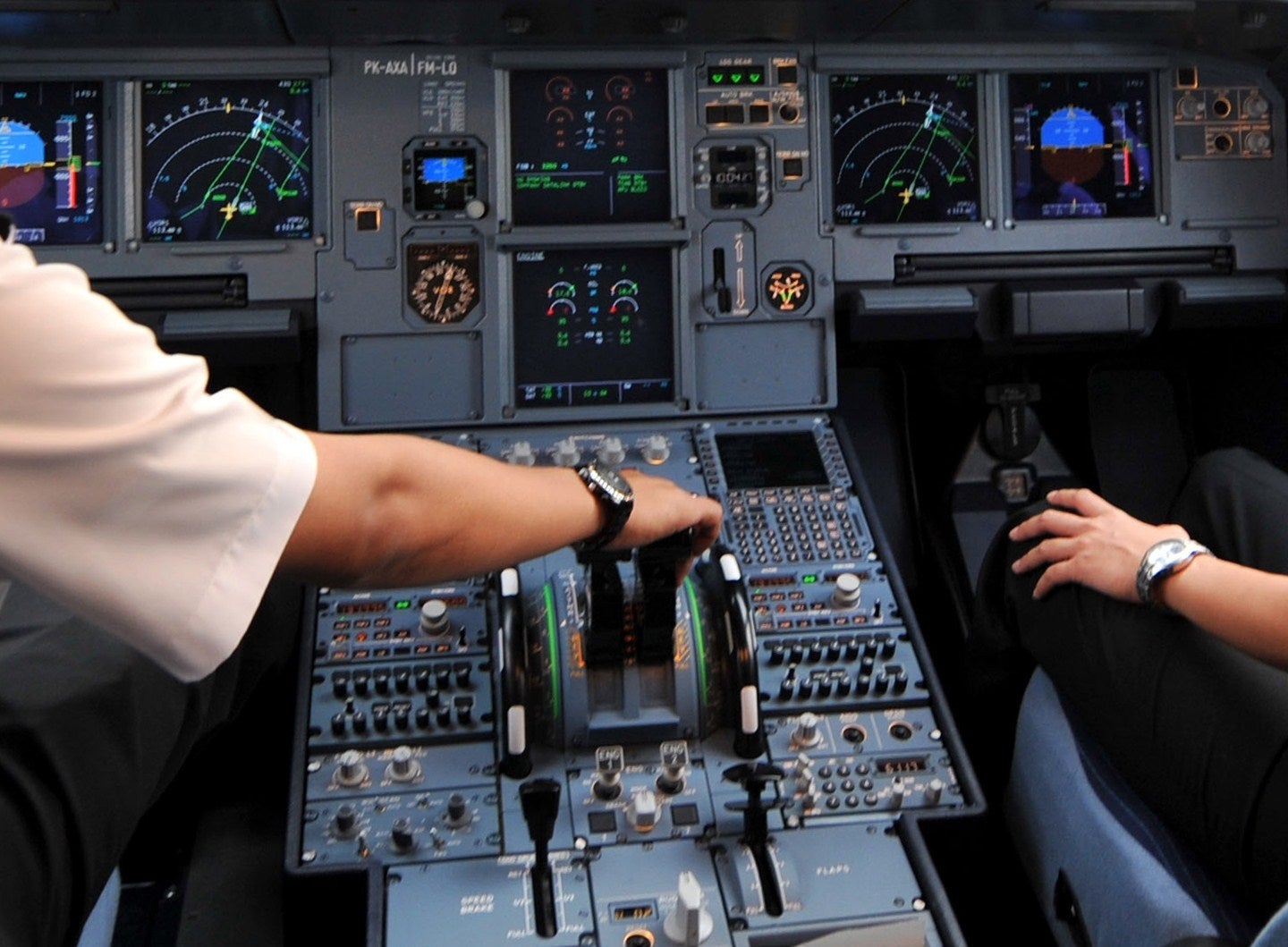
Woof! Woof! Woof!
In the video below, filmed by TPG reporter Madison Blancaflor while on the ground in Charlotte waiting to take off to LaGuardia on an American Airlines Airbus A321, you can hear an unusual barking noise.
You may have heard this noise, too, while sitting on the plane at the gate. It definitely sounds like an unhappy barking dog from the floor under your seat. But take heart: It's not an unhappy dog at all, or a dentist performing work in the baggage hold.
Oh, and your plane has to be an Airbus A318, A319, A320, A321, or A330. (Boeing aircraft don't bark).
What's up with all that? We asked Chris Brady, a long-time Boeing 737 and A320 pilot in Europe, who runs the popular Boeing 737 Technical Site and Facebook page.
Where does the barking dog noise come from?
Flight controls, brakes and steering systems (among others), are powered by hydraulic systems on aircraft such as the A320 or Boeing 737. Those hydraulic systems operate under pressure, some 3,000 psi.
Brady explained that the A320 family has three independent hydraulic systems. The hydraulic systems are normally pressurized by pumps. For redundancy, the aircraft has alternative ways to pressurize those systems, including electric pumps, a ram air turbine (a little propeller that drops out of the side of the fuselage if needed) and the Power Transfer Unit (PTU).
It's the PTU that makes the barking noise. It transfers hydraulic pressure from one of the systems to the other when there is a measurable pressure difference, 500 psi. between the two. When the pressure drops, the PTU kicks in. The PTU is located near the main landing gear, and that's why passengers can hear the noise seemingly coming from mid-way down the aisle, under the floor.
The barking happens most frequently at the gate and taxi, where most aircraft will run only one engine to save fuel. With one engine off, that engine doesn't provide power the pump to provide hydraulic pressure in one of the systems. The PTU balances the hydraulic pressure between the two hydraulic systems, and goes on and off as it does so.

Enter the Saint Bernard. Or the drilling noise.
"The hydraulic system sees this as an engine failure and so runs the PTU. The same goes during taxi, when three minutes after landing it is permitted to shut down one engine to save fuel," Brady said. "This again appears to the hydraulics as an engine failure and so it starts the PTU." The PTU also self-tests when the right engine is started.
"We don't actually hear this noise from the flight deck but, like the rest of the public, we do hear it if we are traveling in the cabin as a passenger. It seems to come from under the cabin floor near the wings and you hear it as the engines are starting and sometimes again when taxiing in," Brady explained.
The A320 has a pronounced dog bark or drill, but Airbus came up with a solution to dampen the sound with their A320neo, particularly when it was discovered that newly-delivered planes barked even louder that previous models. Now, you don't really hear the noise. Said Brady: "The pumps within the PTU and hydraulic lines now have two additional hydraulic dampers, one near the engines and the other near the wing root. This eliminates the barking-dog noise."
Sad, really.
Why don't Boeing Aircraft Bark?
The Boeing 737 and its Boeing brethren don't bark. Quite simply, their hydraulic systems differ from the Airbus. While they still have a PTU, Boeing aircraft have two independent hydraulic systems and a standby. The PTU kicks in to provide hydraulic pressure if the pressure in the two main systems drops, and only if the aircraft is airborne. In addition, the PTU powers hydraulics in the slats and therefore less systems than the A320 family. The result? No dachshunds.
On Airbuses, the barking can sometimes be heard in the air, as well, which is guaranteed to freak out some passengers. In the video below, because it occurred on takeoff, it could be a difference in pressure on the retraction of the landing gear.
Now, for the real controversy.
Is that noise a bark, a pneumatic drill or a dentist's drill? And if it's a dog, what kind of dog?
Mike Arnot is the founder of Boarding Pass NYC, a New York-based travel brand, and a marketing consultant to airlines, none of which appear in this article.
TPG featured card
at American Express's secure site
Terms & restrictions apply. See rates & fees.
| 4X | Earn 4X Membership Rewards® points per dollar spent on purchases at restaurants worldwide, on up to $50,000 in purchases per calendar year, then 1X points for the rest of the year. |
| 4X | Earn 4X Membership Rewards® points per dollar spent at US supermarkets, on up to $25,000 in purchases per calendar year, then 1X points for the rest of the year. |
| 5X | Earn 5X Membership Rewards® points on prepaid hotel stays booked through AmexTravel.com or the Amex Travel App™. |
| 3X | Earn 3X Membership Rewards® points on flights booked through AmexTravel.com, the Amex Travel App™, or purchased directly from airlines. |
| 2X | Earn 2X Membership Rewards® points on prepaid car rentals booked through AmexTravel.com or the Amex Travel App™ and cruises booked and paid through AmexTravel.com. |
| 1X | Earn 1X Membership Rewards® point per dollar spent on all other eligible purchases. |
Pros
- Valuable dining and food-related credits
- Flexible rewards with airline and hotel transfer partners
- Multiple travel and purchase protections
- No foreign transaction fees
- Access to Amex Offers for additional savings (enrollment required)
Cons
- Not as useful for those living outside the U.S.
- Some may have trouble using Uber and other dining credits
- You may be eligible for as high as 100,000 Membership Rewards® Points after you spend $8,000 in eligible purchases on your new Card in your first 6 months of Card Membership. Welcome offers vary and you may not be eligible for an offer. Apply to know if you’re approved and find out your exact welcome offer amount – all with no credit score impact. If you’re approved and choose to accept the Card, your score may be impacted.
- Earn 4X Membership Rewards® points per dollar spent on purchases at restaurants worldwide, on up to $50,000 in purchases per calendar year, then 1X points for the rest of the year.
- Earn 4X Membership Rewards® points per dollar spent at US supermarkets, on up to $25,000 in purchases per calendar year, then 1X points for the rest of the year.
- Earn 5X Membership Rewards® points on prepaid hotel stays booked through AmexTravel.com or the Amex Travel App™.
- Earn 3X Membership Rewards® points on flights booked through AmexTravel.com, the Amex Travel App™, or purchased directly from airlines.
- Earn 2X Membership Rewards® points on prepaid car rentals booked through AmexTravel.com or the Amex Travel App™ and cruises booked and paid through AmexTravel.com.
- Earn 1X Membership Rewards® point per dollar spent on all other eligible purchases.
- Pay It® lets you tap in the American Express® App to quickly pay for small purchase amounts throughout the month and still earn rewards the way you usually do. Plan It® gives you the option to split up big purchases into equal monthly payments with a fixed fee. You’ll know upfront exactly how much you’ll pay.
- $120 Dining Credit: Earn up to a total of $10 in statement credits monthly when you pay with the Gold Card at Grubhub (including Seamless), Buffalo Wild Wings, Five Guys, The Cheesecake Factory, and Wonder. This can be an annual savings of up to $120. Enrollment required.
- $100 Resy Credit: Get up to $100 in statement credits each calendar year at over 10,000 qualifying U.S. Resy restaurants after you pay for eligible purchases with the American Express® Gold Card. That’s up to $50 in statement credits semi-annually. Enrollment required.
- $84 Dunkin' Credit: Earn up to $7 in monthly statement credits after you pay with the American Express® Gold Card at U.S. Dunkin’ locations. Enrollment required.
- $120 Uber Cash on Gold: Enjoy up to $120 in Uber Cash annually with your Gold Card. Just add your Card to your Uber account and you'll get $10 in Uber Cash each month to use on orders and rides in the U.S. when you select an Amex Card for your transaction.
- Enjoy complimentary Hertz Five Star® Status benefits like skipping the counter at select locations, adding an additional driver at no additional cost*, and vehicle upgrades**. Benefit enrollment and Hertz Gold+ registration are required. *Additional drivers must meet standard rental qualifications and must be a spouse or domestic partner to qualify as complimentary. Other additional drivers subject to fees. **Benefits are subject to availability and vary by location. Additional Hertz program Terms and Conditions including age restrictions apply.
- Book two nights or more with The Hotel Collection through AmexTravel.com or the Amex Travel App™ and receive a $100* credit towards eligible charges at over 1,400 upscale hotels worldwide. *Eligible charges vary by property.
- Book your travel through the Amex Travel App™ with added peace of mind – backed by American Express® service and support. Only for American Express® Card Members.
- Whenever you need us, we're here. Our Member Services team will ensure you are taken care of. From lost Card replacement to statement questions, we are available to help 24/7.
- No Foreign Transaction Fees.
- Annual Fee is $325.
- Terms Apply.