When Helicopters Landed on Manhattan Skyscrapers All the Time

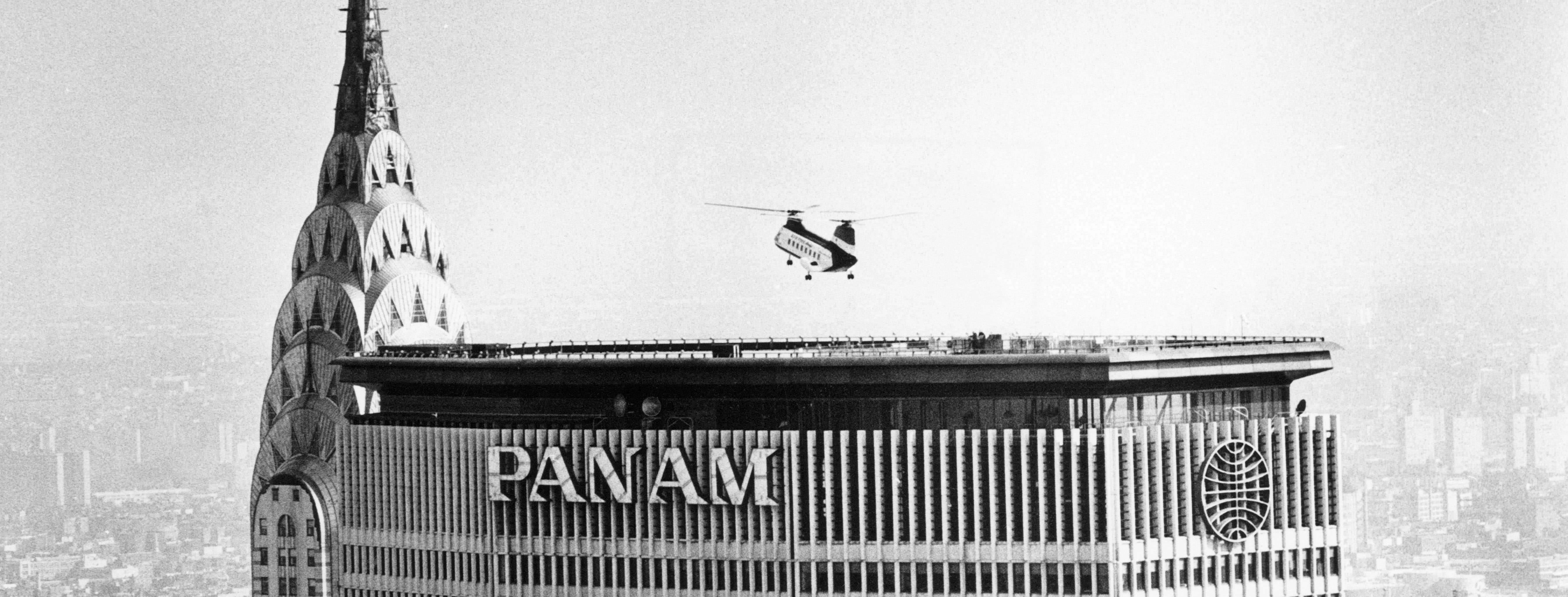
Helicopters are a constant sight in Manhattan, where they whizz by the city hundreds of times a day, taking off from three heliports next to the rivers around the island. But the ubiquitous thump of helicopter blades is not a recent addition to the city; it has been a Manhattan feature since the early 1950s.
Monday's accident in midtown Manhattan, in which the pilot died when his helicopter crash-landed on a West Side skyscraper, called to mind another era. For about two decades, helicopters were actually a common means of commuting between Manhattan and the city's airports, and even between those airports.
Helicopter commuting was common in New York until the late 1970s. In 1977, an accident that killed five people in Midtown created a sensation and highlighted the dangers of flying helicopters among skyscrapers. It also put an end to helicopter landings on top of buildings in the city.
On May 16, 1977, a huge Sikorsky S-61 helicopter belonging to New York Airways flipped on top of the Pan Am Building, where a heliport had been operating for years. Its rotors were spinning as it waited to take off and the rotor blades, cut off as the helicopter fell on its side, sliced through people waiting to board. Four died, and another person on the street was killed when a falling piece of blade hit her. The heliport on the Pan Am building was closed and never reopened.
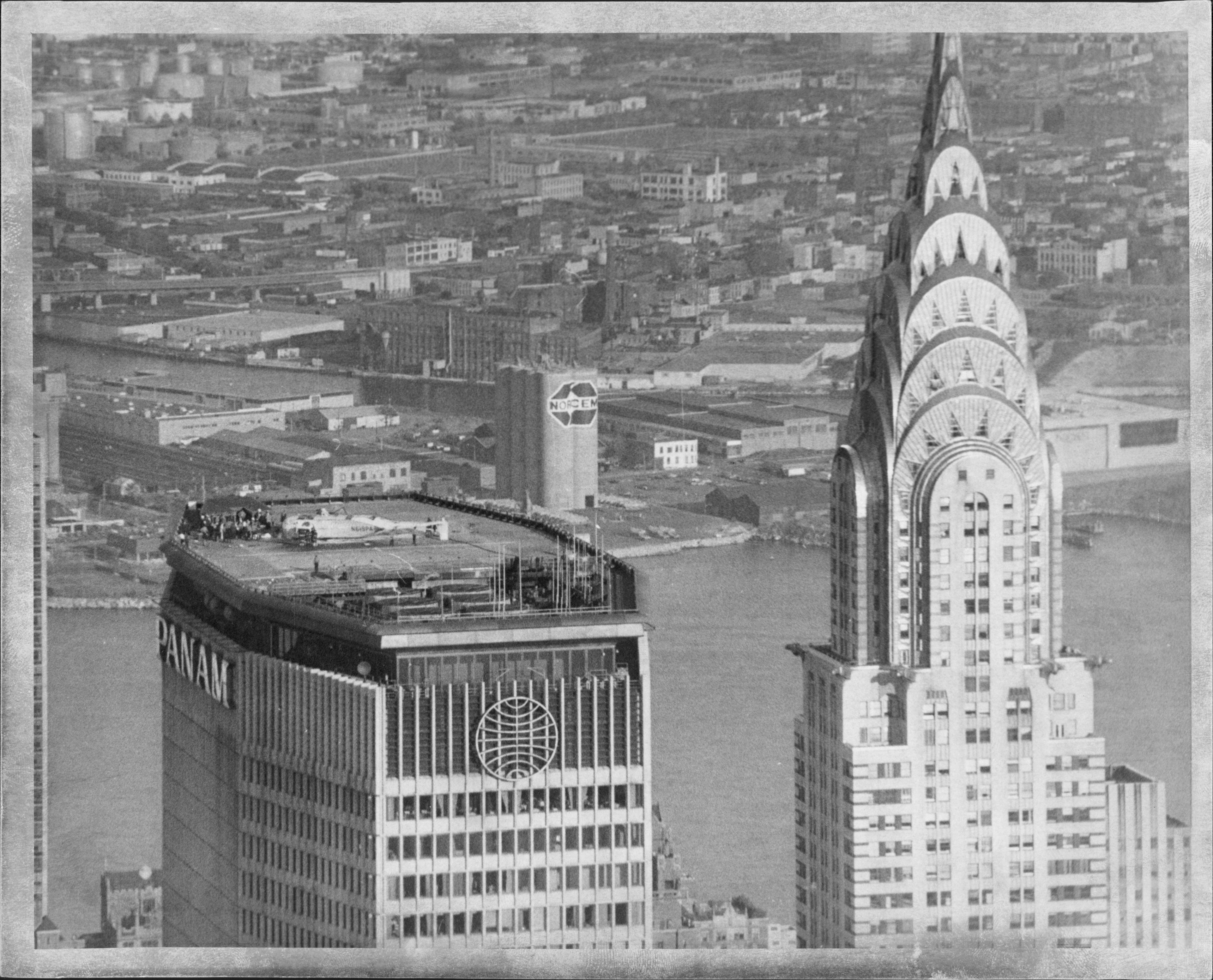
That was the second accident for New York Airways, which had been founded in 1953 using military-surplus choppers. The airline had a third crash in 1979 at Newark airport and went bust shortly afterwards, ending the era of widespread airport commuting by helicopter.
The New York Times said that the roof of the 808-foot-tall Pan Am Building, now the MetLife Building, "was used as a helipad from 1965 to 1968, transporting passengers from Midtown to the Pan Am terminal at John F. Kennedy Airport. The helipad was reopened in February 1977, just three months before the accident."

It was the ultimate jet-age perk: You could check in at Pan Am's own building and fly from it to the airport. It wasn't easy flying, however: Wind and weather made it tough, and night landings were especially hard.
"Probably the most challenging thing I've ever done," recalled a New York Airways pilot speaking to Bloomberg News, "except for getting shot at in Vietnam."
The helicopters ferrying customers to JFK today are much smaller than the giant Sikorskys that plied the New York skies decades ago. Those Sikorsky S-61s were near-identical twins of the mighty US Navy choppers that picked up Apollo astronauts from the ocean and hunted Soviet submarines during the Cold War; they still fly today all over the world, notably as Marine One, the helicopter that transports the President of the United States.
Today, if you take a BLADE helicopter to JFK or the Hamptons from Manhattan, you'll be likely to fly in a six- or eight-place Bell, Eurocopter or Agusta chopper. Those are very different aircraft from the 30-seater Sikorskys that could be five times as heavy. And, most importantly, you won't be taking off from the top of bulidings. All of Manhattan's three heliports are at the water's edge, two on the East River and one on the Hudson.
TPG featured card

at Capital One's secure site
Terms & restrictions apply. See rates & fees.
| 5X miles | Earn 5X miles on hotels, vacation rentals and rental cars booked through Capital One Travel |
| 2X miles | Earn unlimited 2X miles on every purchase, every day |
Pros
- Stellar welcome offer of 75,000 miles after spending $4,000 on purchases in the first three months from account opening. Plus, a $250 Capital One Travel credit to use in your first cardholder year upon account opening.
- You'll earn 2 miles per dollar on every purchase, which means you won't have to worry about memorizing bonus categories
- Rewards are versatile and can be redeemed for a statement credit or transferred to Capital One’s transfer partners
Cons
- Highest bonus-earning categories only on travel booked via Capital One Travel
- LIMITED-TIME OFFER: Enjoy $250 to use on Capital One Travel in your first cardholder year, plus earn 75,000 bonus miles once you spend $4,000 on purchases within the first 3 months from account opening - that’s equal to $1,000 in travel
- Earn unlimited 2X miles on every purchase, every day
- Earn 5X miles on hotels, vacation rentals and rental cars booked through Capital One Travel
- Miles won't expire for the life of the account and there's no limit to how many you can earn
- Receive up to a $120 credit for Global Entry or TSA PreCheck®
- Use your miles to get reimbursed for any travel purchase—or redeem by booking a trip through Capital One Travel
- Enjoy a $50 experience credit and other premium benefits with every hotel and vacation rental booked from the Lifestyle Collection
- Transfer your miles to your choice of 15+ travel loyalty programs
- Top rated mobile app