What Happens to Uneaten Food Once Your Plane Lands?


Sustainability was a hot topic at the Aircraft Interiors Expo in Hamburg last week.
TPG sat down with Fabio Gamba, the managing director of the Airline Catering Association, the leading industry body representing the different stages of airline food and beverage preparation, from offsite production to being served to you at your seat, to find out.
We asked him what happens after you finish your meal and the crew takes your tray away? Where do the cutlery and plates (or trays) go? If you don't touch your dessert, is it recycled?
The answers may surprise you.
Aviation is highly regulated with some of the strictest standards of any industry, Gamba said. Because of this, all food served on a commercial flight is within a so-called "closed-loop system", where each step is tightly controlled from start to finish with no outside influences or variables.
This is the opposite to, say, street-food vendors that might end up producing slightly different versions of their food each day due to variables like location, weather, demand and staffing levels.
The same precision that is applied to the food preparation also applies to the waste and disposal at the end of each flight. The Airline Catering Association says some airlines do split waste between items that can be recycled and those that cannot, and that this is usually only done on board.
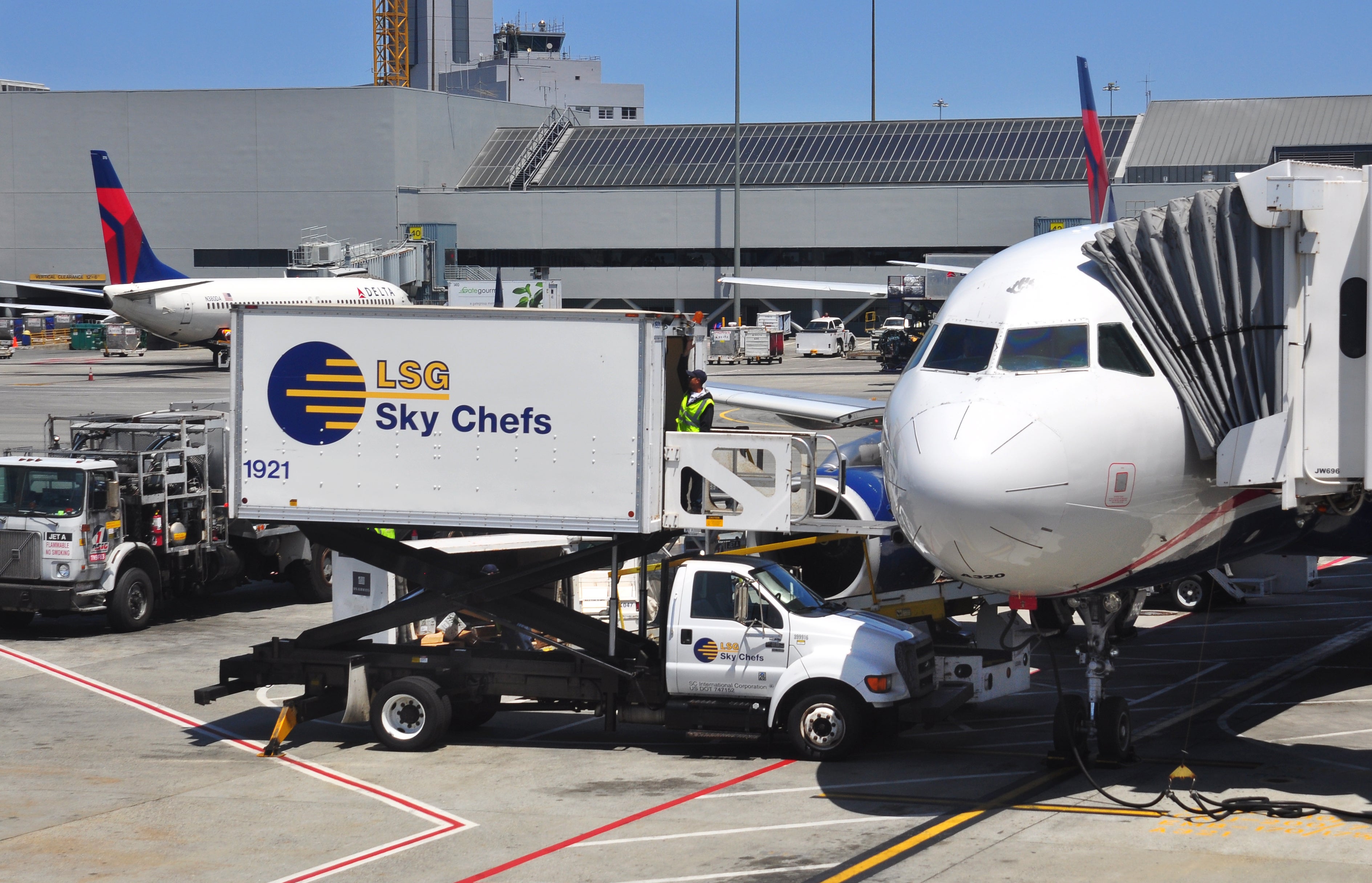
So when a crew member wheels a trolley through the aisle to collect waste following a service, they may have two or more separate compartments to split waste between recyclables and non-recyclables. But if the crew doesn't perform this step on board, it is unlikely that someone else will once the flight lands.
You may have also seen crews secure food trolleys with cable ties at the end of the flight. This is part of that closed-loop system, to indicate that no one has tampered with the trolley when it leaves the plane.

But what happens then? You might hope that the contents are taken away and carefully sorted, with plates and metal cutlery being washed and reused, plastics recycled, and uneaten food perhaps given to charity.
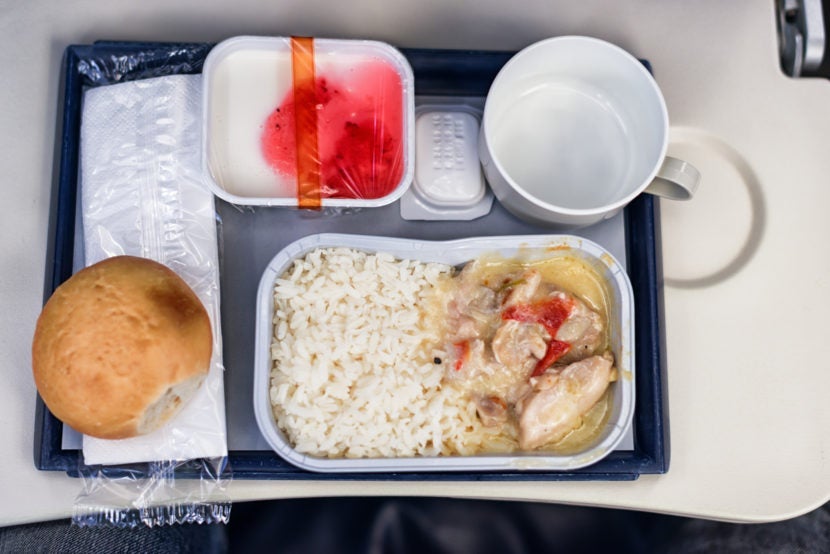
Unfortunately, the ACA admitted that while metal cutlery, glasses and crockery such as those used in premium cabins are washed and reused, the rest of the contents of the trolley, especially after international flights, are usually incinerated as soon as possible. This includes completely untouched food and empty wine bottles, which could be recycled.
Domestic flights and those with nonperishable buy-on-board trolleys, such as the ones you'd find on low-cost carriers, can and do reuse the same food and drinks for subsequent flights.
One airline that is leading the push towards sustainability is Qantas, which has set an ambitious target of reducing its general waste by 75% by the end of 2021, which they say is the highest target of any major airline, globally. Qantas told TPG that on all domestic flights they already separate as many recyclable items like wine bottles, plastic bottles, cups and cans as possible, and will also remove more than 100 million single-use plastic items from flights and lounges by the end of 2020.
Qantas also donates uneaten perishable food to charities when its domestic flights land. The airline said it would like to do more on international flights but they are currently legally required to dispose of many materials permanently.
When it comes to most airlines and airport waste operators though, the ACA says the industry could do a lot more to improve the recycling efforts, noting that strict regulations regarding both security and food safety currently make this difficult and expensive.
Gamba is campaigning the International Air Transport Association (IATA) to establish a working group to take action to improve airline-catering sustainability while still operating within the strict confines of safety regulations.
TPG reached out to IATA regarding any action being taken on catering sustainability but they did not respond by the time of publication.
For the latest travel news, deals and points and miles tips please subscribe to The Points Guy daily email newsletter.
TPG featured card
at American Express's secure site
Terms & restrictions apply. See rates & fees.
| 4X | Earn 4X Membership Rewards® points per dollar spent on purchases at restaurants worldwide, on up to $50,000 in purchases per calendar year, then 1X points for the rest of the year. |
| 4X | Earn 4X Membership Rewards® points per dollar spent at US supermarkets, on up to $25,000 in purchases per calendar year, then 1X points for the rest of the year. |
| 5X | Earn 5X Membership Rewards® points on prepaid hotel stays booked through AmexTravel.com or the Amex Travel App™. |
| 3X | Earn 3X Membership Rewards® points on flights booked through AmexTravel.com, the Amex Travel App™, or purchased directly from airlines. |
| 2X | Earn 2X Membership Rewards® points on prepaid car rentals booked through AmexTravel.com or the Amex Travel App™ and cruises booked and paid through AmexTravel.com. |
| 1X | Earn 1X Membership Rewards® point per dollar spent on all other eligible purchases. |
Pros
- Valuable dining and food-related credits
- Flexible rewards with airline and hotel transfer partners
- Multiple travel and purchase protections
- No foreign transaction fees
- Access to Amex Offers for additional savings (enrollment required)
Cons
- Not as useful for those living outside the U.S.
- Some may have trouble using Uber and other dining credits
- You may be eligible for as high as 100,000 Membership Rewards® Points after you spend $8,000 in eligible purchases on your new Card in your first 6 months of Card Membership. Welcome offers vary and you may not be eligible for an offer. Apply to know if you’re approved and find out your exact welcome offer amount – all with no credit score impact. If you’re approved and choose to accept the Card, your score may be impacted.
- Earn 4X Membership Rewards® points per dollar spent on purchases at restaurants worldwide, on up to $50,000 in purchases per calendar year, then 1X points for the rest of the year.
- Earn 4X Membership Rewards® points per dollar spent at US supermarkets, on up to $25,000 in purchases per calendar year, then 1X points for the rest of the year.
- Earn 5X Membership Rewards® points on prepaid hotel stays booked through AmexTravel.com or the Amex Travel App™.
- Earn 3X Membership Rewards® points on flights booked through AmexTravel.com, the Amex Travel App™, or purchased directly from airlines.
- Earn 2X Membership Rewards® points on prepaid car rentals booked through AmexTravel.com or the Amex Travel App™ and cruises booked and paid through AmexTravel.com.
- Earn 1X Membership Rewards® point per dollar spent on all other eligible purchases.
- Pay It® lets you tap in the American Express® App to quickly pay for small purchase amounts throughout the month and still earn rewards the way you usually do. Plan It® gives you the option to split up big purchases into equal monthly payments with a fixed fee. You’ll know upfront exactly how much you’ll pay.
- $120 Dining Credit: Earn up to a total of $10 in statement credits monthly when you pay with the Gold Card at Grubhub (including Seamless), Buffalo Wild Wings, Five Guys, The Cheesecake Factory, and Wonder. This can be an annual savings of up to $120. Enrollment required.
- $100 Resy Credit: Get up to $100 in statement credits each calendar year at over 10,000 qualifying U.S. Resy restaurants after you pay for eligible purchases with the American Express® Gold Card. That’s up to $50 in statement credits semi-annually. Enrollment required.
- $84 Dunkin' Credit: Earn up to $7 in monthly statement credits after you pay with the American Express® Gold Card at U.S. Dunkin’ locations. Enrollment required.
- $120 Uber Cash on Gold: Enjoy up to $120 in Uber Cash annually with your Gold Card. Just add your Card to your Uber account and you'll get $10 in Uber Cash each month to use on orders and rides in the U.S. when you select an Amex Card for your transaction.
- Enjoy complimentary Hertz Five Star® Status benefits like skipping the counter at select locations, adding an additional driver at no additional cost*, and vehicle upgrades**. Benefit enrollment and Hertz Gold+ registration are required. *Additional drivers must meet standard rental qualifications and must be a spouse or domestic partner to qualify as complimentary. Other additional drivers subject to fees. **Benefits are subject to availability and vary by location. Additional Hertz program Terms and Conditions including age restrictions apply.
- Book two nights or more with The Hotel Collection through AmexTravel.com or the Amex Travel App™ and receive a $100* credit towards eligible charges at over 1,400 upscale hotels worldwide. *Eligible charges vary by property.
- Book your travel through the Amex Travel App™ with added peace of mind – backed by American Express® service and support. Only for American Express® Card Members.
- Whenever you need us, we're here. Our Member Services team will ensure you are taken care of. From lost Card replacement to statement questions, we are available to help 24/7.
- No Foreign Transaction Fees.
- Annual Fee is $325.
- Terms Apply.