Virgin Atlantic just crossed the ocean using sustainable aviation fuel — here's what that actually means

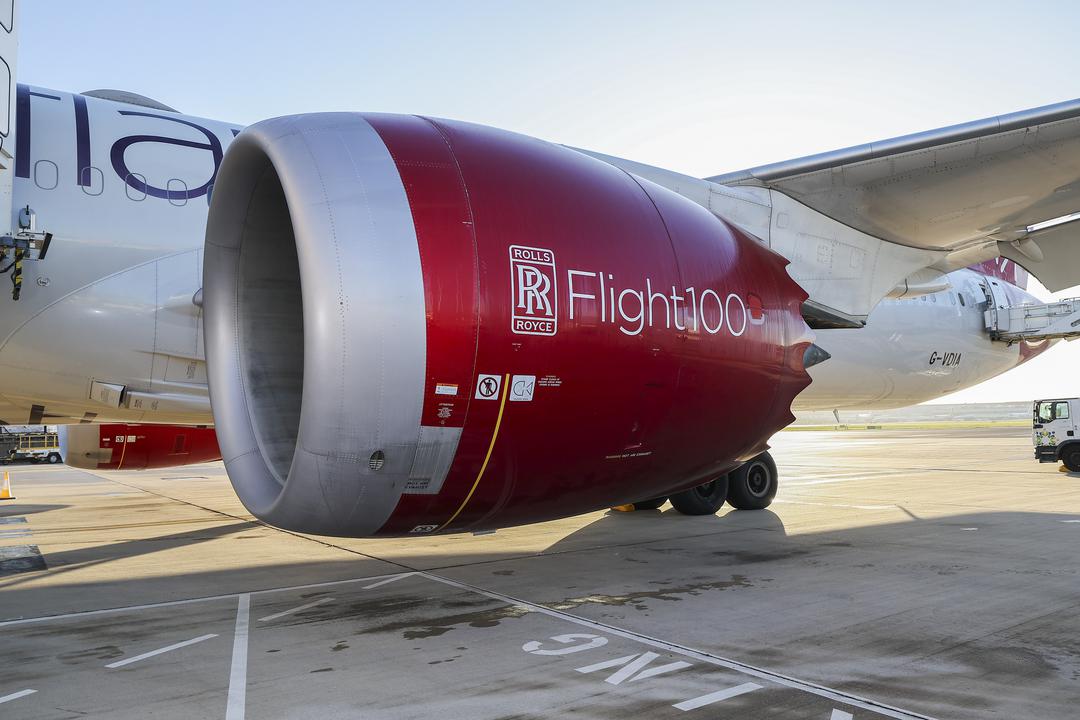
Virgin Atlantic made history on Tuesday by crossing the Atlantic Ocean with a jetliner powered entirely by sustainable aviation fuel (SAF).
Flying from London's Heathrow Airport (LHR) to New York's John F. Kennedy International Airport (JFK), a Virgin Atlantic 787 Dreamliner — powered by twin Rolls Royce Trent 1000 engines — became the first commercial plane to fly a plane across the Atlantic using 100% SAF, rather than traditional kerosene-based fuel. It follows a similar demonstration flight by a Gulfstream G600 private jet last week.
View this post on Instagram
Tuesday's flight, which was partially funded by the British government, has been widely heralded as a proof of concept, of sorts, demonstrating the feasibility of the aviation industry's plan to decarbonize in the coming years and decades. While the flight did not carry paying passengers, airline founder Richard Branson, CEO Shai Weiss, and Britain's transport minister Mark Harper were on board, along with other executives, politicians, and media — including TPG's Nicky Kelvin.
SAF is produced from waste products, primarily from cooking oils, animal fats and byproducts of corn production. While the fuels burn similarly to kerosene and still produce emissions, the overall "lifecycle" emissions are up to 70% lower — partly because, by emitting carbon that had previously been absorbed by plants and animals, the fuels do not contribute as many "new" carbon emissions into the air, as opposed to the case when burning and producing fossil-based fuels.
While commercial aviation generates 2% to 3% of all emissions globally, according to most estimates, it remains among the most difficult industries to decarbonize. Alternative energy forms like electricity remain decades away from being developed enough to work for long-haul flights, and the most emission-heavy flights tend to cross oceans and continents, meaning there's no greener alternative method of transport that can be used.
Airlines have been bullish on SAF as part of their plan to reach "net zero" by 2050, along with other technologies like direct carbon capture. Airlines project that SAF will account for roughly 65% of the emissions reductions it hopes to achieve by 2050.
How to get in: Best credit cards for airport lounge access
However, there are numerous challenges to the widespread adoption of SAF. Commercial engines are not yet certified to fly on more than a blend of 50% SAF — Tuesday's flight received special approval from U.K. regulators, and will fly back to London using regular fuel.
Supplies of SAF and regular production remain too low to enter widespread use. It's scarce and expensive, and currently accounts for less than 0.1% of aviation fuel used across the world, according to the BBC.

Airline bosses have said that widespread adoption without government support would be virtually impossible due to current costs. In the U.S., the Inflation Reduction Act of 2022 includes credits for SAF production that are expected to contribute towards scaling up production.
Critics have also argued that SAF must be seen as a stepping stone, rather than an outright solution, given potential environmental impacts of producing it, including redirecting land for agricultural use .
Cat Hewitt, policy director at the Aviation Environment Federation, told CNN the flight was more of a gimmick than a true step forward.
"Until we have genuinely zero-emission technology available for flying, there's really one thing that we know definitely works to cut aviation emissions — and that's to fly less," Hewitt said.
Nevertheless, Tuesday's flight is expected to raise awareness of SAF and its potential to at least have some positive impact, as fuel producers, airline executives and engine manufacturers continue to work with regulators to seek approval to use up to 100% SAF on commercial flights.
Related reading:
- When is the best time to book flights for the cheapest airfare?
- The best airline credit cards
- What exactly are airline miles, anyway?
- 6 real-life strategies you can use when your flight is canceled or delayed
- Maximize your airfare: The best credit cards for booking flights
- The best credit cards to reach elite status
- What are points and miles worth? TPG's monthly valuations
TPG featured card

at Capital One's secure site
Terms & restrictions apply. See rates & fees.
| 5X miles | Earn 5X miles on hotels, vacation rentals and rental cars booked through Capital One Travel |
| 2X miles | Earn unlimited 2X miles on every purchase, every day |
Pros
- Stellar welcome offer of 75,000 miles after spending $4,000 on purchases in the first three months from account opening. Plus, a $250 Capital One Travel credit to use in your first cardholder year upon account opening.
- You'll earn 2 miles per dollar on every purchase, which means you won't have to worry about memorizing bonus categories
- Rewards are versatile and can be redeemed for a statement credit or transferred to Capital One’s transfer partners
Cons
- Highest bonus-earning categories only on travel booked via Capital One Travel
- LIMITED-TIME OFFER: Enjoy $250 to use on Capital One Travel in your first cardholder year, plus earn 75,000 bonus miles once you spend $4,000 on purchases within the first 3 months from account opening - that’s equal to $1,000 in travel
- Earn unlimited 2X miles on every purchase, every day
- Earn 5X miles on hotels, vacation rentals and rental cars booked through Capital One Travel
- Miles won't expire for the life of the account and there's no limit to how many you can earn
- Receive up to a $120 credit for Global Entry or TSA PreCheck®
- Use your miles to get reimbursed for any travel purchase—or redeem by booking a trip through Capital One Travel
- Enjoy a $50 experience credit and other premium benefits with every hotel and vacation rental booked from the Lifestyle Collection
- Transfer your miles to your choice of 15+ travel loyalty programs
- Top rated mobile app