It's not just you: The TSA's new CT scanning machines are slow

Editor's Note
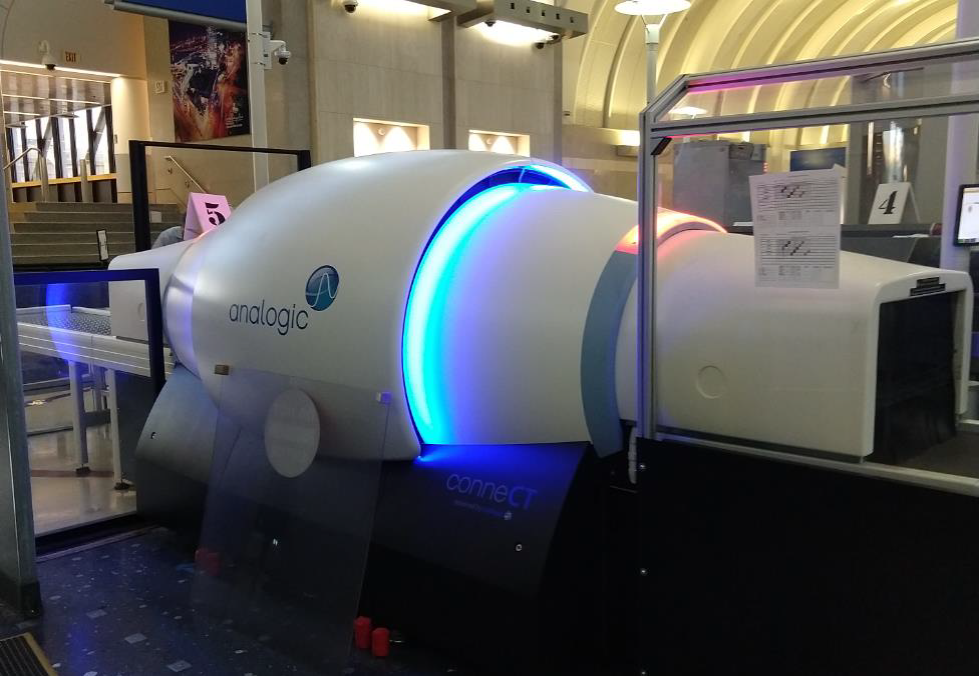
On paper, the Transportation Security Administration's new baggage scanners offer a lot of promise. They'll give TSA officers a better, three-dimensional look at potential threats, and allow those without TSA PreCheck to keep liquids and laptops in their bags.
They're also very slow — frustrating travelers. Adding a layer of complication (and slowness), the new machines require passengers to line up all of their belongings — even suitcases — and place them on bins that then get pulled into the screening queue.
The changes tied to the new computed tomography, or CT, scanning machines have been particularly vexing to those who already have TSA PreCheck.
Since they already don't have to take items out of their bag, many just view the machines as devices that create a bottleneck in expedited-security lanes. It's a phenomenon that TPG staff members and travelers nationwide have noticed in recent months, and an issue the TSA has acknowledged.
TPG Lounge member Chris Ruegsegger was in a TSA PreCheck lane with just a single person ahead of him at Hartsfield-Jackson Atlanta International Airport (ATL) about two months ago — but still had to wait for the CT scanner to process his bags.
After walking through the metal detector, it took "a couple minutes for our bags to go thru the CT scanning machine," Ruegsegger wrote.
Joelle Erickson has TSA PreCheck but ended up in a regular screening lane at Newark Liberty International Airport (EWR) a few weeks ago. She received a card that allowed her to retain some TSA PreCheck benefits — something travelers informally call "PreCheck lite."
"I think it took about 10 minutes to screen 10 people... If not longer," she wrote. "The people in front of me were trying to contact their family further back in line to warn them of how slow the machine was."

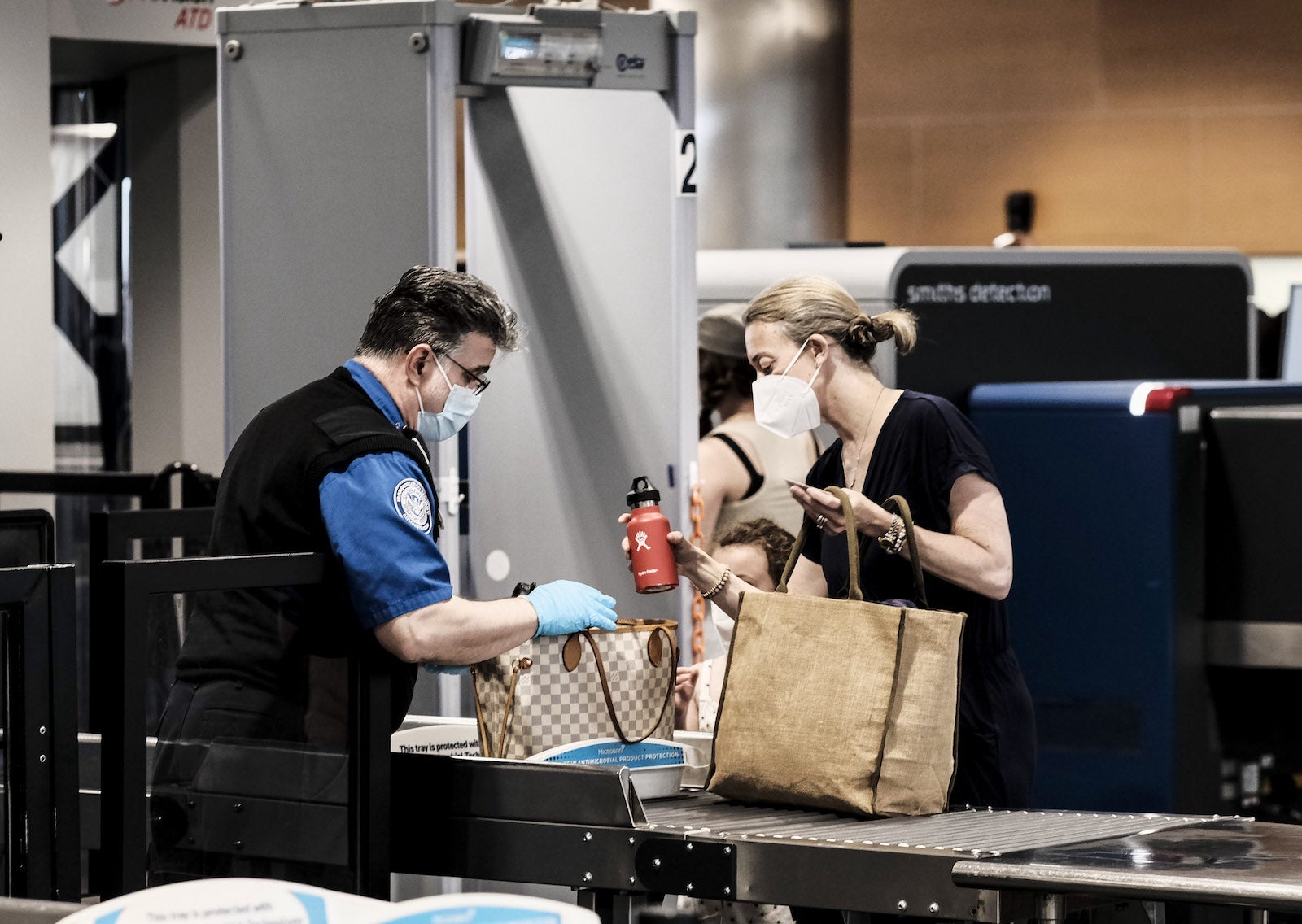
TPG staffers have had similar experiences at airports nationwide, including San Diego International Airport (SAN), Denver International Airport (DEN), Charlotte Douglas International Airport (CLT) and Boston Logan Airport (BOS).
A TSA spokesperson acknowledged that the machines can cause a longer screening experience than the existing machines — known as advanced technology, or AT, machines — due to training issues.
"As with any new technology, there is a learning curve for officers; as their proficiency increases, there is an expectation throughput will meet and exceed existing AT systems," the spokesperson said in an email to TPG.
Following the publication of this story, a second TSA spokesperson noted that "our operational testing of the CT units shows that the baggage search technology takes no additional time." In non-TSA PreCheck lanes, the agency said it sees the screening process proceeding faster with CT machines than with AT machines.
The TSA also noted that the new technology's capabilities will give TSA officers a better, 3D look at objects, reducing the overall number of bags that need to be pulled for inspection.
More: Here's why you may not have to remove your laptop at TSA checkpoints this summer
The agency is going airport by airport and replacing AT machines with CT scanners, which is why these machines are appearing in PreCheck lanes, the spokesperson said.
"TSA is making best use of its resources by following a deployment strategy which completes, to the maximum extent practical, an entire airport at a time," the spokesperson said. "This results in the deployment of CT systems in both standard and PreCheck lanes."
The TSA recently awarded a $781.2 million contract for more of the new machines, which will number just under 1,000 once it's fulfilled. That's on top of an earlier, $200 million contract for a different model of the machines.
Still, not all travelers find the machines to be a nuisance. This is especially true for travelers who don't have PreCheck and use the regular lanes.
TPG Lounge member Matt Teichmann said he had a positive experience at Denver International Airport recently.
"As a parent traveling with iPad, snacks and wet wipes I loved the new machine," he wrote. "I'd rather it take a little longer and not have to do all that unpacking!"
TPG featured card

at Capital One's secure site
Terms & restrictions apply. See rates & fees.
| 5X miles | Earn 5X miles on hotels, vacation rentals and rental cars booked through Capital One Travel |
| 2X miles | Earn unlimited 2X miles on every purchase, every day |
Pros
- Stellar welcome offer of 75,000 miles after spending $4,000 on purchases in the first three months from account opening. Plus, a $250 Capital One Travel credit to use in your first cardholder year upon account opening.
- You'll earn 2 miles per dollar on every purchase, which means you won't have to worry about memorizing bonus categories
- Rewards are versatile and can be redeemed for a statement credit or transferred to Capital One’s transfer partners
Cons
- Highest bonus-earning categories only on travel booked via Capital One Travel
- LIMITED-TIME OFFER: Enjoy $250 to use on Capital One Travel in your first cardholder year, plus earn 75,000 bonus miles once you spend $4,000 on purchases within the first 3 months from account opening - that’s equal to $1,000 in travel
- Earn unlimited 2X miles on every purchase, every day
- Earn 5X miles on hotels, vacation rentals and rental cars booked through Capital One Travel
- Miles won't expire for the life of the account and there's no limit to how many you can earn
- Receive up to a $120 credit for Global Entry or TSA PreCheck®
- Use your miles to get reimbursed for any travel purchase—or redeem by booking a trip through Capital One Travel
- Enjoy a $50 experience credit and other premium benefits with every hotel and vacation rental booked from the Lifestyle Collection
- Transfer your miles to your choice of 15+ travel loyalty programs
- Top rated mobile app